Story code: ST-001134
Part 1: The Endorsement
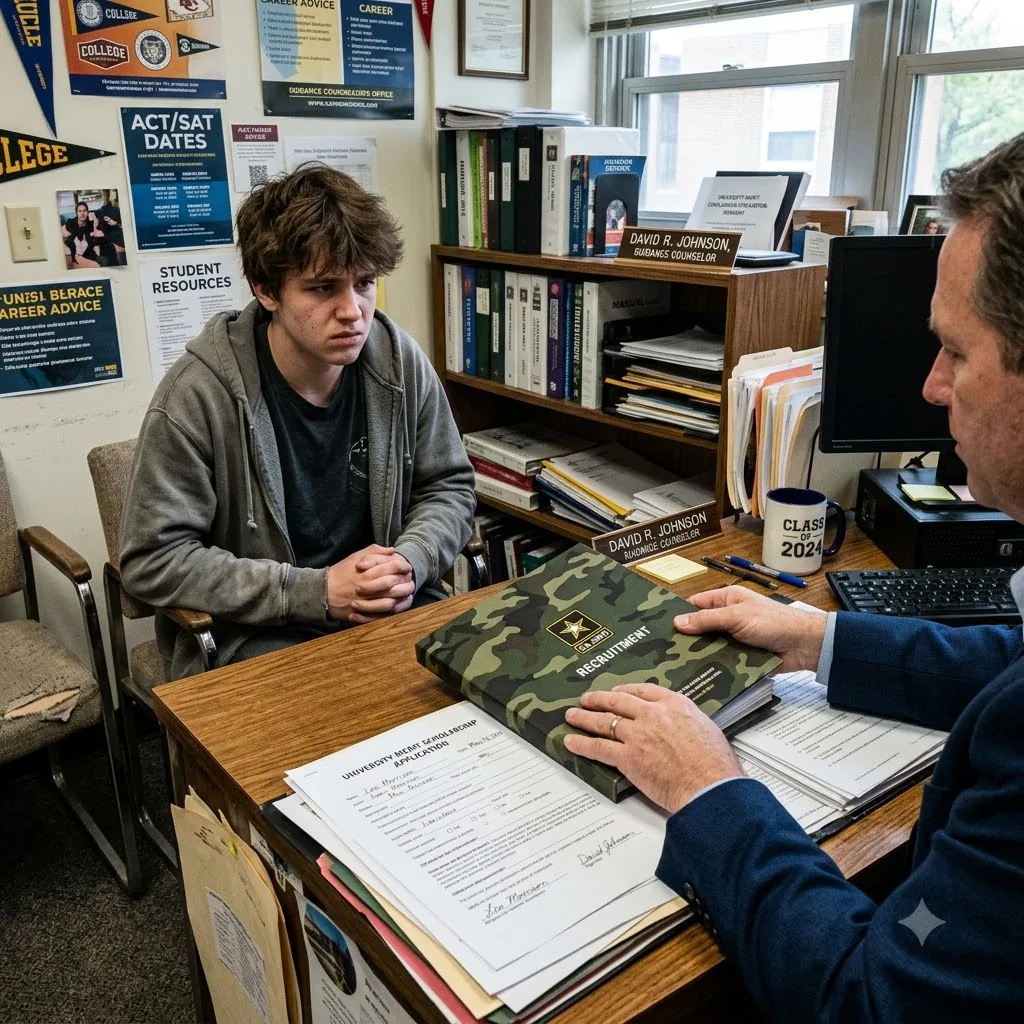
Mateo pushed the ninety-page, spiral-bound engineering scholarship application across the scratched laminate of the guidance counselor’s desk. Mr. Vance did not look at the pristine robotic schematics, the glowing letters of recommendation from the physics department, or the flawless straight-A transcript, but instead slapped his heavy, ringed hand flat over the cover page.
“Incomplete,” Vance said, his voice a dull drone that barely carried over the hum of the fluorescent overhead lights in the cramped, windowless office.
Mateo sat forward in the undersized plastic chair, the fabric of his cheap suit jacket pulling tight across his shoulders. He pointed to the thick stack of papers under Vance’s palm, specifically the neatly tabbed index he had spent three sleepless nights color-coding and formatting. Every line was filled, every essay polished to a mirrored shine, all leading to the guaranteed full-ride mechanical engineering program at the state university. The submission deadline was tomorrow at noon. All the binder needed was the mandated signature from a school official on page four.
Vance tapped a thick, blunt fingernail against section three of the demographics page. The box for his mother’s Social Security Number was blank, accompanied by an asterisk and a supplemental form attached in Appendix B, exactly as the application instructions dictated for undocumented or pending-status parents. Mateo had double-checked the policy with the university admissions office directly, waiting on hold for two hours just to be absolutely certain.
“Appendix B has the ITIN,” Mateo said, keeping his voice level despite the sudden, sharp tightening in his chest. “The university accepts the tax identification number in lieu of an SSN for household income verification. It is all documented right there in the back.”
Vance leaned back in his squeaking leather chair, the springs groaning under his weight. He did not turn to Appendix B. He did not lift his hand from the meticulously assembled application. He stared at Mateo with a flat, unblinking expression that gave away absolutely nothing.
“State rules dictate that incomplete applications do not get an official district endorsement,” Vance said. “I cannot sign a document that has empty mandatory fields. It creates a liability for the school district. We cannot vouch for unverified households.”
Mateo breathed in the stale air of the office, smelling old coffee, floor wax, and dusty carpet. He reached toward the desk to flip to the appendix himself, to physically show Vance the typed numbers, the official IRS watermark on the tax forms, and the printed email from the admissions director. Vance moved faster. He slid the entire scholarship binder to the far edge of the desk, dropping it perilously close to the overflowing trash can.
Before Mateo could protest, Vance reached into his bottom desk drawer and pulled out a glossy, heavy-stock folder. He dropped it directly into the center of the desk, right where Mateo’s life work had rested a second ago.
The cover of the folder was a high-resolution photograph of digital woodland camouflage. Bold stencil letters marched across the top, promising adventure, discipline, and a secure future.
“You are a smart kid with limited options,” Vance said, resting his elbows heavily on the camo folder. “You have an aptitude for mechanics. The motor pool is always looking for smart kids who can turn a wrench. You do four years, keep your head down, and then maybe you use the GI Bill to pay for that engineering degree.”
Mateo stared at the recruitment packet. The recruiter usually set up a table in the cafeteria on Tuesdays, handing out branded lanyards and cheap plastic water bottles to the freshmen. Vance was supposed to be the academic counselor. He was the designated gateway to higher education, the man hired to help students build a future.
“I have a full-ride scholarship,” Mateo said, pointing at his binder teetering on the edge of the desk. “I do not need the GI Bill. I just need your signature on page four.”
“You have a stack of worthless paper,” Vance corrected, his voice dropping half an octave, turning hard and cold. “Without my signature, that application is scrap. And I am telling you, as your designated academic advisor, that I will not sign off on a legally ambiguous demographic profile. The district will not support it.”
The walls of the tiny office seemed to press inward. The ticking of the cheap plastic wall clock grew deafening. Mateo looked from the camouflage folder to the counselor’s indifferent, fleshy face.
“If you mail that application without my endorsement, the university will flag it,” Vance continued. “They will call my office to verify your status. I will be forced to inform them that you attempted to bypass district policy regarding household verification. That kind of flag follows you to other universities. It ruins your chances anywhere.”
Mateo felt his hands curl into fists on his lap. He realized exactly what was happening in this quiet, dusty room. Vance was not just refusing to sign based on a misunderstanding. He was threatening to actively sabotage the application if Mateo tried to submit it independently. The counselor was holding a multi-million-dollar academic future hostage over a nonexistent technicality, steering another minority student directly into the enlistment quota.
Vance opened the camouflage folder. Inside were enlistment contracts, pre-highlighted in yellow, alongside a standardized aptitude test schedule.
“The recruiter is in the building today,” Vance said, sliding a heavy metal pen across the desk until it tapped against Mateo’s knuckles. “He can waive the demographic hold for your mother right now. You sign the delayed entry form, and all this paperwork stress goes away.”
Mateo looked at the heavy pen resting on the camouflage pattern. He looked at his own application, containing every ounce of his brilliance, his late nights, and his mother’s sacrifices, hanging halfway off the edge of the desk. Vance sat perfectly still, waiting for the boy to break, his hand hovering over the enlistment papers.
Mateo reached out and closed his fingers around the cold metal of the pen.
Mateo pushed the ninety-page, spiral-bound engineering scholarship application across the scratched laminate of the guidance counselor’s desk. Mr. Vance did not look at the pristine robotic schematics, the glowing letters of recommendation from the physics department, or the flawless straight-A transcript, but instead slapped his heavy, ringed hand flat over the cover page.
“Incomplete,” Vance said, his voice a dull drone that barely carried over the hum of the fluorescent overhead lights in the cramped, windowless office.
Mateo sat forward in the undersized plastic chair, the fabric of his cheap suit jacket pulling tight across his shoulders. He pointed to the thick stack of papers under Vance’s palm, specifically the neatly tabbed index he had spent three sleepless nights color-coding and formatting. Every line was filled, every essay polished to a mirrored shine, all leading to the guaranteed full-ride mechanical engineering program at the state university. The submission deadline was tomorrow at noon. All the binder needed was the mandated signature from a school official on page four.
Vance tapped a thick, blunt fingernail against section three of the demographics page. The box for his mother’s Social Security Number was blank, accompanied by an asterisk and a supplemental form attached in Appendix B, exactly as the application instructions dictated for undocumented or pending-status parents. Mateo had double-checked the policy with the university admissions office directly, waiting on hold for two hours just to be absolutely certain.
“Appendix B has the ITIN,” Mateo said, keeping his voice level despite the sudden, sharp tightening in his chest. “The university accepts the tax identification number in lieu of an SSN for household income verification. It is all documented right there in the back.”
Vance leaned back in his squeaking leather chair, the springs groaning under his weight. He did not turn to Appendix B. He did not lift his hand from the meticulously assembled application. He stared at Mateo with a flat, unblinking expression that gave away absolutely nothing.
“State rules dictate that incomplete applications do not get an official district endorsement,” Vance said. “I cannot sign a document that has empty mandatory fields. It creates a liability for the school district. We cannot vouch for unverified households.”
Mateo breathed in the stale air of the office, smelling old coffee, floor wax, and dusty carpet. He reached toward the desk to flip to the appendix himself, to physically show Vance the typed numbers, the official IRS watermark on the tax forms, and the printed email from the admissions director. Vance moved faster. He slid the entire scholarship binder to the far edge of the desk, dropping it perilously close to the overflowing trash can.
Before Mateo could protest, Vance reached into his bottom desk drawer and pulled out a glossy, heavy-stock folder. He dropped it directly into the center of the desk, right where Mateo’s life work had rested a second ago.
The cover of the folder was a high-resolution photograph of digital woodland camouflage. Bold stencil letters marched across the top, promising adventure, discipline, and a secure future.
“You are a smart kid with limited options,” Vance said, resting his elbows heavily on the camo folder. “You have an aptitude for mechanics. The motor pool is always looking for smart kids who can turn a wrench. You do four years, keep your head down, and then maybe you use the GI Bill to pay for that engineering degree.”
Mateo stared at the recruitment packet. The recruiter usually set up a table in the cafeteria on Tuesdays, handing out branded lanyards and cheap plastic water bottles to the freshmen. Vance was supposed to be the academic counselor. He was the designated gateway to higher education, the man hired to help students build a future.
“I have a full-ride scholarship,” Mateo said, pointing at his binder teetering on the edge of the desk. “I do not need the GI Bill. I just need your signature on page four.”
“You have a stack of worthless paper,” Vance corrected, his voice dropping half an octave, turning hard and cold. “Without my signature, that application is scrap. And I am telling you, as your designated academic advisor, that I will not sign off on a legally ambiguous demographic profile. The district will not support it.”
The walls of the tiny office seemed to press inward. The ticking of the cheap plastic wall clock grew deafening. Mateo looked from the camouflage folder to the counselor’s indifferent, fleshy face.
“If you mail that application without my endorsement, the university will flag it,” Vance continued. “They will call my office to verify your status. I will be forced to inform them that you attempted to bypass district policy regarding household verification. That kind of flag follows you to other universities. It ruins your chances anywhere.”
Mateo felt his hands curl into fists on his lap. He realized exactly what was happening in this quiet, dusty room. Vance was not just refusing to sign based on a misunderstanding. He was threatening to actively sabotage the application if Mateo tried to submit it independently. The counselor was holding a multi-million-dollar academic future hostage over a nonexistent technicality, steering another minority student directly into the enlistment quota.
Vance opened the camouflage folder. Inside were enlistment contracts, pre-highlighted in yellow, alongside a standardized aptitude test schedule.
“The recruiter is in the building today,” Vance said, sliding a heavy metal pen across the desk until it tapped against Mateo’s knuckles. “He can waive the demographic hold for your mother right now. You sign the delayed entry form, and all this paperwork stress goes away.”
Mateo looked at the heavy pen resting on the camouflage pattern. He looked at his own application, containing every ounce of his brilliance, his late nights, and his mother’s sacrifices, hanging halfway off the edge of the desk. Vance sat perfectly still, waiting for the boy to break, his hand hovering over the enlistment papers.
Mateo reached out and closed his fingers around the cold metal of the pen.