Story code: ST-001135
Part 1: The Orange Notice
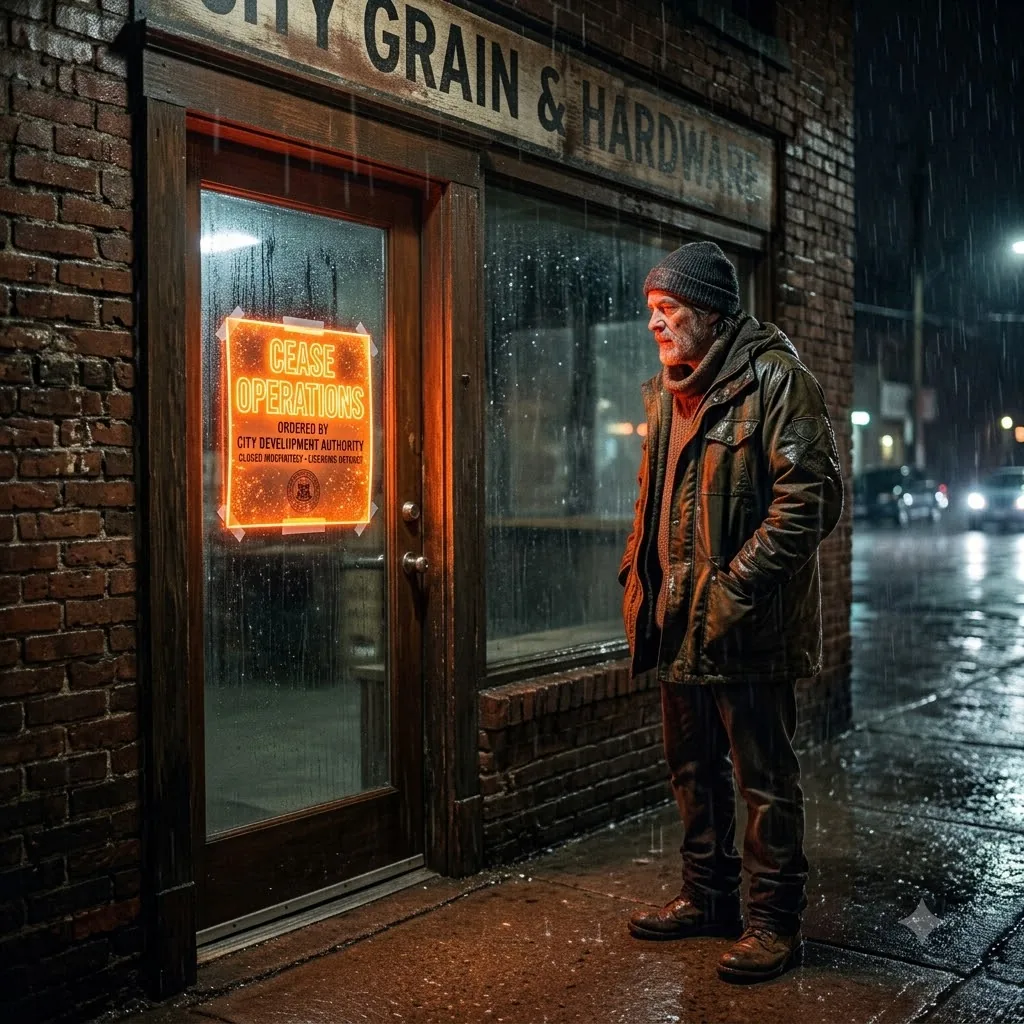
The wind cut out the moment Harlan’s boots hit the concrete, leaving a dead silence in front of his own front door. Slapped right at eye level on the reinforced glass, a neon orange sticker glowed through the freezing morning mist. It read Zoning Injunction: Cease Operations in bold, unfeeling block letters. He let his key ring drop against his thigh, the brass jangling loud in the empty street. Three generations of his family had turned the lock on this gun shop every morning at six, but the heavy laminated paper claimed the building was now a non-compliant hazard to the newly formed downtown aesthetic district.
Harlan peeled at the top corner of the sticker. The adhesive was industrial, leaving a jagged white scar across the glass. The zoning board met on Tuesdays, a sleepy gathering of hardware store owners and retired mechanics who rubber-stamped fence permits and deck additions. They did not issue emergency injunctions at dawn on a Thursday. Not unless someone had bypassed the municipal code entirely. He turned his head toward the opposite corner of the street.
Across the slick asphalt, the freezing rain turned into a thin glaze against the floor-to-ceiling windows of the artisan coffee house that had opened last month. Sitting at a reclaimed wood table right in the window, wrapped in a cashmere scarf, was Dr. Elias Vance. The man was a weekend transplant from the city who had recently taken an intense, heavily funded interest in local politics. Vance had both hands wrapped around a ceramic mug, the steam fogging the glass, and he was staring directly at Harlan’s door. He was waiting for the reaction.
Harlan did not yell. He did not pull the rest of the sticker off. He slid his key into the deadbolt, feeling the heavy mechanical clunk echo in his chest, and pushed the door open. The brass bell above chimed the exact same way it had since his grandfather hung it in nineteen-sixty. The smell of gun oil, aged wood, and solvent washed over him, familiar and grounding. He stepped inside and flipped the breaker switch, illuminating the glass cases of lever-action rifles and polished revolvers. Then he walked back out to the sidewalk and flipped the open sign to face the street.
He barely had time to sweep the ice melt off the welcome mat before the heavy footsteps approached. Dr. Vance was crossing the street, ignoring the crosswalk, his expensive leather boots slipping slightly on the freezing rain. He held a leather folio under his left arm. The doctor stepped up onto the curb, stopping just short of the overhang so the rain continued to dot his expensive shoulders.
“The notice is quite clear, Harlan,” Vance said. His voice was smooth, carrying the practiced patience of a man used to explaining things to people he considered slow. “The emergency council meeting last night re-zoned this entire block. Firearms retail is strictly prohibited within the new wellness corridor. You are operating illegally the second you unlock that door.”
Harlan leaned his weight on his broom. He looked at the torn orange sticker, then at the doctor. “The council has five members. Three of them owe me money, and the other two hunt on my property. They do not hold secret meetings on a Wednesday night.”
“They do when the town’s infrastructure fund is bankrupt and a private donor offers to pave the entire school parking lot in exchange for a few minor zoning modernizations,” Vance replied, tapping the leather folio. “This town is changing. The weekend demographic is bringing real revenue. We want galleries, bakeries, and boutiques. We do not want the smell of cordite and a display of weapons greeting our families when they come up to relax.”
Harlan studied the man’s face. Vance possessed the absolute confidence of someone who had never been told no, someone who viewed the locals as background characters in his weekend retreat. The doctor unzipped the folio and pulled out a thick cream-colored envelope. He held it out into the freezing rain. The water drops immediately began to warp the expensive paper.
“Inside this envelope is a cashier’s check,” Vance said, his tone dropping into a businesslike cadence. “It is for double the assessed value of this building. Plus a generous relocation stipend. I am buying the property through my LLC. You take this, you lock the door, and you walk away. You can retire comfortably in the county, and we get to turn this space into a farm-to-table cooperative. Everyone wins.”
Harlan stared at the envelope. The paper was getting soggy, the ink of Vance’s name smearing in the icy drizzle. The amount of money in that envelope was probably enough to fix his father’s tractor, pay off his seasonal inventory, and sit on a porch for the next twenty years without lifting a finger. It was exactly the kind of move a man like Vance would make, assuming raw capital could erase a family legacy overnight. Harlan reached out his calloused hand and pinched the edge of the damp envelope. Vance smiled, assuming total compliance. Harlan’s grip tightened on the paper.
The wind cut out the moment Harlan’s boots hit the concrete, leaving a dead silence in front of his own front door. Slapped right at eye level on the reinforced glass, a neon orange sticker glowed through the freezing morning mist. It read Zoning Injunction: Cease Operations in bold, unfeeling block letters. He let his key ring drop against his thigh, the brass jangling loud in the empty street. Three generations of his family had turned the lock on this gun shop every morning at six, but the heavy laminated paper claimed the building was now a non-compliant hazard to the newly formed downtown aesthetic district.
Harlan peeled at the top corner of the sticker. The adhesive was industrial, leaving a jagged white scar across the glass. The zoning board met on Tuesdays, a sleepy gathering of hardware store owners and retired mechanics who rubber-stamped fence permits and deck additions. They did not issue emergency injunctions at dawn on a Thursday. Not unless someone had bypassed the municipal code entirely. He turned his head toward the opposite corner of the street.
Across the slick asphalt, the freezing rain turned into a thin glaze against the floor-to-ceiling windows of the artisan coffee house that had opened last month. Sitting at a reclaimed wood table right in the window, wrapped in a cashmere scarf, was Dr. Elias Vance. The man was a weekend transplant from the city who had recently taken an intense, heavily funded interest in local politics. Vance had both hands wrapped around a ceramic mug, the steam fogging the glass, and he was staring directly at Harlan’s door. He was waiting for the reaction.
Harlan did not yell. He did not pull the rest of the sticker off. He slid his key into the deadbolt, feeling the heavy mechanical clunk echo in his chest, and pushed the door open. The brass bell above chimed the exact same way it had since his grandfather hung it in nineteen-sixty. The smell of gun oil, aged wood, and solvent washed over him, familiar and grounding. He stepped inside and flipped the breaker switch, illuminating the glass cases of lever-action rifles and polished revolvers. Then he walked back out to the sidewalk and flipped the open sign to face the street.
He barely had time to sweep the ice melt off the welcome mat before the heavy footsteps approached. Dr. Vance was crossing the street, ignoring the crosswalk, his expensive leather boots slipping slightly on the freezing rain. He held a leather folio under his left arm. The doctor stepped up onto the curb, stopping just short of the overhang so the rain continued to dot his expensive shoulders.
“The notice is quite clear, Harlan,” Vance said. His voice was smooth, carrying the practiced patience of a man used to explaining things to people he considered slow. “The emergency council meeting last night re-zoned this entire block. Firearms retail is strictly prohibited within the new wellness corridor. You are operating illegally the second you unlock that door.”
Harlan leaned his weight on his broom. He looked at the torn orange sticker, then at the doctor. “The council has five members. Three of them owe me money, and the other two hunt on my property. They do not hold secret meetings on a Wednesday night.”
“They do when the town’s infrastructure fund is bankrupt and a private donor offers to pave the entire school parking lot in exchange for a few minor zoning modernizations,” Vance replied, tapping the leather folio. “This town is changing. The weekend demographic is bringing real revenue. We want galleries, bakeries, and boutiques. We do not want the smell of cordite and a display of weapons greeting our families when they come up to relax.”
Harlan studied the man’s face. Vance possessed the absolute confidence of someone who had never been told no, someone who viewed the locals as background characters in his weekend retreat. The doctor unzipped the folio and pulled out a thick cream-colored envelope. He held it out into the freezing rain. The water drops immediately began to warp the expensive paper.
“Inside this envelope is a cashier’s check,” Vance said, his tone dropping into a businesslike cadence. “It is for double the assessed value of this building. Plus a generous relocation stipend. I am buying the property through my LLC. You take this, you lock the door, and you walk away. You can retire comfortably in the county, and we get to turn this space into a farm-to-table cooperative. Everyone wins.”
Harlan stared at the envelope. The paper was getting soggy, the ink of Vance’s name smearing in the icy drizzle. The amount of money in that envelope was probably enough to fix his father’s tractor, pay off his seasonal inventory, and sit on a porch for the next twenty years without lifting a finger. It was exactly the kind of move a man like Vance would make, assuming raw capital could erase a family legacy overnight. Harlan reached out his calloused hand and pinched the edge of the damp envelope. Vance smiled, assuming total compliance. Harlan’s grip tightened on the paper.