Story code: ST-001166
Part 4: The Manual Override
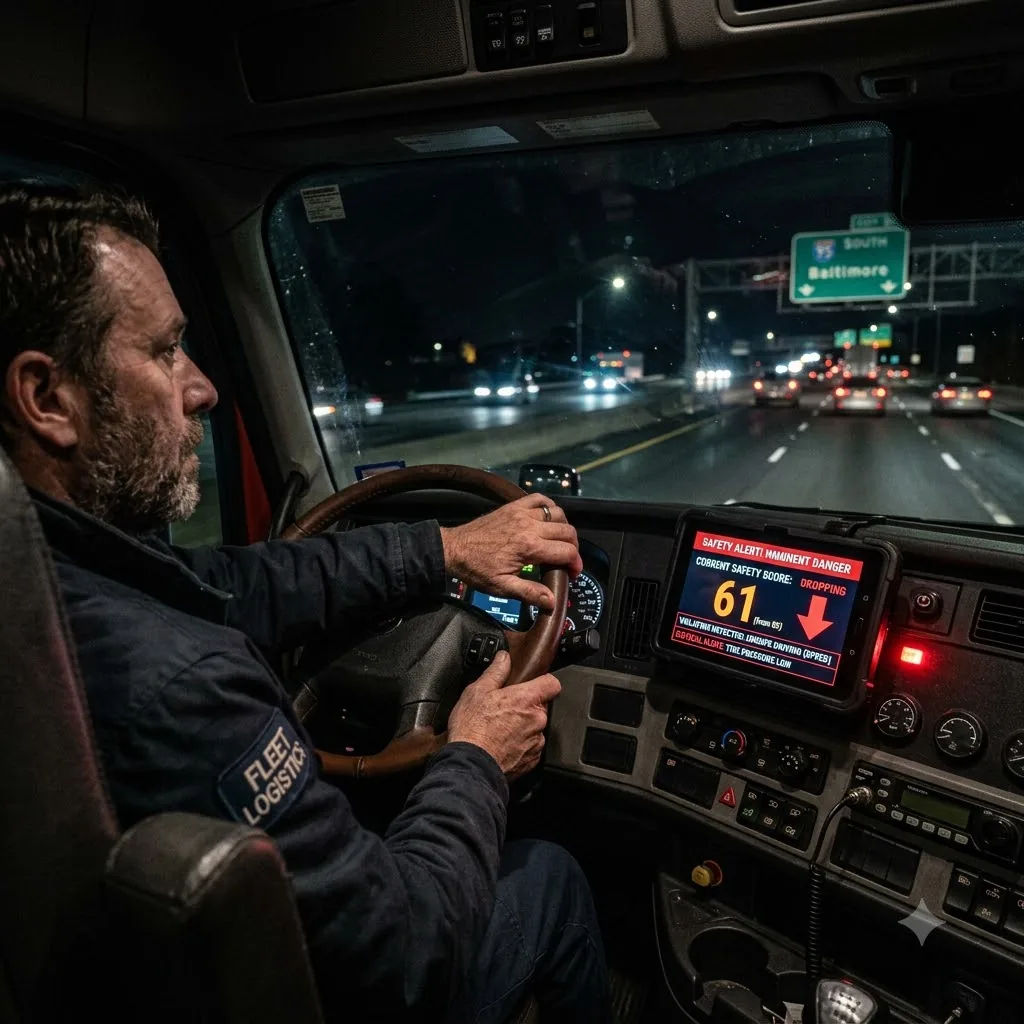
The cab echoed with the sheer, sudden absence of the dispatcher’s frantic voice. The mounted tablet was a dead, cracked black mirror. The AI camera hung from the headliner by a single twisted red wire, its plastic housing shattered, the oppressive green tracking light extinguished forever. Elias stared at the wreckage, his knuckles bleeding slightly from the impact. The air brakes had just released with a heavy pneumatic sigh, and for the first time in hours, the massive eighty-thousand-pound rig felt like it actually belonged to him.
The red and blue strobe lights from the militarized SUV flooded the cab through the rear glass, painting the interior in violent, alternating flashes. The heavy vehicle was still tethered to his flatbed, its mechanized spear firmly embedded in the cargo of copper wire. Elias gripped the steering wheel. He pressed his heavy boot against the accelerator.
The pedal pushed back. It didn’t feel soft or electronically severed. The massive Cummins diesel engine responded instantly to the fuel, letting out a deep, guttural roar that shook the floorboards. The safety governor had been bypassed. He was completely off the grid.
Elias depressed the clutch and shoved the heavy transmission into gear. The truck lurched forward with terrifying, unbridled torque. Behind him, the pneumatic tether groaned violently. The armored SUV, caught entirely off guard by the sudden surge of mechanical power, was yanked forward. Its oversized tires screeched against the asphalt as Elias dragged the interceptor an inch, then a foot.
He had the power now. He could press the pedal to the floor, rip the tether out of his flatbed, or drag the militarized fortress until its front axles snapped. He could run from the dispatcher’s threats, run from the men trying to tear his livelihood apart. With the camera dead, there was no algorithm to stop him.
But running meant becoming the exact monster the algorithm already calculated him to be. The dispatcher had threatened him with ICE, threatened his wife, threatened the home they had spent a decade paying off. If he fled a vehicle flashing police strobes-even a rogue, unmarked enforcement unit operating in the shadows-he was no longer a victim of corporate extortion. He would be a fleeing fugitive. He would be handing the dispatcher the ultimate victory, proving that human drivers were unpredictable, dangerous liabilities that required total automation.
Elias eased his heavy boot off the accelerator. He let the massive engine hum down from its aggressive roar. He didn’t need an AI to guide him. He didn’t need an automated lane departure warning to tell him how to handle a heavy load. He checked his side mirror, squinting through the blinding red and blue strobes, and deliberately steered the truck toward the widest, most stable patch of gravel on the highway shoulder.
He worked the clutch manually, feeling the satisfying, mechanical grind of the gears as he downshifted. The truck decelerated smoothly, far better than the violent, jerky automated braking that had nearly flipped the trailer minutes ago. He aligned the cab perfectly with the flatbed, ensuring the massive load of copper wire was perfectly balanced on the uneven shoulder. When the truck came to a complete, gentle halt, Elias reached forward and wrapped his fingers around the heavy yellow hexagonal knob on the dashboard.
He pulled it outward himself. With a sharp, pneumatic hiss and a heavy mechanical thud, the tractor parking brakes engaged.
The diesel engine idled into a low, steady purr. The cab was eerily quiet, save for the rhythmic clicking of the hazard lights. There were no digital chimes. No fifty-cent deductions for looking away from the road. The safety score no longer existed. His ledger was gone, wiped out by a crushed lens and a shattered circuit board.
Outside, he heard the heavy steel doors of the tactical SUV slam open. Boots crunched aggressively against the gravel, marching toward the driver’s side of the cab. Whoever they were-highway patrol, border enforcement, or some privatized corporate security squad operating off the books-they were expecting to find a terrified, trapped animal locked inside an automated cage.
Elias reached into the overhead compartment. He deliberately ignored the heavy steel tire iron resting on the passenger floorboard. He didn’t need a weapon. He reached past the ruined camera and pulled down his worn leather binder, the one containing his commercial driver’s license, his medical card, and his logbooks. He smoothed out the cover, took a deep breath of the dusty, metallic air, and grabbed the door handle.
He pushed the heavy door open and stepped out onto the metal running board. The dry, freezing Nevada wind hit him instantly, clearing away the stale, air-conditioned artificiality of the cab. He climbed down the steps, his boots hitting the gravel with a solid, definitive crunch. The red and blue strobes washed over his face, blinding him in the dark desert night. Elias Mateo didn’t look away, and he didn’t blink. He walked toward the flashing lights, stripped of his job, his cargo, and his digital leash, but finally walking as a free man.