Story code: ST-001179
Part 1: The Audit
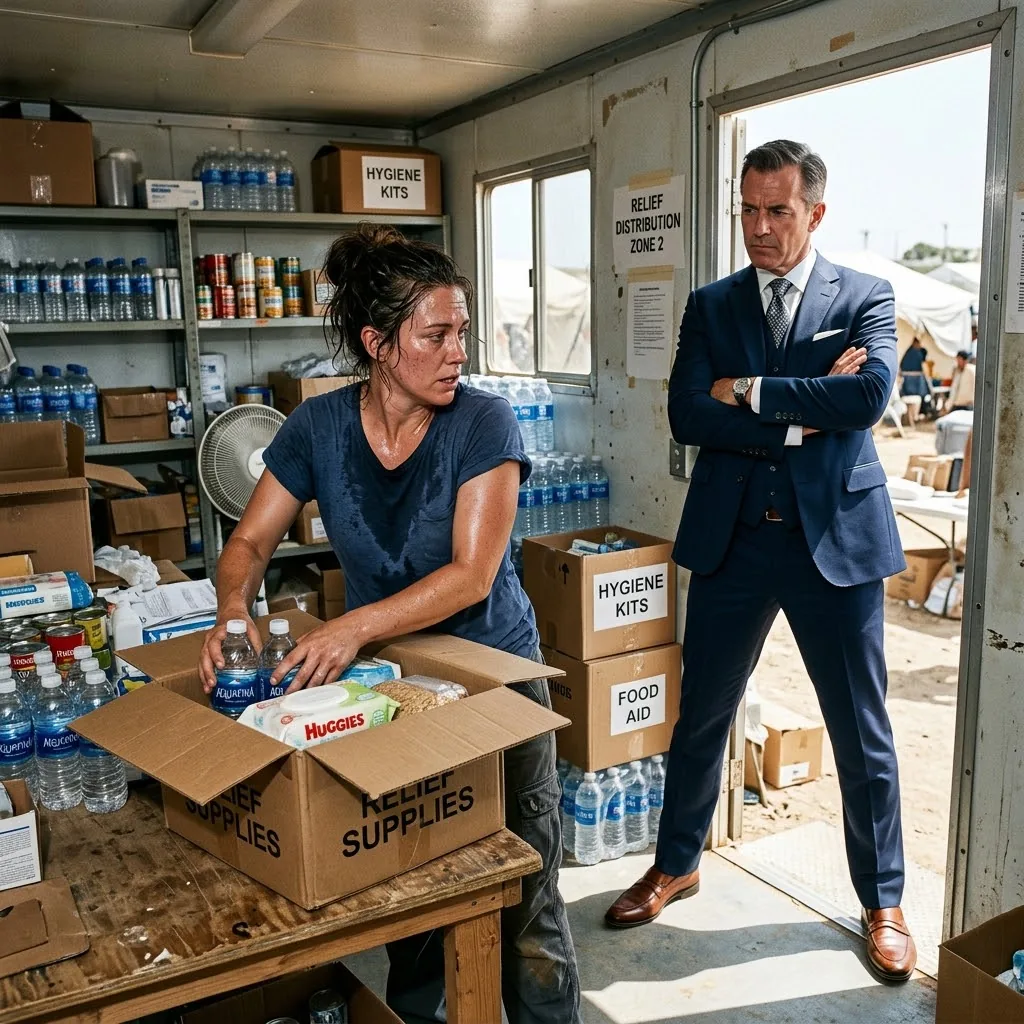
The sweat on my forehead drips onto the final insurance denial letter just before I fold the heavy, watermarked paper in half and shove it deep into the pocket of my damp jeans. I grab three copies of restricted young adult novels and wedge them flat against the bottom of a soggy cardboard disaster-relief box, burying them instantly under a heavy layer of generic bottled water and thick packs of baby wipes. The metal door of the temporary trailer library bangs open, rattling the cheap aluminum siding, and Arthur steps inside without knocking.
I wipe my gritty hands on my thighs and try to slow my breathing. Arthur stands in the doorway wearing a crisp, dry polo shirt and pressed khakis that look like they just came out of a vacuum-sealed bag. It has been six days since the hurricane pushed four feet of brackish river water into my living room, destroying nearly everything I own. The man who personally signed the denial letter currently burning a hole in my pocket is now casually inspecting my makeshift workspace. He is the lead adjuster for the region’s largest property insurance firm. He is also the school board president.
Arthur taps a silver clipboard against his thigh and steps fully into the stifling, un-air-conditioned room. He announces he is here to ensure our emergency supply kits meet the community standards of decency. He says the board cannot risk moral decay slipping into the homes of vulnerable families under the guise of mutual aid.
“The county needs these supplies by noon,” I tell him, keeping my voice entirely flat. “Families are sleeping on cots in the high school gymnasium.”
Arthur walks slowly down the narrow aisle of folding tables. The temporary library is just a retrofitted FEMA trailer, smelling sharply of wet cardboard, mold spores, and industrial bleach. He runs a single finger along the edge of a plastic crate, checking for dust in a room that just survived a category four storm. He says a natural disaster is no excuse to lower our standards. He reminds me the school board passed the restricted materials resolution for a strict reason, and that literature promoting defiance and alternative lifestyles is the absolute last thing traumatized children need right now.
I press my back against the folding table. The cardboard box with the water and the wipes sits right behind me, pressing into my lower spine. The banned novels are less than a quarter inch of cardboard away from his view. I do not mention the letter in my pocket. I do not mention that his firm deemed my flooded house an act of nature entirely excluded from my policy, leaving me bankrupt. I just watch him inch closer to the dispatch table.
He pauses at a stack of donated clothes, poking at a damp sweater with the tip of his expensive pen. He tells me he heard troubling rumors from parent groups that certain rogue librarians were using the relief drive to bypass the district ban. He says the community trusts him to verify that every box leaving this trailer contains only physical necessities, not ideological contraband. He expects my full cooperation, especially since the board was generous enough to keep me on the payroll after the main library building flooded.
“Just water, wipes, and canned goods in these,” I say. I slide half a step to the left, blocking the specific box currently holding three heavily challenged coming-of-age novels, two memoirs, and a stack of dystopian fiction wrapped in a black plastic garbage bag at the very bottom.
Arthur smiles. It is a thin, practiced expression that never reaches his eyes, the exact same smile he wore at the town hall meeting when he defunded the teen reading program. He steps up to the folding table and points his pen directly at the box behind me. He demands I step aside immediately so he can inventory the contents for the official record.
The heat inside the trailer is suffocating. My shirt clings stubbornly to my spine. The diesel generator outside hums a dull, vibrating rhythm that rattles the thin floorboards under my boots. I grip the edge of the plastic table. If he digs under the bottled water, he will find the books. If he finds the books, I lose my job on top of my house.
“I already inventoried and sealed that one,” I lie, my voice dropping an octave as I try to sound authoritative.
Arthur taps the silver clipboard against his thigh a second time. He notes that there is no tape on the cardboard flaps. He points out that the top of the box is visibly wide open.
I look down at the exposed plastic wrapper of the baby wipes. I failed to fold the cardboard flaps over in time when I heard his heavy footsteps on the metal ramp outside.
Arthur steps around me, completely invading my personal space. He smells strongly of heavy sandalwood aftershave, a synthetic scent that clashes violently with the odor of swamp mud blowing in through the screen door. He reaches his pale hand toward the cardboard box.
I shift my weight, bumping the table just hard enough to make the heavy plastic bottles of water rattle against each other. I tell him the water is extremely heavy and the bottom of the cardboard is structurally compromised from the humidity. I warn him the box might give out entirely if he moves things around.
He ignores my warning. He grabs the top flap and pulls it wide open. He stares down at the baby wipes and the generic gallons of distilled water. He reaches a hand inside.
My lungs completely freeze. I watch his pristine, manicured fingers slide past the plastic gallon jugs. He pushes the heavy water aside with a grunt of effort. He digs deeper into the center of the box. His fingertips brush the smooth black plastic of the garbage bag lining the very bottom.
The generator sputters loudly outside, choking on bad fuel. Arthur pauses, his arm buried almost elbow-deep in my carefully packed relief supplies. He narrows his eyes at the distinct, sharp crinkling sound of the hidden plastic bag shifting under his hand.
The sweat on my forehead drips onto the final insurance denial letter just before I fold the heavy, watermarked paper in half and shove it deep into the pocket of my damp jeans. I grab three copies of restricted young adult novels and wedge them flat against the bottom of a soggy cardboard disaster-relief box, burying them instantly under a heavy layer of generic bottled water and thick packs of baby wipes. The metal door of the temporary trailer library bangs open, rattling the cheap aluminum siding, and Arthur steps inside without knocking.
I wipe my gritty hands on my thighs and try to slow my breathing. Arthur stands in the doorway wearing a crisp, dry polo shirt and pressed khakis that look like they just came out of a vacuum-sealed bag. It has been six days since the hurricane pushed four feet of brackish river water into my living room, destroying nearly everything I own. The man who personally signed the denial letter currently burning a hole in my pocket is now casually inspecting my makeshift workspace. He is the lead adjuster for the region’s largest property insurance firm. He is also the school board president.
Arthur taps a silver clipboard against his thigh and steps fully into the stifling, un-air-conditioned room. He announces he is here to ensure our emergency supply kits meet the community standards of decency. He says the board cannot risk moral decay slipping into the homes of vulnerable families under the guise of mutual aid.
“The county needs these supplies by noon,” I tell him, keeping my voice entirely flat. “Families are sleeping on cots in the high school gymnasium.”
Arthur walks slowly down the narrow aisle of folding tables. The temporary library is just a retrofitted FEMA trailer, smelling sharply of wet cardboard, mold spores, and industrial bleach. He runs a single finger along the edge of a plastic crate, checking for dust in a room that just survived a category four storm. He says a natural disaster is no excuse to lower our standards. He reminds me the school board passed the restricted materials resolution for a strict reason, and that literature promoting defiance and alternative lifestyles is the absolute last thing traumatized children need right now.
I press my back against the folding table. The cardboard box with the water and the wipes sits right behind me, pressing into my lower spine. The banned novels are less than a quarter inch of cardboard away from his view. I do not mention the letter in my pocket. I do not mention that his firm deemed my flooded house an act of nature entirely excluded from my policy, leaving me bankrupt. I just watch him inch closer to the dispatch table.
He pauses at a stack of donated clothes, poking at a damp sweater with the tip of his expensive pen. He tells me he heard troubling rumors from parent groups that certain rogue librarians were using the relief drive to bypass the district ban. He says the community trusts him to verify that every box leaving this trailer contains only physical necessities, not ideological contraband. He expects my full cooperation, especially since the board was generous enough to keep me on the payroll after the main library building flooded.
“Just water, wipes, and canned goods in these,” I say. I slide half a step to the left, blocking the specific box currently holding three heavily challenged coming-of-age novels, two memoirs, and a stack of dystopian fiction wrapped in a black plastic garbage bag at the very bottom.
Arthur smiles. It is a thin, practiced expression that never reaches his eyes, the exact same smile he wore at the town hall meeting when he defunded the teen reading program. He steps up to the folding table and points his pen directly at the box behind me. He demands I step aside immediately so he can inventory the contents for the official record.
The heat inside the trailer is suffocating. My shirt clings stubbornly to my spine. The diesel generator outside hums a dull, vibrating rhythm that rattles the thin floorboards under my boots. I grip the edge of the plastic table. If he digs under the bottled water, he will find the books. If he finds the books, I lose my job on top of my house.
“I already inventoried and sealed that one,” I lie, my voice dropping an octave as I try to sound authoritative.
Arthur taps the silver clipboard against his thigh a second time. He notes that there is no tape on the cardboard flaps. He points out that the top of the box is visibly wide open.
I look down at the exposed plastic wrapper of the baby wipes. I failed to fold the cardboard flaps over in time when I heard his heavy footsteps on the metal ramp outside.
Arthur steps around me, completely invading my personal space. He smells strongly of heavy sandalwood aftershave, a synthetic scent that clashes violently with the odor of swamp mud blowing in through the screen door. He reaches his pale hand toward the cardboard box.
I shift my weight, bumping the table just hard enough to make the heavy plastic bottles of water rattle against each other. I tell him the water is extremely heavy and the bottom of the cardboard is structurally compromised from the humidity. I warn him the box might give out entirely if he moves things around.
He ignores my warning. He grabs the top flap and pulls it wide open. He stares down at the baby wipes and the generic gallons of distilled water. He reaches a hand inside.
My lungs completely freeze. I watch his pristine, manicured fingers slide past the plastic gallon jugs. He pushes the heavy water aside with a grunt of effort. He digs deeper into the center of the box. His fingertips brush the smooth black plastic of the garbage bag lining the very bottom.
The generator sputters loudly outside, choking on bad fuel. Arthur pauses, his arm buried almost elbow-deep in my carefully packed relief supplies. He narrows his eyes at the distinct, sharp crinkling sound of the hidden plastic bag shifting under his hand.