Story code: ST-001179
Part 3: Pending Structural Review
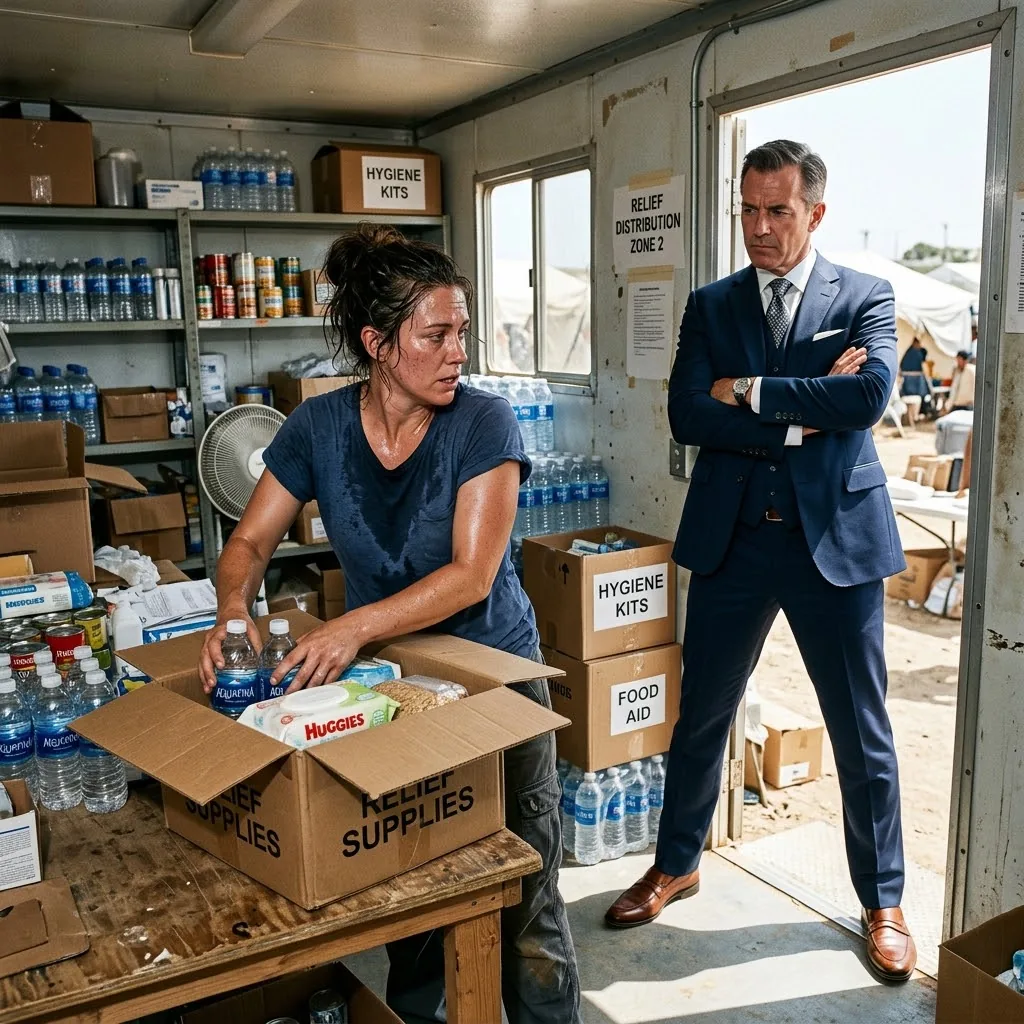
The metal frame of the doorway digs painfully into my shoulder blades as I plant my heavy work boots on the peeling linoleum. Arthur stops short, the heavy black contractor bag clutched tightly against his crisp, dry polo shirt. Through the six-inch gash he just sliced into the thick plastic, the bright blue spine of a banned memoir is barely visible in the dim, fluorescent light of the trailer.
“Move,” Arthur commands, his voice dropping its polite, bureaucratic veneer entirely.
Before I can answer, the National Guardsman on the ramp outside turns and whistles sharply. “Hustle up, kids!” he barks into the humid air. “We’re burning daylight!”
Heavy, dragging footsteps echo on the aluminum loading ramp. Three high schoolers appear behind the soldier, squeezing past him to get to the dispatch table. I recognize them immediately. Mateo, a junior who practically lived in the YA section of the library last semester, is wearing a damp, oversized t-shirt. Beside him is Sarah, dragging a red plastic hand truck, and a third girl wiping sweat from her forehead with a towel. They look hollowed out and utterly exhausted, wearing the exact same clothes they had on when the river crested. These are the displaced teens. The kids sleeping on cots in the high school gymnasium.
“Grab the sealed boxes,” the Guardsman orders the teenagers. “Leave whatever the suit is holding.”
Mateo freezes when he sees me blocking the door, then looks at Arthur, the school board president, awkwardly hugging a torn black garbage bag.
“Ms. Elena?” Mateo asks, wiping his forehead, his eyes darting between us. “You okay?”
Arthur adjusts his grip on the bag, squaring his shoulders to project absolute authority. “Your librarian is fine, young man. I am conducting an official district audit of these materials. Now step aside, Elena.”
I look at Arthur. I look at the gash in the plastic exposing the forbidden book. Then I look at my crumpled insurance denial letter, still sitting on the folding table right where I slammed it down.
*A structural failure of the roof does not negate the primary flood exclusion if the damage vector was the rising river.*
A strange, freezing calm washes over the suffocating heat in my chest. Bureaucracy is just a language. It is a weapon forged out of syllables, designed to paralyze the listener. Arthur just used it to drown me and steal my home. Now, I pick up the exact same weapon.
I don’t move from the doorframe. Instead, I raise my chin and project my voice, making absolutely sure it carries over the dull, choking roar of the diesel generator outside.
“Arthur, you cannot take that bag to your car,” I announce, using the firm, unyielding tone I usually reserve for breaking up fights in the library aisles. “That is unsalvageable, water-damaged refuse.”
Arthur blinks, his perfectly groomed eyebrows drawing together in genuine confusion. “What?”
“It is unsalvageable refuse,” I repeat loudly, pointing directly at the heavy black plastic clutched to his chest. “Pending structural review.”
The teenagers pause on the ramp, glancing between us. Sarah wrinkles her nose, staring hard at the garbage bag.
“This is confiscated district property,” Arthur hisses, taking a menacing half-step toward me. He keeps his voice barely above a whisper, desperate to keep the confrontation private.
I do not let him. “The policy language on disaster relief protocol is abundantly clear, Arthur,” I say, my voice ringing off the thin aluminum walls. “You know this. You wrote the community guidelines yourself. The primary damage vector for that specific pile of refuse was the rising river.”
Arthur stares at me, his pale blue eyes widening a fraction of an inch as he clearly recognizes his own exact phrasing being used against him. His victorious smirk completely vanishes.
“I literally just cut this open,” Arthur whispers through clenched teeth, leaning in so close I can smell the sharp sandalwood of his expensive aftershave over the swamp mud. “I saw the spine. We both know exactly what this is.”
“I know exactly what it is,” I say to him, my expression deadpan. Then I look past him to the displaced teenagers. “Guys, please stand back. Mr. Arthur just used his pocket knife to deliberately breach the primary containment barrier on a ground-surge contaminated package. He has exposed the immediate area to black-water pathogens.”
Mateo instinctively takes a large step backward, pulling the red hand truck with him. He pulls the collar of his damp t-shirt up over his nose. “Whoa. Is that from the flood zone?”
“Category three water,” I tell Mateo, keeping my eyes locked on Arthur’s furious, trapped face. “Highly toxic. It is a total loss. That is exactly why it was sealed tightly inside heavy-duty contractor plastic at the absolute bottom of the box.”
“Elena, stop this ridiculous nonsense immediately,” Arthur demands, his face flushing a deep, mottled crimson. “This is not refuse. These are-”
He chokes on the word. He catches himself right on the ragged edge of the cliff.
He looks sideways at Mateo, Sarah, and the other girl. They are staring at him with wide, judging eyes. If Arthur says the word *books*, if he pulls that bright blue LGBTQ+ memoir out of the slashed plastic to prove I am lying, he will be exposing these exact vulnerable teenagers to the very “ideological poison” he swore to eradicate. He will be caught distributing the banned materials himself.
He will also look like an absolute lunatic. To the teenagers, to the impatient National Guardsman checking his waterproof watch, Arthur is just a wealthy man in clean khakis who aggressively dug through baby wipes to violently hoard a dripping bag of toxic swamp trash.
“These are what, sir?” the Guardsman asks, stepping up right behind the teenagers. “I need an answer, and I need this doorway clear right now. The secondary bridge is closing.”
Arthur opens his mouth, but no sound comes out. His manicured fingers twitch frantically against the thick black plastic.
“A structural failure of the cardboard box,” I say, driving the final nail into the coffin, quoting his insurance lecture back to him word for agonizing word, “does not negate the primary contamination exclusion. You cannot put that refuse in your personal vehicle, Arthur. It violates section four of the environmental guidelines.”
Arthur looks down at the heavy burden pressed against his chest. His crisp, dry polo shirt is now heavily smeared with the dirt, sweat, and condensation from the exterior of the plastic bag.
“Put the refuse down, Arthur,” I say softly, the heavy silence of the trailer hanging on my every word. “Before you contaminate the shelter.”