Story code: ST-001191
Part 1: The Drone’s Ledger
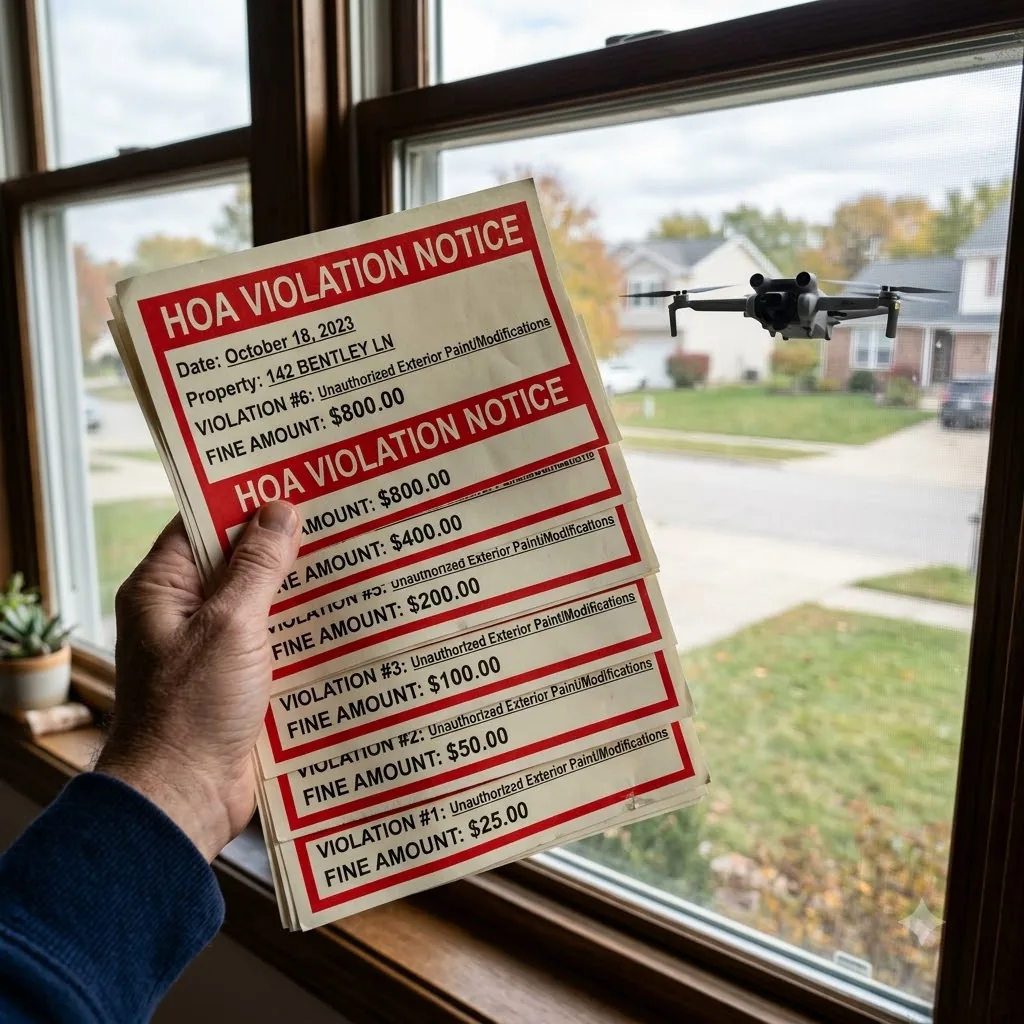
Marcus spread the seven crisp, identical envelopes across his kitchen island. Each envelope bore the embossed crest of the Oakridge Estates Homeowners Association in the upper left corner. A neat little window on the front of each displayed his name and address, printed in the exact same sterile sans-serif font. He opened the first one, slicing the top with a butter knife. The header read “Notice of Violation: Turf Neglect.” The fine was fifty dollars. The black-and-white timestamped photo at the bottom showed a top-down aerial view of his front yard, clearly taken from a drone.
He opened the second envelope. The date was one day later. The fine was one hundred dollars.
Marcus ripped into the third envelope with his thumb, ignoring the paper cut it gave him. Two hundred dollars. The mathematical progression was absolute and terrifying. The drone had flown over his property every single day at precisely two in the afternoon, logging the exact same patch of ground, and the automated billing system had doubled the penalty each time. Envelope four demanded four hundred dollars. Envelope five demanded eight hundred. By the time he tore open the seventh envelope, the daily fine had reached three thousand two hundred dollars.
The total balance sitting on his granite countertop was over six thousand dollars. A bold red banner at the bottom of the seventh notice stated that any unpaid balance over five thousand dollars triggered an automatic property lien and initiated foreclosure proceedings.
He stared at the blurry, pixelated drone photographs. The automated image recognition software had circled his front yard in bright digital red, labeling the space as “Dead Weeds/Unapproved Brown Space.” Marcus looked out his front window at the exact area the drone had photographed. He looked at the carefully placed rocks, the precise grading of the soil, and the green shoots emerging from the center of the geometric layout he had spent his entire spring building. The machine above only saw a lack of uniform green grass.
Marcus sat down at his dining table and opened his laptop. He navigated to the Oakridge Estates resident portal, a clunky website that usually took three tries to accept a password. He clicked on the “Dispute Citation” tab. A pop-up warned him that all appeals required photographic evidence and a written explanation.
He typed a clear, factual response. He explained the compounding error. He detailed the exact nature of the landscaping in the front yard, attaching three high-resolution photos he had taken yesterday from the ground level. The photos showed the blooming colors and the intentional layout, proving the space was not neglected dirt. He clicked the green submit button.
A loading wheel spun in the center of the screen for less than half a second.
A red banner replaced the loading wheel. “Appeal Denied. Case resolved by Automated Enforcement System.”
Marcus blinked at the screen. He clicked the back arrow, thinking it was a server error. The dispute form was locked. A new message appeared in his portal inbox. He opened it. The email was a template, stating that the visual data submitted did not meet the algorithm’s threshold for approved turf coloration. The system had processed his written explanation, evaluated his three attached photographs, and rejected his appeal in less time than it took him to blink. There was no phone number to call. There was no human name attached to the signature line. The bottom of the email simply reiterated the threat of the property lien.
He picked up the stack of notices. The paper felt heavy, loaded with the legal authority to take his home over a mechanical misunderstanding. The HOA board had voted to implement the drone surveillance program three months ago to cut costs on neighborhood patrols. They had promised the community it would only target extreme, blatant violations. Instead, it was functioning as a blind, exponential debt generator.
Marcus checked the clock on the wall. It was six-thirty in the evening. The Oakridge Estates HOA board met on the second Tuesday of every month at seven o’clock in the community clubhouse. That was tonight.
He grabbed a thick manila folder from his desk. He shoved all seven violation notices inside. He printed the instant rejection email from the portal and added it to the stack. He printed the ledger showing the impossible, doubling math that was about to cost him his house. He zipped his jacket and walked out the front door, passing the carefully arranged landscaping that had triggered the machine’s wrath.
The clubhouse parking lot was nearly full. Marcus walked through the double glass doors and down the hallway toward the main meeting room. The muffled sound of a microphone echoed from inside. He pushed the heavy wooden doors open.
At the front of the room, Board President Richard Vance sat behind a folding table, flanked by three other board members. Richard was leaning into a microphone, reading a mundane budget report about pool maintenance chemicals. Several residents sat in rows of folding chairs, half-asleep.
Marcus walked straight down the center aisle. He did not wait for the public comment period. He reached the folding table and slammed his heavy manila folder down directly over Richard’s budget report. The loud crack of paper hitting plastic echoed through the silent room, causing the board president to jump back in his chair.
Marcus spread the seven crisp, identical envelopes across his kitchen island. Each envelope bore the embossed crest of the Oakridge Estates Homeowners Association in the upper left corner. A neat little window on the front of each displayed his name and address, printed in the exact same sterile sans-serif font. He opened the first one, slicing the top with a butter knife. The header read “Notice of Violation: Turf Neglect.” The fine was fifty dollars. The black-and-white timestamped photo at the bottom showed a top-down aerial view of his front yard, clearly taken from a drone.
He opened the second envelope. The date was one day later. The fine was one hundred dollars.
Marcus ripped into the third envelope with his thumb, ignoring the paper cut it gave him. Two hundred dollars. The mathematical progression was absolute and terrifying. The drone had flown over his property every single day at precisely two in the afternoon, logging the exact same patch of ground, and the automated billing system had doubled the penalty each time. Envelope four demanded four hundred dollars. Envelope five demanded eight hundred. By the time he tore open the seventh envelope, the daily fine had reached three thousand two hundred dollars.
The total balance sitting on his granite countertop was over six thousand dollars. A bold red banner at the bottom of the seventh notice stated that any unpaid balance over five thousand dollars triggered an automatic property lien and initiated foreclosure proceedings.
He stared at the blurry, pixelated drone photographs. The automated image recognition software had circled his front yard in bright digital red, labeling the space as “Dead Weeds/Unapproved Brown Space.” Marcus looked out his front window at the exact area the drone had photographed. He looked at the carefully placed rocks, the precise grading of the soil, and the green shoots emerging from the center of the geometric layout he had spent his entire spring building. The machine above only saw a lack of uniform green grass.
Marcus sat down at his dining table and opened his laptop. He navigated to the Oakridge Estates resident portal, a clunky website that usually took three tries to accept a password. He clicked on the “Dispute Citation” tab. A pop-up warned him that all appeals required photographic evidence and a written explanation.
He typed a clear, factual response. He explained the compounding error. He detailed the exact nature of the landscaping in the front yard, attaching three high-resolution photos he had taken yesterday from the ground level. The photos showed the blooming colors and the intentional layout, proving the space was not neglected dirt. He clicked the green submit button.
A loading wheel spun in the center of the screen for less than half a second.
A red banner replaced the loading wheel. “Appeal Denied. Case resolved by Automated Enforcement System.”
Marcus blinked at the screen. He clicked the back arrow, thinking it was a server error. The dispute form was locked. A new message appeared in his portal inbox. He opened it. The email was a template, stating that the visual data submitted did not meet the algorithm’s threshold for approved turf coloration. The system had processed his written explanation, evaluated his three attached photographs, and rejected his appeal in less time than it took him to blink. There was no phone number to call. There was no human name attached to the signature line. The bottom of the email simply reiterated the threat of the property lien.
He picked up the stack of notices. The paper felt heavy, loaded with the legal authority to take his home over a mechanical misunderstanding. The HOA board had voted to implement the drone surveillance program three months ago to cut costs on neighborhood patrols. They had promised the community it would only target extreme, blatant violations. Instead, it was functioning as a blind, exponential debt generator.
Marcus checked the clock on the wall. It was six-thirty in the evening. The Oakridge Estates HOA board met on the second Tuesday of every month at seven o’clock in the community clubhouse. That was tonight.
He grabbed a thick manila folder from his desk. He shoved all seven violation notices inside. He printed the instant rejection email from the portal and added it to the stack. He printed the ledger showing the impossible, doubling math that was about to cost him his house. He zipped his jacket and walked out the front door, passing the carefully arranged landscaping that had triggered the machine’s wrath.
The clubhouse parking lot was nearly full. Marcus walked through the double glass doors and down the hallway toward the main meeting room. The muffled sound of a microphone echoed from inside. He pushed the heavy wooden doors open.
At the front of the room, Board President Richard Vance sat behind a folding table, flanked by three other board members. Richard was leaning into a microphone, reading a mundane budget report about pool maintenance chemicals. Several residents sat in rows of folding chairs, half-asleep.
Marcus walked straight down the center aisle. He did not wait for the public comment period. He reached the folding table and slammed his heavy manila folder down directly over Richard’s budget report. The loud crack of paper hitting plastic echoed through the silent room, causing the board president to jump back in his chair.