Story code: ST-001208
Part 1: The Proxy
Marcus listened to the endless, hollow ringing on the line. The USDA loan officer’s phone finally clicked over to a generic automated voicemail, the fourth time since dawn. Marcus slammed his thumb against the red end-call button. The screen of his phone reflected the worn, stained wood of his kitchen table, a surface his great-grandfather had planed and assembled by hand over a century ago. Today was the foreclosure auction for this very kitchen, the barn outside, and the four hundred acres of prime soil surrounding them. The deadline had been forced into reality by thirty-six months of systemic federal loan delays, endless red tape, and lost paperwork that had steadily bled the farm’s operating budget dry. He shoved the phone into his canvas jacket pocket and grabbed his truck keys. The federal safety net had officially snapped, leaving only the desperate backup plan he had engineered himself.
The drive into town took twenty minutes of winding through fields that had borne his family’s name for four generations. The heavy frost on the dormant winter wheat mirrored the cold dread settling deep in Marcus’s chest. The farm was dying on paper, but he and Silas held the cure. Their new agricultural technology startup had finally secured its first major round of seed funding exactly forty-eight hours ago. The cash was sitting in a joint holding account. Silas was designated as the proxy. Silas possessed the certified bank drafts, the legal authority, and the explicit directive to bid on the property, effectively buying Marcus’s family land back from the bank using their joint venture’s freshly acquired capital. It was a backdoor rescue, perfectly legal, and entirely dependent on Silas arriving at the courthouse steps by nine in the morning.
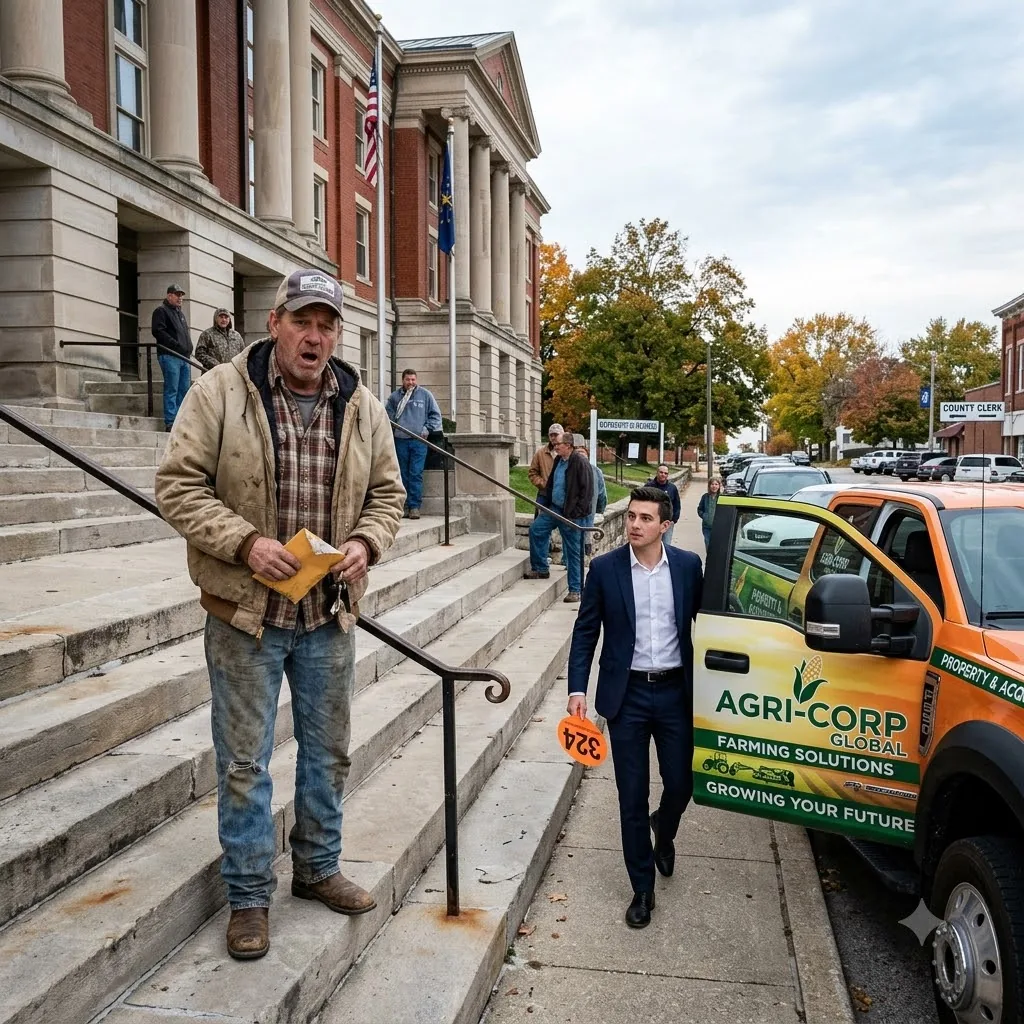
Marcus parked his rusted Ford down the block from the limestone courthouse. The morning air was sharp, biting at his scarred knuckles as he jogged up the broad, salt-stained concrete steps. A cluster of local investors, real estate flippers, and bank representatives milled around the heavy oak doors, clutching clipboards and steaming thermos cups of coffee. Marcus checked his phone again. No missed calls. No text messages. The digital clock on the cracked screen read eight-forty-five. Silas was cutting it terrifyingly close. Marcus paced the length of the portico, his heavy work boots echoing loudly against the stone pillars. He watched the street, scanning the line of sedans and local pickup trucks for Silas’s dented silver Honda. The predictive soil algorithm they had spent two brutal years coding in Marcus’s unheated barn was going to revolutionize crop yield logistics across the entire Midwest, but right now, all Marcus cared about was the emergency liquidity it had generated.
Eight-fifty-five. The county clerk, a stern woman wrapped in a thick wool scarf, stepped out of the double doors to set up the folding table that served as the auction block. She carried a stack of thick manila folders and a clear plastic bin full of numbered bidding paddles. Marcus moved closer to the table, positioning himself strategically where Silas would spot him immediately upon running up the steps. His stomach churned with a toxic, acidic mix of black coffee and sheer adrenaline. The century farm was the very first lot listed on the morning docket. The bank representatives were already signing the registry, their expensive pens scratching loudly in the quiet morning air. Marcus tapped his boots in a steady, nervous rhythm, willing the silver Honda to turn the corner at the traffic light.
A heavy diesel engine rumbled down Main Street, disrupting the quiet, calculated murmurs of the gathered crowd. A massive, late-model pickup truck pulled directly into the restricted loading zone in front of the courthouse steps. It was freshly washed, gleaming black, and wrapped in the bright, aggressive green logo of OmniAgro, the largest and most ruthless corporate agribusiness conglomerate in the tri-state area. Marcus frowned, stepping to the side as the heavy air brakes hissed loudly. OmniAgro had been aggressively buying up distressed properties all year, turning inherited family plots into sterilized, automated corporate mega-farms. Their sudden presence here meant serious competition. It meant Silas would have to bid aggressively with their seed money the moment he arrived.
The driver-side door of the wrapped corporate truck swung open. A man stepped out, adjusting the collar of a crisp, heavy wool overcoat that cost more than a combine harvester repair. Marcus froze. The man did not look like a corporate drone. The man was Silas. Silas shut the heavy truck door with a solid, expensive thud. He adjusted a leather portfolio under his arm and began climbing the courthouse steps with a brisk, confident stride. Marcus exhaled a hard, confused breath, stepping forward to intercept his business partner, assuming Silas had hitched a ride or rented the vehicle in some bizarre, unexplained last-minute emergency. Marcus raised a hand, stepping directly into Silas’s path to pull him aside before the clerk began reading the docket.
Silas did not break his stride. He did not extend a hand, nor did he offer a frantic explanation for his delay or the corporate truck. Silas’s eyes slid right past Marcus, focusing entirely on the clerk’s folding table, his expression completely blank and devoid of recognition. He brushed past Marcus’s shoulder, the rough wool of his expensive new coat scraping roughly against Marcus’s worn canvas jacket. A faint scent of new, expensive cologne lingered in his wake. Marcus turned, stunned into absolute silence, watching as Silas walked straight up to the county clerk. Silas leaned forward, murmured a single, quiet phrase to the woman, and smoothly accepted a laminated VIP bidding paddle stamped boldly with the green OmniAgro insignia.
Marcus listened to the endless, hollow ringing on the line. The USDA loan officer’s phone finally clicked over to a generic automated voicemail, the fourth time since dawn. Marcus slammed his thumb against the red end-call button. The screen of his phone reflected the worn, stained wood of his kitchen table, a surface his great-grandfather had planed and assembled by hand over a century ago. Today was the foreclosure auction for this very kitchen, the barn outside, and the four hundred acres of prime soil surrounding them. The deadline had been forced into reality by thirty-six months of systemic federal loan delays, endless red tape, and lost paperwork that had steadily bled the farm’s operating budget dry. He shoved the phone into his canvas jacket pocket and grabbed his truck keys. The federal safety net had officially snapped, leaving only the desperate backup plan he had engineered himself.
The drive into town took twenty minutes of winding through fields that had borne his family’s name for four generations. The heavy frost on the dormant winter wheat mirrored the cold dread settling deep in Marcus’s chest. The farm was dying on paper, but he and Silas held the cure. Their new agricultural technology startup had finally secured its first major round of seed funding exactly forty-eight hours ago. The cash was sitting in a joint holding account. Silas was designated as the proxy. Silas possessed the certified bank drafts, the legal authority, and the explicit directive to bid on the property, effectively buying Marcus’s family land back from the bank using their joint venture’s freshly acquired capital. It was a backdoor rescue, perfectly legal, and entirely dependent on Silas arriving at the courthouse steps by nine in the morning.
Marcus parked his rusted Ford down the block from the limestone courthouse. The morning air was sharp, biting at his scarred knuckles as he jogged up the broad, salt-stained concrete steps. A cluster of local investors, real estate flippers, and bank representatives milled around the heavy oak doors, clutching clipboards and steaming thermos cups of coffee. Marcus checked his phone again. No missed calls. No text messages. The digital clock on the cracked screen read eight-forty-five. Silas was cutting it terrifyingly close. Marcus paced the length of the portico, his heavy work boots echoing loudly against the stone pillars. He watched the street, scanning the line of sedans and local pickup trucks for Silas’s dented silver Honda. The predictive soil algorithm they had spent two brutal years coding in Marcus’s unheated barn was going to revolutionize crop yield logistics across the entire Midwest, but right now, all Marcus cared about was the emergency liquidity it had generated.
Eight-fifty-five. The county clerk, a stern woman wrapped in a thick wool scarf, stepped out of the double doors to set up the folding table that served as the auction block. She carried a stack of thick manila folders and a clear plastic bin full of numbered bidding paddles. Marcus moved closer to the table, positioning himself strategically where Silas would spot him immediately upon running up the steps. His stomach churned with a toxic, acidic mix of black coffee and sheer adrenaline. The century farm was the very first lot listed on the morning docket. The bank representatives were already signing the registry, their expensive pens scratching loudly in the quiet morning air. Marcus tapped his boots in a steady, nervous rhythm, willing the silver Honda to turn the corner at the traffic light.
A heavy diesel engine rumbled down Main Street, disrupting the quiet, calculated murmurs of the gathered crowd. A massive, late-model pickup truck pulled directly into the restricted loading zone in front of the courthouse steps. It was freshly washed, gleaming black, and wrapped in the bright, aggressive green logo of OmniAgro, the largest and most ruthless corporate agribusiness conglomerate in the tri-state area. Marcus frowned, stepping to the side as the heavy air brakes hissed loudly. OmniAgro had been aggressively buying up distressed properties all year, turning inherited family plots into sterilized, automated corporate mega-farms. Their sudden presence here meant serious competition. It meant Silas would have to bid aggressively with their seed money the moment he arrived.
The driver-side door of the wrapped corporate truck swung open. A man stepped out, adjusting the collar of a crisp, heavy wool overcoat that cost more than a combine harvester repair. Marcus froze. The man did not look like a corporate drone. The man was Silas. Silas shut the heavy truck door with a solid, expensive thud. He adjusted a leather portfolio under his arm and began climbing the courthouse steps with a brisk, confident stride. Marcus exhaled a hard, confused breath, stepping forward to intercept his business partner, assuming Silas had hitched a ride or rented the vehicle in some bizarre, unexplained last-minute emergency. Marcus raised a hand, stepping directly into Silas’s path to pull him aside before the clerk began reading the docket.
Silas did not break his stride. He did not extend a hand, nor did he offer a frantic explanation for his delay or the corporate truck. Silas’s eyes slid right past Marcus, focusing entirely on the clerk’s folding table, his expression completely blank and devoid of recognition. He brushed past Marcus’s shoulder, the rough wool of his expensive new coat scraping roughly against Marcus’s worn canvas jacket. A faint scent of new, expensive cologne lingered in his wake. Marcus turned, stunned into absolute silence, watching as Silas walked straight up to the county clerk. Silas leaned forward, murmured a single, quiet phrase to the woman, and smoothly accepted a laminated VIP bidding paddle stamped boldly with the green OmniAgro insignia.