Story code: ST-001281
Part 1: The Safe Space Trap
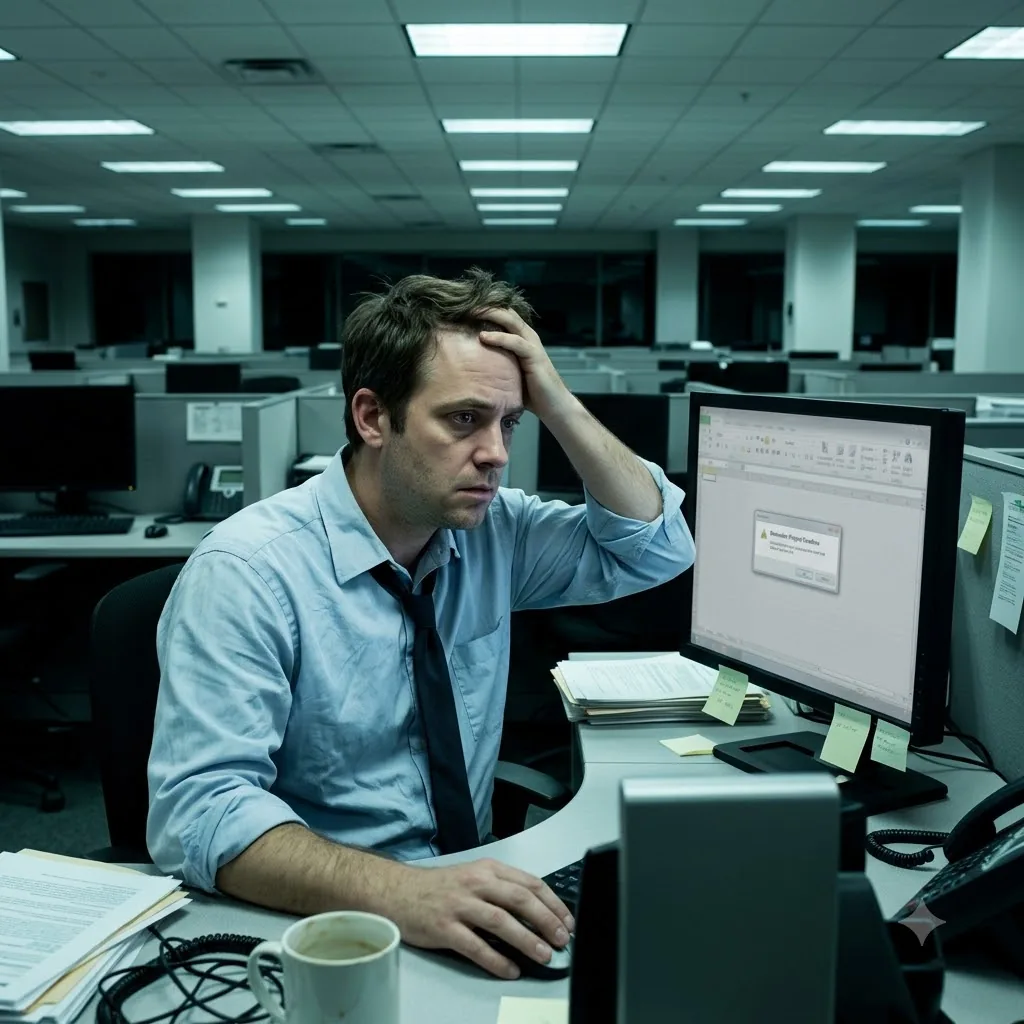
The SQL console returned a fatal syntax error I had never seen in my four years on the backend engineering team. Error code 1044: Access denied for user ‘marcus.t’@’localhost’ to database ‘prod_ops’ (Read-Only). I mashed the backspace key, retyped the standard status update command, and slammed the enter key. The same red text flashed on the screen. My heart did a slow, heavy roll against my ribs. I clicked over to the cloud infrastructure dashboard to check my permission scopes. The little green administrator shield next to my avatar was gone. In its place sat a hollow, gray circle indicating a basic, restricted viewer tier.
I opened my communications client to message the IT helpdesk, hoping it was just a botched server migration or a temporary outage. Before I could even type a greeting, a calendar notification pulsed at the top right of my secondary monitor. It was a new, mandatory invitation. Alignment Sync – 4:00 PM. Organizer: Sarah Jenkins, Human Resources. There was no agenda attached to the event. The guest list was hidden.
I pulled my hands away from the keyboard and wiped my sweating palms on my denim jeans. The open-plan office around me was buzzing with the usual Tuesday afternoon noise. Sales reps were laughing on their headsets, and the expensive espresso machine hissed loudly in the breakroom. No one noticed the floor dropping out from under my life. The chill started at the base of my neck and rushed all the way down to my fingertips. I glanced at the digital clock on my taskbar. It had been exactly forty-eight hours since my mandatory quarterly wellness meeting.
Last month, the executive team had rolled out a massive mental health initiative. They required every employee to complete a deep-dive diagnostic on a new corporate platform called MindfulSpace. They promised us absolute anonymity. They brought in outside consultants who swore during three separate all-hands presentations that the diagnostic data was heavily encrypted, tokenized, and entirely decoupled from our employee identification numbers. The phrase ‘safe space’ was printed in bold, soothing green font on every onboarding document. They told us the company simply wanted to measure aggregate burnout levels to better allocate resources and provide private, third-party counseling to those in need.
I had been pulling eighty-hour weeks for six straight months to keep our legacy servers from collapsing under the weight of the new product launch. I was completely frayed, running on empty, and starting to drop data packets in the staging environment. I was misplacing decimal points in dummy financial reports and forgetting to close secure server connections. When the MindfulSpace assessment prompted me with a sliding scale about stress levels, cognitive degradation, and focus, I answered truthfully. I checked the boxes indicating severe, debilitating burnout. I even typed a rambling paragraph in the final free-form text box about my absolute inability to focus on critical data migrations. I confessed my creeping dread about causing a catastrophic system failure if I did not get a leave of absence. I treated the form like a private medical intake because the application explicitly guaranteed absolute medical privacy.
They lied. My database access was crippled. An HR alignment meeting was sitting on my calendar for the end of the day. They were moving at lightning speed to build a paper trail to terminate me for cause. They were going to cite gross incompetence and active risk to company infrastructure, all handed to them on a silver platter by my own exhausted, naive confession. They would not have to pay out my unvested stock options or give me severance if they framed it as a critical security intervention.
I had to scrub the data. I needed to destroy that assessment immediately. If I could get into my MindfulSpace dashboard and delete my account entirely, or at least overwrite the free-form text box with generic corporate buzzwords about loving the fast-paced culture, I could claim the database restriction was an automated glitch. I could walk into that four o’clock HR meeting, smile, and play entirely dumb. I could demand they show me proof of any performance issues.
I opened a new incognito browser window and typed in the URL for the corporate wellness portal. My fingers were shaking so badly I misspelled the domain twice. I finally hit the correct landing page. The screen was filled with the familiar, calming pastel gradients and high-resolution images of people doing yoga on mountain tops. I clicked the login button and entered my corporate single sign-on credentials.
The two-factor authentication pinged my mobile phone. I tapped the green approve button.
The browser redirected to my personal dashboard. The page began to load my previous assessments, showing a progress bar at the top. I dragged my mouse up toward the settings gear icon in the top right corner. I was mere inches away from the delete account button.
The screen froze. The pastel gradients abruptly vanished, replaced by a solid, flat gray background. I clicked the left mouse button frantically. Nothing happened. I tried to drag the cursor down to refresh the page. The little white arrow was completely gone. The cooling fans inside my computer tower suddenly roared to maximum speed, sounding like a jet engine preparing for takeoff. The gray screen locked my entire workstation, ignoring every desperate keystroke, while a tiny, spinning red loading circle appeared right in the dead center of my monitor.
The SQL console returned a fatal syntax error I had never seen in my four years on the backend engineering team. Error code 1044: Access denied for user ‘marcus.t’@’localhost’ to database ‘prod_ops’ (Read-Only). I mashed the backspace key, retyped the standard status update command, and slammed the enter key. The same red text flashed on the screen. My heart did a slow, heavy roll against my ribs. I clicked over to the cloud infrastructure dashboard to check my permission scopes. The little green administrator shield next to my avatar was gone. In its place sat a hollow, gray circle indicating a basic, restricted viewer tier.
I opened my communications client to message the IT helpdesk, hoping it was just a botched server migration or a temporary outage. Before I could even type a greeting, a calendar notification pulsed at the top right of my secondary monitor. It was a new, mandatory invitation. Alignment Sync – 4:00 PM. Organizer: Sarah Jenkins, Human Resources. There was no agenda attached to the event. The guest list was hidden.
I pulled my hands away from the keyboard and wiped my sweating palms on my denim jeans. The open-plan office around me was buzzing with the usual Tuesday afternoon noise. Sales reps were laughing on their headsets, and the expensive espresso machine hissed loudly in the breakroom. No one noticed the floor dropping out from under my life. The chill started at the base of my neck and rushed all the way down to my fingertips. I glanced at the digital clock on my taskbar. It had been exactly forty-eight hours since my mandatory quarterly wellness meeting.
Last month, the executive team had rolled out a massive mental health initiative. They required every employee to complete a deep-dive diagnostic on a new corporate platform called MindfulSpace. They promised us absolute anonymity. They brought in outside consultants who swore during three separate all-hands presentations that the diagnostic data was heavily encrypted, tokenized, and entirely decoupled from our employee identification numbers. The phrase ‘safe space’ was printed in bold, soothing green font on every onboarding document. They told us the company simply wanted to measure aggregate burnout levels to better allocate resources and provide private, third-party counseling to those in need.
I had been pulling eighty-hour weeks for six straight months to keep our legacy servers from collapsing under the weight of the new product launch. I was completely frayed, running on empty, and starting to drop data packets in the staging environment. I was misplacing decimal points in dummy financial reports and forgetting to close secure server connections. When the MindfulSpace assessment prompted me with a sliding scale about stress levels, cognitive degradation, and focus, I answered truthfully. I checked the boxes indicating severe, debilitating burnout. I even typed a rambling paragraph in the final free-form text box about my absolute inability to focus on critical data migrations. I confessed my creeping dread about causing a catastrophic system failure if I did not get a leave of absence. I treated the form like a private medical intake because the application explicitly guaranteed absolute medical privacy.
They lied. My database access was crippled. An HR alignment meeting was sitting on my calendar for the end of the day. They were moving at lightning speed to build a paper trail to terminate me for cause. They were going to cite gross incompetence and active risk to company infrastructure, all handed to them on a silver platter by my own exhausted, naive confession. They would not have to pay out my unvested stock options or give me severance if they framed it as a critical security intervention.
I had to scrub the data. I needed to destroy that assessment immediately. If I could get into my MindfulSpace dashboard and delete my account entirely, or at least overwrite the free-form text box with generic corporate buzzwords about loving the fast-paced culture, I could claim the database restriction was an automated glitch. I could walk into that four o’clock HR meeting, smile, and play entirely dumb. I could demand they show me proof of any performance issues.
I opened a new incognito browser window and typed in the URL for the corporate wellness portal. My fingers were shaking so badly I misspelled the domain twice. I finally hit the correct landing page. The screen was filled with the familiar, calming pastel gradients and high-resolution images of people doing yoga on mountain tops. I clicked the login button and entered my corporate single sign-on credentials.
The two-factor authentication pinged my mobile phone. I tapped the green approve button.
The browser redirected to my personal dashboard. The page began to load my previous assessments, showing a progress bar at the top. I dragged my mouse up toward the settings gear icon in the top right corner. I was mere inches away from the delete account button.
The screen froze. The pastel gradients abruptly vanished, replaced by a solid, flat gray background. I clicked the left mouse button frantically. Nothing happened. I tried to drag the cursor down to refresh the page. The little white arrow was completely gone. The cooling fans inside my computer tower suddenly roared to maximum speed, sounding like a jet engine preparing for takeoff. The gray screen locked my entire workstation, ignoring every desperate keystroke, while a tiny, spinning red loading circle appeared right in the dead center of my monitor.