Story code: ST-001281
Part 2: The Quarantine Protocol
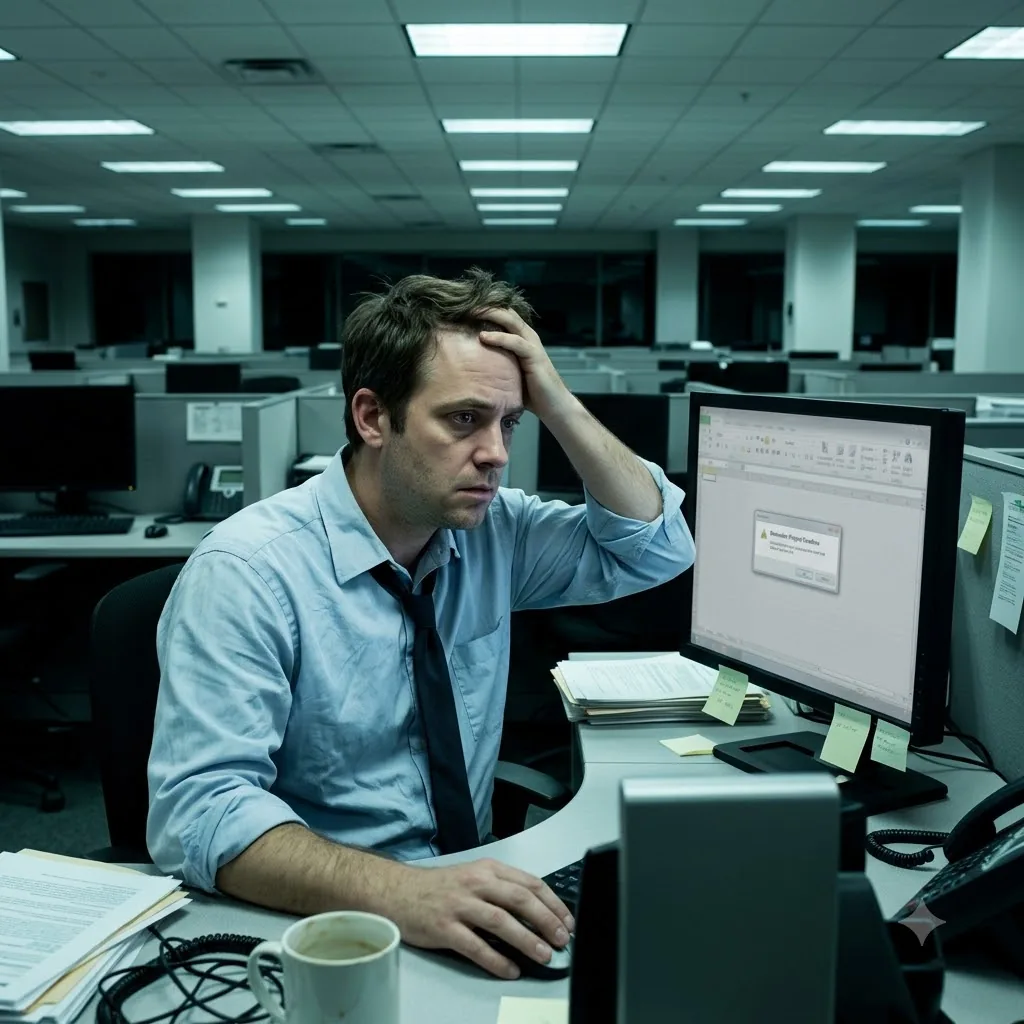
The tiny red circle spun on my monitor, mocking my paralysis. I slammed the escape key. I pounded Ctrl-Alt-Delete. I hammered the Windows key in a frantic, disjointed rhythm, praying to force a system interrupt. Nothing. The fans in my tower whined higher, a physical manifestation of the invisible scripts hijacking my hardware. I reached under the desk and jammed my thumb against the machine’s physical power button, holding it down with white-knuckled pressure. If I couldn’t delete my MindfulSpace confession, I could at least stop whatever surveillance protocol was scraping my active session.
The tower powered down with a heavy click. The fans spun down into silence. I took a ragged breath, waiting ten seconds before pressing the button again. The BIOS logo flashed, followed by the standard boot sequence. But the familiar Windows login screen never materialized. Instead, the monitor snapped to a harsh, blinding blue background with stark white text.
WORKSTATION QUARANTINED. Error Code: SEC-909. This device has been locked by Information Security due to a policy violation. Please contact your department head.
A cold stone dropped into my stomach. They hadn’t just caught me trying to access the wellness app; the lock had been initiated before I even clicked the login button. The gray screen was a remote execution command. HR and SecOps were working in tandem.
I shoved my hand into my pocket and pulled out my personal smartphone. We were required to install a Mobile Device Management profile to access company email and Slack on our own hardware. I unlocked the screen just in time to watch the corporate mail icon turn gray and vanish. A second later, the Slack icon disappeared. The VPN authenticator app dissolved into an empty space on my home screen. They were executing a remote wipe of my secure work container. I was being digitally erased in real-time.
My mind violently snapped back to the exact words I had typed into that MindfulSpace free-form box forty-eight hours ago. It hadn’t just been a generic complaint about being tired. I had been stupidly, dangerously specific. I remembered my exact phrasing: “I am so exhausted I am one misplaced keystroke away from dropping the entire production database. I can’t tell if the Apollo migration scripts are safe anymore because I haven’t slept a full night since November. I am terrified I’m going to cause a critical system failure.”
I had treated the wellness app like a therapist’s couch, believing the absolute guarantee of medical privacy. But to a corporate liability algorithm, I hadn’t submitted a mental health assessment. I had submitted a written confession of being an active, critical insider threat. I had handed them documentation of gross negligence on the Apollo migration, our flagship enterprise rollout. If they fired me for cause, specifically citing a security risk that I admitted to, my unvested stock options-four years of eighty-hour weeks, my entire financial safety net-would instantly evaporate.
I stood up. The open-plan office was still humming with oblivious energy. A group of junior developers were tossing a foam football across the aisle. I walked stiffly toward the IT helpdesk in the corner of the floor. My legs felt like they were moving through wet concrete.
Todd, the senior desk tech I usually joked with about server uptime, was sitting behind the counter. He looked up as I approached, and his casual smile instantly dropped. He quickly minimized the window on his monitor.
“Todd,” I said, trying to keep my voice steady. “My machine just threw a SEC-909 error and locked me out. My phone’s work profile just wiped. Is there a network issue?”
Todd wouldn’t meet my eyes. He stared incredibly hard at his keyboard, his fingers hovering over the keys without typing. “I can’t help you with that, Marcus.”
“What do you mean you can’t help me? Just run the unlock command. I have a critical deployment for the Apollo staging server this afternoon.”
“Marcus, please,” Todd muttered, his voice dropping to a harsh whisper. He glanced nervously toward the glass-walled manager’s office. “Don’t put me in a weird spot. Your profile is locked at the administrative root level. I don’t even have the privileges to view your ticket. The system locked me out of your file.”
“Who owns the ticket?” I demanded, leaning over the counter.
Todd recoiled slightly. “It’s flagged as a Tier One Executive Escalation. That’s all I can see. You need to go back to your desk and wait for your meeting.”
I backed away from the desk. The utter finality in Todd’s voice confirmed my worst fears. There was no glitch. There was no misunderstanding. I was a dead man walking.
I returned to my desk and sat in front of the harsh blue quarantine screen. I had absolutely no leverage. I couldn’t download my performance reviews to prove my competence. I couldn’t access my code commits to show the Apollo migration was actually flawless. I was completely disarmed, locked out of the very systems I had built from the ground up.
My personal phone buzzed on the desk, vibrating violently against the wood. It was an automated SMS from the corporate scheduling system.
UPDATE: Your Alignment Sync has been rescheduled. New Time: 3:00 PM. New Location: Conference Room 4B.
I stared at the screen. It was 2:45 PM. Room 4B was a windowless box down by the freight elevators, exclusively used for offboarding hostile terminations. But the text message wasn’t finished. A second automated text immediately followed the first.
UPDATE: Attendee List Modified. Added: David Chen (Head of Information Security). Added: Internal Corporate Counsel.
My breath caught in my throat. They weren’t just bringing HR to fire me. They were bringing the lawyers.