Story code: ST-001282
Part 1: Optimized Overhead
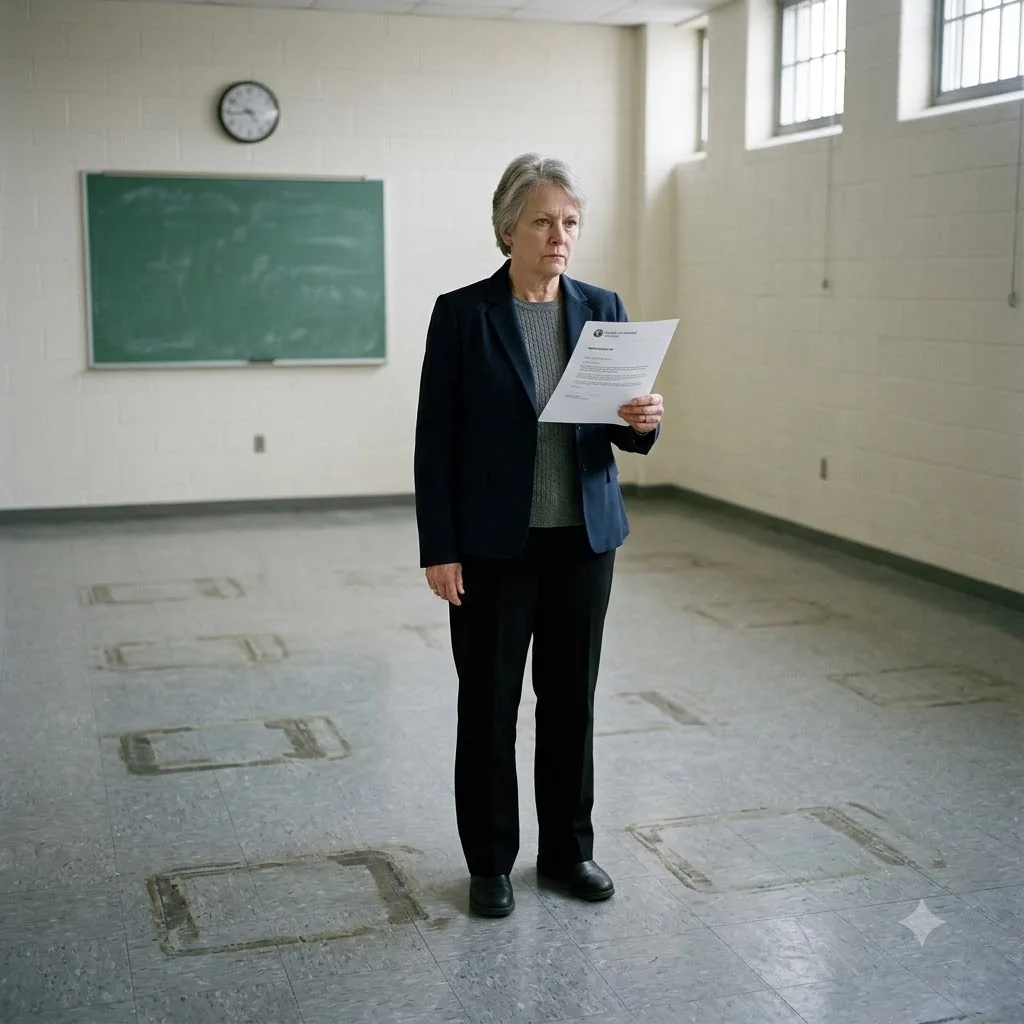
The fluorescent lights buzzed over thirty pale, dust-free rectangles on the linoleum where the heavy steel desks had been bolted just yesterday. Martha stood in the center of the vocational wing, her boots echoing against the sudden, hollow expanse of the room. In her right hand, she gripped a rejected requisition form, her thumb tracing the crisp red ink of Warden Caldwell’s signature stamped directly over a typed memo praising ‘optimized overhead.’
Maintenance had come through at four in the morning like scavengers in the night. They stripped the classroom down to the bare cinderblock walls, leaving only the bolted-in whiteboard and a single metal bookshelf sagging under the weight of donated encyclopedias and outdated textbooks. Martha walked to the corner where her own desk used to sit. The phone line had been yanked from the jack, leaving frayed copper wires curling out of the plastic faceplate. Caldwell had not just cut the budget. He had surgically removed the dignity of the entire program.
The heavy steel door at the end of the corridor clanged open. The morning shift of inmates filed in for GED prep, their gray uniforms shuffling to a halt at the threshold. Marcus, a man three months away from taking his final equivalency exam, stopped dead. The men piled up behind him, staring into the cavernous, empty room. No one spoke. They looked from the pale squares on the floor to Martha, waiting for an explanation she did not have.
Martha gestured to the linoleum. She told them to find a spot and sit down. The scraping of heavy boots and the rustle of rough cotton filled the void as twenty-five grown men awkwardly lowered themselves to the cold floor. They had no writing surfaces. They had no chairs. They sat with their knees pulled to their chests, holding dog-eared notebooks against their thighs.
Martha turned to the whiteboard and uncapped a marker. She began to write out the day’s math equations, the squeak of the felt tip echoing too loudly in the stripped room. Behind her, she could hear the frustrated sighs of men trying to balance cheap pens on uneven laps, the paper tearing as they pressed down too hard against their own knees. It was a calculated humiliation. Caldwell’s memo had framed the removal of the desks as a necessary repurposing of state property for the new solitary confinement wing. The true purpose was far more obvious in the slumped shoulders of her students.
She paced the aisles between the sitting men. She corrected a fraction on Marcus’s page, tapping the paper gently as he scowled at a torn hole in his notebook. He muttered a curse about the warden. Martha squeezed his shoulder and moved on. She kept her expression neutral, projecting a calm resilience she did not actually feel. Beneath her beige cardigan, her heart hammered against her ribs. She was a state employee, contracted to teach adult basic education, but right now she felt like a guard presiding over a holding cell.
The hour dragged into two. Cramps seized the men’s legs. Focus shattered into a restless, agitated energy that rippled through the room. Without the desks, the physical boundary between the teacher and the incarcerated was gone, replaced by a raw, uncomfortable proximity. When the final buzzer blared, the relief was instantaneous. The inmates scrambled to their feet, stretching stiff backs and rubbing their joints. They filed out in silence, leaving Martha alone with the buzzing lights and the hollow echo of the metal door sliding shut.
She walked back to the center of the room and looked at the rejected requisition form still sitting on the floor where she had dropped it. Optimized overhead. The phrase tasted like bile in her throat. Caldwell thought education was a luxury he could liquidate for a quarterly performance bonus. He viewed the men in her classroom as inventory, and her as an unnecessary line item.
Martha picked up the memo. She walked over to the single remaining shelf, the one bolted flush against the concrete wall. It held three dozen thick, discarded hardcovers-an archaic set of encyclopedias, several heavy medical dictionaries, and a stack of obsolete law textbooks from a defunct community college. She ran her fingers over the dusty, cloth-bound spines. They were heavy, dense, and utterly ignored by the administration.
She opened the small plastic supply caddy maintenance had overlooked in their purge. Inside sat a handful of chalk nubs, a roll of duct tape, and a yellow-handled box cutter used for breaking down cardboard deliveries. Martha took the cutter. She pulled a massive, three-pound dictionary from the center of the shelf and laid it flat on the linoleum. She clicked the blade out, locked it in place, and drove the sharp steel tip directly into the binding of the hardcover spine.
The fluorescent lights buzzed over thirty pale, dust-free rectangles on the linoleum where the heavy steel desks had been bolted just yesterday. Martha stood in the center of the vocational wing, her boots echoing against the sudden, hollow expanse of the room. In her right hand, she gripped a rejected requisition form, her thumb tracing the crisp red ink of Warden Caldwell’s signature stamped directly over a typed memo praising ‘optimized overhead.’
Maintenance had come through at four in the morning like scavengers in the night. They stripped the classroom down to the bare cinderblock walls, leaving only the bolted-in whiteboard and a single metal bookshelf sagging under the weight of donated encyclopedias and outdated textbooks. Martha walked to the corner where her own desk used to sit. The phone line had been yanked from the jack, leaving frayed copper wires curling out of the plastic faceplate. Caldwell had not just cut the budget. He had surgically removed the dignity of the entire program.
The heavy steel door at the end of the corridor clanged open. The morning shift of inmates filed in for GED prep, their gray uniforms shuffling to a halt at the threshold. Marcus, a man three months away from taking his final equivalency exam, stopped dead. The men piled up behind him, staring into the cavernous, empty room. No one spoke. They looked from the pale squares on the floor to Martha, waiting for an explanation she did not have.
Martha gestured to the linoleum. She told them to find a spot and sit down. The scraping of heavy boots and the rustle of rough cotton filled the void as twenty-five grown men awkwardly lowered themselves to the cold floor. They had no writing surfaces. They had no chairs. They sat with their knees pulled to their chests, holding dog-eared notebooks against their thighs.
Martha turned to the whiteboard and uncapped a marker. She began to write out the day’s math equations, the squeak of the felt tip echoing too loudly in the stripped room. Behind her, she could hear the frustrated sighs of men trying to balance cheap pens on uneven laps, the paper tearing as they pressed down too hard against their own knees. It was a calculated humiliation. Caldwell’s memo had framed the removal of the desks as a necessary repurposing of state property for the new solitary confinement wing. The true purpose was far more obvious in the slumped shoulders of her students.
She paced the aisles between the sitting men. She corrected a fraction on Marcus’s page, tapping the paper gently as he scowled at a torn hole in his notebook. He muttered a curse about the warden. Martha squeezed his shoulder and moved on. She kept her expression neutral, projecting a calm resilience she did not actually feel. Beneath her beige cardigan, her heart hammered against her ribs. She was a state employee, contracted to teach adult basic education, but right now she felt like a guard presiding over a holding cell.
The hour dragged into two. Cramps seized the men’s legs. Focus shattered into a restless, agitated energy that rippled through the room. Without the desks, the physical boundary between the teacher and the incarcerated was gone, replaced by a raw, uncomfortable proximity. When the final buzzer blared, the relief was instantaneous. The inmates scrambled to their feet, stretching stiff backs and rubbing their joints. They filed out in silence, leaving Martha alone with the buzzing lights and the hollow echo of the metal door sliding shut.
She walked back to the center of the room and looked at the rejected requisition form still sitting on the floor where she had dropped it. Optimized overhead. The phrase tasted like bile in her throat. Caldwell thought education was a luxury he could liquidate for a quarterly performance bonus. He viewed the men in her classroom as inventory, and her as an unnecessary line item.
Martha picked up the memo. She walked over to the single remaining shelf, the one bolted flush against the concrete wall. It held three dozen thick, discarded hardcovers-an archaic set of encyclopedias, several heavy medical dictionaries, and a stack of obsolete law textbooks from a defunct community college. She ran her fingers over the dusty, cloth-bound spines. They were heavy, dense, and utterly ignored by the administration.
She opened the small plastic supply caddy maintenance had overlooked in their purge. Inside sat a handful of chalk nubs, a roll of duct tape, and a yellow-handled box cutter used for breaking down cardboard deliveries. Martha took the cutter. She pulled a massive, three-pound dictionary from the center of the shelf and laid it flat on the linoleum. She clicked the blade out, locked it in place, and drove the sharp steel tip directly into the binding of the hardcover spine.