Story code: ST-001310
Part 4: The Cost of Time
The gavel struck the sound block with a sharp, definitive crack.
“Proceedings dismissed,” Judge Vance declared, his voice echoing in the hollow space of Courtroom 4. “Your legal resident status is restored in full, Mr. Thornton.”
Elias exhaled a ragged, trembling breath that tasted of stale courtroom coffee and three months of sheer terror. Beside him, Lin snapped her binder shut. At the prosecution table, Vargas didn’t even look up, already swiping his tablet to queue up the next immigrant on his quota list.
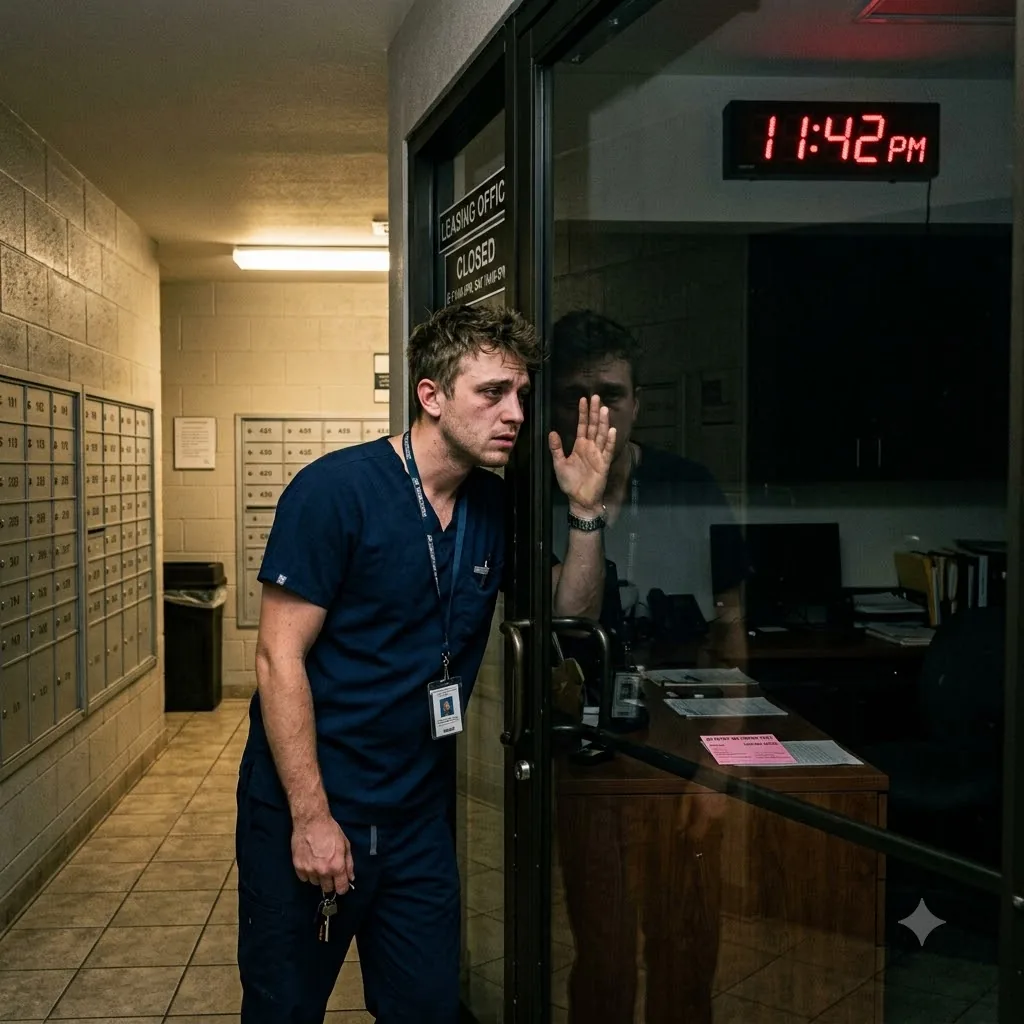
Elias walked out of the federal building into the blinding Houston heat. He was safe. He had won. The typo, the shattered glass, the agonizing 11:59 PM denial at the post office-none of it could hurt him anymore. A federal holiday had shielded him.
But as he stood on the concrete steps, the victory began to feel profoundly like a defeat.
Lin pushed through the revolving doors and handed him a thick manila envelope. Inside was his passport, the validated response slip, and her final invoice.
Elias stared at the bolded total at the bottom of the page. Thirty-two thousand dollars.
“I petitioned for the government to cover the legal fees, given the clerical error was theirs,” Lin said quietly, adjusting the strap of her heavy briefcase. “But because Judge Vance ruled on a technical statutory deadline rather than agency malpractice, we don’t qualify for fee recovery. I’m sorry, Elias.”
He nodded numbly. Thirty-two thousand dollars. It was every cent he and his father had saved since arriving in Texas. The money meant for a down payment on a house, drained entirely to prove a point the government should have known all along.
“I’ll wire the funds from the joint account tonight,” Elias said.
He took the city bus to Houston General. His beat-up Honda was still sitting in a municipal scrap yard, auctioned off weeks ago because he couldn’t afford the impound fees while his work authorization was frozen.
The fluorescent lights of the hospital corridors felt violently bright. Elias took the elevator to the fifth floor, walking toward the Graduate Medical Education office. He had his reinstatement order in hand. He was ready to pull another fourteen-hour shift in Trauma Bay 2. He just wanted to put on his scrubs and be a doctor again.
Dr. Aris, the ER Residency Director, stood in the doorway of his office. He didn’t smile when he saw Elias. He looked away, motioning for Elias to step inside and close the door.
“I have the federal order,” Elias said, placing the heavy, embossed paper on the desk. “My visa is valid. The deportation was dropped. I can resume my rotation immediately.”
Dr. Aris sighed, rubbing the bridge of his nose. “Elias, I received the notice from your lawyer yesterday. But you’ve been gone for twelve weeks.”
“I was on administrative leave. I legally couldn’t work.”
“You were on leave for the first two weeks,” Aris corrected softly. “When the initial removal order was entered into the federal system, your work authorization was automatically revoked. Hospital HR policy designates that as a voluntary forfeiture of employment. Every shift you missed since then was classified as an unexcused absence. You missed your entire critical care block.”
Elias felt the floor tilt beneath his feet. “It was a typo. The judge threw it out. I didn’t forfeit anything.”
“The ACGME doesn’t care about federal court drama,” Aris said, his voice laced with genuine regret. “You exceeded the maximum allowable unexcused absences for a medical resident. We had to maintain patient care. We filled your spot with a transfer from Dallas last month. You’re out of the program, Elias. You’ve been officially terminated.”
The words hung in the sterile air. Three years of medical school. The agonizing matching process. Gone.
Elias stumbled out of the hospital, the hot Texas wind hitting him like a physical blow. He pulled out his phone, his hands shaking so badly he could barely unlock the screen. He needed to call his father. He needed to hear Mateo’s voice, to tell him that despite the bankruptcy, despite losing the residency, they were at least safe. They would figure it out. They always did.
He dialed the number. It went straight to voicemail.
A cold spike of dread pierced Elias’s chest. He boarded another bus, riding forty minutes to the industrial edge of Pasadena. He ran the last three blocks to the small stucco duplex where his father lived.
The front door was unlocked. The living room was entirely empty, save for a single cardboard box sitting on the bare linoleum.
Mrs. Gable, the elderly landlord, stepped out of the kitchen holding a spray bottle of bleach. She froze when she saw Elias.
“Oh, honey,” she whispered, lowering the bottle.
“Where’s my dad?” Elias asked, his voice cracking. “Where’s Mateo?”
Mrs. Gable looked at the floor. “They came two weeks ago. In the middle of the night.”
Elias backed up, hitting his shoulders against the doorframe. “No. No, his status is linked to mine. My status is valid.”
“When your file was flagged for deportation, the system automatically invalidated his derivative sponsorship,” she explained, her voice trembling. “They took him to the processing center in Conroe. He begged them to let him call you, but he didn’t want to distract you while you were fighting your own case. They put him on a plane to San Pedro Sula last Tuesday.”
Elias slid down the doorframe, his knees giving out until he hit the floor. The silence of the empty duplex pressed against his ears, heavy and absolute.
He reached into his pocket and pulled out the crumpled pink delivery slip, now stained with three-month-old dried blood from the night he had shattered the glass door. He had beaten the clock. He had beaten the judge. He had beaten the system.
He sat alone on the cold floor, holding the piece of paper that proved he was legally allowed to exist in a life he no longer had.