Story code: ST-001314
Part 1: The Price of Peace
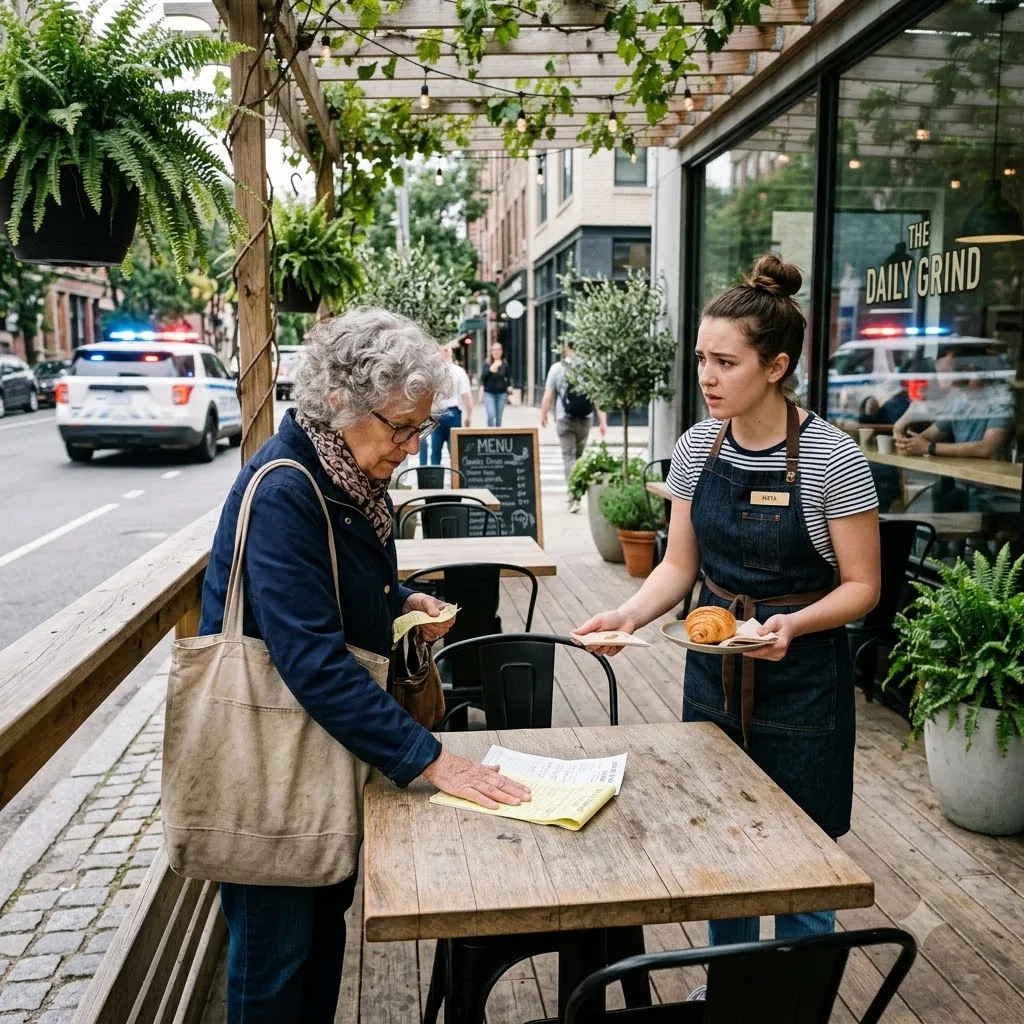
Blue and red light pulsed through the front window of The Daily Grind, catching the polished chrome of the espresso machine Julian was vigorously buffing. He leaned into the rag, wiping away a stray fingerprint, finding a deep sense of calm in the rhythmic strobe of the neighborhood security sweep outside. Two cruisers idled at the intersection, their presence a silent guarantee that tomorrow’s morning rush would be orderly, safe, and profitable. He set the rag down and looked out at the street. Most of the usual loiterers had scattered, leaving only a few steadfast locals. Among them was Ms. Harriet.
She stood near the edge of his patio, her posture rigid beneath a faded wool coat. Everyone on the block knew about the eviction notice taped to her front door three houses down. Julian felt a sudden urge to be the benevolent business owner, the kind of neighbor who cared. It would be a good look, a small peace offering to smooth over the rapid changes happening on the street. It was a small investment for goodwill. He turned to the pastry case, pulled a fresh almond croissant from the warming rack, and slid it into a crisp white paper bag. He folded the top down with practiced precision, ensuring the presentation was flawless.
The bell above the door chimed as he stepped out into the evening air. The static of a police radio drifted down the block, mingling with the hum of his neon Open sign. He approached Ms. Harriet with a practiced, gentle smile, holding the white bag out like a truce. The cool autumn wind whipped a loose wrapper across his polished boots. He told her he had extra inventory tonight and insisted she take it, adopting the customer-service cadence he used to disarm difficult patrons.
Ms. Harriet did not look at the bag. She looked at Julian. Her eyes were sharp, devoid of the weary defeat he expected from someone losing their home of forty years. She slowly lowered her gaze to the wrought-iron patio table separating them.
Instead of reaching for the pastry, she hoisted a heavy, frayed canvas tote onto the table. The metal groaned under the weight. Julian stood frozen, the paper bag still extended in mid-air. She unclasped the center button of the tote and reached inside.
She did not pull out a weapon, nor did she produce a petition to save her building. She withdrew a thick, rubber-banded stack of papers. They were crisp, rectangular slips, the unmistakable pink and yellow hues of carbon-copy invoices. The edges were perfectly aligned, untouched by the grime of the city.
With a swift, practiced motion, she snapped the rubber band off and pinned the top slip to the patio table with a single, blunt fingernail. She pressed it down so hard the paper indented into the iron mesh.
Julian lowered the pastry bag, his eyes drawn to the document. It was an itemized bill. The header bore a municipal seal he recognized from his own permitting processes, but the department name was blurred by the hasty carbon transfer. He leaned in slightly, trying to decipher the jagged, dot-matrix print. The ink was faded in spots, suggesting the document had been passed through multiple bureaucratic hands before landing here.
There was a date printed at the top. It was exactly three months ago, the exact week Julian had lodged his first formal complaint about the loitering on the corner. Below the date was a list of charges. They were not taxes or utility fees. They were itemized costs, listed with clinical precision.
Julian told her he did not understand the document. He stated clearly that he had nothing to do with her landlord or her building.
Ms. Harriet ignored his defense. She peeled back the top yellow copy to reveal a pink one beneath it, sliding it out to place it beside the first. This one was dated a week later. The amount at the bottom was double the previous total. The line items were more specific. There were charges for dispatch, municipal processing, and an ambiguous fee labeled as neighborhood stabilization.
Julian felt a cold prickle at the base of his neck. The flashing lights from the cruisers down the street reflected off the glossy surface of the carbon paper. He pointed at the paper, explaining that these were municipal codes, things entirely out of his control. He insisted he just sold coffee, a neutral party in the aggressive gentrification sweeping the district.
She placed a third receipt on the table. Then a fourth. She arranged them in a neat grid across the black metal, building a paper trail that Julian could not decode. The numbers climbed higher with each slip, thousands of dollars accumulating in neat, mechanical columns.
He noticed his own business address printed in the reference column of the fifth slip. The realization halted his breath.
He demanded she explain the papers, his voice losing its previously carefully curated warmth. He reached out to pick one up, wanting to examine the blurry municipal seal more closely to prove it was a mistake.
Before his fingers could graze the thin yellow paper, Ms. Harriet slammed her palm flat over the entire arrangement. The loud smack echoed against the brick facade of the cafe, drawing the attention of an officer standing by the idling cruiser. Julian froze.
Ms. Harriet leaned over the table, her face inches from his, and slid one final, heavily stamped pink carbon copy directly over his own hand.
Blue and red light pulsed through the front window of The Daily Grind, catching the polished chrome of the espresso machine Julian was vigorously buffing. He leaned into the rag, wiping away a stray fingerprint, finding a deep sense of calm in the rhythmic strobe of the neighborhood security sweep outside. Two cruisers idled at the intersection, their presence a silent guarantee that tomorrow’s morning rush would be orderly, safe, and profitable. He set the rag down and looked out at the street. Most of the usual loiterers had scattered, leaving only a few steadfast locals. Among them was Ms. Harriet.
She stood near the edge of his patio, her posture rigid beneath a faded wool coat. Everyone on the block knew about the eviction notice taped to her front door three houses down. Julian felt a sudden urge to be the benevolent business owner, the kind of neighbor who cared. It would be a good look, a small peace offering to smooth over the rapid changes happening on the street. It was a small investment for goodwill. He turned to the pastry case, pulled a fresh almond croissant from the warming rack, and slid it into a crisp white paper bag. He folded the top down with practiced precision, ensuring the presentation was flawless.
The bell above the door chimed as he stepped out into the evening air. The static of a police radio drifted down the block, mingling with the hum of his neon Open sign. He approached Ms. Harriet with a practiced, gentle smile, holding the white bag out like a truce. The cool autumn wind whipped a loose wrapper across his polished boots. He told her he had extra inventory tonight and insisted she take it, adopting the customer-service cadence he used to disarm difficult patrons.
Ms. Harriet did not look at the bag. She looked at Julian. Her eyes were sharp, devoid of the weary defeat he expected from someone losing their home of forty years. She slowly lowered her gaze to the wrought-iron patio table separating them.
Instead of reaching for the pastry, she hoisted a heavy, frayed canvas tote onto the table. The metal groaned under the weight. Julian stood frozen, the paper bag still extended in mid-air. She unclasped the center button of the tote and reached inside.
She did not pull out a weapon, nor did she produce a petition to save her building. She withdrew a thick, rubber-banded stack of papers. They were crisp, rectangular slips, the unmistakable pink and yellow hues of carbon-copy invoices. The edges were perfectly aligned, untouched by the grime of the city.
With a swift, practiced motion, she snapped the rubber band off and pinned the top slip to the patio table with a single, blunt fingernail. She pressed it down so hard the paper indented into the iron mesh.
Julian lowered the pastry bag, his eyes drawn to the document. It was an itemized bill. The header bore a municipal seal he recognized from his own permitting processes, but the department name was blurred by the hasty carbon transfer. He leaned in slightly, trying to decipher the jagged, dot-matrix print. The ink was faded in spots, suggesting the document had been passed through multiple bureaucratic hands before landing here.
There was a date printed at the top. It was exactly three months ago, the exact week Julian had lodged his first formal complaint about the loitering on the corner. Below the date was a list of charges. They were not taxes or utility fees. They were itemized costs, listed with clinical precision.
Julian told her he did not understand the document. He stated clearly that he had nothing to do with her landlord or her building.
Ms. Harriet ignored his defense. She peeled back the top yellow copy to reveal a pink one beneath it, sliding it out to place it beside the first. This one was dated a week later. The amount at the bottom was double the previous total. The line items were more specific. There were charges for dispatch, municipal processing, and an ambiguous fee labeled as neighborhood stabilization.
Julian felt a cold prickle at the base of his neck. The flashing lights from the cruisers down the street reflected off the glossy surface of the carbon paper. He pointed at the paper, explaining that these were municipal codes, things entirely out of his control. He insisted he just sold coffee, a neutral party in the aggressive gentrification sweeping the district.
She placed a third receipt on the table. Then a fourth. She arranged them in a neat grid across the black metal, building a paper trail that Julian could not decode. The numbers climbed higher with each slip, thousands of dollars accumulating in neat, mechanical columns.
He noticed his own business address printed in the reference column of the fifth slip. The realization halted his breath.
He demanded she explain the papers, his voice losing its previously carefully curated warmth. He reached out to pick one up, wanting to examine the blurry municipal seal more closely to prove it was a mistake.
Before his fingers could graze the thin yellow paper, Ms. Harriet slammed her palm flat over the entire arrangement. The loud smack echoed against the brick facade of the cafe, drawing the attention of an officer standing by the idling cruiser. Julian froze.
Ms. Harriet leaned over the table, her face inches from his, and slid one final, heavily stamped pink carbon copy directly over his own hand.