Story code: ST-001316
Part 1: The Glitch at the Gate
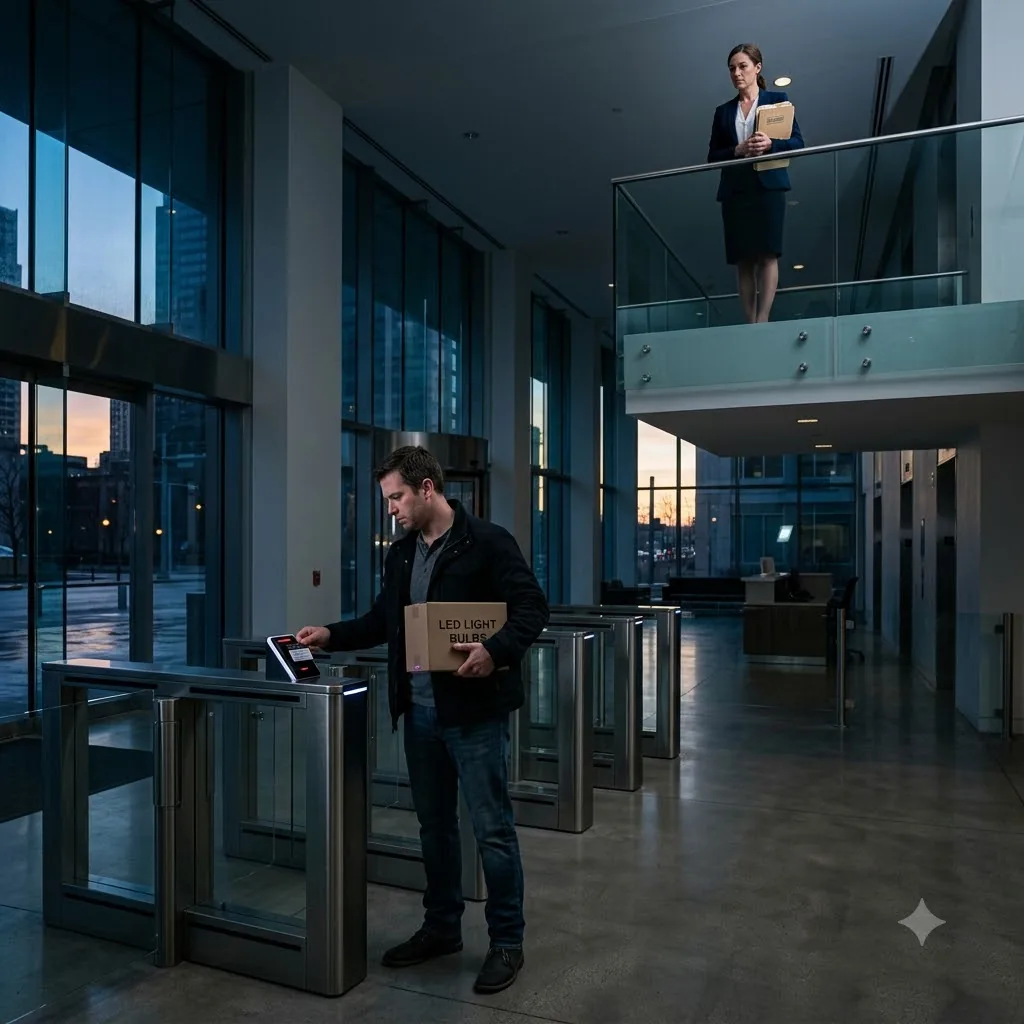
Elias pressed his employee badge against the scanner of the lobby turnstile, juggling a cardboard four-pack of soft-white bulbs in his left arm. The machine emitted a flat, dissonant beep. He stepped forward, but the heavy metal bars locked rigidly against his thigh, bruising the muscle. It was six-thirty in the morning, and the marble foyer of the regional logistics center was utterly empty. The vast space echoed only with the sterile hum of the overnight ventilation system.
He stepped back from the barrier. He shifted the cardboard box to his right hand, making sure not to crush the fragile glass inside. The lobby was freezing, featuring the kind of aggressive climate control meant to keep moving crowds from overheating during the afternoon rush. He wiped the plastic face of his ID card against his wool coat, assuming the cold morning air had caused a thin layer of condensation to confuse the optical reader. He slapped the card squarely against the glass pad a second time. The small LED indicator flashed a solid red. The mechanical lock deep inside the turnstile engaged with a heavy, final clunk.
Elias let out a slow breath. He stared at the box of sixty-watt bulbs. They were meant for the cheap brass desk lamp he had smuggled into his cubicle the afternoon before. The overhead fluorescents on the fourth floor possessed a high-frequency flicker, a relentless stutter that drilled a steady spike of tension behind his left eye by two o’clock every day. He merely wanted to unscrew the overhead tube above his chair and rely on the warm, ambient glow of the desk lamp to review his screens. He had submitted a standard medical accommodation ticket through the internal employee portal on Tuesday, attaching a doctor’s note regarding his severe migraines.
The automated response from the facilities department had been jarring. The ticket was denied within four minutes, accompanied by a heavy-handed, all-caps warning about unauthorized modifications to workstation electrical grids being a severe violation of company policy. It had felt like an absurd overreaction to a piece of cheap residential furniture. Elias had decided to ignore the automated scolding entirely. He figured he would simply arrive an hour before the rest of his department, plug the lamp into the heavy-duty battery backup beneath his desk, and work in peace before anyone noticed.
He tapped the badge against the glass a third time. The red light flared again.
A sharp click echoed through the empty atrium. It was the sound of a heavy heel striking marble, loud enough to cut through the white noise of the air vents.
Elias looked up toward the sound. The second-floor mezzanine jutted out over the main lobby, enclosed by a sleek wall of frosted glass. A figure stood perfectly still behind the barrier, looking down at him.
It was Brenda from Human Resources.
Elias froze, his hand still hovering over the scanner. Brenda was the regional director of HR, a woman who rarely left the executive suite, let alone appeared in the building before dawn. She was wearing a heavy trench coat, completely buttoned, her posture stiff and unyielding in the cold air. Tucked under her left arm, gripped so tightly that her knuckles lacked color, was a remarkably thick manila folder. The edges of unevenly stacked papers protruded from the sides, threatening to spill over the railing.
She did not wave. She did not call out to tell him the security system was down for maintenance. She merely watched him struggle against the locked gate.
Elias lowered his badge, the cold edge of the plastic digging into his palm. A terrible, sinking weight settled in his stomach as he connected the rigid posture of the HR director to the screen he had been studying yesterday afternoon.
He had been sitting in the dim light of his cubicle, massaging his temples to fend off the migraine, staring at the flagged inventory spreadsheets. He had pulled the quarterly transit logs to cross-reference a dozen missing pallets of high-grade commercial electronics. At first, the discrepancy had seemed like a simple coding error in the warehouse routing software, a digital ghost in the database duplicating shipment numbers. But as the afternoon wore on, the numbers had stubbornly refused to align. Every time he tried to balance the outgoing freight with the received invoices, the gap widened. He had spent four solid hours tracing the phantom pallets through layers of encrypted manifests. The data clearly showed that massive quantities of high-value inventory were being systematically routed to a holding facility that did not exist on the company ledger. The destination address listed in the final column belonged to an empty dirt lot three counties away.
He had assumed it was a massive tax write-off error. He had highlighted the rows, saved the spreadsheet to his local drive, and planned to email his manager about the glitch this morning.
Now, he was locked out of the building. The HR director was staring at him from the shadows of the second floor, clutching a file thick enough to contain his entire employment history.
Elias took a step back from the turnstile. He looked at the soft-white bulbs in his hand, realizing with sudden clarity that the immediate rejection of his desk lamp ticket had absolutely nothing to do with electrical safety protocols. They had flagged his terminal the moment he accessed those files. They had seen exactly what he was looking at in the dark.
Brenda finally moved, stepping up to the very edge of the glass balcony. She lifted a small black two-way radio to her mouth, her eyes locked dead on Elias, and spoke a single, inaudible sentence into the receiver.
Elias pressed his employee badge against the scanner of the lobby turnstile, juggling a cardboard four-pack of soft-white bulbs in his left arm. The machine emitted a flat, dissonant beep. He stepped forward, but the heavy metal bars locked rigidly against his thigh, bruising the muscle. It was six-thirty in the morning, and the marble foyer of the regional logistics center was utterly empty. The vast space echoed only with the sterile hum of the overnight ventilation system.
He stepped back from the barrier. He shifted the cardboard box to his right hand, making sure not to crush the fragile glass inside. The lobby was freezing, featuring the kind of aggressive climate control meant to keep moving crowds from overheating during the afternoon rush. He wiped the plastic face of his ID card against his wool coat, assuming the cold morning air had caused a thin layer of condensation to confuse the optical reader. He slapped the card squarely against the glass pad a second time. The small LED indicator flashed a solid red. The mechanical lock deep inside the turnstile engaged with a heavy, final clunk.
Elias let out a slow breath. He stared at the box of sixty-watt bulbs. They were meant for the cheap brass desk lamp he had smuggled into his cubicle the afternoon before. The overhead fluorescents on the fourth floor possessed a high-frequency flicker, a relentless stutter that drilled a steady spike of tension behind his left eye by two o’clock every day. He merely wanted to unscrew the overhead tube above his chair and rely on the warm, ambient glow of the desk lamp to review his screens. He had submitted a standard medical accommodation ticket through the internal employee portal on Tuesday, attaching a doctor’s note regarding his severe migraines.
The automated response from the facilities department had been jarring. The ticket was denied within four minutes, accompanied by a heavy-handed, all-caps warning about unauthorized modifications to workstation electrical grids being a severe violation of company policy. It had felt like an absurd overreaction to a piece of cheap residential furniture. Elias had decided to ignore the automated scolding entirely. He figured he would simply arrive an hour before the rest of his department, plug the lamp into the heavy-duty battery backup beneath his desk, and work in peace before anyone noticed.
He tapped the badge against the glass a third time. The red light flared again.
A sharp click echoed through the empty atrium. It was the sound of a heavy heel striking marble, loud enough to cut through the white noise of the air vents.
Elias looked up toward the sound. The second-floor mezzanine jutted out over the main lobby, enclosed by a sleek wall of frosted glass. A figure stood perfectly still behind the barrier, looking down at him.
It was Brenda from Human Resources.
Elias froze, his hand still hovering over the scanner. Brenda was the regional director of HR, a woman who rarely left the executive suite, let alone appeared in the building before dawn. She was wearing a heavy trench coat, completely buttoned, her posture stiff and unyielding in the cold air. Tucked under her left arm, gripped so tightly that her knuckles lacked color, was a remarkably thick manila folder. The edges of unevenly stacked papers protruded from the sides, threatening to spill over the railing.
She did not wave. She did not call out to tell him the security system was down for maintenance. She merely watched him struggle against the locked gate.
Elias lowered his badge, the cold edge of the plastic digging into his palm. A terrible, sinking weight settled in his stomach as he connected the rigid posture of the HR director to the screen he had been studying yesterday afternoon.
He had been sitting in the dim light of his cubicle, massaging his temples to fend off the migraine, staring at the flagged inventory spreadsheets. He had pulled the quarterly transit logs to cross-reference a dozen missing pallets of high-grade commercial electronics. At first, the discrepancy had seemed like a simple coding error in the warehouse routing software, a digital ghost in the database duplicating shipment numbers. But as the afternoon wore on, the numbers had stubbornly refused to align. Every time he tried to balance the outgoing freight with the received invoices, the gap widened. He had spent four solid hours tracing the phantom pallets through layers of encrypted manifests. The data clearly showed that massive quantities of high-value inventory were being systematically routed to a holding facility that did not exist on the company ledger. The destination address listed in the final column belonged to an empty dirt lot three counties away.
He had assumed it was a massive tax write-off error. He had highlighted the rows, saved the spreadsheet to his local drive, and planned to email his manager about the glitch this morning.
Now, he was locked out of the building. The HR director was staring at him from the shadows of the second floor, clutching a file thick enough to contain his entire employment history.
Elias took a step back from the turnstile. He looked at the soft-white bulbs in his hand, realizing with sudden clarity that the immediate rejection of his desk lamp ticket had absolutely nothing to do with electrical safety protocols. They had flagged his terminal the moment he accessed those files. They had seen exactly what he was looking at in the dark.
Brenda finally moved, stepping up to the very edge of the glass balcony. She lifted a small black two-way radio to her mouth, her eyes locked dead on Elias, and spoke a single, inaudible sentence into the receiver.