Story code: ST-001327
Part 1: The 11:12 PM Override
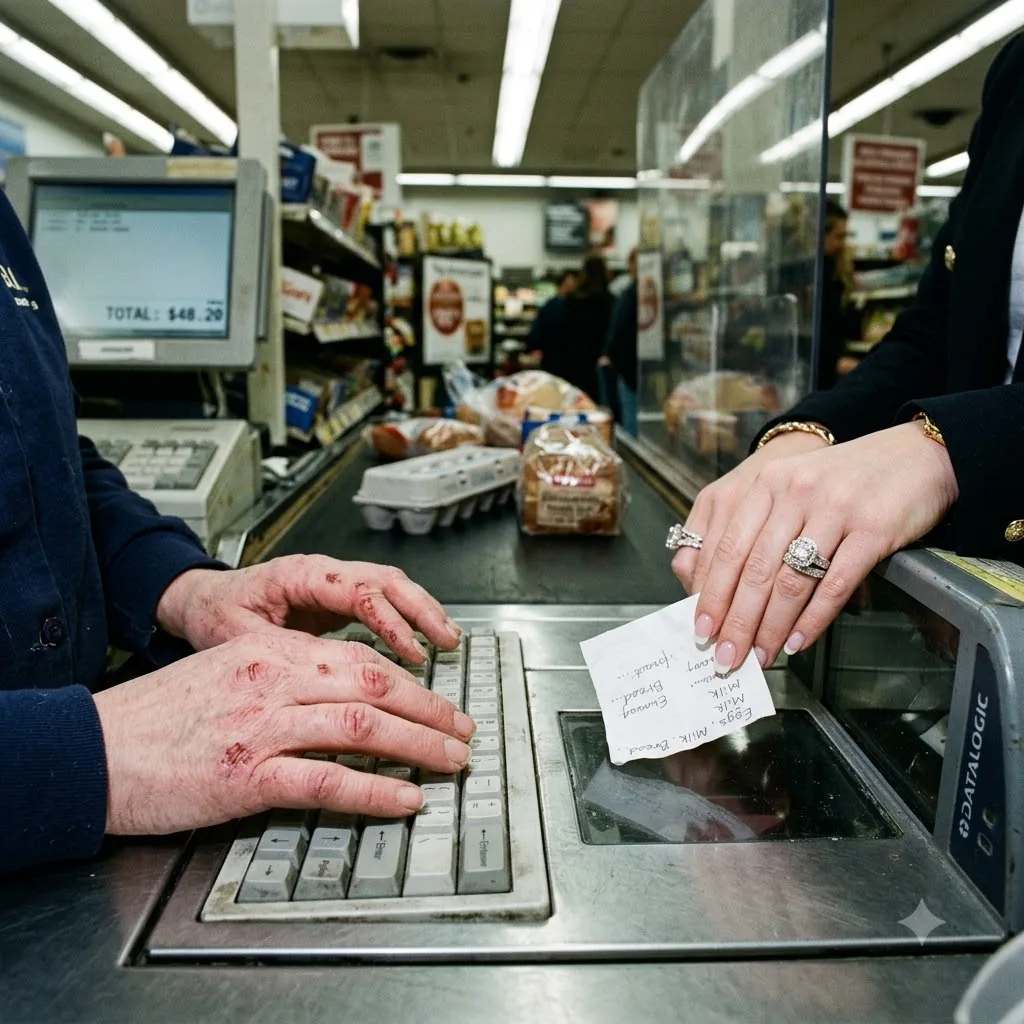
The flat, electronic *errnk* of the register cut through the fluorescent hum of Marnie’s third consecutive closing shift, vibrating straight into her aching molars. She stared down at the scanner glass, her knuckles split and raw from industrial sanitizer, while a perfectly manicured hand adorned with a heavy, diamond-encrusted platinum band pushed a crumpled slip of paper forward. The wealthy shopper on the other side of the counter refused to let go of the paper’s edge, hiding the center text under her French-tipped thumb, sliding the mystery document toward Marnie with an air of absolute expectation.
Marnie sighed, a shallow breath that did nothing to ease the tightness in her chest. She wore a faded polyester grocery smock over her oversized sweater, her shoulders slumped from eight hours of standing on a severely worn anti-fatigue mat. The woman across from her stood tall in a pristine camel-hair coat that smelled faintly of expensive cedar and vanilla, untouched by the freezing November sleet outside. Marnie picked up the slip, her bruised fingertips fumbling against the stiff, crinkled edges, and dragged the exposed barcode across the red laser grid a second time.
*Errnk.*
The harsh rejection tone was louder this time, echoing off the empty aisles of the quiet supermarket. It was eleven-twelve at night. The automatic doors were locked to incoming traffic, the upbeat ambient music had been shut off to signal closing time, and Marnie’s last bus home departed the corner stop in exactly ten minutes. If she missed that bus, she faced a two-mile walk alongside a highway with no sidewalks in the freezing rain. She tried to flatten the paper against the edge of the register, careful not to tear the damp crease down the middle, deliberately keeping her eyes averted from the dense block of faded text and the official-looking seal stamped near the bottom margin.
“It needs to scan,” the woman said. Her voice was a smooth, icy drawl, carrying a cadence that belonged in a gated subdivision entirely outside of this working-class county. “Run it again.”
“The optical reader cannot process the barcode because of the crease,” Marnie said, keeping her tone completely neutral. She leaned closer to the monitor and typed the blurry sequence of numbers printed beneath the code into her physical keypad. The ancient monitor flashed a harsh, error-red box. “The system is rejecting the manual override. It will not accept the slip.”
The woman exhaled a long, dramatic breath that ruffled the elegant collar of her coat. She tapped a single acrylic nail against the stainless steel staging area where her few items-a bottle of imported sparkling water, a wedge of artisan brie, and a bundle of organic asparagus-sat bagged and ready. The tapping sound was sharp, rapid, and endlessly irritating.
“Then you need to force it through,” the woman instructed, not moving an inch. “I am not leaving without this being applied to my total.”
Behind the woman, the checkout lane was backed up with the final stragglers of the night. Directly next in line stood a local man in a grease-stained Carhartt jacket, clutching a plastic gallon of whole milk and a loaf of discounted white bread. He shifted his weight heavily from side to side, his steel-toed boots scraping loudly against the scuffed linoleum floor. He wiped a rough hand across his forehead, leaving a smudge of dark machine oil near his hairline.
“Some of us have a five a.m. punch-in,” the man muttered. His voice was gravelly and thick with exhaustion, cutting through the tense silence of the checkout lane.
The wealthy woman did not even turn her head to acknowledge him. She merely adjusted her stance, blocking more of the narrow aisle with her oversized designer leather handbag, and flicked her wrist toward Marnie. The diamonds on her fingers caught the terrible overhead lighting, throwing fractured prisms across the cheap chewing gum displays.
“Call your manager,” the woman demanded.
“My manager is locked in the cash office finalizing the safe drop,” Marnie explained, her own voice beginning to crack from overuse. She placed the crumpled paper back on the counter, sliding it an inch toward the customer. “He cannot come out until the store is completely empty. I cannot process this document, and I need to clear the line.”
The woman refused to touch the paper. She leaned closer, the vanilla scent becoming suffocatingly sweet, and stared pointedly at Marnie’s hands. Marnie became acutely aware of the blue-black bruise blooming under her thumbnail from a pinched pallet jack earlier that afternoon. Next to the woman’s flawless, pale skin, Marnie felt entirely inadequate, a feeling that quickly morphed into a hot, defensive spike of adrenaline.
“I am not asking you to process a document,” the woman said, spacing her words out carefully. “I am telling you to apply the adjustment.”
“Lady, she told you it won’t work,” the man in the Carhartt jacket said, raising his voice so it echoed past the abandoned registers. He stepped halfway out of line, invading the wealthy woman’s personal space. “Pay for your groceries or get out of the way. You are holding up people who actually work for a living.”
The woman finally snapped her head around, her expression twisting into a sneer of pure disgust. “You need to step back. This does not concern you.”
“It concerns me when I’m missing my sleep because you want to argue over a piece of trash,” he shot back, slamming his gallon of milk onto the black conveyor belt divider. The plastic jug hit the metal track with a heavy thud, splashing a white droplet against the inside of the sealed cap.
Marnie watched the digital clock on her register flip to eleven-fifteen. Seven minutes until the bus. Her pulse hammered in her throat. She looked down at the slip of paper again, her eyes finally focusing on the faded ink, the strange watermark faintly visible through the grease stains, and the bolded name printed across the top margin. The tension in the air felt suffocating, matching the atmospheric drop right before a violent summer thunderstorm.
The woman turned her back on the local man and slammed both of her manicured hands flat onto the counter, pinning the paper down. “I am not moving from this spot until you do your job and run it.”
The man in the Carhartt jacket let out a sharp, breathless laugh. He reached past the woman’s expensive coat, his large, calloused hand lunging straight for the crumpled slip resting under her acrylic nails.
The flat, electronic *errnk* of the register cut through the fluorescent hum of Marnie’s third consecutive closing shift, vibrating straight into her aching molars. She stared down at the scanner glass, her knuckles split and raw from industrial sanitizer, while a perfectly manicured hand adorned with a heavy, diamond-encrusted platinum band pushed a crumpled slip of paper forward. The wealthy shopper on the other side of the counter refused to let go of the paper’s edge, hiding the center text under her French-tipped thumb, sliding the mystery document toward Marnie with an air of absolute expectation.
Marnie sighed, a shallow breath that did nothing to ease the tightness in her chest. She wore a faded polyester grocery smock over her oversized sweater, her shoulders slumped from eight hours of standing on a severely worn anti-fatigue mat. The woman across from her stood tall in a pristine camel-hair coat that smelled faintly of expensive cedar and vanilla, untouched by the freezing November sleet outside. Marnie picked up the slip, her bruised fingertips fumbling against the stiff, crinkled edges, and dragged the exposed barcode across the red laser grid a second time.
*Errnk.*
The harsh rejection tone was louder this time, echoing off the empty aisles of the quiet supermarket. It was eleven-twelve at night. The automatic doors were locked to incoming traffic, the upbeat ambient music had been shut off to signal closing time, and Marnie’s last bus home departed the corner stop in exactly ten minutes. If she missed that bus, she faced a two-mile walk alongside a highway with no sidewalks in the freezing rain. She tried to flatten the paper against the edge of the register, careful not to tear the damp crease down the middle, deliberately keeping her eyes averted from the dense block of faded text and the official-looking seal stamped near the bottom margin.
“It needs to scan,” the woman said. Her voice was a smooth, icy drawl, carrying a cadence that belonged in a gated subdivision entirely outside of this working-class county. “Run it again.”
“The optical reader cannot process the barcode because of the crease,” Marnie said, keeping her tone completely neutral. She leaned closer to the monitor and typed the blurry sequence of numbers printed beneath the code into her physical keypad. The ancient monitor flashed a harsh, error-red box. “The system is rejecting the manual override. It will not accept the slip.”
The woman exhaled a long, dramatic breath that ruffled the elegant collar of her coat. She tapped a single acrylic nail against the stainless steel staging area where her few items-a bottle of imported sparkling water, a wedge of artisan brie, and a bundle of organic asparagus-sat bagged and ready. The tapping sound was sharp, rapid, and endlessly irritating.
“Then you need to force it through,” the woman instructed, not moving an inch. “I am not leaving without this being applied to my total.”
Behind the woman, the checkout lane was backed up with the final stragglers of the night. Directly next in line stood a local man in a grease-stained Carhartt jacket, clutching a plastic gallon of whole milk and a loaf of discounted white bread. He shifted his weight heavily from side to side, his steel-toed boots scraping loudly against the scuffed linoleum floor. He wiped a rough hand across his forehead, leaving a smudge of dark machine oil near his hairline.
“Some of us have a five a.m. punch-in,” the man muttered. His voice was gravelly and thick with exhaustion, cutting through the tense silence of the checkout lane.
The wealthy woman did not even turn her head to acknowledge him. She merely adjusted her stance, blocking more of the narrow aisle with her oversized designer leather handbag, and flicked her wrist toward Marnie. The diamonds on her fingers caught the terrible overhead lighting, throwing fractured prisms across the cheap chewing gum displays.
“Call your manager,” the woman demanded.
“My manager is locked in the cash office finalizing the safe drop,” Marnie explained, her own voice beginning to crack from overuse. She placed the crumpled paper back on the counter, sliding it an inch toward the customer. “He cannot come out until the store is completely empty. I cannot process this document, and I need to clear the line.”
The woman refused to touch the paper. She leaned closer, the vanilla scent becoming suffocatingly sweet, and stared pointedly at Marnie’s hands. Marnie became acutely aware of the blue-black bruise blooming under her thumbnail from a pinched pallet jack earlier that afternoon. Next to the woman’s flawless, pale skin, Marnie felt entirely inadequate, a feeling that quickly morphed into a hot, defensive spike of adrenaline.
“I am not asking you to process a document,” the woman said, spacing her words out carefully. “I am telling you to apply the adjustment.”
“Lady, she told you it won’t work,” the man in the Carhartt jacket said, raising his voice so it echoed past the abandoned registers. He stepped halfway out of line, invading the wealthy woman’s personal space. “Pay for your groceries or get out of the way. You are holding up people who actually work for a living.”
The woman finally snapped her head around, her expression twisting into a sneer of pure disgust. “You need to step back. This does not concern you.”
“It concerns me when I’m missing my sleep because you want to argue over a piece of trash,” he shot back, slamming his gallon of milk onto the black conveyor belt divider. The plastic jug hit the metal track with a heavy thud, splashing a white droplet against the inside of the sealed cap.
Marnie watched the digital clock on her register flip to eleven-fifteen. Seven minutes until the bus. Her pulse hammered in her throat. She looked down at the slip of paper again, her eyes finally focusing on the faded ink, the strange watermark faintly visible through the grease stains, and the bolded name printed across the top margin. The tension in the air felt suffocating, matching the atmospheric drop right before a violent summer thunderstorm.
The woman turned her back on the local man and slammed both of her manicured hands flat onto the counter, pinning the paper down. “I am not moving from this spot until you do your job and run it.”
The man in the Carhartt jacket let out a sharp, breathless laugh. He reached past the woman’s expensive coat, his large, calloused hand lunging straight for the crumpled slip resting under her acrylic nails.