Story code: ST-001332
Part 4: The Taproot
Brenda squeezed the metal trigger. Elias clamped his eyes shut and held his breath, tucking his chin to his chest to protect his airway. He mentally recited the chemical composition of glyphosate. *Carbon, hydrogen, nitrogen, oxygen, phosphorus.* He waited for the cold, toxic mist to hit his flannel shirt.
Instead of a hiss, there was a wet, concussive pop, followed by a rapid, gurgling spew.
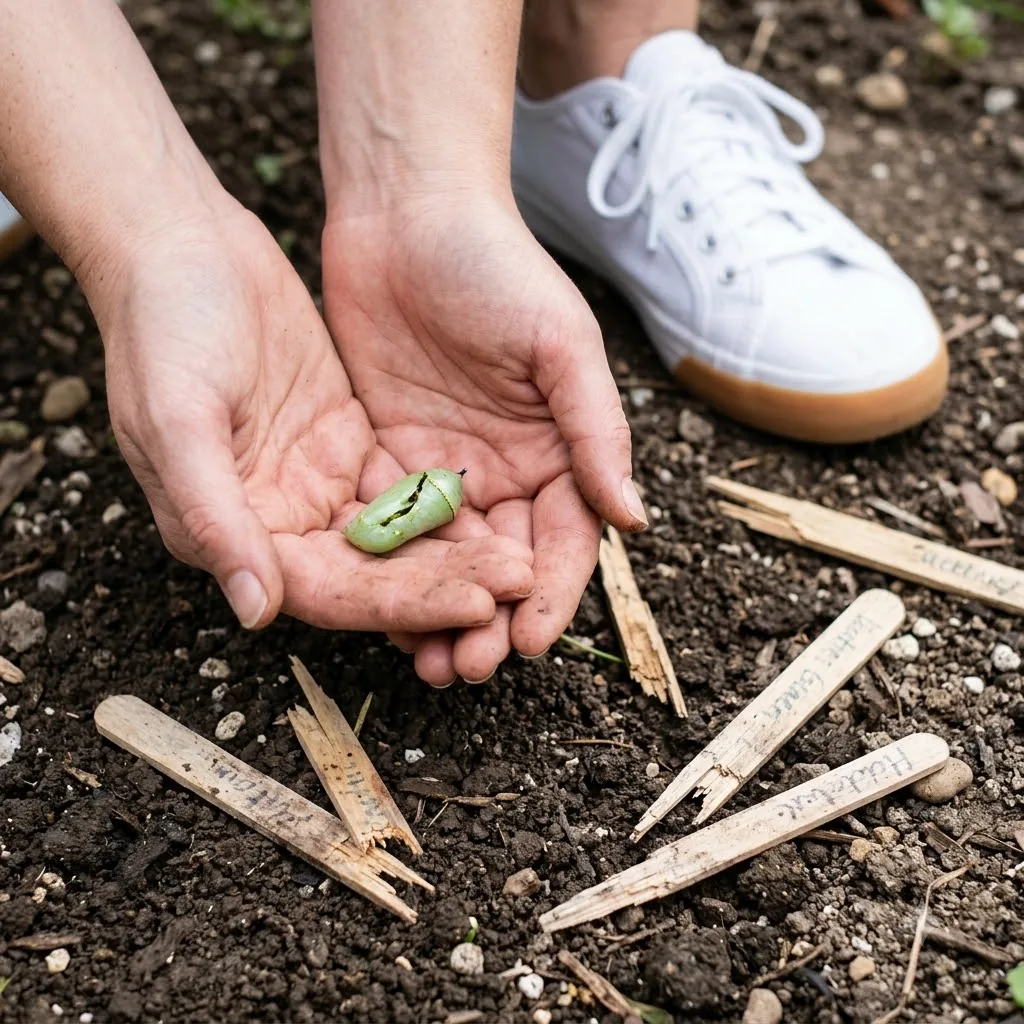
Elias opened his eyes. The brass wand had not sprayed. When Brenda had wrenched the heavy tank from the young worker and dragged it across the jagged, crushed plastic of the *Asclepias tuberosa* markers, the reinforced rubber hose had sustained a deep laceration. The sudden spike in pressure from the pump valve blew the weakened rubber wide open.
A thick, foamy torrent of concentrated, industrial-grade herbicide erupted from the rupture just above Brenda’s kneecap. The milky liquid cascaded down the front of her tailored slacks, pooling heavily in the insteps of her beige shoes.
Brenda froze. The administrative fury vanished from her face, replaced by a slack-jawed shock as the corrosive chemical soaked through her nylon socks.
Then, she screamed. It was a high, jagged sound lacking any metrical structure. She dropped the wand as if it were burning hot.
“My legs! It’s burning!” she shrieked, batting frantically at her soaked pants with her bare hands, immediately coating her manicured fingers in the toxic foam.
“Don’t rub it in!” the younger landscaper yelled, backpedaling toward his truck.
Mike, the skid-steer operator, was already marching across the grass, a heavy black cell phone pressed to his ear. “Yeah, dispatch? I need police and fire at…” He rattled off Elias’s address. “Got a lady who just doused herself in concentrated Weedmaster trying to spray a homeowner. She needs a decon wash, fast.”
Elias remained pinned against the cedar post. He calculated the slope of the ground. The chemical puddle was expanding, but the grade of the yard slanted down toward the street, carrying the toxic runoff away from the bee hotel’s foundation. The larvae were safe. The mud caps remained dry.
Within seven minutes, the quiet morning was shattered by the rhythmic, piercing wail of sirens. Elias covered his ears, applying deep pressure to his tragus to muffle the overwhelming auditory spike. A massive red fire engine and two black-and-white police cruisers parked at haphazard angles across the street, their light bars throwing aggressive, sweeping flashes of red and blue across the torn mud.
Elias watched the chaotic influx of first responders through narrowed eyes. Paramedics forced Brenda to sit on the tailgate of the landscaping truck, unceremoniously hosing her legs and feet down with a high-pressure water jug. She was shivering violently, her ruined beige shoes sitting in a toxic puddle on the asphalt.
A police officer with a thick notepad stood beside her. Brenda pointed a shaking, wet finger at Elias.
“He… he assaulted me! He forced me to do it!” she stammered, her voice thin and reedy.
“Ma’am, we have two independent witnesses who say you ripped the tank from the worker, dragged it, and aimed it at the homeowner,” the officer said, his tone flat, entirely unimpressed by her HOA title. “You’re lucky the hose blew, or you’d be looking at an assault charge instead of criminal mishandling of hazardous materials and reckless endangerment.”
Another officer gently guided Brenda, now wrapped in a crinkly, reflective thermal blanket, toward the back seat of the cruiser. The heavy metal door slammed shut, cleanly severing her shrill protests from the ambient noise.
The police and fire crews packed up their gear. The flashing lights snapped off, instantly reducing the visual noise in Elias’s brain. The heavy diesel engines rolled away, leaving only the soft idling of the landscapers’ pickup truck.
Elias slowly lowered his hands from his ears. He stepped away from the rough cedar post, rolling his shoulders to release the rigid tension in his spine. The yard was a disaster of deep ruts and uprooted stems, but the cedar post stood tall and untouched.
Footsteps crunched on the gravel. Mike walked up to the edge of the churned dirt. He held his blue hard hat in his hands, turning it slowly.
“Look, buddy,” Mike said, his voice quiet, devoid of the earlier aggression. “I’m real sorry about all this. We were just contracted to pull weeds. We didn’t know she was off her rocker, or that this was… whatever this is.”
“It is a registered ecological habitat,” Elias said.
“Right.” Mike looked at the crushed vegetation. “My guys and I… we can’t lay the sod. Not after that. Contract’s void if the client commits a crime on site. But I got three guys here on the clock for another four hours.” Mike pointed to the deep treads left by his machine. “Show me what to do. We can smooth out the tracks. Maybe put some of these plants back in the ground?”
Elias looked at the heavy, dirt-stained hands of the operator. He looked down at the mud. A few feet away, a cluster of *Echinacea purpurea* lay on its side, its thick taproot exposed to the air but largely intact.
Elias walked over and knelt in the damp earth. The smell of crushed lavender and diesel exhaust was still present, but the sharp, grounding scent of exposed loam was stronger.
“The taproots must be buried at a depth of four inches,” Elias said, his voice finding its steady, familiar cadence. “The soil must be lightly compacted to remove air pockets, but not crushed.”
Mike nodded, stepping carefully into the mud, avoiding the broken yellow plastic markers. “Four inches. You got it. Just point to where they go.”
Elias picked up the surviving coneflower, brushing a gentle thumb over the bruised petals, and began the meticulous, necessary work of restoring order.