Story code: ST-001332
Part 1: The Crushed Chrysalis
The damp, bruised smell of torn roots hung heavy in the morning air, thick and suffocating. Elias knelt in the churned earth of his front yard, his fingertips coated in the sticky, white sap of shredded milkweed. The soil, usually a source of grounding pressure beneath his palms, now felt loose and violated. He pressed his bare knees deeper into the dirt, trying to anchor himself against the spinning vertigo of the ruined landscape.
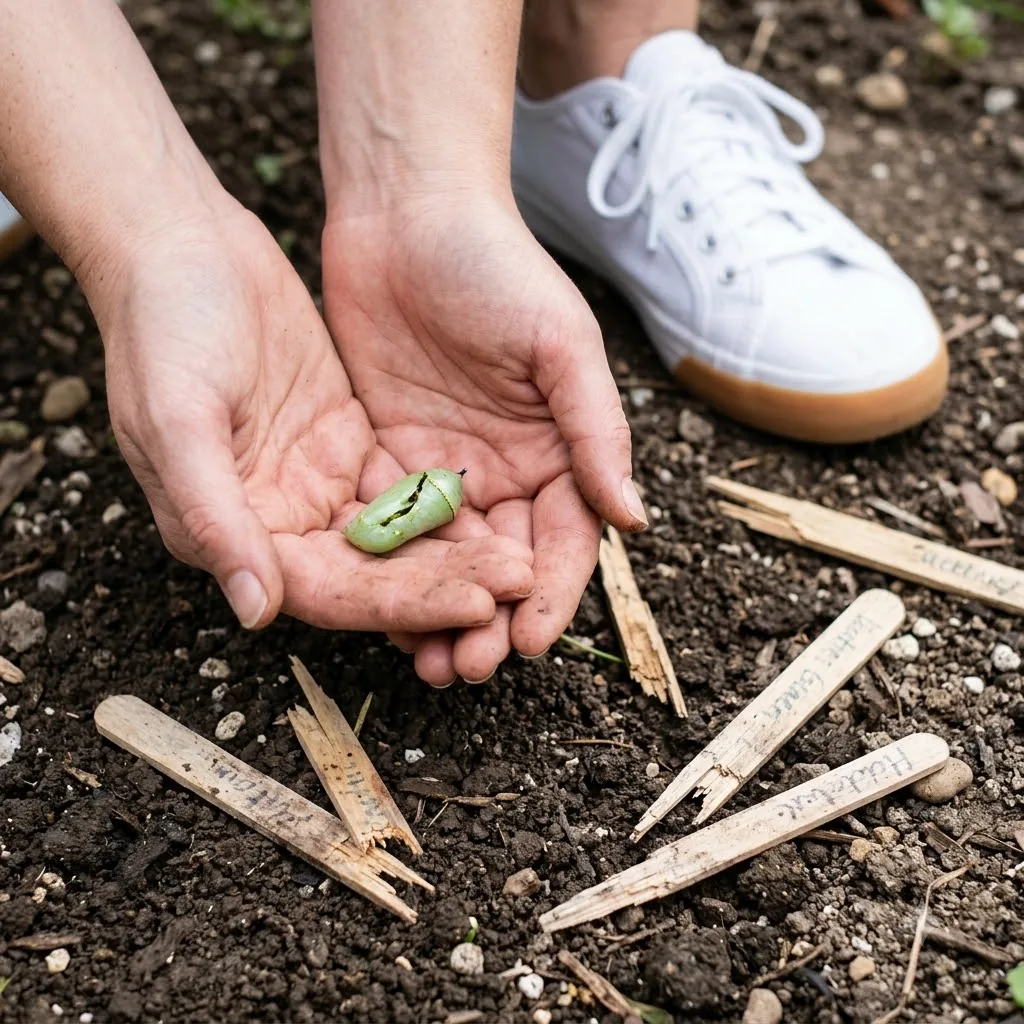
His thumb brushed the edge of a snapped botanical marker. The yellow plastic, which had neatly read *Asclepias tuberosa* in his precise block lettering just yesterday, was jagged and white at the break. He found another a few inches away. *Echinacea purpurea*. Snapped in half. He picked up the pieces, aligning the jagged edges together in a desperate need to restore order, but the plastic refused to hold. The friction of the broken edges grinding together sent a terrible shiver up his arms.
In his left hand, cradled against his palm, lay a crushed Monarch chrysalis. The delicate jade-green casing, rimmed with its tiny gold specks, had been flattened into a smear of translucent fluid and broken tissue. He focused his eyes on that tiny speck of gold. The gold was supposed to mean a healthy pupa. It was a structural color, reflecting light, a predictable scientific reality. Now it was just a fragment in the wreckage.
Elias closed his eyes and began to hum. It was a low, steady vibration in his chest that usually helped recalibrate his nervous system. One, two, three, four. He tapped his thumb against his index finger. The humming sounded thin in the open air. His sanctuary was gone. The precise grid of varying textures-lamb’s ear for soft tactile input, blue fescue for visual calm, the towering ironweed for acoustic dampening from the street noise-had been churned into a chaotic mess of deep tire tracks and broken stems.
He opened his eyes and traced the aggressive tread marks gouged into the topsoil. The patterns were irregular, overlapping in ways that made his skin crawl. They were wide tracks. Skid-steer tires. The heavy machinery had driven straight over the limestone border he had laid by hand, stone by stone, to create a perfect geometric boundary. The crushed stone dust now coated the surviving, bruised leaves of a nearby hosta.
Elias rocked slightly on his heels. He needed to document the damage. He needed a list. Lists made the unmanageable world manageable. Four mature swamp milkweed plants, utterly destroyed. Twelve coneflowers, uprooted and crushed into the mud. Six lavender bushes, specifically chosen for olfactory regulation when he felt overwhelmed. Crushed. The air now smelled of bruised lavender and acrid diesel exhaust, an overwhelming, contradictory combination that made his throat tighten.
He pressed the palm of his clean hand hard against his sternum. The deep, heavy pressure offered a small anchor. The destruction was deliberate. The garden had been fully compliant with state ordinances regarding native plant restoration. He had filed the paperwork. He had the approval letters neatly organized in the blue folder on his desk. The blue folder meant safety. The blue folder meant he had followed all the rules.
The blue folder had not stopped the machinery.
The diesel smell grew stronger. It was not just residual exhaust hanging in the still morning air. A low rumble vibrated through the ground, transmitting directly through the soil into Elias’s knees. He stopped rocking. The vibration was rhythmic, mechanical, and immensely heavy. A massive engine was idling nearby.
He tucked the crushed chrysalis carefully into the breast pocket of his flannel shirt, keeping the ruined life safe against his chest. He gathered the broken pieces of the yellow plant markers, gripping them so tightly the sharp plastic edges dug deep into his calloused skin. The physical pain was a sharp, clear signal cutting through the overwhelming sensory noise of the ruined garden.
Footsteps crunched on the gravel driveway. Not the heavy, deliberate tread of work boots. These were sharp, staccato clicks. Hard soles striking the pavement with impatient, demanding force.
Elias remained kneeling, his back rigidly turned to the driveway. He focused his entire consciousness on a single, surviving earthworm writhing in the exposed, turned soil. He watched its segments expand and contract. He regulated his breathing to match the worm’s slow, methodical progress. In through the nose. Hold. Out through the mouth.
The clicking footsteps stopped abruptly at the edge of the churned dirt.
A shadow fell over Elias, blocking the morning sun. The shadow was tall, rigid, cast by a figure standing with hands planted firmly on their hips. The scent of heavy floral perfume cut through the smell of diesel and torn lavender. It was an aggressive, chemical sweetness that made Elias gag.
He did not look up. He focused on the broken stem of a blazing star, noting the precise forty-five-degree angle of the fracture.
A clipboard snapped loudly, the sound echoing like a gunshot.
“I told you the association would not tolerate this overgrown weed patch another day, Elias,” Brenda said, her voice sharp and loud enough to make him wince.
Elias kept his eyes fixed on the dirt, his fingers white-knuckled around the broken plastic markers, as a large, yellow skid-steer loader rolled heavily into view at the edge of his peripheral vision.
The damp, bruised smell of torn roots hung heavy in the morning air, thick and suffocating. Elias knelt in the churned earth of his front yard, his fingertips coated in the sticky, white sap of shredded milkweed. The soil, usually a source of grounding pressure beneath his palms, now felt loose and violated. He pressed his bare knees deeper into the dirt, trying to anchor himself against the spinning vertigo of the ruined landscape.
His thumb brushed the edge of a snapped botanical marker. The yellow plastic, which had neatly read *Asclepias tuberosa* in his precise block lettering just yesterday, was jagged and white at the break. He found another a few inches away. *Echinacea purpurea*. Snapped in half. He picked up the pieces, aligning the jagged edges together in a desperate need to restore order, but the plastic refused to hold. The friction of the broken edges grinding together sent a terrible shiver up his arms.
In his left hand, cradled against his palm, lay a crushed Monarch chrysalis. The delicate jade-green casing, rimmed with its tiny gold specks, had been flattened into a smear of translucent fluid and broken tissue. He focused his eyes on that tiny speck of gold. The gold was supposed to mean a healthy pupa. It was a structural color, reflecting light, a predictable scientific reality. Now it was just a fragment in the wreckage.
Elias closed his eyes and began to hum. It was a low, steady vibration in his chest that usually helped recalibrate his nervous system. One, two, three, four. He tapped his thumb against his index finger. The humming sounded thin in the open air. His sanctuary was gone. The precise grid of varying textures-lamb’s ear for soft tactile input, blue fescue for visual calm, the towering ironweed for acoustic dampening from the street noise-had been churned into a chaotic mess of deep tire tracks and broken stems.
He opened his eyes and traced the aggressive tread marks gouged into the topsoil. The patterns were irregular, overlapping in ways that made his skin crawl. They were wide tracks. Skid-steer tires. The heavy machinery had driven straight over the limestone border he had laid by hand, stone by stone, to create a perfect geometric boundary. The crushed stone dust now coated the surviving, bruised leaves of a nearby hosta.
Elias rocked slightly on his heels. He needed to document the damage. He needed a list. Lists made the unmanageable world manageable. Four mature swamp milkweed plants, utterly destroyed. Twelve coneflowers, uprooted and crushed into the mud. Six lavender bushes, specifically chosen for olfactory regulation when he felt overwhelmed. Crushed. The air now smelled of bruised lavender and acrid diesel exhaust, an overwhelming, contradictory combination that made his throat tighten.
He pressed the palm of his clean hand hard against his sternum. The deep, heavy pressure offered a small anchor. The destruction was deliberate. The garden had been fully compliant with state ordinances regarding native plant restoration. He had filed the paperwork. He had the approval letters neatly organized in the blue folder on his desk. The blue folder meant safety. The blue folder meant he had followed all the rules.
The blue folder had not stopped the machinery.
The diesel smell grew stronger. It was not just residual exhaust hanging in the still morning air. A low rumble vibrated through the ground, transmitting directly through the soil into Elias’s knees. He stopped rocking. The vibration was rhythmic, mechanical, and immensely heavy. A massive engine was idling nearby.
He tucked the crushed chrysalis carefully into the breast pocket of his flannel shirt, keeping the ruined life safe against his chest. He gathered the broken pieces of the yellow plant markers, gripping them so tightly the sharp plastic edges dug deep into his calloused skin. The physical pain was a sharp, clear signal cutting through the overwhelming sensory noise of the ruined garden.
Footsteps crunched on the gravel driveway. Not the heavy, deliberate tread of work boots. These were sharp, staccato clicks. Hard soles striking the pavement with impatient, demanding force.
Elias remained kneeling, his back rigidly turned to the driveway. He focused his entire consciousness on a single, surviving earthworm writhing in the exposed, turned soil. He watched its segments expand and contract. He regulated his breathing to match the worm’s slow, methodical progress. In through the nose. Hold. Out through the mouth.
The clicking footsteps stopped abruptly at the edge of the churned dirt.
A shadow fell over Elias, blocking the morning sun. The shadow was tall, rigid, cast by a figure standing with hands planted firmly on their hips. The scent of heavy floral perfume cut through the smell of diesel and torn lavender. It was an aggressive, chemical sweetness that made Elias gag.
He did not look up. He focused on the broken stem of a blazing star, noting the precise forty-five-degree angle of the fracture.
A clipboard snapped loudly, the sound echoing like a gunshot.
“I told you the association would not tolerate this overgrown weed patch another day, Elias,” Brenda said, her voice sharp and loud enough to make him wince.
Elias kept his eyes fixed on the dirt, his fingers white-knuckled around the broken plastic markers, as a large, yellow skid-steer loader rolled heavily into view at the edge of his peripheral vision.