Story code: ST-001351
Part 1: Protocol 3
Martha pressed the induction symbol on the sleek glass stovetop, anticipating the familiar red ring of heat to flare beneath her copper kettle. The glass remained black and cold. She pressed the icon again, leaving a smudge of fingerprint on the pristine surface. The kettle sat heavy and completely silent. A sharp, sterile chime echoed from the hallway, interrupting the quiet hum of the apartment’s climate control.
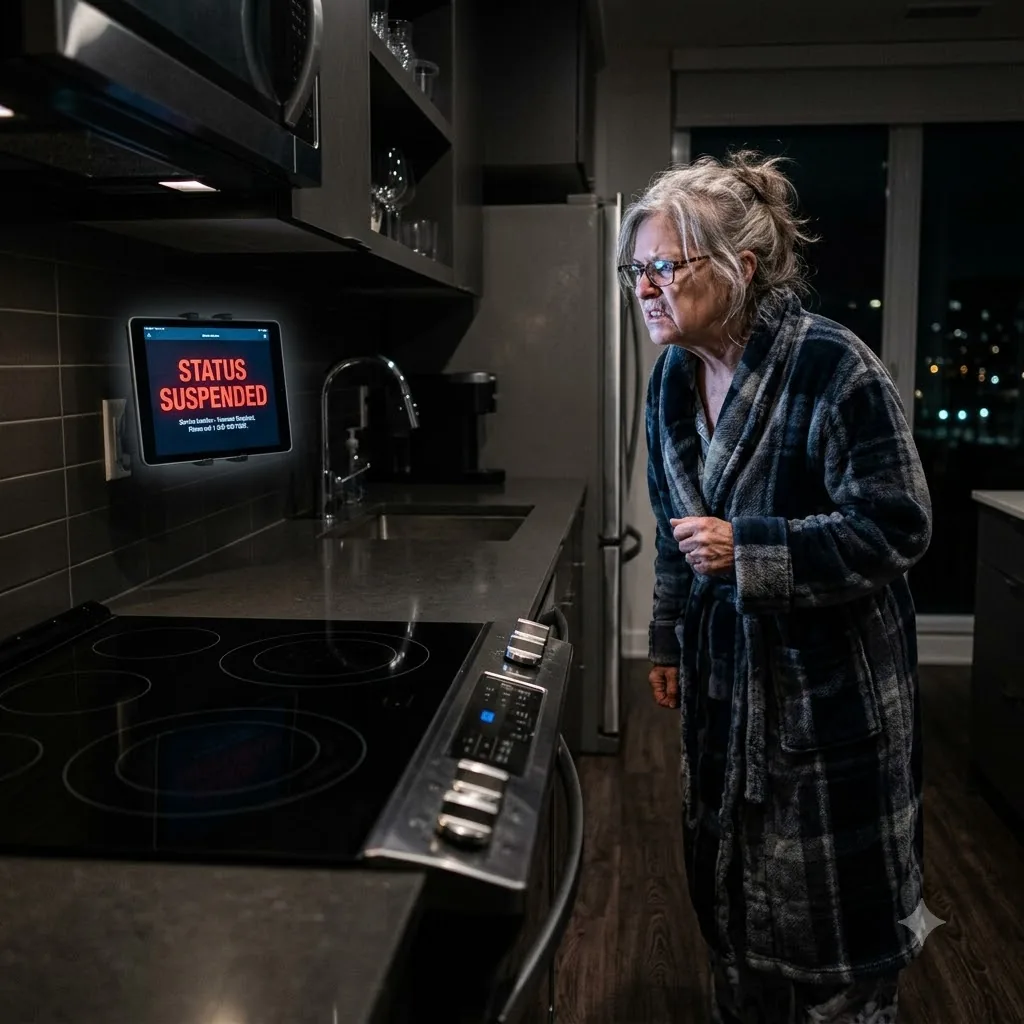
She abandoned the stove and walked into the entryway, rubbing her cold hands together. The central home management tablet, normally a subdued slate gray displaying her daily schedule, pulsed with a harsh crimson border. She touched the screen. The text displayed stark white against the red background.
*Notice of Lease Suspension. Level 3 Cognitive Decline Protocol initiated. Independent Tenant Status: Revoked.*
A sudden chill rushed down her arms. She stared at the screen, reading the block of text three times to ensure her eyes were functioning correctly. The SilverPines automated living complex was marketed as the ultimate guarantor of independent living for seniors, a place where unobtrusive sensors kept you safe without intruding on your dignity. Now, the very walls were declaring her unfit to live alone. She tapped the screen to expand the notification.
*Behavioral anomaly detected at 04:12 AM. Resident safety risk threshold exceeded. All non-essential appliances disabled. Exterior egress locked pending emergency proxy authorization. Immediate intervention required for residency reinstatement.*
She backed away from the tablet, her breathing growing shallow. She had no memory of being awake at four in the morning. She always slept soundly through the night, waking only when the smart-blinds automatically raised at seven. She tried to recall if she had gotten up for a glass of water, or if she had walked the hallway in a daze, but her mind offered only a solid block of dreamless sleep.
Desperation clawed at her throat. She walked briskly to the front door and pushed down on the heavy metal handle. The mechanism held firm. The deadbolt refused to slide back. A digital lock indicator on the doorframe glowed the same unforgiving red as the hallway tablet. She was sealed inside.
She moved to the living room window, unlatching the heavy brass lock and pushing upward on the sash. It budged half an inch before a motorized whir kicked in, locking the frame in place. The apartment was on the fifth floor, making the fire escape her only alternative egress, but the glass door leading to the small balcony bore the same red digital padlock icon. She was systematically being boxed in, treated like a prisoner in a space she paid a small fortune to own.
She returned to the kitchen and tested the sink. Cold water flowed, offering a small, pathetic mercy. She opened the refrigerator to grab her orange juice. The interior light illuminated her groceries, but a sharp click sounded from the lower shelf. The automated medication drawer, which usually unlocked exactly at eight in the morning, had engaged its tamper-proof lock. The AI had deemed her a risk to herself.
She rushed back to the main control tablet, her pulse hammering against her ribs. There had to be a mistake, a glitch in the biometric sensors, or a software update gone terribly wrong. She pressed the icon for customer support, ready to demand an immediate system reset from a human operator. A robotic female voice filled the hallway, smooth and entirely devoid of empathy.
“Manual override disabled. Level 3 Cognitive Decline protocols require in-person visual and digital authorization from your designated emergency proxy. Please contact your proxy to resolve the current lease suspension.”
Martha felt a heavy, cold weight settle in her stomach. The proxy mandate was a non-negotiable clause in the lease, a safety net she had reluctantly signed off on years ago when she first moved into the SilverPines community. Back then, it was just a bureaucratic formality. The overzealous leasing agent had insisted on a name on the dotted line, someone who could take legal responsibility if her mind ever truly started to slip. She had provided the only name she could, assuming the protocol would never actually be triggered. She was sharp. She was capable.
She paced the length of her living room, her wool slippers slapping softly against the polished hardwood floor. The bright morning sunlight streaming through the windows mocked her captive state. Every hour that passed without resolving the suspension meant the eviction process would escalate. By tomorrow morning, the building administration would notify the state health department. She would be forced into an assisted care facility, stripped of her assets and her agency.
She stopped pacing and stared out at the street below. Delivery trucks idled at the curb. People in heavy coats hurried down the sidewalk, clutching their coffees, existing in a world she could no longer step into. She had spent the last three years building a life of absolute self-reliance, proving to everyone she needed no one. The quiet routines of her apartment had been her sanctuary. Now, that same quiet felt like a tightening trap. The algorithm had decided her fate based on a completely unseen, unremembered midnight event, stripping her of her civil rights with a few lines of invisible code.
She walked slowly to the small mahogany side table where her personal smartphone sat charging. Her hand trembled as she unplugged the cord. She unlocked the screen and swiped through her contacts, bypassing friends from her Tuesday bridge club and neighbors she occasionally spoke with in the lobby. None of them had the legal authority to lift the lockdown. Only one person held the cryptographic key to the apartment’s central system. Only one person could verify her sanity to the machine and halt the eviction.
She scrolled down to the very bottom of the contact list, stopping on a name she had meticulously avoided looking at for thirty-six long months. The bitter, screaming political argument that had shattered their relationship echoed in her memory, a rift so deep she had sworn she would rather die alone than ever beg for a reconciliation. The automated system did not care about human pride, nor did it understand the stubbornness of a broken family. It only required the authorized biometric signature of her assigned proxy.
Martha closed her eyes, swallowed the bitter memories of their last fight, and tapped the screen to dial her estranged daughter, Sarah, listening to the hollow static just before the first ring.
Martha pressed the induction symbol on the sleek glass stovetop, anticipating the familiar red ring of heat to flare beneath her copper kettle. The glass remained black and cold. She pressed the icon again, leaving a smudge of fingerprint on the pristine surface. The kettle sat heavy and completely silent. A sharp, sterile chime echoed from the hallway, interrupting the quiet hum of the apartment’s climate control.
She abandoned the stove and walked into the entryway, rubbing her cold hands together. The central home management tablet, normally a subdued slate gray displaying her daily schedule, pulsed with a harsh crimson border. She touched the screen. The text displayed stark white against the red background.
*Notice of Lease Suspension. Level 3 Cognitive Decline Protocol initiated. Independent Tenant Status: Revoked.*
A sudden chill rushed down her arms. She stared at the screen, reading the block of text three times to ensure her eyes were functioning correctly. The SilverPines automated living complex was marketed as the ultimate guarantor of independent living for seniors, a place where unobtrusive sensors kept you safe without intruding on your dignity. Now, the very walls were declaring her unfit to live alone. She tapped the screen to expand the notification.
*Behavioral anomaly detected at 04:12 AM. Resident safety risk threshold exceeded. All non-essential appliances disabled. Exterior egress locked pending emergency proxy authorization. Immediate intervention required for residency reinstatement.*
She backed away from the tablet, her breathing growing shallow. She had no memory of being awake at four in the morning. She always slept soundly through the night, waking only when the smart-blinds automatically raised at seven. She tried to recall if she had gotten up for a glass of water, or if she had walked the hallway in a daze, but her mind offered only a solid block of dreamless sleep.
Desperation clawed at her throat. She walked briskly to the front door and pushed down on the heavy metal handle. The mechanism held firm. The deadbolt refused to slide back. A digital lock indicator on the doorframe glowed the same unforgiving red as the hallway tablet. She was sealed inside.
She moved to the living room window, unlatching the heavy brass lock and pushing upward on the sash. It budged half an inch before a motorized whir kicked in, locking the frame in place. The apartment was on the fifth floor, making the fire escape her only alternative egress, but the glass door leading to the small balcony bore the same red digital padlock icon. She was systematically being boxed in, treated like a prisoner in a space she paid a small fortune to own.
She returned to the kitchen and tested the sink. Cold water flowed, offering a small, pathetic mercy. She opened the refrigerator to grab her orange juice. The interior light illuminated her groceries, but a sharp click sounded from the lower shelf. The automated medication drawer, which usually unlocked exactly at eight in the morning, had engaged its tamper-proof lock. The AI had deemed her a risk to herself.
She rushed back to the main control tablet, her pulse hammering against her ribs. There had to be a mistake, a glitch in the biometric sensors, or a software update gone terribly wrong. She pressed the icon for customer support, ready to demand an immediate system reset from a human operator. A robotic female voice filled the hallway, smooth and entirely devoid of empathy.
“Manual override disabled. Level 3 Cognitive Decline protocols require in-person visual and digital authorization from your designated emergency proxy. Please contact your proxy to resolve the current lease suspension.”
Martha felt a heavy, cold weight settle in her stomach. The proxy mandate was a non-negotiable clause in the lease, a safety net she had reluctantly signed off on years ago when she first moved into the SilverPines community. Back then, it was just a bureaucratic formality. The overzealous leasing agent had insisted on a name on the dotted line, someone who could take legal responsibility if her mind ever truly started to slip. She had provided the only name she could, assuming the protocol would never actually be triggered. She was sharp. She was capable.
She paced the length of her living room, her wool slippers slapping softly against the polished hardwood floor. The bright morning sunlight streaming through the windows mocked her captive state. Every hour that passed without resolving the suspension meant the eviction process would escalate. By tomorrow morning, the building administration would notify the state health department. She would be forced into an assisted care facility, stripped of her assets and her agency.
She stopped pacing and stared out at the street below. Delivery trucks idled at the curb. People in heavy coats hurried down the sidewalk, clutching their coffees, existing in a world she could no longer step into. She had spent the last three years building a life of absolute self-reliance, proving to everyone she needed no one. The quiet routines of her apartment had been her sanctuary. Now, that same quiet felt like a tightening trap. The algorithm had decided her fate based on a completely unseen, unremembered midnight event, stripping her of her civil rights with a few lines of invisible code.
She walked slowly to the small mahogany side table where her personal smartphone sat charging. Her hand trembled as she unplugged the cord. She unlocked the screen and swiped through her contacts, bypassing friends from her Tuesday bridge club and neighbors she occasionally spoke with in the lobby. None of them had the legal authority to lift the lockdown. Only one person held the cryptographic key to the apartment’s central system. Only one person could verify her sanity to the machine and halt the eviction.
She scrolled down to the very bottom of the contact list, stopping on a name she had meticulously avoided looking at for thirty-six long months. The bitter, screaming political argument that had shattered their relationship echoed in her memory, a rift so deep she had sworn she would rather die alone than ever beg for a reconciliation. The automated system did not care about human pride, nor did it understand the stubbornness of a broken family. It only required the authorized biometric signature of her assigned proxy.
Martha closed her eyes, swallowed the bitter memories of their last fight, and tapped the screen to dial her estranged daughter, Sarah, listening to the hollow static just before the first ring.