Story code: ST-001372
Part 1: The Cobblestone Silence
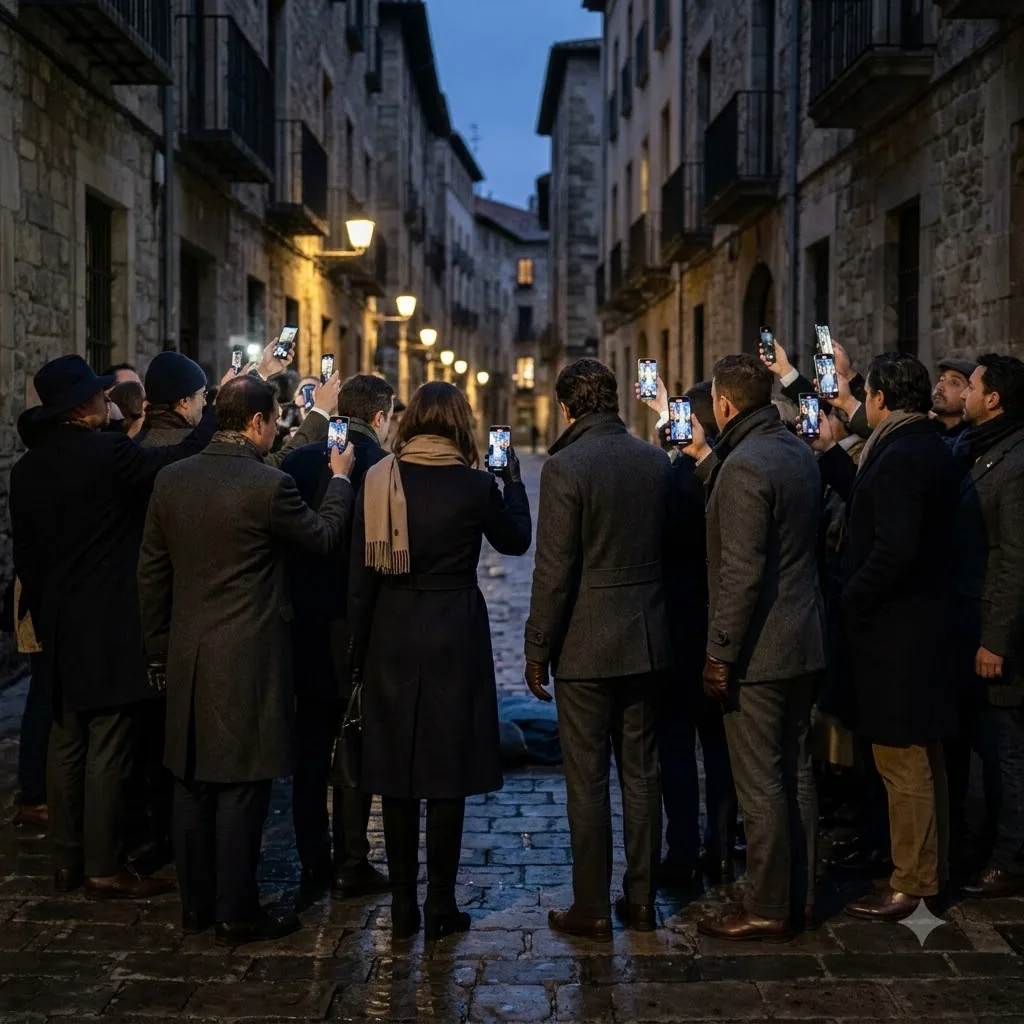
The crack of impact echoed off the restored brick facades, followed by a single, tearing scream that abruptly chopped into an absolute, suffocating silence. Julian stood frozen on the uneven cobblestones, his boots locked to the damp granite, entirely unable to force his weight forward. Ten feet away, a person lay crumpled in the center of the narrow, historic lane. Nobody ran to help. Instead, in a synchronized, eerie wave, a dozen people in cashmere overcoats and tailored wool blazers lifted their smartphones into the evening air. The pale blue glow of their screens illuminated their rigid, focused expressions.
Julian’s chest tightened as he stared at the motionless shape on the stones. A dark, glossy pool was already beginning to stretch out from beneath the dark fabric of the fallen figure, catching the amber glare of the antique streetlamps. Julian commanded his right leg to step forward. He ordered his knees to bend, to break the invisible, terrifying barrier separating the pristine onlookers from the bleeding victim. His muscles flatly refused. The sheer abnormality of the moment held him hostage. These were the neighborhood’s most prominent voices, the esteemed members of the heritage society, and they were treating a severe injury like a press conference.
Not a single voice called for an ambulance. The only sound was the faint, synthetic clicking of camera shutters and the rustle of expensive fabrics shifting as the crowd adjusted their angles.
A woman with an immaculate silver bob stepped to the very edge of the pooling blood. She did not crouch. She did not reach out a hand to check for a pulse or offer comfort. She simply rotated her device horizontally, the recording light a steady, accusing red dot in the gloom. Julian recognized the sharp, angular profile of the committee chairperson.
“We are documenting this live,” the woman said, her voice projecting with a practiced, theatrical sorrow that sliced through the quiet street. “This is the devastating reality of the proposed urban development. This is exactly what happens when you attempt to force careless, high-density infrastructure into a fragile, historic ecosystem. We stood before the city council and warned them. We told them the temporary staging areas were a death trap.”
Julian swallowed hard, the dry click in his throat feeling like swallowed glass. His pulse hammered against his ribs. He knew the heavy machinery parked at the far end of the block had been secured and silent for hours. He knew the narrative spinning into the camera lens was a calculated, deliberate manipulation. But speaking up meant severing his own lifeline. The career he had sacrificed his thirties to build, the impending partnership at the firm, rested entirely on keeping this exact group of wealthy, influential clients completely satisfied. They held the community board. They controlled the narrative. And right now, they were seamlessly converting a man’s broken body into a political weapon to kill the housing project they so deeply despised.
The fallen person let out a wet, ragged gasp. The sound was small, desperate, and fundamentally human.
The crowd did not flinch. Three more phones extended further over the invisible boundary, zooming in on the source of the sound.
“Look at the violence inflicted on our streets,” the woman continued, panning her device from the motionless body toward the distant, fenced-off construction equipment. “The developers promised safety. They promised care. Instead, they have brought blood to our doorsteps. This is the ultimate proof that the zoning variances must be revoked immediately.”
Julian felt a cold sweat breaking across the back of his neck. His hands trembled inside his jacket pockets. If he stepped into the frame, if he ruined the shot and declared the truth of what had actually caused the horrific noise just seconds ago, his name would be eradicated from the industry by morning. He would be professionally ruined. The preservationists would ensure he never worked on another local contract again. Yet, the ragged breathing from the cobblestones was growing shallower, a rhythmic ticking clock demanding action.
He dragged his eyes away from the committee chairperson and forced himself to look directly at the victim. The amber light caught a detail on the frayed collar of the man’s jacket, a small, undeniable piece of visual evidence that completely shattered the story being broadcast to the neighborhood. Julian’s lungs felt empty. The narrative was a lie, and the proof was lying right there in the open, waiting for anyone willing to risk everything to point it out.
Julian pulled his hands from his pockets and took one heavy, definitive step onto the blood-slicked stones.
The woman instantly snapped her camera away from the construction site and aimed the lens directly at Julian’s face.
The crack of impact echoed off the restored brick facades, followed by a single, tearing scream that abruptly chopped into an absolute, suffocating silence. Julian stood frozen on the uneven cobblestones, his boots locked to the damp granite, entirely unable to force his weight forward. Ten feet away, a person lay crumpled in the center of the narrow, historic lane. Nobody ran to help. Instead, in a synchronized, eerie wave, a dozen people in cashmere overcoats and tailored wool blazers lifted their smartphones into the evening air. The pale blue glow of their screens illuminated their rigid, focused expressions.
Julian’s chest tightened as he stared at the motionless shape on the stones. A dark, glossy pool was already beginning to stretch out from beneath the dark fabric of the fallen figure, catching the amber glare of the antique streetlamps. Julian commanded his right leg to step forward. He ordered his knees to bend, to break the invisible, terrifying barrier separating the pristine onlookers from the bleeding victim. His muscles flatly refused. The sheer abnormality of the moment held him hostage. These were the neighborhood’s most prominent voices, the esteemed members of the heritage society, and they were treating a severe injury like a press conference.
Not a single voice called for an ambulance. The only sound was the faint, synthetic clicking of camera shutters and the rustle of expensive fabrics shifting as the crowd adjusted their angles.
A woman with an immaculate silver bob stepped to the very edge of the pooling blood. She did not crouch. She did not reach out a hand to check for a pulse or offer comfort. She simply rotated her device horizontally, the recording light a steady, accusing red dot in the gloom. Julian recognized the sharp, angular profile of the committee chairperson.
“We are documenting this live,” the woman said, her voice projecting with a practiced, theatrical sorrow that sliced through the quiet street. “This is the devastating reality of the proposed urban development. This is exactly what happens when you attempt to force careless, high-density infrastructure into a fragile, historic ecosystem. We stood before the city council and warned them. We told them the temporary staging areas were a death trap.”
Julian swallowed hard, the dry click in his throat feeling like swallowed glass. His pulse hammered against his ribs. He knew the heavy machinery parked at the far end of the block had been secured and silent for hours. He knew the narrative spinning into the camera lens was a calculated, deliberate manipulation. But speaking up meant severing his own lifeline. The career he had sacrificed his thirties to build, the impending partnership at the firm, rested entirely on keeping this exact group of wealthy, influential clients completely satisfied. They held the community board. They controlled the narrative. And right now, they were seamlessly converting a man’s broken body into a political weapon to kill the housing project they so deeply despised.
The fallen person let out a wet, ragged gasp. The sound was small, desperate, and fundamentally human.
The crowd did not flinch. Three more phones extended further over the invisible boundary, zooming in on the source of the sound.
“Look at the violence inflicted on our streets,” the woman continued, panning her device from the motionless body toward the distant, fenced-off construction equipment. “The developers promised safety. They promised care. Instead, they have brought blood to our doorsteps. This is the ultimate proof that the zoning variances must be revoked immediately.”
Julian felt a cold sweat breaking across the back of his neck. His hands trembled inside his jacket pockets. If he stepped into the frame, if he ruined the shot and declared the truth of what had actually caused the horrific noise just seconds ago, his name would be eradicated from the industry by morning. He would be professionally ruined. The preservationists would ensure he never worked on another local contract again. Yet, the ragged breathing from the cobblestones was growing shallower, a rhythmic ticking clock demanding action.
He dragged his eyes away from the committee chairperson and forced himself to look directly at the victim. The amber light caught a detail on the frayed collar of the man’s jacket, a small, undeniable piece of visual evidence that completely shattered the story being broadcast to the neighborhood. Julian’s lungs felt empty. The narrative was a lie, and the proof was lying right there in the open, waiting for anyone willing to risk everything to point it out.
Julian pulled his hands from his pockets and took one heavy, definitive step onto the blood-slicked stones.
The woman instantly snapped her camera away from the construction site and aimed the lens directly at Julian’s face.