Story code: ST-001395
Part 1: The Ghost Shift
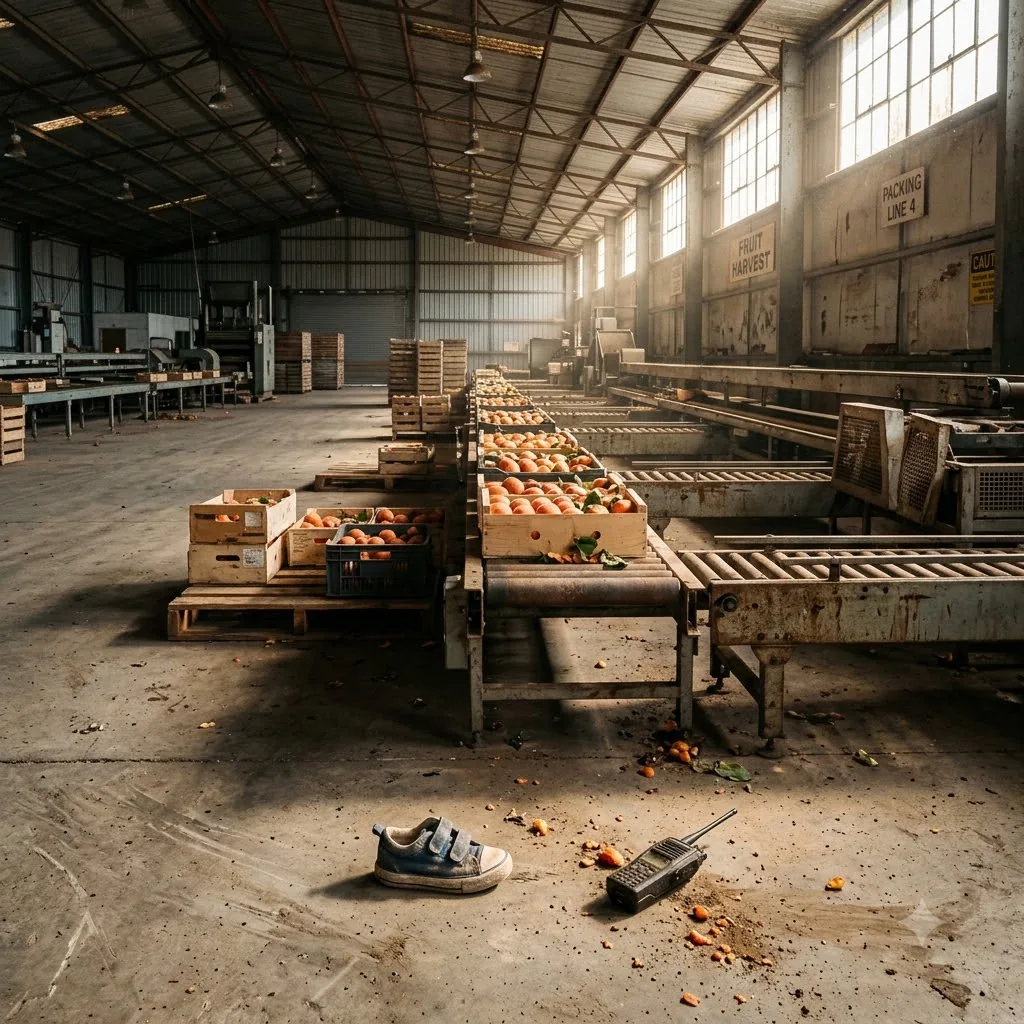
The heavy rubber flaps of the loading dock slapped shut behind Hector, but the expected chaos of line three never hit his ears. The washing vats churned, splashing water over nothing. The sorting belts hummed, carrying a continuous river of peaches toward the packing stations, but there was no clatter of wooden crates.
No shouting over the roar of the diesel generators. Just the mechanical drone of a peak harvest facility running completely blind.
Hector wiped a streak of grease and sweat from his forehead. A hundred and four degrees in the shade meant tempers ran high, and a wildcat strike had been brewing since Tuesday. He had expected a confrontation, a list of demands slapped against his chest by the shift foreman. Instead, he found a ghost ship. Thousands of pounds of delicate stone fruit were piling up at the end of the line, bruising against the steel barriers. The sweet, fermenting smell of ruined inventory was already thick in the trapped air.
He gritted his teeth, mentally calculating the thousands of dollars hemorrhaging by the minute. He walked down the slick concrete aisle, passing the grading stations. The overhead misters hissed, spraying fine water onto empty metal chutes. He intended to march straight to the break area, ready to negotiate, ready to offer the extra fifteen minutes of shade time they wanted, ready to swallow his pride to save the harvest.
Then he noticed the spilled coffee.
At station four, a heavy steel thermos lay on its side, dark liquid pooling and dripping steadily onto the grated floor. The sorting stools were not pushed back in a display of organized protest. They were knocked over entirely. One lay tangled in the power cords of a sizing machine, its legs spinning lazily as the vibrations of the belt shook the frame.
A walkout was a unified, defiant action. Workers left together, shouting their grievances. They did not abandon their personal thermoses. They did not leave their jackets hanging on the safety rails.
Hector stepped over a bruised pile of fallen fruit, his frustration evaporating into a sudden, sharp vigilance. A crackle of static broke through the mechanical hum. He tracked the sound to the edge of the washing vats. A heavy-duty two-way radio rested in a puddle of muddy water, its casing cracked, the green receive light flashing rhythmically.
He crouched down, reaching to pick it up. His fingers stopped inches from the wet plastic.
Half submerged in the same muddy puddle was a shoe. A tiny, bright pink sneaker with a Velcro strap, glowing with a faint LED light in the heel from the impact of hitting the concrete. It was no bigger than his palm. It belonged to Sofia, the shift manager’s four-year-old daughter. She was strictly confined to the air-conditioned front office during processing hours, coloring at a small desk her mother had set up.
Hector did not pick up the radio. He did not touch the shoe. The oppressive heat of the shed vanished, replaced by a cold, familiar leaden weight in his chest. The life he had built over the last eight years-the clean ledgers, the agricultural permits, the quiet, boring existence of a middle-aged farmer-began to crack right down the middle.
He knew what a panicked evacuation looked like. He knew what a raid looked like. His past did not send warning letters. It just arrived.
He spun around and broke into a dead sprint. His heavy steel-toed boots pounded against the wet concrete, slipping on the crushed fruit, tearing back through the main aisle. He bypassed the offices entirely, aiming for the massive rolling doors of the primary loading bay. The sunlight bleeding through the gaps in the corrugated metal seemed too bright, too harsh, exposing the sanctuary he had worked so hard to hide.
He slammed his shoulder into the heavy plastic strip curtains, bursting out onto the raised concrete platform. The dry, brutal heat of the valley hit him like a physical blow, but his eyes locked instantly on the perimeter.
Dust choked the air above the access road. Not the slow, lazy clouds kicked up by the heavy flatbed trucks hauling pallets, but tight, aggressive plumes rising fast. Hector narrowed his eyes against the glare, his heart rate dropping into a steady, chilling rhythm he had not used in a decade.
Three matte-black SUVs tore down the gravel driveway. They ignored the speed bumps, their reinforced suspensions absorbing the deep ruts without slowing. They did not bear the seals of the Department of Agriculture. They lacked the light bars of local sheriffs. They drove in a tight, practiced staggered formation, a tactical approach designed to prevent any vehicle from leaving the compound.
The lead SUV skidded violently, throwing a shower of gravel against the chain-link fence, braking sideways to block the main exit. The two trailing vehicles fanned out instantly, sealing off the packing shed’s loading zones.
Before the dust could even settle on their tinted windshields, four doors on the lead vehicle swung open in unison.
The heavy rubber flaps of the loading dock slapped shut behind Hector, but the expected chaos of line three never hit his ears. The washing vats churned, splashing water over nothing. The sorting belts hummed, carrying a continuous river of peaches toward the packing stations, but there was no clatter of wooden crates.
No shouting over the roar of the diesel generators. Just the mechanical drone of a peak harvest facility running completely blind.
Hector wiped a streak of grease and sweat from his forehead. A hundred and four degrees in the shade meant tempers ran high, and a wildcat strike had been brewing since Tuesday. He had expected a confrontation, a list of demands slapped against his chest by the shift foreman. Instead, he found a ghost ship. Thousands of pounds of delicate stone fruit were piling up at the end of the line, bruising against the steel barriers. The sweet, fermenting smell of ruined inventory was already thick in the trapped air.
He gritted his teeth, mentally calculating the thousands of dollars hemorrhaging by the minute. He walked down the slick concrete aisle, passing the grading stations. The overhead misters hissed, spraying fine water onto empty metal chutes. He intended to march straight to the break area, ready to negotiate, ready to offer the extra fifteen minutes of shade time they wanted, ready to swallow his pride to save the harvest.
Then he noticed the spilled coffee.
At station four, a heavy steel thermos lay on its side, dark liquid pooling and dripping steadily onto the grated floor. The sorting stools were not pushed back in a display of organized protest. They were knocked over entirely. One lay tangled in the power cords of a sizing machine, its legs spinning lazily as the vibrations of the belt shook the frame.
A walkout was a unified, defiant action. Workers left together, shouting their grievances. They did not abandon their personal thermoses. They did not leave their jackets hanging on the safety rails.
Hector stepped over a bruised pile of fallen fruit, his frustration evaporating into a sudden, sharp vigilance. A crackle of static broke through the mechanical hum. He tracked the sound to the edge of the washing vats. A heavy-duty two-way radio rested in a puddle of muddy water, its casing cracked, the green receive light flashing rhythmically.
He crouched down, reaching to pick it up. His fingers stopped inches from the wet plastic.
Half submerged in the same muddy puddle was a shoe. A tiny, bright pink sneaker with a Velcro strap, glowing with a faint LED light in the heel from the impact of hitting the concrete. It was no bigger than his palm. It belonged to Sofia, the shift manager’s four-year-old daughter. She was strictly confined to the air-conditioned front office during processing hours, coloring at a small desk her mother had set up.
Hector did not pick up the radio. He did not touch the shoe. The oppressive heat of the shed vanished, replaced by a cold, familiar leaden weight in his chest. The life he had built over the last eight years-the clean ledgers, the agricultural permits, the quiet, boring existence of a middle-aged farmer-began to crack right down the middle.
He knew what a panicked evacuation looked like. He knew what a raid looked like. His past did not send warning letters. It just arrived.
He spun around and broke into a dead sprint. His heavy steel-toed boots pounded against the wet concrete, slipping on the crushed fruit, tearing back through the main aisle. He bypassed the offices entirely, aiming for the massive rolling doors of the primary loading bay. The sunlight bleeding through the gaps in the corrugated metal seemed too bright, too harsh, exposing the sanctuary he had worked so hard to hide.
He slammed his shoulder into the heavy plastic strip curtains, bursting out onto the raised concrete platform. The dry, brutal heat of the valley hit him like a physical blow, but his eyes locked instantly on the perimeter.
Dust choked the air above the access road. Not the slow, lazy clouds kicked up by the heavy flatbed trucks hauling pallets, but tight, aggressive plumes rising fast. Hector narrowed his eyes against the glare, his heart rate dropping into a steady, chilling rhythm he had not used in a decade.
Three matte-black SUVs tore down the gravel driveway. They ignored the speed bumps, their reinforced suspensions absorbing the deep ruts without slowing. They did not bear the seals of the Department of Agriculture. They lacked the light bars of local sheriffs. They drove in a tight, practiced staggered formation, a tactical approach designed to prevent any vehicle from leaving the compound.
The lead SUV skidded violently, throwing a shower of gravel against the chain-link fence, braking sideways to block the main exit. The two trailing vehicles fanned out instantly, sealing off the packing shed’s loading zones.
Before the dust could even settle on their tinted windshields, four doors on the lead vehicle swung open in unison.