Story code: ST-001471
Part 2: The Spliced Confession
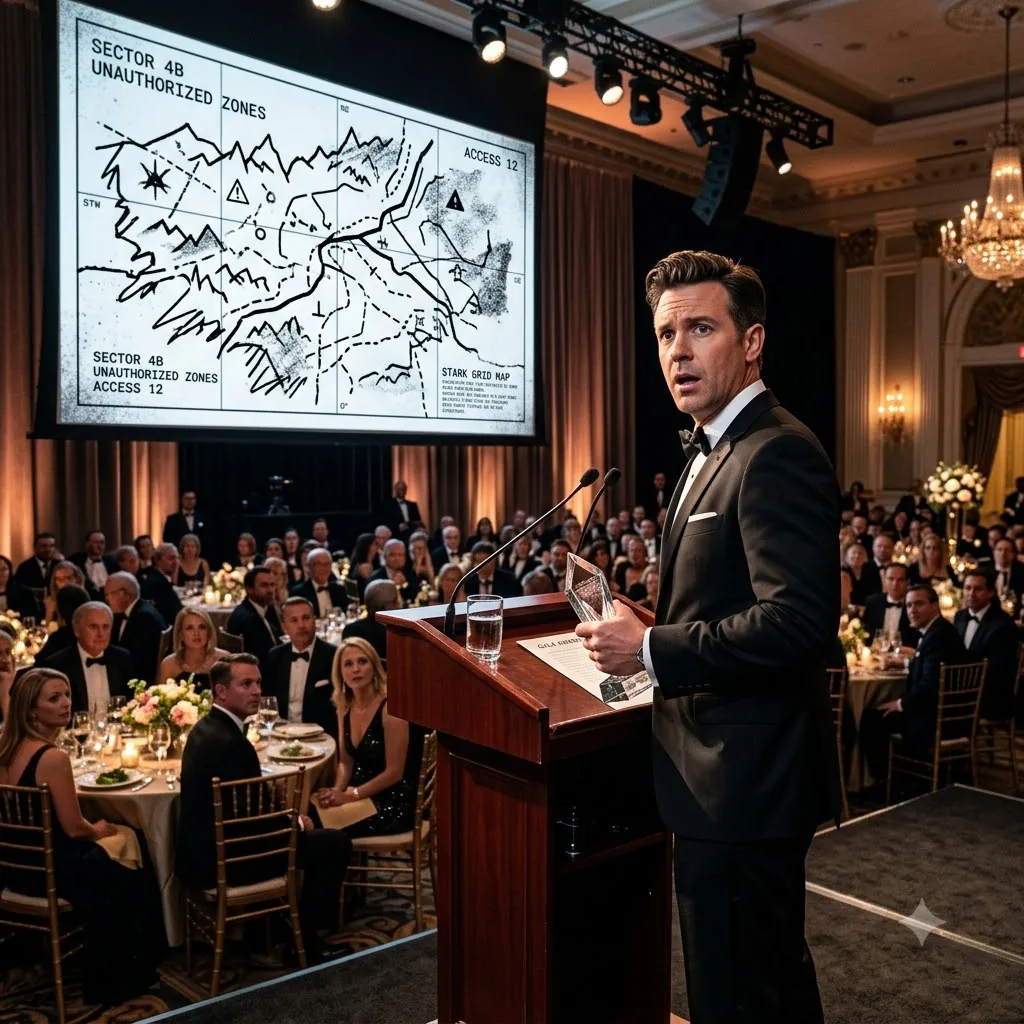
“Geological survey suppressed. Sector Four,” a flat, automated voice droned through the ballroom’s massive line-array speakers. The synthetic bass vibrated the floorboards beneath Marcus’s leather shoes, rattling the heavy glass obelisk still clutched in his sweating right hand.
On the sixty-foot screen behind him, the block of text expanded. It was a raw geotechnical report, dated three years prior. The thick red lines on the map flared brighter, bleeding outward from the parkway’s footprint and seeping into the dense grid of the surrounding residential neighborhoods.
Marcus grabbed the microphone, abandoning the shattered clicker at his feet. “Turn the audio off!” he shouted. “That report is obsolete! We oversaw a complete soil remediation of Sector Four!”
His voice didn’t project. The soundboard operator had cut the podium microphone. Marcus was screaming into dead foam. He slapped the side of the mic, the dull thud entirely swallowed by the synthetic voice echoing through the cavernous hall.
“Contaminant plume actively expanding into municipal aquifer,” the automated voice continued, entirely devoid of emotion. “Lethal concentrations of trichloroethylene. Capping operation unauthorized.”
“We didn’t cap it!” Marcus yelled, stepping out from behind the acrylic podium, gesturing frantically at the VIP tables. “We excavated! I signed the haul manifests myself!”
He looked directly at Mayor Thorne in the front row, desperate for an ally. He had sat in the Mayor’s office for three consecutive weekends, hammering out the municipal bonds required to pay for the hazardous waste removal. He had sacrificed his marriage to those endless nights, prioritizing the safety of the city’s drinking water over his own collapsing personal life. He had built this greenway the right way. He was an architect of the future, not a corporate butcher.
But the Mayor wasn’t looking at Marcus with solidarity. Thorne was staring at the screen, his face draining of color before flushing with a violent, mottled rage. The politician aggressively shoved his chair back, the wooden legs screeching against the parquet floor, and pulled his cell phone from his tuxedo jacket.
A sharp crackle of static cut through the ballroom, silencing the automated voice.
Then, a new audio track began to play. The acoustics of the recording were tinny, clearly captured from a cellular phone, but the voice was unmistakable. It was Marcus’s own voice, heavy with exhaustion and irritation.
*”I don’t care what the secondary core samples say,”* his recorded voice barked over the speakers. *”Bury it. I want the concrete poured by midnight before the state inspector gets back. We are not losing another month to this.”*
Marcus felt the blood vanish from his extremities. The world tilted dangerously on its axis. He recognized the audio instantly, but the context had been grotesquely weaponized. He had spoken those exact words two years ago to a lazy sub-contractor who was trying to delay pouring a retaining wall over a minor gravel dispute. It had absolutely nothing to do with toxic soil or environmental inspectors.
Someone had recorded his phone calls. Someone had meticulously spliced his frustration into a damning, career-ending confession.
The ballroom erupted. The suffocating silence shattered into a chaotic roar of five hundred panicked voices. In the back balcony, the press corps sprang to life. A blinding strobe of camera flashes began to rapidly detonate, capturing Marcus standing center stage, bathed in the sinister red glow of the projector, looking exactly like a man who had just been caught poisoning a city.
“It’s spliced!” Marcus screamed, his voice cracking, though he knew no one beyond the first row could hear him. He stepped toward the edge of the stage, holding his hands out in a desperate plea for reason. “That was about the east retaining wall! The dirt was clean! I checked the manifests!”
On the screen, a massive PDF document slammed over the map. It was a haul manifest. But it wasn’t the one Marcus had filed with the city. This one bore the logo of a shell corporation he had never seen before, authorizing the illegal dumping of the Bicentennial Parkway’s excavated soil into a protected wetland in the neighboring county.
And at the bottom of the page, magnified to the size of a billboard, was Marcus’s own signature.
It was a flawless forgery. Or worse, it was a document slipped into the mountain of paperwork he had blindly signed during the grueling eighty-hour weeks of the project’s final push. The absolute certainty that he had built something pure began to fracture. Had his lead contractor lied to him? Had the soil ever actually left the site?
He looked toward the wings. Sarah, the event organizer, was backing away from the stage, holding her clipboard against her chest like a shield. She wouldn’t meet his eyes.
At the rear of the ballroom, the heavy mahogany double doors swung violently open. Four men in dark windbreakers, wearing the distinct tactical earpieces of the Mayor’s private security detail, pushed through the fleeing crowd. They weren’t moving toward the sound booth to stop the broadcast. They were advancing directly down the center aisle, their eyes locked firmly on Marcus.
The projector hummed loudly, shifting gears. The forged manifest vanished, replaced by a live, shaky video feed. It showed the damp, concrete-lined subterranean maintenance tunnels directly beneath the parkway-the exact tunnels Marcus had designed. The camera panned down, focusing on a massive structural support column. A deep, jagged fissure ran up the center of the concrete, weeping a thick, unnatural black sludge.
A timestamp in the corner of the live feed blinked in real-time. It was happening right now.