Story code: ST-001479
Part 3: The Read-Only City
The blinding white beam from the municipal SUV pinned Leo against his immobilized box truck. He squinted, raising a gloved hand against the glare, his other arm desperately clutching the plastic bags bulging with thermal Mylar blankets. The heavy vehicle rolled to a stop, its tires crunching over the frost-heaved asphalt of the hardware store parking lot.
The driver’s side window hummed down, letting out a blast of heated air that smelled of vanilla air freshener and expensive leather. A young man in a tailored topcoat leaned across the center console.
“Leo Vance? Transport Unit Forty-Two?” the driver asked, his tone clipped and thoroughly annoyed. “I’m with the Mayor’s Office of Communications. You need to hand over the fob and get in. You’re violating the broadcast perimeter.”
“I’m not leaving my truck,” Leo said, his breath pluming in the harsh light. “Unlock the immobilizer. I have supplies to run.”
“The truck stays,” the staffer replied, tapping a sleek tablet mounted to his dashboard. “Fleet command locked it, and I don’t have the clearance to undo it. Mayor Vargas wants all out-of-bounds volunteers brought directly to the City Hall staging area for immediate debrief. You’re ruining the optics of the entire initiative. Now get in, or I call the actual police.”
Leo looked at the digital brick that was his supply truck, then at the dashboard clock in the SUV. The temperature was dropping by the minute. The families at the textile mill couldn’t wait. He didn’t have a choice. He yanked the rear door handle, threw the bags of blankets onto the leather seats, and climbed in.
The drive was an agonizing blur of neon signs and empty streets. The staffer ignored Leo’s demands for a radio patch to dispatch, simply turning up the heat and the classical music playing softly from the speakers. Ten minutes later, they cleared a heavy security checkpoint and descended into the restricted subterranean garage beneath City Hall.
“Wait here for security,” the driver commanded as he put the SUV in park.
Leo didn’t wait. He grabbed his bags of blankets, shoved his shoulder against the door, and sprinted for the elevator banks. He knew the layout of the municipal complex. If Vargas was doing a live broadcast, he would be utilizing the newly renovated ground-floor atrium, leveraging the massive glass walls to show off the freshly paved courtyard outside.
The elevator doors opened on the ground floor, spilling Leo into a chaotic hive of production assistants, municipal aides, and coiled television cables. Beyond the interior glass doors, out in the freezing courtyard, the ‘pristine transit hub’ was bathed in blinding stadium lights. A row of empty, idling city buses sat in perfect alignment.
Mayor Vargas was just stepping back through the glass doors into the warmth of the atrium, un-clipping a lavalier microphone from his lapel. His television smile instantly dissolved into a look of bone-deep exhaustion. He handed the mic to an assistant and reached for a steaming paper cup of coffee.
“Mayor Vargas!” Leo shouted, pushing past a man holding a clipboard.
Two heavy-set security guards immediately stepped into Leo’s path, their hands rising to his chest.
“Whoa, hold on there,” the larger guard barked.
Vargas turned, his eyes darting toward the glass doors to ensure the news cameras outside weren’t pointing their way. He saw Leo’s dirty high-vis jacket and the bulging plastic grocery bags.
“It’s fine, let him through,” Vargas muttered, waving the guards off. He rubbed his temples. “Leo, isn’t it? You’re the rogue driver. You’re making a massive mess for my communications team tonight. We have a highly integrated, automated logistics plan. You don’t just drive off the map because you feel like it.”
“The map is wrong,” Leo said, his voice trembling with a mix of adrenaline and the lingering cold. He dropped the heavy bags onto the polished marble floor. “The state closed the highway off-ramp. Over a hundred people are sitting on broken asphalt at the old textile mill. It is twenty-two degrees outside. The automated system immobilized my truck and froze my city purchasing card when I tried to buy space heaters.”
“The system detected an unauthorized deviation,” Vargas countered smoothly, falling right back into his rehearsed cadence. He gestured to an aide, who quickly handed him a tablet. “We have to maintain the integrity of the Green Zone hub. If we let volunteers scatter to the four winds, it’s operational chaos.”
“It is already chaos!” Leo took a step closer, smelling the thick hairspray and stale coffee radiating from the Mayor. “Just hit the override. Unlock truck forty-two and restore the funds. Right now. I have thirty blankets here, but I need the truck to get them to the mill, and I need my card unfrozen to go back for the heaters.”
Vargas stared at the tablet in his hands. He swiped his thumb across the screen, tapped an icon, and then quickly handed it back to his aide. “We will dispatch a fully authorized unit to the mill just as soon as the algorithm clears a safe, sanctioned route.”
“The algorithm doesn’t know the road is closed, and you know it,” Leo said. “Unlock my truck. It’s one button on your administrator screen.”
Vargas wouldn’t look him in the eye. He adjusted his silk tie, his gaze fixed on the empty buses outside. “It is not that simple, Leo.”
“It is exactly that simple. You’re the head of emergency management. You’re the system administrator. You are the Mayor of this city.”
“I am the Mayor, which means I have a municipal budget to balance!” Vargas snapped, his voice echoing sharply against the marble walls. The cluster of aides took a collective step back, their eyes wide.
Leo froze. He looked at the tablet resting against the aide’s chest, then back to Vargas. The tablet screen was entirely populated by a fleet tracking map. The trucks were represented by small red and green dots. There were no dropdown menus. No command line interfaces. No administrative controls. It was just a read-only graphical dashboard.
“Where is your manual override?” Leo asked, his voice dropping to a hollow whisper.
Vargas rubbed the bridge of his nose, suddenly looking incredibly fragile. He glanced back out at the television crews packing up their camera booms in the freezing courtyard.
“The tech vendor, SysLogix,” Vargas muttered, his voice tight and defensive. “They offered us two enterprise tiers for the routing and dispatch software. The premium tier included local, real-time manual override rights, a dedicated server, and dynamic rerouting.”
Leo felt the blood drain from his face as the reality of the digital cage finally clicked into place. “And the tier the city bought?”
“The basic package,” Vargas said, his jaw clenching. “It saved the city a million dollars in annual licensing fees. We look like fiscal heroes on the balance sheet. But the software architecture is locked. We surrendered all manual override rights to the vendor. Their automated geofence controls the fleet engine immobilizers and the digital wallets based on the fixed coordinates we submitted to them last month.”
“So call them,” Leo demanded, his panic spiking. “Tell them to change the coordinates right now.”
“I can’t,” Vargas said, his voice rising in a thin, desperate pitch. “Any perimeter modification requires an enterprise ticket submission to their corporate backend in California. Their service level agreement for emergency changes is forty-eight to seventy-two hours. No one is even in their office.”
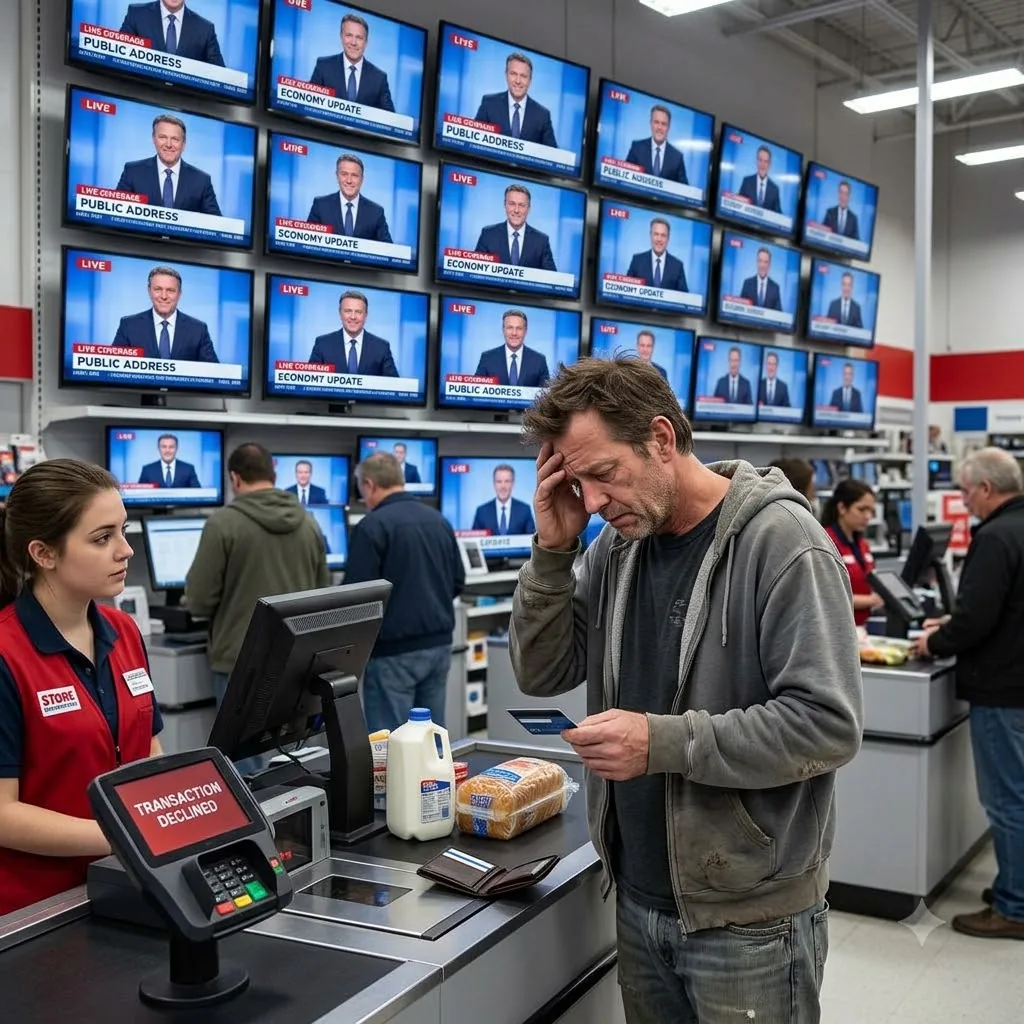
Leo stared at the man. The slick public relations campaign, the glowing news chyrons, the synchronized televisions playing on a loop-it was all a frantic facade covering an empty, powerless dashboard.
“You didn’t hijack my app to keep the optics controlled,” Leo realized, the profound horror of the situation tightening his chest. “You hijacked my screen with a countdown timer to hide the fact that you are entirely locked out of your own city. You literally cannot turn my truck back on.”
Vargas opened his mouth to spin it, to form another polished bureaucratic defense, but the words died in his throat. He stood utterly silent in the gleaming marble hall, trapped by his own budget cut, as the cold wind rattled the heavy glass doors.