Story code: ST-001479
Part 1: Declined in the Green Zone
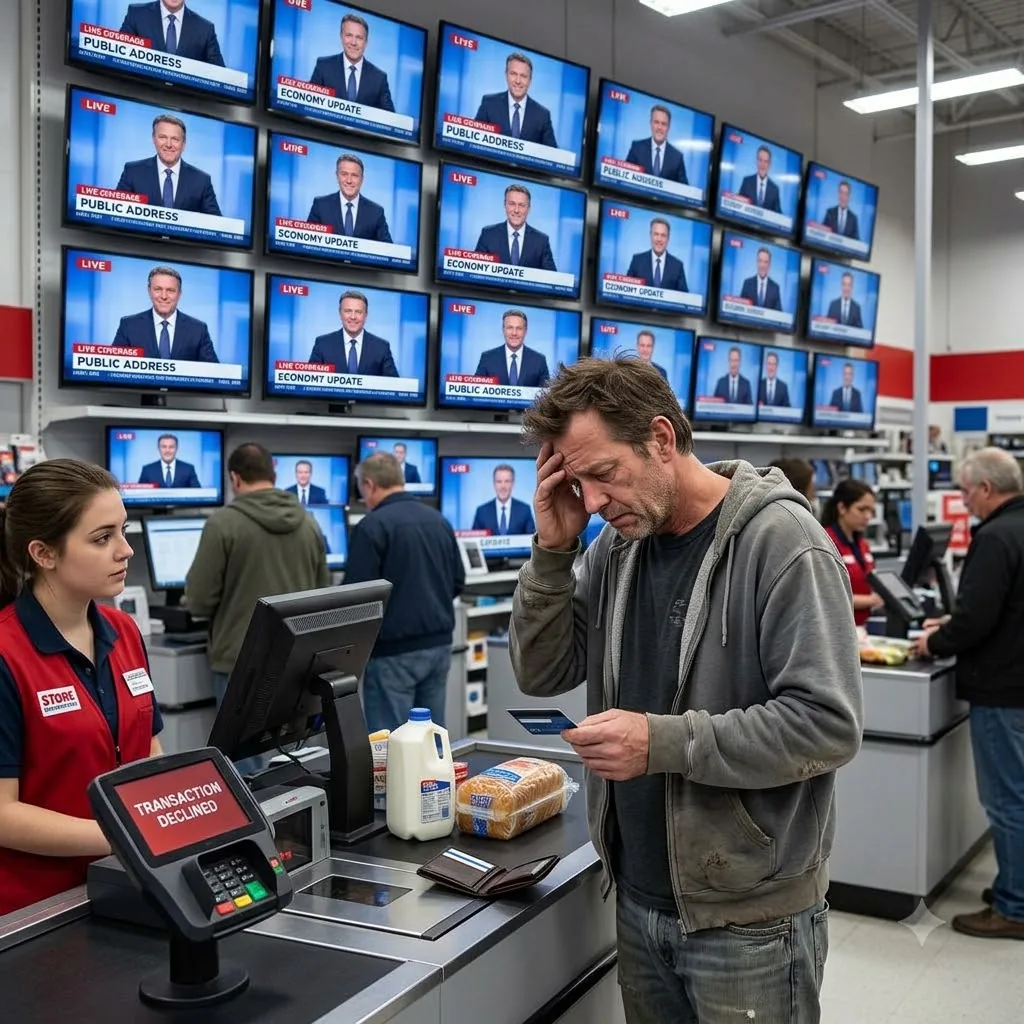
The red ‘DECLINED’ text flashed across the self-checkout terminal for the third time, locking the register with a sharp error chime. Leo stared at the towering pallets of bottled water, thermal blankets, and industrial space heaters he had just dragged to the front of the hardware store. The city-issued logistics card in his hand felt like a useless piece of plastic. The line of evening shoppers behind him shifted abruptly. Carts rattled against the linoleum. Boots squeaked. He tapped the bruised screen of his phone to force a refresh on the municipal transit app.
The card reader beeped an angry, rhythmic denial. A bright yellow banner dominated his phone screen. *Funds suspended. Unauthorized Route Deviation detected on Transport Unit Forty-Two.*
Above his head, a row of eight massive display televisions played the local news channel in perfect synchronization. Mayor Vargas filled the screens, standing at a freshly painted podium flanked by city flags. The sound was muted, but the closed captions ran in crisp white letters along the bottom of every monitor. *Our comprehensive municipal logistics network is fully operational. We are providing seamless, immediate support to all incoming transport buses.* The Mayor smiled broadly, pointing at a pristine, empty transit hub built specifically for the cameras.
Leo looked down from the smiling Mayor to the blinking red light on his terminal. The buses were not at the pristine transit hub. They were stalled on a cracked frontage road near the abandoned textile mill, two miles outside the designated green zone. The highway off-ramp had been abruptly closed for emergency paving by the state department of transportation. Leo had driven his supply truck to the only safe staging area left to intercept them. The automated tracking system did not care about state-mandated road closures. It only saw a GPS dot leaving the approved municipal polygon.
He pressed the ‘Call Attendant’ button on the terminal. A yellow light began flashing above his lane, casting a sickly glow over the stacks of emergency blankets. The people in line behind him murmured loudly. A man in a heavy coat abandoned a cart full of lumber and walked out the automatic doors into the freezing night. Leo swiped the app screen, hunting for a manual override button. The interface offered only a series of automated links to public relations statements and a digital form that promised a response within three to five business days. The temperature dropping outside meant the families sitting on the broken asphalt of the frontage road had less than three hours before the cold became dangerous.
The teenage cashier assigned to oversee the self-checkout lanes shuffled over, dragging his feet. He looked at the mountain of supplies, then at the error code on the screen. The cashier reached out and pressed a sequence of buttons on the terminal, clearing the decline message. He instructed Leo to wipe the magnetic strip and swipe it again. Leo ran the card down his jacket sleeve and swiped. The machine buzzed twice. *Error 404: Logistics Wallet Frozen.* The teenager shrugged and stated he would have to call a senior manager to void a transaction this large.
On the televisions, Mayor Vargas was now shaking hands with a state trooper. The captions declared that the city was a beacon of efficiency and compassionate infrastructure. Leo gripped the edge of the scanning bed. The total on the screen sat at two thousand, four hundred and twelve dollars. His personal bank account held exactly three hundred. The city had promised the funds would be liquid, untethered, and ready for the grassroots organizers to deploy the moment the buses arrived. The reality was a geofenced digital cage designed to keep the optics tightly controlled.
A woman in a blue store vest walked up, holding a set of keys on a coiled wristband. She glanced at the screen, then at the pallets of water, and finally at Leo. She pointed at the laminated sign above the register that stated the store policy on municipal voucher cards. The system required a live connection to the city dispatch server. If the dispatch server flagged a vehicle out of bounds, the funds evaporated instantly to prevent unauthorized distribution. The woman inserted her key into the side of the monitor and turned it. The screen went black, then reset to the store logo. She informed Leo they needed to clear the lane for paying customers and that he would have to move the pallets back to the aisles.
Leo held his ground, standing firmly between the manager and the heavy cart of space heaters. He pulled up the dispatch console on his phone to show her the highway closure alert and prove the deviation was a forced detour. He tapped the map icon to load the traffic data.
The city app immediately force-closed itself. A high-priority system notification hijacked his phone screen. The message did not come from the municipal transport department or the automated logistics server. It was a direct system-level override pushed from the Mayor’s Office of Communications, containing a single line of unselectable text and a red countdown timer that began ticking down from sixty seconds.
The red ‘DECLINED’ text flashed across the self-checkout terminal for the third time, locking the register with a sharp error chime. Leo stared at the towering pallets of bottled water, thermal blankets, and industrial space heaters he had just dragged to the front of the hardware store. The city-issued logistics card in his hand felt like a useless piece of plastic. The line of evening shoppers behind him shifted abruptly. Carts rattled against the linoleum. Boots squeaked. He tapped the bruised screen of his phone to force a refresh on the municipal transit app.
The card reader beeped an angry, rhythmic denial. A bright yellow banner dominated his phone screen. *Funds suspended. Unauthorized Route Deviation detected on Transport Unit Forty-Two.*
Above his head, a row of eight massive display televisions played the local news channel in perfect synchronization. Mayor Vargas filled the screens, standing at a freshly painted podium flanked by city flags. The sound was muted, but the closed captions ran in crisp white letters along the bottom of every monitor. *Our comprehensive municipal logistics network is fully operational. We are providing seamless, immediate support to all incoming transport buses.* The Mayor smiled broadly, pointing at a pristine, empty transit hub built specifically for the cameras.
Leo looked down from the smiling Mayor to the blinking red light on his terminal. The buses were not at the pristine transit hub. They were stalled on a cracked frontage road near the abandoned textile mill, two miles outside the designated green zone. The highway off-ramp had been abruptly closed for emergency paving by the state department of transportation. Leo had driven his supply truck to the only safe staging area left to intercept them. The automated tracking system did not care about state-mandated road closures. It only saw a GPS dot leaving the approved municipal polygon.
He pressed the ‘Call Attendant’ button on the terminal. A yellow light began flashing above his lane, casting a sickly glow over the stacks of emergency blankets. The people in line behind him murmured loudly. A man in a heavy coat abandoned a cart full of lumber and walked out the automatic doors into the freezing night. Leo swiped the app screen, hunting for a manual override button. The interface offered only a series of automated links to public relations statements and a digital form that promised a response within three to five business days. The temperature dropping outside meant the families sitting on the broken asphalt of the frontage road had less than three hours before the cold became dangerous.
The teenage cashier assigned to oversee the self-checkout lanes shuffled over, dragging his feet. He looked at the mountain of supplies, then at the error code on the screen. The cashier reached out and pressed a sequence of buttons on the terminal, clearing the decline message. He instructed Leo to wipe the magnetic strip and swipe it again. Leo ran the card down his jacket sleeve and swiped. The machine buzzed twice. *Error 404: Logistics Wallet Frozen.* The teenager shrugged and stated he would have to call a senior manager to void a transaction this large.
On the televisions, Mayor Vargas was now shaking hands with a state trooper. The captions declared that the city was a beacon of efficiency and compassionate infrastructure. Leo gripped the edge of the scanning bed. The total on the screen sat at two thousand, four hundred and twelve dollars. His personal bank account held exactly three hundred. The city had promised the funds would be liquid, untethered, and ready for the grassroots organizers to deploy the moment the buses arrived. The reality was a geofenced digital cage designed to keep the optics tightly controlled.
A woman in a blue store vest walked up, holding a set of keys on a coiled wristband. She glanced at the screen, then at the pallets of water, and finally at Leo. She pointed at the laminated sign above the register that stated the store policy on municipal voucher cards. The system required a live connection to the city dispatch server. If the dispatch server flagged a vehicle out of bounds, the funds evaporated instantly to prevent unauthorized distribution. The woman inserted her key into the side of the monitor and turned it. The screen went black, then reset to the store logo. She informed Leo they needed to clear the lane for paying customers and that he would have to move the pallets back to the aisles.
Leo held his ground, standing firmly between the manager and the heavy cart of space heaters. He pulled up the dispatch console on his phone to show her the highway closure alert and prove the deviation was a forced detour. He tapped the map icon to load the traffic data.
The city app immediately force-closed itself. A high-priority system notification hijacked his phone screen. The message did not come from the municipal transport department or the automated logistics server. It was a direct system-level override pushed from the Mayor’s Office of Communications, containing a single line of unselectable text and a red countdown timer that began ticking down from sixty seconds.