Story code: ST-001480
Part 1: Code 44B
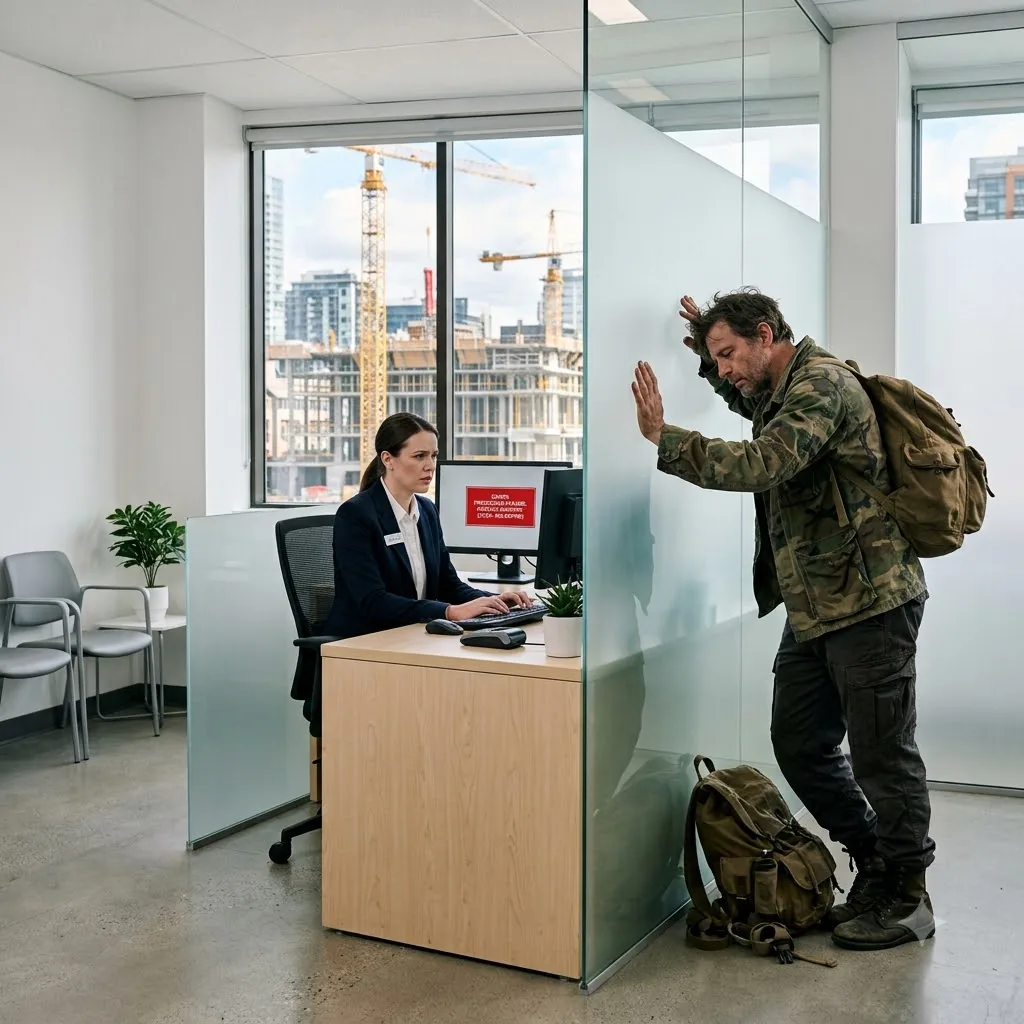
The cursor on the 4K display spun in a flawless, hypnotic azure circle, its reflection skating across the brushed steel counter. Arthur adjusted his ergonomic mesh chair, keeping his gaze strictly on the loading bar of the Department of Veterans Affairs proprietary intake software. He ignored the harsh, wet wheezing coming from the other side of the bulletproof glass partition. The man slumped against the barrier was a jarring disruption to the newly inaugurated satellite clinic, a sterile oasis built right into the ground floor of a billion-dollar luxury condominium development.
Through the floor-to-ceiling windows behind the waiting area, yellow construction cranes hoisted steel beams into the crisp morning sky, building more high-rises for the tech executives flocking to the revitalized district. Inside the clinic, the air smelled of lemon-scented industrial floor cleaner and the faint, metallic tang of ozone from the heavy-duty HVAC system. The aesthetic was designed to project modern, efficient healing. Frosted glass, white marble counters, muted gray upholstery on the waiting chairs.
The man bleeding onto the immaculate grout lines did not fit the aesthetic.
Arthur pressed the backspace key to clear an errant character in the search field. The veteran’s knuckles were white as they gripped the edge of the pass-through slot. Mud caked the soles of the man’s combat boots, shedding dry flakes onto the polished stone floor. A dark, rusted stain blossomed on the left shoulder of his olive-drab surplus jacket, spreading slowly with each labored breath. Arthur noted the stain with acute distaste, mentally drafting the maintenance ticket he would have to submit to get the marble scrubbed and sanitized.
The spinning circle on the monitor froze. The system was pinging the central database in Washington, pulling the housing eligibility matrix.
“Just a moment longer, Mr. Vance,” Arthur said. His voice was a practiced monotone, devoid of inflection, calibrated to de-escalate and dismiss. He did not look up from the screen, preferring the safe, orderly rows of digital data to the physical reality of the man standing two feet away.
Vance let out a sound that was half-cough, half-groan. The heavy thud of his forehead hitting the safety glass made Arthur flinch. The smudge of grease and sweat left on the pristine surface would require the specialized ammonia spray kept under the desk.
“I have been out there for three weeks,” Vance muttered, his voice scraping like coarse sandpaper. “Since the city sweeps. They took the tent. They took the winter gear.”
Arthur typed a twelve-digit alphanumeric authorization code into the prompt box. He had processed fifty-four individuals since the ribbon-cutting ceremony on Monday. The protocol was absolute. The computer analyzed service records, discharge statuses, and current dependency matrices. It cross-referenced zip codes and income brackets. Then, the server generated a binary outcome. Approve or deny. There was no manual override for the intake clerks, a feature Arthur found immensely comforting. It removed the messy, unpredictable human element from the transaction.
The hard drive whirred, a quiet hum in the heavily soundproofed lobby.
Arthur arranged his desktop accessories while the progress bar crept from eighty to ninety percent. He aligned the heavy red rubber stamp perfectly parallel to the edge of his leather mousepad. He squared the edges of the blank intake folders. He checked his reflection in the dark bezel of the monitor, ensuring his agency-issued tie was perfectly knotted. He was an instrument of the state, efficient, clean, and bound by regulations.
Vance shifted his weight, his boots scraping harshly against the floor. He gripped the metal speaker grille embedded in the glass.
“My wife,” Vance breathed out, the words fogging the partition. “She cannot do another night under the overpass. The cold is getting deep into her lungs.”
Arthur clicked the final confirmation dialog. The screen flashed white, then populated with dense rows of administrative text. A bold red banner materialized across the top of the profile. INELIGIBLE: CODE 44B. LACK OF CONTINUOUS VERIFIABLE RESIDENCY.
Arthur exhaled a slow, controlled breath. He reached for the intake form he had printed when Vance first staggered through the automatic sliding doors. He pulled the crisp white paper toward him, picked up the red rubber stamp, and pressed it firmly onto the ink pad.
The sound of the stamp hitting the paper echoed heavily in the silent room.
DENIED.
Arthur slid the paper through the narrow slot at the bottom of the glass.
“The system indicates a lapse in your residency verification for a period exceeding ninety days,” Arthur said, reciting the generated script on his right monitor. “Your emergency housing voucher application cannot be processed at this facility. You will need to file an appeal at the regional headquarters downtown.”
Vance stared at the bright red ink. His eyes, sunken and deeply bruised from exhaustion, tracked slowly up the paper, across the polished steel counter, and locked onto Arthur’s face. The veteran did not reach for the paper. He did not move away from the window.
“The regional office is twelve miles away,” Vance whispered.
“You have thirty days to file the administrative appeal,” Arthur replied, his fingers already hovering over the keyboard to close out the session. “Please clear the intake area for the next appointment.”
There was no one else in the waiting room. The clinic was entirely empty, the ambient silence broken only by the soft hum of the climate control.
Vance’s hand moved with sudden, terrifying speed, grabbing the edges of the metal slot. His muscles corded under the filthy jacket. He yanked upward on the security partition. The reinforced glass rattled violently in its aluminum frame, the heavy security bolts screaming in protest against the marble counter as the barrier groaned under the immense strain.
Arthur pushed his ergonomic chair back, the casters sliding over the plastic floor mat.
“I am not walking back out there,” Vance said, his voice dropping an octave, vibrating through the small opening as the thick glass shuddered and bowed under his grip.
The cursor on the 4K display spun in a flawless, hypnotic azure circle, its reflection skating across the brushed steel counter. Arthur adjusted his ergonomic mesh chair, keeping his gaze strictly on the loading bar of the Department of Veterans Affairs proprietary intake software. He ignored the harsh, wet wheezing coming from the other side of the bulletproof glass partition. The man slumped against the barrier was a jarring disruption to the newly inaugurated satellite clinic, a sterile oasis built right into the ground floor of a billion-dollar luxury condominium development.
Through the floor-to-ceiling windows behind the waiting area, yellow construction cranes hoisted steel beams into the crisp morning sky, building more high-rises for the tech executives flocking to the revitalized district. Inside the clinic, the air smelled of lemon-scented industrial floor cleaner and the faint, metallic tang of ozone from the heavy-duty HVAC system. The aesthetic was designed to project modern, efficient healing. Frosted glass, white marble counters, muted gray upholstery on the waiting chairs.
The man bleeding onto the immaculate grout lines did not fit the aesthetic.
Arthur pressed the backspace key to clear an errant character in the search field. The veteran’s knuckles were white as they gripped the edge of the pass-through slot. Mud caked the soles of the man’s combat boots, shedding dry flakes onto the polished stone floor. A dark, rusted stain blossomed on the left shoulder of his olive-drab surplus jacket, spreading slowly with each labored breath. Arthur noted the stain with acute distaste, mentally drafting the maintenance ticket he would have to submit to get the marble scrubbed and sanitized.
The spinning circle on the monitor froze. The system was pinging the central database in Washington, pulling the housing eligibility matrix.
“Just a moment longer, Mr. Vance,” Arthur said. His voice was a practiced monotone, devoid of inflection, calibrated to de-escalate and dismiss. He did not look up from the screen, preferring the safe, orderly rows of digital data to the physical reality of the man standing two feet away.
Vance let out a sound that was half-cough, half-groan. The heavy thud of his forehead hitting the safety glass made Arthur flinch. The smudge of grease and sweat left on the pristine surface would require the specialized ammonia spray kept under the desk.
“I have been out there for three weeks,” Vance muttered, his voice scraping like coarse sandpaper. “Since the city sweeps. They took the tent. They took the winter gear.”
Arthur typed a twelve-digit alphanumeric authorization code into the prompt box. He had processed fifty-four individuals since the ribbon-cutting ceremony on Monday. The protocol was absolute. The computer analyzed service records, discharge statuses, and current dependency matrices. It cross-referenced zip codes and income brackets. Then, the server generated a binary outcome. Approve or deny. There was no manual override for the intake clerks, a feature Arthur found immensely comforting. It removed the messy, unpredictable human element from the transaction.
The hard drive whirred, a quiet hum in the heavily soundproofed lobby.
Arthur arranged his desktop accessories while the progress bar crept from eighty to ninety percent. He aligned the heavy red rubber stamp perfectly parallel to the edge of his leather mousepad. He squared the edges of the blank intake folders. He checked his reflection in the dark bezel of the monitor, ensuring his agency-issued tie was perfectly knotted. He was an instrument of the state, efficient, clean, and bound by regulations.
Vance shifted his weight, his boots scraping harshly against the floor. He gripped the metal speaker grille embedded in the glass.
“My wife,” Vance breathed out, the words fogging the partition. “She cannot do another night under the overpass. The cold is getting deep into her lungs.”
Arthur clicked the final confirmation dialog. The screen flashed white, then populated with dense rows of administrative text. A bold red banner materialized across the top of the profile. INELIGIBLE: CODE 44B. LACK OF CONTINUOUS VERIFIABLE RESIDENCY.
Arthur exhaled a slow, controlled breath. He reached for the intake form he had printed when Vance first staggered through the automatic sliding doors. He pulled the crisp white paper toward him, picked up the red rubber stamp, and pressed it firmly onto the ink pad.
The sound of the stamp hitting the paper echoed heavily in the silent room.
DENIED.
Arthur slid the paper through the narrow slot at the bottom of the glass.
“The system indicates a lapse in your residency verification for a period exceeding ninety days,” Arthur said, reciting the generated script on his right monitor. “Your emergency housing voucher application cannot be processed at this facility. You will need to file an appeal at the regional headquarters downtown.”
Vance stared at the bright red ink. His eyes, sunken and deeply bruised from exhaustion, tracked slowly up the paper, across the polished steel counter, and locked onto Arthur’s face. The veteran did not reach for the paper. He did not move away from the window.
“The regional office is twelve miles away,” Vance whispered.
“You have thirty days to file the administrative appeal,” Arthur replied, his fingers already hovering over the keyboard to close out the session. “Please clear the intake area for the next appointment.”
There was no one else in the waiting room. The clinic was entirely empty, the ambient silence broken only by the soft hum of the climate control.
Vance’s hand moved with sudden, terrifying speed, grabbing the edges of the metal slot. His muscles corded under the filthy jacket. He yanked upward on the security partition. The reinforced glass rattled violently in its aluminum frame, the heavy security bolts screaming in protest against the marble counter as the barrier groaned under the immense strain.
Arthur pushed his ergonomic chair back, the casters sliding over the plastic floor mat.
“I am not walking back out there,” Vance said, his voice dropping an octave, vibrating through the small opening as the thick glass shuddered and bowed under his grip.