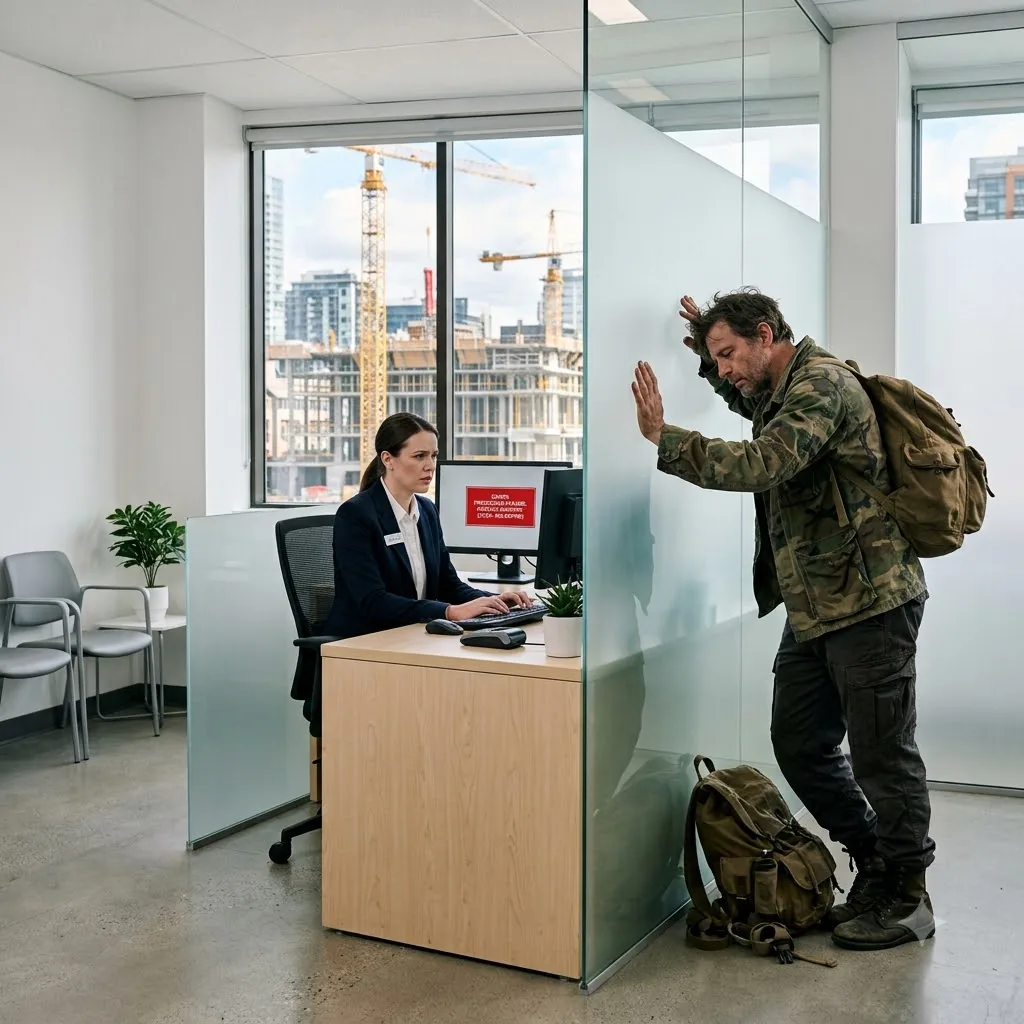
Story code: ST-001480
Part 3: The Weight of the Protocol
Arthur stared at the dark plastic dome of the phone. The silence in the clinic was now absolute, devoid even of the white noise of the network routers.
“Make it green,” Vance repeated, his voice a low rumble that vibrated against the desk.
Arthur’s hands hovered over the keyboard. His fingers, usually capable of one hundred and ten words per minute, felt thick and uncoordinated. “I… I can’t,” he stammered. “The external line is severed. The server can’t ping Washington. Even if I had override credentials-which I don’t-the local terminal is completely isolated.”
Vance’s sunken eyes scanned the screen. The red banner glared back, immutable. “Try.”
Arthur opened the command terminal. He typed in his supervisor’s bypass string, a sequence he had watched over a shoulder months ago. The system immediately returned a localized error: *Network Timeout. Remote Host Unreachable.*
“Look,” Arthur pleaded, tilting the monitor. “It’s a closed loop now. Nothing goes out. Nothing comes in.”
Vance stared at the error code. The veteran’s posture shifted. The immediate threat of violence gave way to a chilling, tactical calculation. He turned away from the desk and looked back out the doorway into the empty waiting room, then at the heavy fire door hanging loose on its broken magnetic lock.
“If it’s a closed loop,” Vance said, his breathing still ragged, “then nobody knows we’re in here. But when shift change happens, or those construction workers hit another line, somebody is going to walk through that front entrance.”
“The clinic closes at five,” Arthur whispered.
Vance checked the analog clock on the wall. “Three hours.” He gripped his bleeding shoulder, rotating it once with a sharp hiss of pain. “We hold the room. We wait for the connection to come back. Then you make it green.”
“Hold the room?” Arthur asked, his voice cracking. “From who?”
“Anyone who isn’t bringing a housing voucher.”
Vance moved to the heavy steel filing cabinet against the far wall. He dug his boots into the carpet and shoved. The cabinet shrieked against the gray tile. Arthur winced, watching the pristine floor scratch and gouge. Vance muscled the heavy steel box across the small office, wedging it against the open door to block the frame.
It wasn’t enough. The gap was still wide enough for a person to squeeze through, and the cabinet was prone to sliding on the polished tile.
Vance looked around the sterile, minimalist office. There was nothing else of substance. The desks were bolted to the floor. The ergonomic chairs were lightweight plastic and mesh.
Then Vance looked under Arthur’s desk.
Arthur felt all the blood drain from his face. “No,” Arthur said. The word came out breathless, choked.
Tucked deep against the firewall, hidden by the modesty panel, was Arthur’s bag. It was a massive, heavy-duty waxed canvas messenger bag, bulging at the seams. It was the antithesis of Arthur’s sleek, minimalist aesthetic. He had spent ten minutes that morning carefully hiding it out of sight before unlocking the front doors.
Vance knelt, ignoring Arthur’s protest, and reached under the desk. He grabbed the thick nylon handle.
“Stop, please, leave that,” Arthur said, pushing his chair back, his hands fluttering helplessly. “It’s personal.”
Vance grunted, hauling the bag out. It weighed easily forty pounds. “It’s weight,” the veteran replied coldly. “And it’s soft. It’ll wedge under the cabinet wheels. Keep it from sliding.”
“Don’t-” Arthur lunged forward, his self-preservation instinct momentarily overridden by raw, blinding panic.
Vance easily straight-armed Arthur back into the mesh chair. The veteran dragged the heavy canvas bag toward the door gap. He lifted it and jammed it violently into the space between the filing cabinet and the door jamb, intending to use it as a makeshift sandbag.
He kicked it hard with his combat boot to wedge it in.
The bag caught on the jagged, exposed metal flange of the ruined card reader bracket hanging from the wall.
*Riiiiiiip.*
The sound was deafening in the quiet room. The heavy waxed canvas, already strained to its absolute limit, gave way. The entire bottom seam blew out.
Arthur squeezed his eyes shut. His chest hitched.
The contents of Arthur’s entire life spilled onto the scratched tile.
There were no bureaucratic files. No extra agency ties. No neat stacks of intake forms.
A dark green, ultra-lightweight sleeping bag unspooled like a dead snake, tightly compressed in a waterproof stuff sack. Next to it clattered a cheap plastic toiletry caddy, spilling a half-empty bottle of generic body wash and a worn toothbrush. A bright yellow plastic scan-card from the 24-hour budget gym down the street skittered across the floor, coming to rest against Vance’s mud-caked boot.
And then, fluttering down like a dead leaf, a bright pink piece of paper landed face-up in the center of the pile.
Vance froze. He looked down at the mess, his chest heaving, the steel padlock still wrapped around his knuckles. He slowly released his grip on the torn canvas.
He reached down and picked up the pink paper.
Arthur didn’t move. He couldn’t breathe. The carefully constructed illusion-the pristine suit, the perfectly knotted tie, the rigid adherence to the rules that separated him from the wretched people on the other side of the glass-was gone. Stripped away in a single violent tear.
Vance stared at the document. It was heavily creased, as if it had been folded and unfolded a hundred times.
“Three-Day Notice to Pay Rent or Quit,” Vance read aloud. His voice lacked its previous thunder; it was flat, heavy with sudden, disorienting confusion. He read the address. “The Wellington Apartments. That’s… that’s the building they just tore down for the new luxury high-rises on 4th Street.”
Vance looked from the pink paper to the tightly rolled sleeping bag, and finally to the bright yellow gym card. The same gym card Vance’s wife used to shower when they had the extra fifteen dollars a month.
The veteran slowly raised his eyes, locking onto Arthur’s pale, trembling face.
Arthur sat perfectly rigid in his ergonomic chair, his perfectly pressed trousers inches from his spilled life. His throat worked silently. There was no script on his monitor for this. There was no protocol, no denial stamp, no bulletproof glass left to hide behind.
Vance dropped the padlock onto the desk. It landed with a heavy, final thud next to his own waterlogged discharge papers.
“You,” Vance whispered, staring at the clerk’s immaculate, desperate disguise. “You don’t have a home either.”