Story code: ST-001503
Part 1: The Sixty-Fourth Floor
The air in Marcus’s sixty-fourth-floor office tasted like filtered nothing. Beyond the floor-to-ceiling glass, the city was a hazy grid of heat and exhaust, but inside the hermetically sealed suite, the temperature held at a relentless, unfeeling sixty-eight degrees. He sat at a slab of polished black granite that served as a desk, surrounded by severe, minimalist leather furniture that screamed undisputed success and absolute isolation. There was not a single grain of dust, not a stray paperclip, not a personal photograph to disrupt the calculated perfection of the room. The only movement was the rhythmic blinking of a red light on his intercom console, demanding his immediate attention.
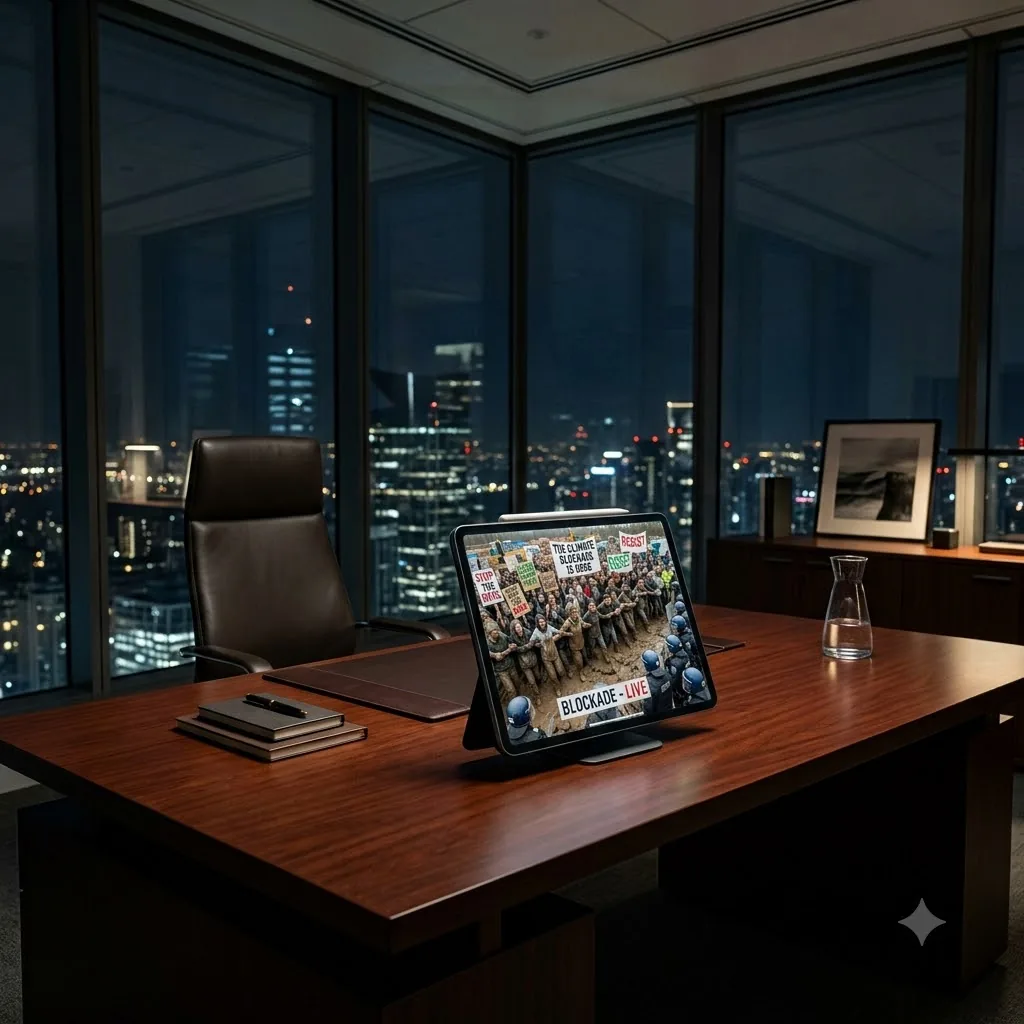
Beside the console, a sleek titanium tablet displayed a silent, chaotic livestream. The Uintah pipeline sector four was supposed to be a locked-down fortress of corrugated steel and razor wire. Instead, the high-definition drone feed showed a flood of bodies surging over flattened chain-link fencing. Thick, dark mud spattered the lower lens of the primary security camera, blurring the edges of the frame, but the center remained sharply focused on the perimeter breach. Marcus watched the frantic, jagged movements of the protestors with total professional detachment. This was his exclusive domain. As a senior crisis architect, raw chaos was merely unrefined material waiting to be molded into a sterile corporate narrative.
He adjusted his cuffs, the heavy gold links clinking softly against the granite desk. The unnatural silence of the office amplified the microscopic sounds of his own existence-the rustle of his bespoke wool trousers, the steady intake of conditioned air, the faint click of his fingernail tapping the edge of the tablet. On the screen, the private tactical response teams in heavy riot gear were already assembling at the tree line. They formed a solid wall of black composite armor waiting for the green light. The protocol was brutally simple. A single authorization from Marcus’s office would unleash the sweep, clearing the mud and the trespassing bodies from the corporate right-of-way. The smear campaign was already loaded on his secondary monitor. It was a masterpiece of digital assassination, framing the protestors as dangerous, anti-progress extremists. The targeted ads and shadow accounts were primed to launch the moment the first tear gas canister deployed, a necessary barrage to protect the board’s reputation and the company stock price before the opening bell. It was a flawless, ruthless strategy he had executed a dozen times before without a flicker of hesitation or an ounce of regret.
Marcus traced the polished edge of the intercom button. The plastic was cool and unyielding under his fingertip. Pressing it meant the swift end of the disruption and a guaranteed return to the profitable quiet. The tactical units would move in rapidly with batons and heavy-duty zip-ties. The evening news anchors would read his carefully crafted bullet points exactly as they were written. The Uintah pipeline would resume its relentless, earth-gouging push forward, and his year-end bonus would comfortably secure another decade in this sterile glass box in the sky. He leaned closer to the tablet to identify the primary instigators, his eyes automatically scanning the pixelated crowd for the most aggressive targets to feed to the waiting media hounds.
The drone operator zoomed in on the vanguard of the breach. A lead protestor stood defiantly atop a stalled yellow bulldozer, waving a road flare that burned a silent, brilliant magenta against the overcast sky. The figure wore an oversized, heavy canvas jacket, their face completely obscured by a tightly wound woven scarf and dark goggles. Marcus’s finger hovered a fraction of an inch above the intercom. He needed only to press down and say a single word of confirmation to the security chief waiting on the other end of the open line. The protestor turned sharply toward the camera lens, the sudden, violent motion causing the thick scarf to slip down around their collar. The burning flare illuminated the figure’s chest in stark relief.
Resting heavily against the worn canvas was a necklace. It was a massive, unmistakable piece of vintage silverwork, a traditional squash blossom design set with a highly specific, asymmetrical pattern of rough-cut turquoise stones. One of the large crescent stones at the very bottom of the piece had a distinct, jagged fracture running directly through the center. Marcus stopped breathing. The perfectly filtered air of the executive suite suddenly felt impossibly thick, heavy, and entirely devoid of oxygen. His pulse hammered a violent, deafening rhythm against his eardrums, completely drowning out the ambient hum of the climate control system. The gold cufflink dragged loudly against the granite as his hand locked in mid-air. He stared intensely at the glowing screen, the polished silver blossoms reflecting the harsh magenta light of the flare. The red light on the intercom blinked faster, flashing a frantic demand for the final order to sweep. Marcus stared at the fractured turquoise stone, his outstretched finger trembling violently just above the unpressed button, unable to bridge the final millimeter of empty space.
The air in Marcus’s sixty-fourth-floor office tasted like filtered nothing. Beyond the floor-to-ceiling glass, the city was a hazy grid of heat and exhaust, but inside the hermetically sealed suite, the temperature held at a relentless, unfeeling sixty-eight degrees. He sat at a slab of polished black granite that served as a desk, surrounded by severe, minimalist leather furniture that screamed undisputed success and absolute isolation. There was not a single grain of dust, not a stray paperclip, not a personal photograph to disrupt the calculated perfection of the room. The only movement was the rhythmic blinking of a red light on his intercom console, demanding his immediate attention.
Beside the console, a sleek titanium tablet displayed a silent, chaotic livestream. The Uintah pipeline sector four was supposed to be a locked-down fortress of corrugated steel and razor wire. Instead, the high-definition drone feed showed a flood of bodies surging over flattened chain-link fencing. Thick, dark mud spattered the lower lens of the primary security camera, blurring the edges of the frame, but the center remained sharply focused on the perimeter breach. Marcus watched the frantic, jagged movements of the protestors with total professional detachment. This was his exclusive domain. As a senior crisis architect, raw chaos was merely unrefined material waiting to be molded into a sterile corporate narrative.
He adjusted his cuffs, the heavy gold links clinking softly against the granite desk. The unnatural silence of the office amplified the microscopic sounds of his own existence-the rustle of his bespoke wool trousers, the steady intake of conditioned air, the faint click of his fingernail tapping the edge of the tablet. On the screen, the private tactical response teams in heavy riot gear were already assembling at the tree line. They formed a solid wall of black composite armor waiting for the green light. The protocol was brutally simple. A single authorization from Marcus’s office would unleash the sweep, clearing the mud and the trespassing bodies from the corporate right-of-way. The smear campaign was already loaded on his secondary monitor. It was a masterpiece of digital assassination, framing the protestors as dangerous, anti-progress extremists. The targeted ads and shadow accounts were primed to launch the moment the first tear gas canister deployed, a necessary barrage to protect the board’s reputation and the company stock price before the opening bell. It was a flawless, ruthless strategy he had executed a dozen times before without a flicker of hesitation or an ounce of regret.
Marcus traced the polished edge of the intercom button. The plastic was cool and unyielding under his fingertip. Pressing it meant the swift end of the disruption and a guaranteed return to the profitable quiet. The tactical units would move in rapidly with batons and heavy-duty zip-ties. The evening news anchors would read his carefully crafted bullet points exactly as they were written. The Uintah pipeline would resume its relentless, earth-gouging push forward, and his year-end bonus would comfortably secure another decade in this sterile glass box in the sky. He leaned closer to the tablet to identify the primary instigators, his eyes automatically scanning the pixelated crowd for the most aggressive targets to feed to the waiting media hounds.
The drone operator zoomed in on the vanguard of the breach. A lead protestor stood defiantly atop a stalled yellow bulldozer, waving a road flare that burned a silent, brilliant magenta against the overcast sky. The figure wore an oversized, heavy canvas jacket, their face completely obscured by a tightly wound woven scarf and dark goggles. Marcus’s finger hovered a fraction of an inch above the intercom. He needed only to press down and say a single word of confirmation to the security chief waiting on the other end of the open line. The protestor turned sharply toward the camera lens, the sudden, violent motion causing the thick scarf to slip down around their collar. The burning flare illuminated the figure’s chest in stark relief.
Resting heavily against the worn canvas was a necklace. It was a massive, unmistakable piece of vintage silverwork, a traditional squash blossom design set with a highly specific, asymmetrical pattern of rough-cut turquoise stones. One of the large crescent stones at the very bottom of the piece had a distinct, jagged fracture running directly through the center. Marcus stopped breathing. The perfectly filtered air of the executive suite suddenly felt impossibly thick, heavy, and entirely devoid of oxygen. His pulse hammered a violent, deafening rhythm against his eardrums, completely drowning out the ambient hum of the climate control system. The gold cufflink dragged loudly against the granite as his hand locked in mid-air. He stared intensely at the glowing screen, the polished silver blossoms reflecting the harsh magenta light of the flare. The red light on the intercom blinked faster, flashing a frantic demand for the final order to sweep. Marcus stared at the fractured turquoise stone, his outstretched finger trembling violently just above the unpressed button, unable to bridge the final millimeter of empty space.