Story code: ST-001504
Part 1: The 3:52 PM Checkpoint
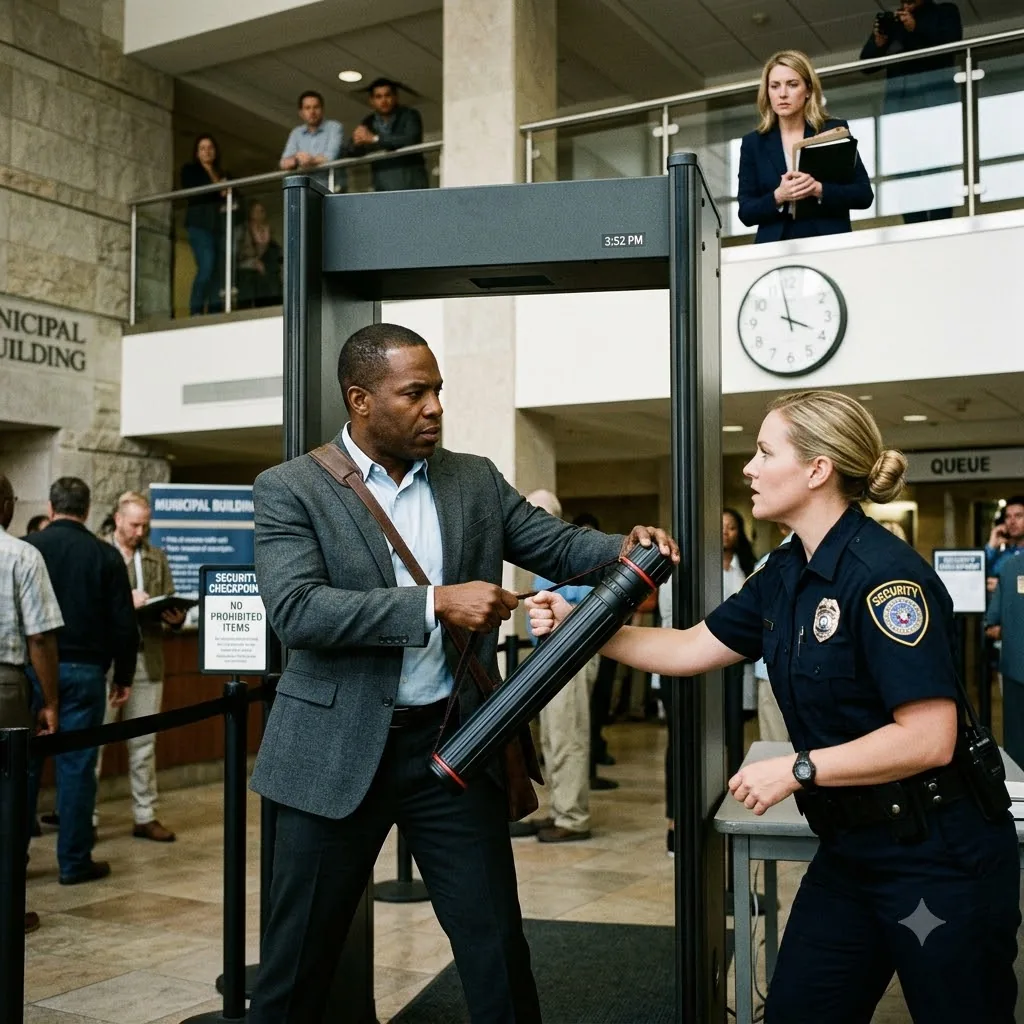
The red digital numbers on the security desk clock flipped to 3:52 PM just as Marcus unbuckled his leather belt. Eight minutes remained until the clerk’s office locked its heavy oak doors on the fourth floor. The line for the municipal building’s metal detector crawled, held up by a guard meticulously examining every compartment of a grandmother’s coin purse. Marcus kept his eyes locked on the digital display, his left hand gripping the nylon strap of the heavy black PVC architectural tube slung across his back. The tube contained the required blueprints and land-use filings for the Eastside annex.
Two men in tailored navy suits approached the checkpoint from the left, bypassing the velvet ropes entirely. They carried thick leather briefcases and wore standard municipal visitor lanyards swaying over their silk ties. The head guard at the side gate nodded, respectfully unclipping the barrier chain. The men walked right through the gap without breaking their conversation, their briefcases entirely bypassing the X-ray belt. Marcus watched them head straight for the elevator banks. The rules in the municipal lobby were fluid, bending easily for men who looked like they owned the concrete beneath their wingtips.
Marcus stepped up to the plastic bins. He placed his phone, keys, and belt into the gray tray. He unslung the PVC tube and laid it carefully on the conveyor belt. The rubber flaps of the X-ray machine swallowed it. He walked through the archway of the metal detector.
Silence. No beep. No flashing red light.
He stepped toward the end of the steel roller table to collect his belongings. A thick arm in a crisp polyester sleeve suddenly blocked his path.
“Step to the side,” the guard said. He was a broad man with a tight buzz cut and a radio clipped to his broad shoulder. “Random secondary check.”
Marcus looked back at the digital clock on the desk. 3:54 PM. Six minutes.
“I didn’t beep,” Marcus stated, keeping his voice carefully level. He pointed toward his gray tray. “I just need my phone and my belt.”
“Sir, step onto the yellow footprints,” the guard commanded, gesturing down to a worn decal stuck to the linoleum floor.
Marcus looked past the guard’s wide shoulder. Up on the second-floor mezzanine, leaning against the glass railing, stood Elaine Sterling. The lead city planner. She was staring directly down at the security checkpoint. She held a paper cup of coffee, standing completely still, watching Marcus with the cold detachment of a hawk watching a field mouse. She tapped the glass face of her watch with one index finger. She knew exactly what time it was. She also knew exactly what was inside the tube rolling out of the X-ray machine.
“My filings are due at four,” Marcus said, planting his feet firmly on the floor. “The clerk’s office closes in exactly five minutes.”
“Then you should have gotten here earlier,” the guard replied, pulling on a pair of tight blue nitrile gloves. He snapped the latex at the wrist, a deliberate, time-wasting motion. “Take off your shoes.”
Marcus slipped out of his loafers. The cold floor seeped through his thin socks. He watched the digital numbers change again. 3:55 PM. Elaine was still watching from her perch on the mezzanine. The guard moved with agonizing slowness, running a handheld wand over Marcus’s arms, down his ribs, and along his legs. The wand remained perfectly silent. The guard paused at Marcus’s ankles, then slowly dragged the electronic wand back up his other leg, inspecting the fabric of his trousers as if searching for invisible seams.
Every second felt impossibly heavy. The hum of the busy lobby, the echo of hard-soled footsteps, the ringing of a distant telephone all amplified in Marcus’s ears. The clerk’s office was four floors up, and the elevators in this historic building were notoriously sluggish. Even if he sprinted up the marble stairs, he needed at least three uninterrupted minutes to reach the desk.
“Alright,” the guard muttered, finally turning away from Marcus. “Now the bag check.”
The guard walked over to the conveyor belt and picked up the black PVC tube. He did not reach for Marcus’s phone or his belt. He focused entirely on the heavy drafting tube. He held it up to the harsh fluorescent light as if the solid black plastic might suddenly become transparent.
“It is just paper,” Marcus said, stepping off the yellow footprints. “Architectural plans. The X-ray just verified that for you.”
“We have to be absolutely sure,” the guard said. He gripped the textured, threaded cap of the tube. “Lots of places to hide contraband in a sealed pipe.”
Marcus stepped forward. The air in the lobby seemed to thin out. 3:56 PM. Four minutes.
“Do not open that,” Marcus warned. His voice dropped an octave, losing the polite, measured veneer he usually reserved for municipal employees. “Those documents are sealed and stamped by a notary. If you break that seal before the clerk logs it into the system, the filing is completely void.”
Elaine Sterling shifted her weight on the mezzanine above. She took a slow, deliberate sip of her coffee. The strategy was entirely obvious now. They did not need to arrest him, and they did not need to find anything illegal. They just needed to break the notary seal or delay him past four o’clock. If the filing missed the deadline, the Eastside annex development rights reverted to the city. Elaine would get the land.
The guard ignored Marcus. He wrapped his thick, gloved fingers around the cap and began to twist. The plastic threads gave a loud groan.
“I said stop,” Marcus said, stepping within inches of the guard’s chest.
“Back up, sir,” the guard warned, his free hand moving to hover over his radio. “Or I will confiscate this item as an immediate security threat.”
The clock flipped to 3:57 PM. Three minutes. The guard tightened his grip on the tube, yanking it forcefully backward toward his own chest to claim full physical possession of the item.
Marcus lunged forward, his hand snapping out to clamp down hard over the guard’s wrist.
The red digital numbers on the security desk clock flipped to 3:52 PM just as Marcus unbuckled his leather belt. Eight minutes remained until the clerk’s office locked its heavy oak doors on the fourth floor. The line for the municipal building’s metal detector crawled, held up by a guard meticulously examining every compartment of a grandmother’s coin purse. Marcus kept his eyes locked on the digital display, his left hand gripping the nylon strap of the heavy black PVC architectural tube slung across his back. The tube contained the required blueprints and land-use filings for the Eastside annex.
Two men in tailored navy suits approached the checkpoint from the left, bypassing the velvet ropes entirely. They carried thick leather briefcases and wore standard municipal visitor lanyards swaying over their silk ties. The head guard at the side gate nodded, respectfully unclipping the barrier chain. The men walked right through the gap without breaking their conversation, their briefcases entirely bypassing the X-ray belt. Marcus watched them head straight for the elevator banks. The rules in the municipal lobby were fluid, bending easily for men who looked like they owned the concrete beneath their wingtips.
Marcus stepped up to the plastic bins. He placed his phone, keys, and belt into the gray tray. He unslung the PVC tube and laid it carefully on the conveyor belt. The rubber flaps of the X-ray machine swallowed it. He walked through the archway of the metal detector.
Silence. No beep. No flashing red light.
He stepped toward the end of the steel roller table to collect his belongings. A thick arm in a crisp polyester sleeve suddenly blocked his path.
“Step to the side,” the guard said. He was a broad man with a tight buzz cut and a radio clipped to his broad shoulder. “Random secondary check.”
Marcus looked back at the digital clock on the desk. 3:54 PM. Six minutes.
“I didn’t beep,” Marcus stated, keeping his voice carefully level. He pointed toward his gray tray. “I just need my phone and my belt.”
“Sir, step onto the yellow footprints,” the guard commanded, gesturing down to a worn decal stuck to the linoleum floor.
Marcus looked past the guard’s wide shoulder. Up on the second-floor mezzanine, leaning against the glass railing, stood Elaine Sterling. The lead city planner. She was staring directly down at the security checkpoint. She held a paper cup of coffee, standing completely still, watching Marcus with the cold detachment of a hawk watching a field mouse. She tapped the glass face of her watch with one index finger. She knew exactly what time it was. She also knew exactly what was inside the tube rolling out of the X-ray machine.
“My filings are due at four,” Marcus said, planting his feet firmly on the floor. “The clerk’s office closes in exactly five minutes.”
“Then you should have gotten here earlier,” the guard replied, pulling on a pair of tight blue nitrile gloves. He snapped the latex at the wrist, a deliberate, time-wasting motion. “Take off your shoes.”
Marcus slipped out of his loafers. The cold floor seeped through his thin socks. He watched the digital numbers change again. 3:55 PM. Elaine was still watching from her perch on the mezzanine. The guard moved with agonizing slowness, running a handheld wand over Marcus’s arms, down his ribs, and along his legs. The wand remained perfectly silent. The guard paused at Marcus’s ankles, then slowly dragged the electronic wand back up his other leg, inspecting the fabric of his trousers as if searching for invisible seams.
Every second felt impossibly heavy. The hum of the busy lobby, the echo of hard-soled footsteps, the ringing of a distant telephone all amplified in Marcus’s ears. The clerk’s office was four floors up, and the elevators in this historic building were notoriously sluggish. Even if he sprinted up the marble stairs, he needed at least three uninterrupted minutes to reach the desk.
“Alright,” the guard muttered, finally turning away from Marcus. “Now the bag check.”
The guard walked over to the conveyor belt and picked up the black PVC tube. He did not reach for Marcus’s phone or his belt. He focused entirely on the heavy drafting tube. He held it up to the harsh fluorescent light as if the solid black plastic might suddenly become transparent.
“It is just paper,” Marcus said, stepping off the yellow footprints. “Architectural plans. The X-ray just verified that for you.”
“We have to be absolutely sure,” the guard said. He gripped the textured, threaded cap of the tube. “Lots of places to hide contraband in a sealed pipe.”
Marcus stepped forward. The air in the lobby seemed to thin out. 3:56 PM. Four minutes.
“Do not open that,” Marcus warned. His voice dropped an octave, losing the polite, measured veneer he usually reserved for municipal employees. “Those documents are sealed and stamped by a notary. If you break that seal before the clerk logs it into the system, the filing is completely void.”
Elaine Sterling shifted her weight on the mezzanine above. She took a slow, deliberate sip of her coffee. The strategy was entirely obvious now. They did not need to arrest him, and they did not need to find anything illegal. They just needed to break the notary seal or delay him past four o’clock. If the filing missed the deadline, the Eastside annex development rights reverted to the city. Elaine would get the land.
The guard ignored Marcus. He wrapped his thick, gloved fingers around the cap and began to twist. The plastic threads gave a loud groan.
“I said stop,” Marcus said, stepping within inches of the guard’s chest.
“Back up, sir,” the guard warned, his free hand moving to hover over his radio. “Or I will confiscate this item as an immediate security threat.”
The clock flipped to 3:57 PM. Three minutes. The guard tightened his grip on the tube, yanking it forcefully backward toward his own chest to claim full physical possession of the item.
Marcus lunged forward, his hand snapping out to clamp down hard over the guard’s wrist.