Story code: ST-001544
Part 1: The Simulation
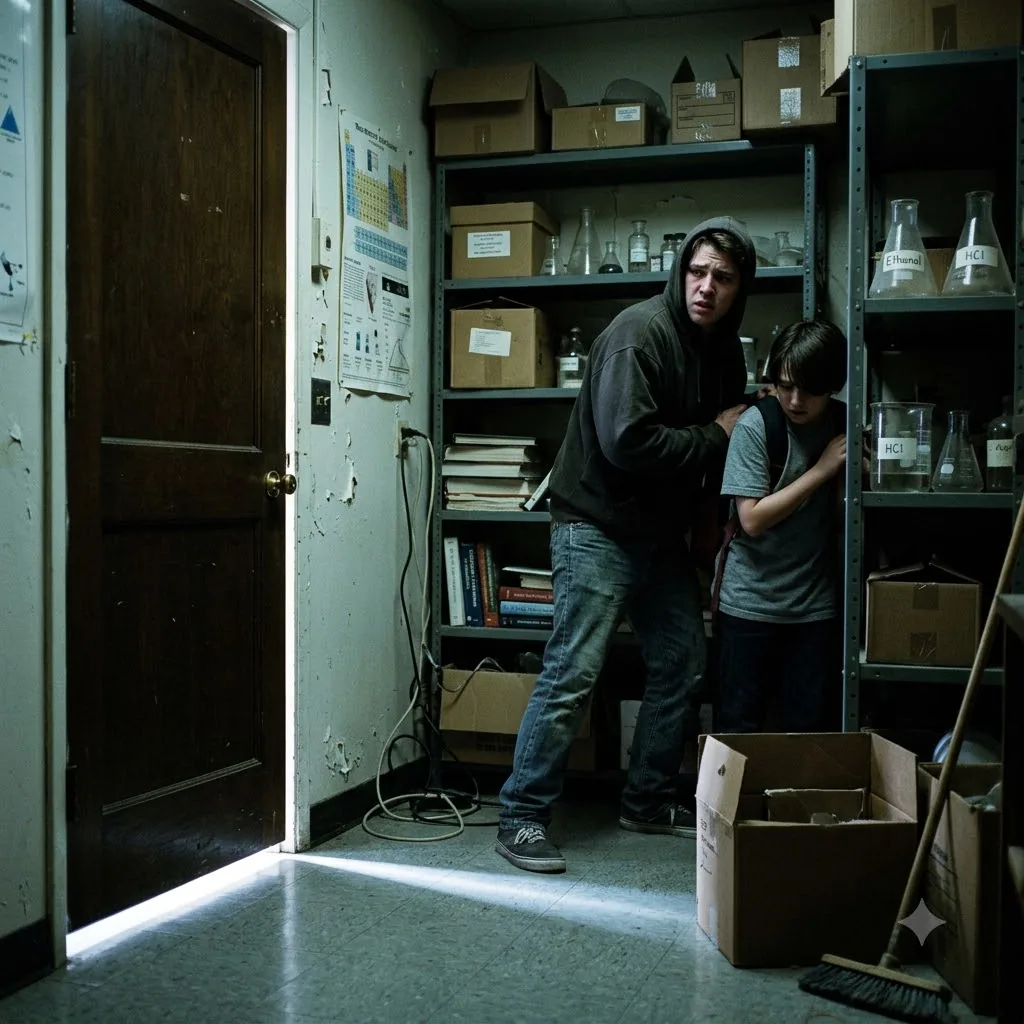
The darkness inside the chemistry closet smelled of industrial lemon floor wax and absolute terror. I kept my hand clamped firmly over the mouth of the freshman trembling against my chest, feeling his jagged, hyperventilating breaths wet against my palm. Out in the hallway, heavy boots slammed against the linoleum. Then came the sound we had all been trained to fear, echoing off the metal lockers with deafening authority. Pop. Pop. Pop.
Every muscle in my back locked rigid against the cold edge of the chemical shelving. A glass beaker dug into my spine, threatening to shatter if I shifted my weight even a fraction of an inch. The freshman let out a muffled, agonizing whimper. His small fingers dug into my forearm like talons, piercing the fabric of my sweater. I squeezed my eyes shut, trying to project absolute silence into the pitch-black space around us. The boots grew louder, their heavy tread stopping just outside our door. The brass doorknob rattled violently. My heart slammed against my ribs so hard I thought the man in the hall would hear the rhythm of it. We were going to die in a storage closet next to a gallon of hydrochloric acid. I braced my legs to spring forward, ready to launch myself at the intruder and take the first bullet if the door gave way. I owed this kid that much.
A sharp, piercing screech of static sliced through the dark. The PA system above us clicked on, humming with electrical interference.
“Excellent response times, students,” Principal Sterling’s voice crooned through the speaker. His tone was crisp, corporate, and entirely unbothered. “This concludes our unannounced active crisis simulation. Teachers, please unlock your doors and resume fourth period. Thank you for your cooperation in keeping our newly renovated campus secure.”
The freshman sagged against me, a dead weight slipping onto the linoleum floor. I dropped to my knees beside him, my hands shaking so violently I could barely manage to find my phone and turn on the flashlight. The harsh white beam illuminated his tear-streaked face. He was gasping for air, clutching his chest, completely unable to process that the gunfire had been blanks. It was a drill. A theatrical performance mandated by the new administration to make the wealthy transplant parents feel safe about sending their children to a school in our zip code.
I pushed the closet door open and stepped out into the blinding fluorescent light of the hallway. The air was thick with the acrid scent of gunpowder caps. Down the long, freshly painted corridor, the classroom doors swung open. The contrast between the student bodies was sickening. The new kids, the ones wearing uniforms bought crisp and perfectly fitted this semester, strolled out of their classrooms laughing and fixing their hair. They complained loudly about the dust on the floor and the inconvenience of missing the rest of AP European History.
Then I saw the legacy kids. We were the ones who had survived this neighborhood long before the luxury condos and the corporate takeovers boxed us in. Marcus was leaning heavily against a locker, his face ash-white, staring blankly at his trembling hands. He looked up and caught my eye. I nodded to him, trying to project a calm I did not feel. Maria was sitting on the floor nearby, crying silently into her worn backpack. We knew what gunfire sounded like in the middle of the night. We knew what it meant to lose a cousin, a brother, a neighbor to the streets. Sterling and his board of gentrifiers did not. They imported trauma as a morning exercise, a convenient box to check on their insurance compliance forms.
I helped the freshman out of the closet and walked him toward the clinic.
“Mateo, grab his other arm,” the school nurse instructed as she rushed out to meet us in the hall.
She looked just as pale and shaken as the kids. The administration had kept the staff entirely in the dark. Total immersion, Sterling had called it in a memo we only heard rumors about. I handed the boy over, walking away as the leftover adrenaline in my veins curdled into something sharp, cold, and entirely focused. They wanted to play survival games. They wanted to traumatize the students who actually lived through real danger, just to justify their bloated, million-dollar security budget to the new PTA.
I stopped outside the pristine glass walls of the administration suite. Sterling was standing by the reception desk, shaking hands with the private security contractors his team had hired for the morning. The men in black tactical gear were laughing, holding their modified blank-firing rifles casually by their sides as they drank coffee from paper cups. One of them handed Sterling a thick paper invoice. The principal smiled, patting the man on the back.
I pulled out my phone and hit the camera app, holding it discreetly against my thigh. If I marched in there and yelled, they would expel me on the spot. The administration had been looking for any excuse to clear out the remaining legacy students since the first day of the semester to make room for more tuition-paying transplants. I needed them to expose their own hypocrisy. I needed the transplant parents to see exactly what kind of psychological warfare they were funding with their donations.
I stepped closer to the glass, framing the shot of the principal laughing with the fake gunmen. My thumb hovered over the red recording circle on the screen. Before I could tap the button to go live, a heavy, leather-gloved hand clamped down firmly onto my shoulder from behind.
The darkness inside the chemistry closet smelled of industrial lemon floor wax and absolute terror. I kept my hand clamped firmly over the mouth of the freshman trembling against my chest, feeling his jagged, hyperventilating breaths wet against my palm. Out in the hallway, heavy boots slammed against the linoleum. Then came the sound we had all been trained to fear, echoing off the metal lockers with deafening authority. Pop. Pop. Pop.
Every muscle in my back locked rigid against the cold edge of the chemical shelving. A glass beaker dug into my spine, threatening to shatter if I shifted my weight even a fraction of an inch. The freshman let out a muffled, agonizing whimper. His small fingers dug into my forearm like talons, piercing the fabric of my sweater. I squeezed my eyes shut, trying to project absolute silence into the pitch-black space around us. The boots grew louder, their heavy tread stopping just outside our door. The brass doorknob rattled violently. My heart slammed against my ribs so hard I thought the man in the hall would hear the rhythm of it. We were going to die in a storage closet next to a gallon of hydrochloric acid. I braced my legs to spring forward, ready to launch myself at the intruder and take the first bullet if the door gave way. I owed this kid that much.
A sharp, piercing screech of static sliced through the dark. The PA system above us clicked on, humming with electrical interference.
“Excellent response times, students,” Principal Sterling’s voice crooned through the speaker. His tone was crisp, corporate, and entirely unbothered. “This concludes our unannounced active crisis simulation. Teachers, please unlock your doors and resume fourth period. Thank you for your cooperation in keeping our newly renovated campus secure.”
The freshman sagged against me, a dead weight slipping onto the linoleum floor. I dropped to my knees beside him, my hands shaking so violently I could barely manage to find my phone and turn on the flashlight. The harsh white beam illuminated his tear-streaked face. He was gasping for air, clutching his chest, completely unable to process that the gunfire had been blanks. It was a drill. A theatrical performance mandated by the new administration to make the wealthy transplant parents feel safe about sending their children to a school in our zip code.
I pushed the closet door open and stepped out into the blinding fluorescent light of the hallway. The air was thick with the acrid scent of gunpowder caps. Down the long, freshly painted corridor, the classroom doors swung open. The contrast between the student bodies was sickening. The new kids, the ones wearing uniforms bought crisp and perfectly fitted this semester, strolled out of their classrooms laughing and fixing their hair. They complained loudly about the dust on the floor and the inconvenience of missing the rest of AP European History.
Then I saw the legacy kids. We were the ones who had survived this neighborhood long before the luxury condos and the corporate takeovers boxed us in. Marcus was leaning heavily against a locker, his face ash-white, staring blankly at his trembling hands. He looked up and caught my eye. I nodded to him, trying to project a calm I did not feel. Maria was sitting on the floor nearby, crying silently into her worn backpack. We knew what gunfire sounded like in the middle of the night. We knew what it meant to lose a cousin, a brother, a neighbor to the streets. Sterling and his board of gentrifiers did not. They imported trauma as a morning exercise, a convenient box to check on their insurance compliance forms.
I helped the freshman out of the closet and walked him toward the clinic.
“Mateo, grab his other arm,” the school nurse instructed as she rushed out to meet us in the hall.
She looked just as pale and shaken as the kids. The administration had kept the staff entirely in the dark. Total immersion, Sterling had called it in a memo we only heard rumors about. I handed the boy over, walking away as the leftover adrenaline in my veins curdled into something sharp, cold, and entirely focused. They wanted to play survival games. They wanted to traumatize the students who actually lived through real danger, just to justify their bloated, million-dollar security budget to the new PTA.
I stopped outside the pristine glass walls of the administration suite. Sterling was standing by the reception desk, shaking hands with the private security contractors his team had hired for the morning. The men in black tactical gear were laughing, holding their modified blank-firing rifles casually by their sides as they drank coffee from paper cups. One of them handed Sterling a thick paper invoice. The principal smiled, patting the man on the back.
I pulled out my phone and hit the camera app, holding it discreetly against my thigh. If I marched in there and yelled, they would expel me on the spot. The administration had been looking for any excuse to clear out the remaining legacy students since the first day of the semester to make room for more tuition-paying transplants. I needed them to expose their own hypocrisy. I needed the transplant parents to see exactly what kind of psychological warfare they were funding with their donations.
I stepped closer to the glass, framing the shot of the principal laughing with the fake gunmen. My thumb hovered over the red recording circle on the screen. Before I could tap the button to go live, a heavy, leather-gloved hand clamped down firmly onto my shoulder from behind.