Story code: ST-001545
Part 3: The Ledger
The antique grandfather clock in the hallway ticked off five agonizing seconds. The rhythmic, metallic sound echoed in the cavernous dining room, underscoring the absolute stillness of the family. Nobody moved. Aunt Helen’s knife hovered a fraction of an inch above her glazed carrots. Marcus had stopped swirling his wine, the glass frozen midway to his mouth. At the head of the table, Uncle Richard waited, his hand casually resting next to his pristine porcelain plate, his palm upturned in an open, undeniable challenge. He looked entirely relaxed, basking in the glow of his own perceived wisdom. He genuinely believed he was doing me a favor. He was about to teach the reckless millennial a hard lesson in fiscal responsibility.
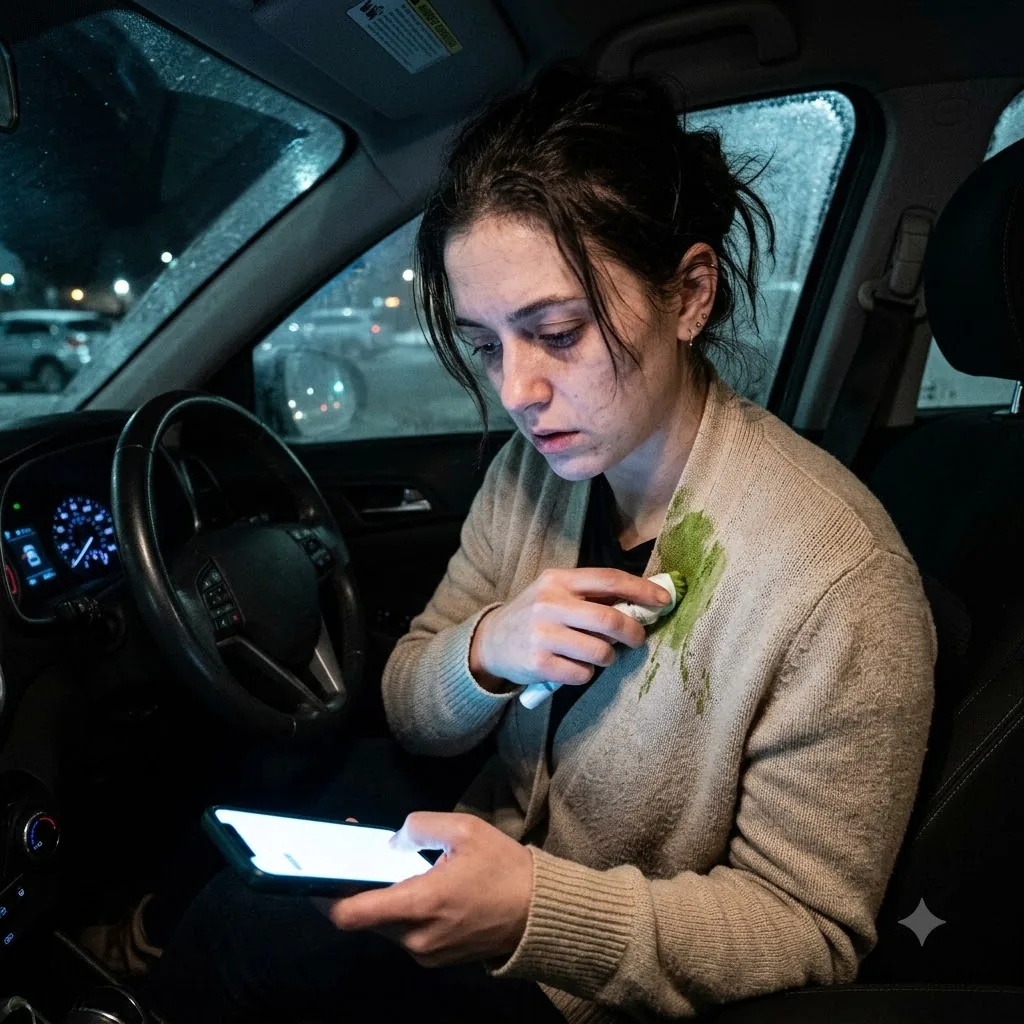
The cracked glass of my phone pressed against my sweaty palm inside my coat pocket. The phantom vibration of the electric company’s shut-off notice still echoed against my thigh. A familiar, suffocating wave of shame washed over me. It was the same shame that kept me dodging calls from unknown numbers, the shame that made me park my car two blocks away from social gatherings so no one would hear the engine rattle, the shame of carefully angling my torso to hide a stranger’s spilled matcha.
But as I looked down the length of the mahogany table, past the towering silver candlesticks and the massive standing rib roast, something inside my chest violently fractured.
The shame evaporated, instantly replaced by a sudden, blinding rush of adrenaline. I was starving. I was freezing. I was sleeping four hours a night and my bones ached constantly. I was doing everything exactly the way they had always told me to do it, and I was drowning anyway. And now, this man in a five-hundred-dollar cashmere sweater wanted to pay me five hundred dollars to humiliate me over a fictional coffee habit.
I pulled my hand out of my pocket.
The room collectively inhaled as I placed the device on the table in front of me. The screen was severely spider-webbed from a drop on the pavement six months ago, the cracks radiating outward from the bottom corner like ice shattering over a pond. I pressed my thumb against the sensor. The screen blazed to life, harsh and bright against the warm, ambient dining room lighting.
The bright red notification banner for the past-due electric bill sat perfectly centered on the home screen. I didn’t swipe it away. I didn’t hide it. I tapped directly on my banking application, letting the facial recognition software bypass the login. The screen loaded, displaying a stark, unforgiving white background with bold black text.
I didn’t hand the phone to Richard. I stood up. My heavy wooden chair scraped loudly against the imported hardwood floor, the sound harsh enough to make Marcus wince.
I walked the three steps to the head of the table. Helen’s eyes widened, her posture stiffening as I bypassed her completely. I reached right into Richard’s personal space. I took my cracked, cheap smartphone and slid it directly onto his bone-china plate. I pushed it past the buttery mashed potatoes until the bottom edge of the device dipped into the dark, pooling au jus next to his slab of prime rib.
Richard recoiled, pulling his hands back as if the phone were emitting radiation. “What are you doing?”
“You want an audit?” I asked, my voice no longer small or swallowed by the room. It rang out, terrifyingly steady and loud. “Let’s do the audit. Look at the screen, Richard. You’re looking for five hundred dollars in waste. Let’s find it.”
He stared at the device sitting in his gravy, momentarily paralyzed by the sheer breach of dinner table etiquette.
“Read the big number at the top,” I commanded, tapping the cracked glass with my index finger. A drop of au jus splattered onto the screen. “That’s my checking account balance. Fourteen dollars and thirty-eight cents. My savings account is right below it. Zero. The last transaction, from yesterday, is a thirty-five dollar overdraft fee because my primary job’s payroll company delayed our direct deposits by twelve hours, and my automated rent payment hit first.”
“Maya, this is entirely inappropriate,” Helen hissed, clutching her cloth napkin to her chest.
“I’m answering his challenge, Helen,” I said, never taking my eyes off Richard. I swiped the screen horizontally, switching to my open apps, and tapped a bright orange icon. “There are no lattes in there, Richard. There is no avocado toast. But let’s look at the income side. This is my gig-worker portal. Marcus, you mentioned seeing DoorDashers downtown? I’m one of them. Look at the active hours logged for this week.”
Richard’s eyes darted involuntarily down to the glowing screen.
“Eighty-two hours,” I said, reading it for him. “Eighty-two hours of driving strangers’ food around this city. Gross payout: six hundred and twelve dollars. If you do the math, which I know you love to do, that comes out to roughly seven dollars and forty-six cents an hour. That is before I pay for the gas to keep the car running. It’s before I pay the insurance premiums that skyrocketed because I live in a zip code you wouldn’t drive through with your doors unlocked.”
I swiped the screen one final time, bringing up a sterile blue webpage.
“And this,” I continued, my voice dropping to a harsh, ragged whisper, “is the student loan portal. The loan for the degree you and my mother swore I needed to survive in the real world. Original balance: fifty-five thousand dollars. Current balance, after me paying three hundred dollars a month, on time, for four years straight? Sixty-eight thousand dollars. The interest outpaces the principal. I literally cannot pay it fast enough.”
I pressed my hands flat against the mahogany table, leaning over his plate, forcing him to look at me.
“My rent for a studio apartment with black mold in the bathroom is fourteen hundred dollars. My take-home pay from my primary job is twenty-two hundred. I work eighty hours a week so I don’t starve, and I got a shut-off notice for my electricity today for a hundred and twelve dollars.” I pointed a shaking finger at the phone sitting in his dinner. “So you tell me, Richard. You look at that screen and you find the five hundred dollars of waste. You find the math that makes this my fault.”
Richard sat perfectly rigid. He looked from my stained, acrylic sweater to my face, and finally down to the cracked, glowing screen resting against his prime rib. The numbers blared up at him in high definition. The grandfather clock ticked heavily in the background. Nobody took a breath. Richard’s jaw worked silently, but the lecture had died completely in his throat.