Story code: ST-001545
Part 4: The Shift
The screen of my phone stayed lit for thirty seconds before the auto-lock feature kicked in. For those thirty seconds, nobody in the dining room blinked. The harsh, blue-white glare of my financial ruin illuminated the edge of Richard’s prime rib, the numbers reflecting off the silver rim of his dinner plate.
Then, the screen went black.
Without the backlight, it was just a piece of cracked glass and cheap plastic sitting in a puddle of congealing au jus. The silence that followed was absolute, heavy, and suffocating. It pressed down on the room, smothering the faint hum of the chandelier and the distant whistle of the winter wind outside. The antique grandfather clock in the hallway ticked-once, twice, three times-each metallic clack sounding like a hammer striking an anvil.
I kept my hands planted flat on the mahogany table, my chest heaving against the acrylic fabric of my stained cardigan. I watched my uncle. I waited for the rebuttal. I waited for the compound interest formula that would somehow magically erase my student loan debt, or the bootstrapping anecdote that would pay my electric bill before Tuesday morning.
Richard’s jaw worked side to side. The deep, performative disappointment he had worn just minutes ago had vanished, replaced by a hollow, cornered expression. He stared at the darkened phone, then slowly dragged his eyes up to meet mine. He opened his mouth, drawing in a breath to speak, but nothing came out. The great orator of personal responsibility was entirely bankrupt of words.
Down the table, Aunt Helen slowly lowered her hands to her lap. She didn’t look at me. She stared fixedly at the intricate floral pattern on her expensive china plate, her posture stiff and defensive. Marcus finally set his wine glass down. The base of the crystal clinked sharply against the wood, making Sarah flinch. Neither of my cousins said a word. They didn’t offer to help. They didn’t apologize. They just wanted the uncomfortable reality of my existence to be removed from their pristine dining room.
“So?” I asked, my voice slicing through the thick, roasted-meat scent of the room. “The five hundred dollars, Richard. You made a bet in front of the whole family. You said if you couldn’t find five hundred dollars of waste in under five minutes, you’d write a check. You’ve seen the ledger. Write it.”
Richard blinked, the spell breaking slightly. He shifted in his heavy wooden chair, pulling his elbows off the table. He looked small suddenly, just an aging man in a very expensive quarter-zip sweater.
“Maya, this… this wasn’t the spirit of the exercise,” he stammered, his booming baritone reduced to a reedy, defensive mumble. “The point was to discuss long-term wealth strategies. Not to… not to ambush me with this.”
I knew he wasn’t going to pay. He was never going to pay. The bet was a prop, a rhetorical device meant to humiliate me into submission. Writing the check would mean admitting that the math of my life was rigged against me, and admitting that would mean acknowledging that his own wealth was perhaps less a product of moral superiority and more a product of timing and luck. He couldn’t afford that. His ego couldn’t foot the bill.
The last surge of adrenaline drained out of me, leaving behind a profound, bone-deep exhaustion. My knees trembled slightly. My stomach, which had been cramping with hunger just ten minutes ago, now felt like it was full of cold ash. I didn’t belong here. I never had.
I reached down into his dinner plate. I pinched the edges of my phone and lifted it out of the gravy. Dark brown liquid dripped from the charging port, splattering softly onto the mahogany table. I picked up Richard’s pristine, thick linen napkin and wiped the phone down, smearing the grease and meat juice into the bright white fabric. I dropped the ruined napkin next to his silver fork.
“Enjoy your dinner,” I said quietly.
I turned my back on the head of the table. I walked out of the dining room, my boots loud against the hardwood floor. Nobody called my name. Nobody told me to stop. The suffocating silence held firm, sealing itself shut behind me the moment I crossed the threshold into the foyer.
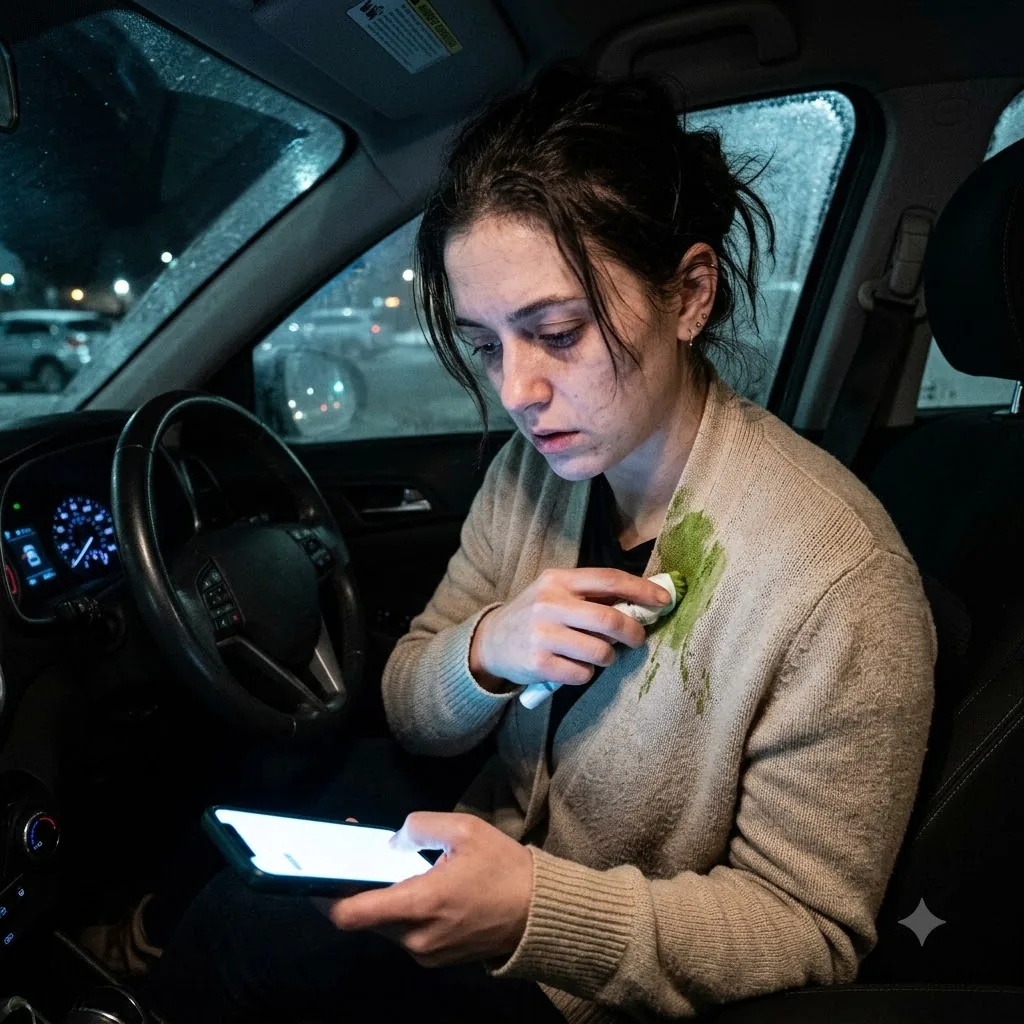
I opened the hall closet and pulled out my thin winter coat. The bright green matcha stain on the collar of my cardigan caught the entryway light one last time before I zipped the jacket all the way up to my chin. I pushed open the heavy oak front door and stepped out into the freezing night.
The cold hit me immediately, a sharp, biting wind that sliced right through my inadequate layers. It felt incredibly clean compared to the heavy, perfumed air of the dining house. I walked down the paver-stone driveway, my boots crunching on the salt, stepping back into the long shadows cast by the towering oak trees. I passed the spotless black SUV and the pristine silver Lexus, feeling absolutely nothing for them.
I reached my Corolla. I yanked the frozen handle, sliding into the cracked vinyl driver’s seat. My breath plumed instantly in the freezing cabin. I put the key in the ignition and turned it. The engine ground heavily, choked for a second, and finally roared to life with its familiar, rattling hum.
I pulled my phone out of my pocket. The screen was smeared with a thin film of grease, but it still registered my thumbprint. I opened the gig-worker application. The screen flared bright orange in the dark, freezing car. I tapped the button to start my driving shift, put the car in gear, and drove away from the golden windows, heading back down toward the city to chase the next seven dollars.