Story code: ST-001551
Part 4: The Enforcer
The anger drained out of me, leaving a sudden, crippling exhaustion in its place. My heavy boots felt like they were cast in lead. I stared at Sierra Vance, watching her wipe a streak of ruined mascara from her cheek with a trembling, manicured hand, and I realized there was no one left to fight. There was no villain in this glass box. There was no evil mastermind who had calculated my destruction to enrich their own pockets. There was only a terrified woman pulling levers so the trapdoor wouldn’t open under her own feet.
She wasn’t the architect of the system. She was just another hostage.
I looked past her, fixing my eyes on the vertical monitor. My file was still open. The eighty-four thousand dollar principal sat there in bold black numbers, an anchor I had dragged for a decade, now officially reinstated and made even heavier by the capitalized interest. It was a digital tombstone. There was no manager to escalate to, no secret override code that would bring back my ten years of sacrifice. The line was dead. The fight was over.
“I’m sorry,” Sierra whispered, her voice barely audible over the synthetic hum of the air conditioning. “I can’t change it. They’ll ruin me.”
I didn’t answer. I didn’t offer her forgiveness, and I didn’t offer her wrath. I just turned around, pushed through the heavy glass door, and walked back out onto the call center floor.
I looked at the rows and rows of glowing monitors and gray fabric dividers. A hundred people sitting in ergonomic chairs, wearing wireless headsets, reading scripts. They were all just like her. A localized army of the heavily indebted, hired to enforce the rules of the machine against the rest of us, just to buy themselves another month of survival. The illusion of the system-that it was built on order, justice, or a social contract-shattered permanently in my mind. It was just a meat grinder, perfectly engineered to use the working class as its own gears.
I rode the elevator down in silence. I walked past the marble security desk and pushed through the revolving doors into the sweltering afternoon heat.
My county Crown Victoria was still idling at the curb, its red and blue lights flashing against the glass of the financial tower. I climbed into the driver’s seat and reached for the toggle switch. The emergency lights died. The strobe reflections vanished from the skyscraper. I put the car in gear and drove away.
I didn’t turn the siren back on. I merged into the slow, crawling traffic, watching the city shift as I crossed over the interstate line. The gleaming glass towers gave way to the dying town I patrolled every day. I drove past the payday lenders with their neon signs promising cash in minutes, past the title loan lots, past the discount dollar stores that had replaced the grocery markets. The infrastructure of poverty. A whole ecosystem designed to bleed the desperate.
I pulled into the county lot behind the CPS annex and parked in my assigned space.
The heat radiating off the asphalt was suffocating as I walked back into the building. The smell of cheap coffee and lingering body odor hit me immediately, a sharp contrast to the sanitized citrus of the corporate tower.
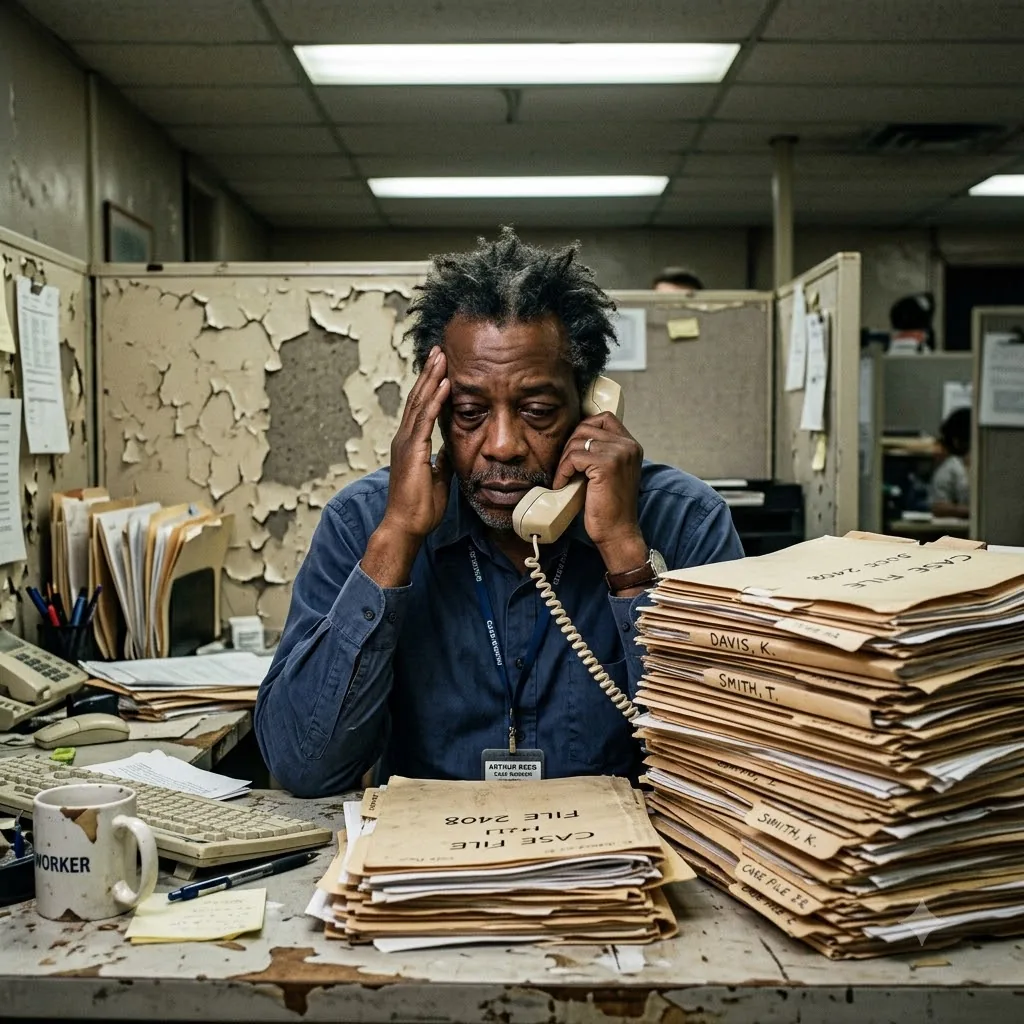
Miller was waiting by my desk. He was holding the red-tabbed folder.
“Where the hell have you been?” he barked, his face flushed. “Local PD cut the padlock on the storage unit twenty minutes ago. The mother is frantic. They’re waiting for the state rep to arrive and sign the removal order. You need to get out there now.”
I stood at my desk and looked at my computer screen. My spreadsheet was still open. One hundred and twenty green checkmarks.
Then I looked at the red-tabbed folder in Miller’s hand. I pictured the mother sitting on the pavement outside a metal box, holding two hungry kids. She had defaulted on a medical debt. Her wages were garnished. The system had taken her money, taken her home, and now it was sending me to take her children.
Next month, my new payment of twelve hundred and eighty dollars would be due. I wouldn’t be able to pay it. In thirty days, I would default. The machine would trigger the garnishment of my county wages. I would miss my mortgage. I would lose my house. I was on the exact same trajectory as the woman crying outside the storage unit.
“Hayes,” Miller snapped, tapping the folder against my desk. “Did you hear me? Sign the extraction order and go get those kids.”
If I took that folder, if I drove to that storage unit and tore those children out of their mother’s arms to protect my own paycheck, I was no different than Sierra Vance reading her script in the glass tower. I would just be another terrified hostage enforcing the machine’s cruelty to survive.
I reached up and unclipped my gold state-issued ID badge from my belt. I dropped it on the desk.
I unzipped the heavy canvas tactical jacket with the bold white letters across the back, sliding it off my shoulders. The faint smell of kerosene rose from the fabric one last time. I draped the jacket over the back of my plastic chair, right next to the red-tabbed folder.
“Hayes?” Miller’s voice dropped, confusion replacing his anger. “What are you doing? You walk out now, you’re abandoning your post. You throw away your pension. You’re done.”
I didn’t say a word. I turned my back on my towering caseload, walked down the long, beige hallway, and pushed the heavy glass doors open, stepping out into the dying town with nothing left to lose.