Story code: ST-001558
Part 1: The Photo-Op
The gurney wheels squeaked against the warped linoleum, cutting through the heavy scent of bleach and stale sweat that clung to my clinic’s waiting room. A mother knelt beside the rusted water cooler, her forehead pressed against the cheap plastic casing. She clutched a dark blue windbreaker that still smelled like her son. He had been dead for less than forty minutes. The emergency medical technicians had just wheeled his body out the back service elevator to avoid the street traffic, leaving behind a mess of torn foil packets, discarded syringes, and the sharp metallic tang of a failed resuscitation. We had lost patients before, but rarely in the chairs right next to the children’s wooden block table.
I stood by the shattered fiberglass of the reception desk, my hands still trembling slightly, reeking of the naloxone nasal spray that had done absolutely nothing to reverse the synthetic opioid tearing through his brain. The rest of my staff moved in a stunned, silent orbit around the weeping woman. Nobody spoke. The air felt compressed, heavy with the specific, suffocating gravity that follows a sudden death.
Then the glass double doors swung open, letting in a blast of city exhaust and a man in a perfectly tailored charcoal suit. Julian did not walk into rooms. He descended upon them. Behind him trailed a videographer balancing a massive shoulder rig, an audio technician swinging a boom mic, and an assistant furiously typing on a tablet. Julian’s teeth were blindingly white under our flickering fluorescent lights, his silk tie catching the grim overhead glow. He represented the corporate parent company that funded our grant, the pharmaceutical giant that ostensibly wanted to clean up the streets. He was here for his quarterly check-in.
Julian clapped his hands together. The sound echoed like a gunshot over the mother’s low, rhythmic sobbing. He marched straight toward me, utterly oblivious to the shattered atmosphere, his polished wingtips stepping casually over a dropped latex glove. He threw a heavy, possessive arm over my shoulder, ignoring the way my muscles locked into rigid stone.
He signaled to the cameraman. The red recording light blinked on. Julian began speaking in his practiced, booming baritone, staring directly down the barrel of the lens. He praised the tireless work of our urban health initiative. He spoke about margins and metrics, using buzzwords that felt like sandpaper against the raw reality of the room. He pointed at me, calling me a localized hero. He commended my unyielding work ethic, laughing heartily at a joke he made about my dark under-eye circles.
I tried to step away, desperate to shut down the spectacle. Julian tightened his grip. His fingers dug into my collarbone, pinning me in place for the shot. He continued his monologue, transitioning smoothly into a speech about corporate responsibility and pharmaceutical innovation. The mother by the water cooler let out a jagged gasp, a sound pulled straight from the bottom of her lungs. It was a raw, unfiltered noise that finally broke through Julian’s rehearsed cadence.
He paused, his brilliant smile never wavering, and slowly turned his head toward the source of the noise. His eyes swept over her slumped form, the torn windbreaker, the absolute devastation radiating from her posture. Most people would recoil. Most people would apologize and quietly back out the door. Julian’s eyes lit up with the kind of predatory gleam reserved for award-winning charity campaigns. He saw a prop.
He released my shoulder and took two confident, measured strides toward the grieving woman. The cameraman followed smoothly on his heels, adjusting the focus ring on the fly. Julian knelt gracefully onto the dirty linoleum, intentionally invading her space. He placed a freshly manicured hand over the white-knuckled fist she held against her chest. He tilted his head to an angle that conveyed deep, manufactured empathy, positioning his shoulders so the clinic logo on the wall behind them framed the shot perfectly.
He began murmuring a speech about community healing directly to the camera, using her grief as a dramatic backdrop. The mother shrank away, too exhausted and broken to push him off. Julian commanded the cameraman to get closer, instructing the audio tech to dip the boom mic lower to catch her weeping. He wanted to capture the raw emotion of the urban crisis in high definition. The thick glass of the camera lens drifted inches from the blue windbreaker.
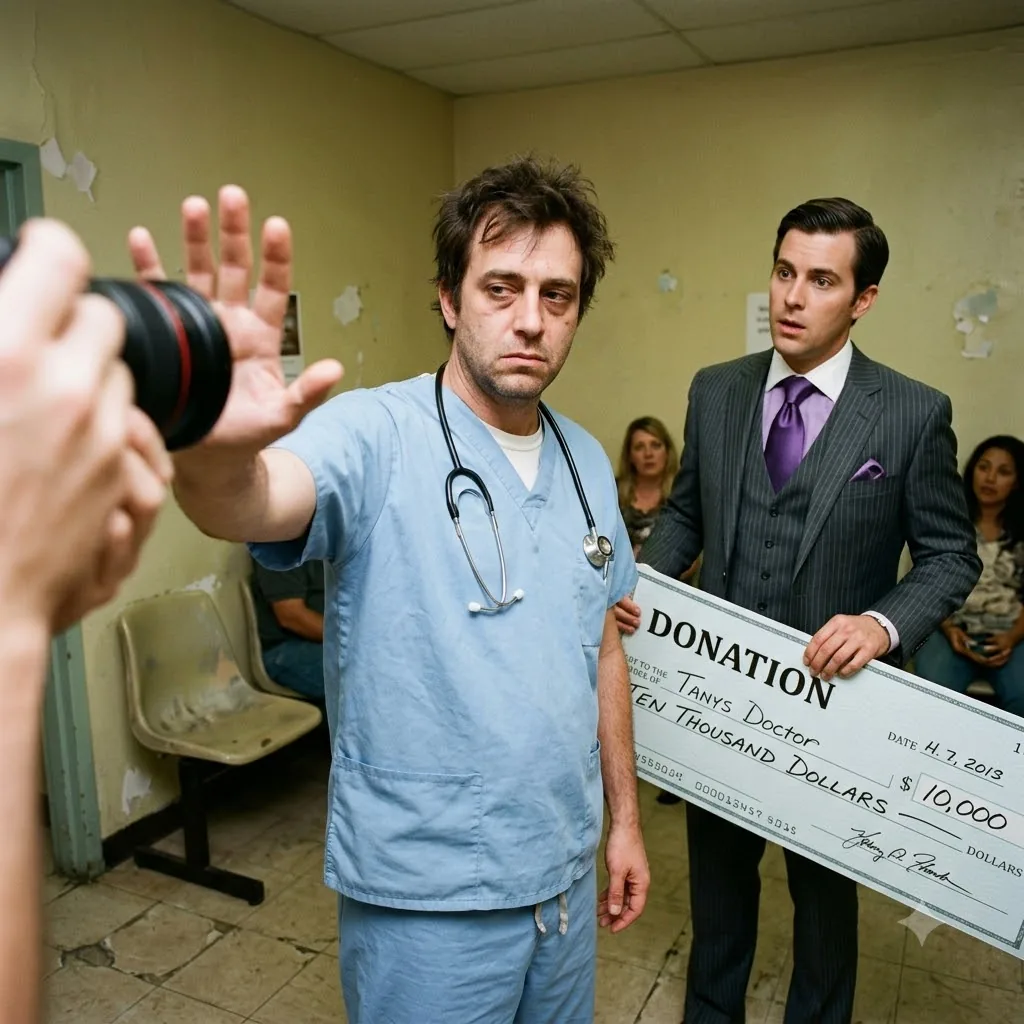
The buzzing in my ears drowned out his corporate platitudes. I crossed the waiting room in three long strides, stepping deliberately between the kneeling executive and the terrified woman. I raised my hand flat against the approaching camera rig, slamming my palm directly over the expensive glass lens with a hard, audible smack.
The gurney wheels squeaked against the warped linoleum, cutting through the heavy scent of bleach and stale sweat that clung to my clinic’s waiting room. A mother knelt beside the rusted water cooler, her forehead pressed against the cheap plastic casing. She clutched a dark blue windbreaker that still smelled like her son. He had been dead for less than forty minutes. The emergency medical technicians had just wheeled his body out the back service elevator to avoid the street traffic, leaving behind a mess of torn foil packets, discarded syringes, and the sharp metallic tang of a failed resuscitation. We had lost patients before, but rarely in the chairs right next to the children’s wooden block table.
I stood by the shattered fiberglass of the reception desk, my hands still trembling slightly, reeking of the naloxone nasal spray that had done absolutely nothing to reverse the synthetic opioid tearing through his brain. The rest of my staff moved in a stunned, silent orbit around the weeping woman. Nobody spoke. The air felt compressed, heavy with the specific, suffocating gravity that follows a sudden death.
Then the glass double doors swung open, letting in a blast of city exhaust and a man in a perfectly tailored charcoal suit. Julian did not walk into rooms. He descended upon them. Behind him trailed a videographer balancing a massive shoulder rig, an audio technician swinging a boom mic, and an assistant furiously typing on a tablet. Julian’s teeth were blindingly white under our flickering fluorescent lights, his silk tie catching the grim overhead glow. He represented the corporate parent company that funded our grant, the pharmaceutical giant that ostensibly wanted to clean up the streets. He was here for his quarterly check-in.
Julian clapped his hands together. The sound echoed like a gunshot over the mother’s low, rhythmic sobbing. He marched straight toward me, utterly oblivious to the shattered atmosphere, his polished wingtips stepping casually over a dropped latex glove. He threw a heavy, possessive arm over my shoulder, ignoring the way my muscles locked into rigid stone.
He signaled to the cameraman. The red recording light blinked on. Julian began speaking in his practiced, booming baritone, staring directly down the barrel of the lens. He praised the tireless work of our urban health initiative. He spoke about margins and metrics, using buzzwords that felt like sandpaper against the raw reality of the room. He pointed at me, calling me a localized hero. He commended my unyielding work ethic, laughing heartily at a joke he made about my dark under-eye circles.
I tried to step away, desperate to shut down the spectacle. Julian tightened his grip. His fingers dug into my collarbone, pinning me in place for the shot. He continued his monologue, transitioning smoothly into a speech about corporate responsibility and pharmaceutical innovation. The mother by the water cooler let out a jagged gasp, a sound pulled straight from the bottom of her lungs. It was a raw, unfiltered noise that finally broke through Julian’s rehearsed cadence.
He paused, his brilliant smile never wavering, and slowly turned his head toward the source of the noise. His eyes swept over her slumped form, the torn windbreaker, the absolute devastation radiating from her posture. Most people would recoil. Most people would apologize and quietly back out the door. Julian’s eyes lit up with the kind of predatory gleam reserved for award-winning charity campaigns. He saw a prop.
He released my shoulder and took two confident, measured strides toward the grieving woman. The cameraman followed smoothly on his heels, adjusting the focus ring on the fly. Julian knelt gracefully onto the dirty linoleum, intentionally invading her space. He placed a freshly manicured hand over the white-knuckled fist she held against her chest. He tilted his head to an angle that conveyed deep, manufactured empathy, positioning his shoulders so the clinic logo on the wall behind them framed the shot perfectly.
He began murmuring a speech about community healing directly to the camera, using her grief as a dramatic backdrop. The mother shrank away, too exhausted and broken to push him off. Julian commanded the cameraman to get closer, instructing the audio tech to dip the boom mic lower to catch her weeping. He wanted to capture the raw emotion of the urban crisis in high definition. The thick glass of the camera lens drifted inches from the blue windbreaker.
The buzzing in my ears drowned out his corporate platitudes. I crossed the waiting room in three long strides, stepping deliberately between the kneeling executive and the terrified woman. I raised my hand flat against the approaching camera rig, slamming my palm directly over the expensive glass lens with a hard, audible smack.