Story code: ST-001558
Part 4: The Weight of the Wreckage
The silence stretched, thick and suffocating, broken only by the hum of the fluorescent lights. Julian stared at his own handwriting, trapped in the amber of ten-year-old ink. The booming corporate baritone had failed him, but the silence didn’t last long.
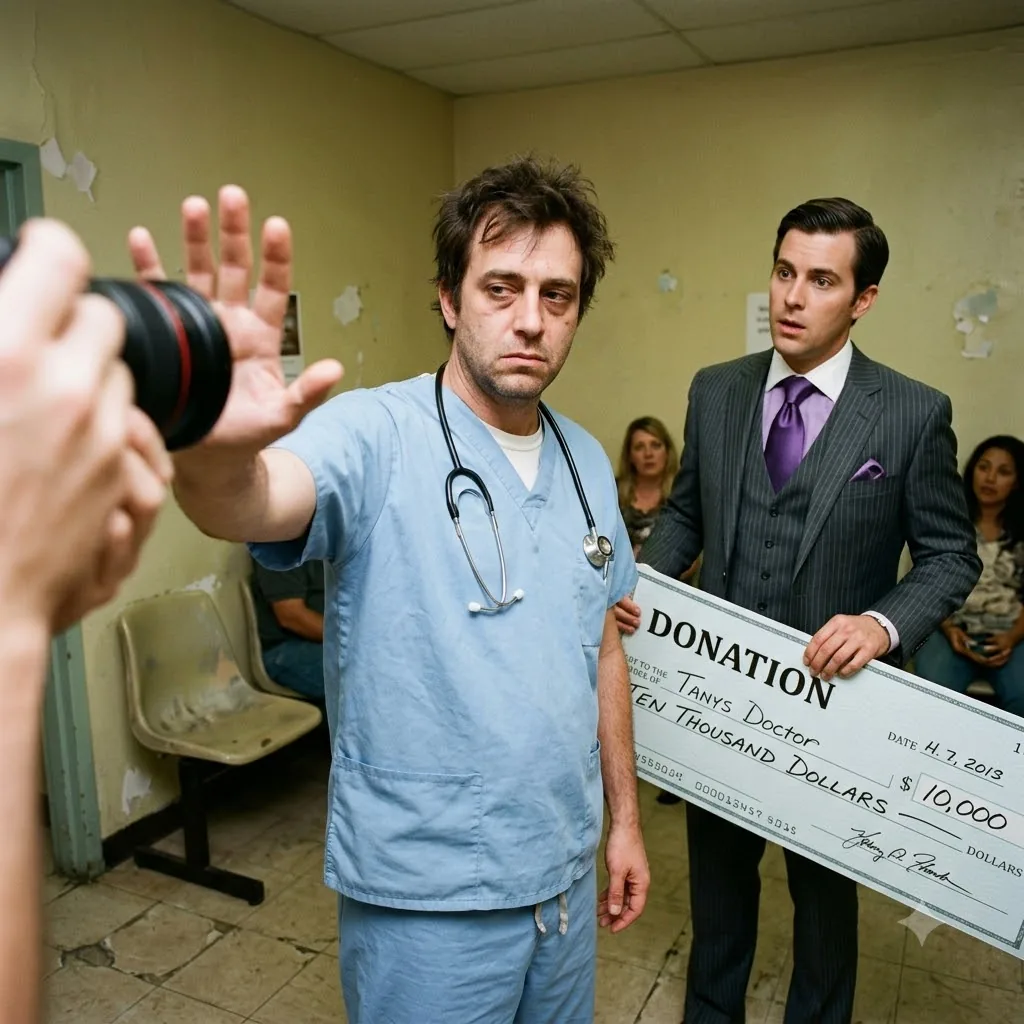
A flush of ugly, mottled red crept up his perfectly shaved neck, violently clashing with the crisp white collar of his shirt. He didn’t look at me. He looked at the red recording light of the camera.
“Turn that off,” Julian snarled. It wasn’t a request, and it wasn’t delivered in his boardroom cadence. It was a vicious, guttural bark.
The cameraman, finally recognizing the genuine danger in the room, killed the power. The red light blinked out. The sudden absence of it stripped away the last layer of theatricality, leaving us in the stark, unglamorous reality of a ruined clinic.
Julian stepped back, his chest heaving as the carefully constructed mask of the philanthropist shattered entirely. He reached inside his tailored suit jacket. For a second, I tensed, but his hand emerged clutching a thick, cream-colored envelope. I recognized the gold-foil Vanguard seal stamped on the flap. It was the quarterly operating grant. The literal lifeblood of this building, the check he had brought down here specifically to hand to me on camera while smiling for his board of directors.
He didn’t say a word as he gripped the envelope in both hands. With a sudden, savage jerk, he tore it in half. The thick paper resisted for a fraction of a second before yielding with a loud rip. He tore the halves again, his manicured fingers trembling with absolute rage, turning the clinic’s survival into meaningless confetti. He threw the shredded pieces at my chest. They fluttered down, landing on Marcus’s intake chart and the dusty floorboards.
“You think this makes you a martyr?” Julian hissed, his voice vibrating with venom. “You think you’ve won something here, Arthur? You’ve won nothing.”
He leaned in, the smell of sandalwood now masked by the sour stench of his own sweat. “I am going to bury you. Vanguard holds the debt on this building. By Friday, the locks will be changed. By Monday, this place will be gutted and sold for scrap. You just killed every single patient in this waiting room because you couldn’t keep your mouth shut and take the money.”
He didn’t wait for a response. He didn’t need one. Julian turned on his heel, his wingtips crushing a piece of the shredded check into the linoleum.
“Pack the gear,” he ordered his crew, not looking back. “We’re leaving. Now.”
Chloe practically sprinted to snatch her tablet off the receptionist’s desk, avoiding my eyes. The audio tech and the cameraman scrambled to collapse their rigs, the metal poles clattering loudly in their haste to escape the fallout. Within seconds, they were piling out the glass double doors, the heavy frame swinging shut behind them.
And then, they were gone.
The sudden quiet was absolute. It felt as if a vacuum had been unsealed, letting the pressurized air bleed out of the room. I stood alone behind the ruined fiberglass desk, staring down at the scattered pieces of the Vanguard check.
Julian was right. The clinic was dead. In a few days, the suppliers would stop their deliveries. The power would be cut. My staff would have to box up their desks and file for unemployment. The sanctuary we had built in this forgotten zip code would vanish, replaced by plywood over the windows and a foreclosure notice on the door. I had just orchestrated my own professional ruin.
But as I looked down at the shredded paper, I realized my lungs were expanding fully for the first time in two years.
I reached up and unclipped the plastic ID badge from my scrub top. The stylized silver ‘V’ of the Vanguard logo caught the overhead light one last time. I let it fall from my fingers. It hit the floor with a hollow plastic clack, coming to rest right next to the torn remnants of Julian’s hush money. The suffocating weight of being a corporate prop, of smiling at the monsters who had poisoned our streets just to beg for their table scraps, finally evaporated.
I stepped out from behind the desk.
The grieving mother was still sitting on the floor by the rusted water cooler. She had watched the entire confrontation, but I couldn’t tell if she had absorbed any of it. Her world had ended forty-five minutes ago. Corporate grants and pharmaceutical hypocrisy meant nothing compared to the dark blue windbreaker she held crushed against her chest.
I didn’t approach her as the localized hero. I didn’t have a speech about community resilience or healing. I had absolutely nothing left to offer her, no resources, no promises, no cameras.
I walked over to the water cooler and slowly lowered myself onto the scuffed linoleum beside her. I didn’t say a word. I just sat close enough that she knew she wasn’t alone in the empty room.
After a long time, the rhythmic heave of her shoulders slowed. She leaned her head against the cheap plastic casing of the cooler, letting out a ragged, exhausted breath. I stared at the blank wall opposite us, feeling the heavy, quiet truth of the space we occupied. We were just two people sitting in the wreckage, with nothing left to do but mourn the boy who wasn’t coming back.