Story code: ST-001563
Part 1: Proof of Residence
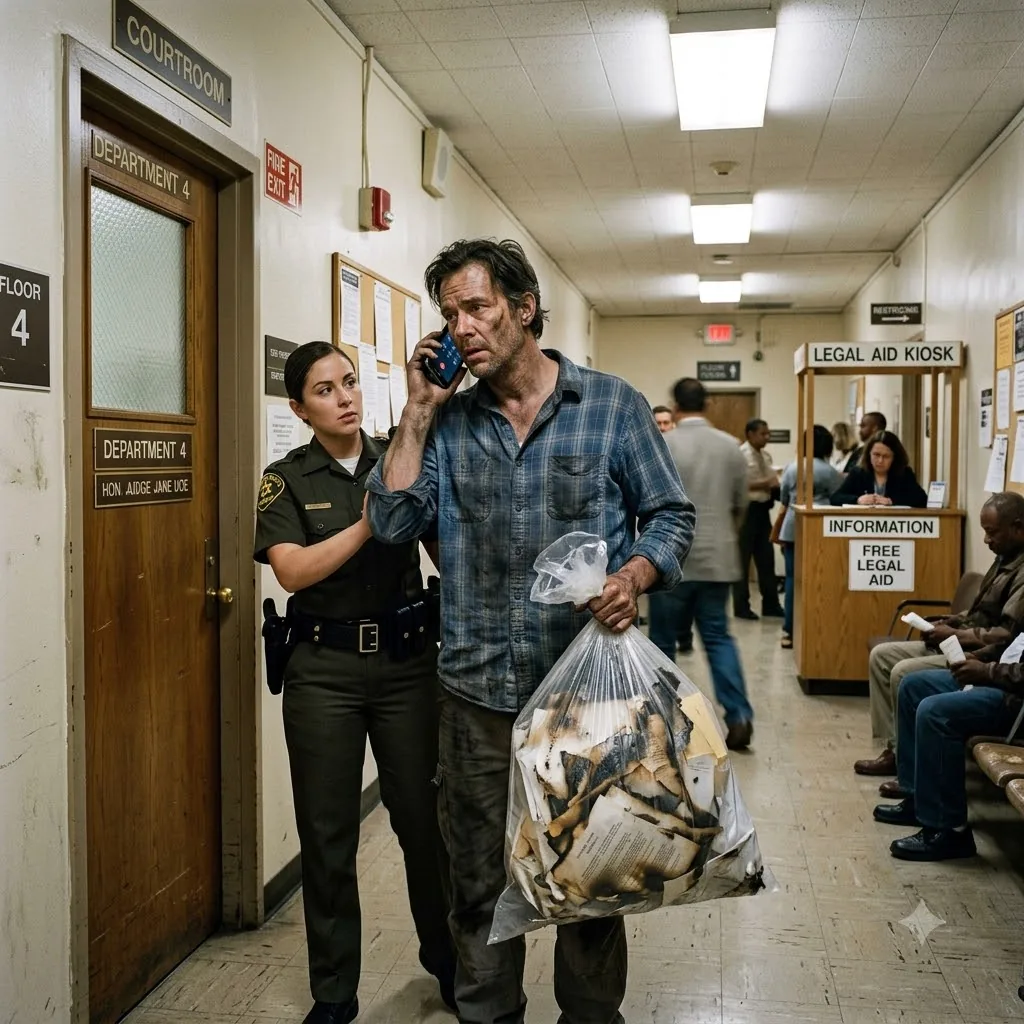
By the time the deputy said his name for the third time, Eli Navarro had wedged the phone between his shoulder and jaw, a black trash bag looped around one wrist, and a stack of smoke-stiff papers spread against the courthouse wall as if the cinder-block paint might hold them still. The call kept breaking into metallic chirps. On the other end, the insurance adjuster was asking for the same document again in the patient voice people used when they were already moving on to the next file.
“Sir, if you can email proof of occupancy, we can continue processing the claim.”
Eli pressed the heel of his hand over one page where the corners had curled inward from heat. A property tax envelope, browned along one side. A pharmacy receipt with the ink half gone. A school form that was not his but had ended up in the bag anyway, fused at the edge to something else. He tried to separate two sheets and left a gray thumbprint on both.
“I’m telling you, that’s what I have,” he said, keeping his voice low because the hallway carried everything. “The rest was in the kitchen drawer. The drawer is not a drawer now.”
People passed around him in courthouse clothes that made them all look like they had somewhere definite to be. Low shoes on tile. A clerk with a cart. A woman with a crying toddler on one hip. Two men in work shirts holding manila folders flat against their chests. Above the hallway benches, an old television with the sound off ran a county preparedness segment under closed captions a few seconds behind the picture. RECOVERY CENTER HOURS. DEBRIS REMOVAL DEADLINES. DISASTER ASSISTANCE UPDATED.
The deputy stopped a few feet away and hooked both thumbs into his vest. “Navarro. Department 4 is waiting.”
Eli held up one finger without looking over. His phone flashed one bar, then none. He shifted closer to the window at the end of the hall even though the glass was wired and dirty and faced a concrete light well that gave him nothing. The adjuster was still talking.
“A utility bill would work. Lease agreement. Mortgage statement. Voter registration. Any official mail showing the address.”
He gave a short laugh that came out wrong. He looked at the trash bag hanging from his wrist. It had once been white, maybe, but now it was soot-rubbed and thin at the corners where something inside had poked against it. A smell lived in it no amount of air could take away, not exactly ash and not exactly plastic. Burned insulation, maybe. Burned glue. Burned ordinary life.
“Official mail,” he repeated.
A pair of public defenders came through the security doors, talking fast over paper cups of coffee. One glanced at Eli’s spread of charred documents and glanced away just as fast. The deputy took a step closer.
“Sir, I need you in the courtroom now. Judge’s already on calendar.”
Eli nodded, not agreeing, just making the motion to buy a few seconds. He crouched and gathered the papers into one pile. A brittle corner snapped off and skittered under the bench. He stared at it, then left it there. The phone crackled so hard he had to pull it away from his ear.
“Mr. Navarro, if you can’t provide documents today, the file may be delayed pending verification by county records. Current review times are extended due to volume.”
He looked up at the television again. A woman in a county polo shirt smiled beside a table of pamphlets. Behind her, in the caption strip, words rolled by with bureaucratic calm. TEMPORARY HOUSING. CASE MANAGEMENT. STREAMLINED ACCESS. Everything in the hallway seemed to have a lane, a number, a desk, a form, a place to stand. Even the people crying knew which window to cry at.
Eli had a hearing in Department 4 and a trash bag full of paper that no longer looked official enough to prove anything. The names on the documents were still his. The address was still his. But every page had been touched by the same heat that had taken the shape out of everything else, and now every office wanted clean edges, clear dates, legible seals. He could offer them smoke.
“Can you verify through county property records,” he said. “Or with the fire report. There was a fire report. There has to be.”
The adjuster paused, the way people did before giving an answer that sounded helpful while moving nothing. “Those may support the file, sir, but we still need proof you resided there at the time of loss.”
At the far end of the hall, the deputy looked toward a courtroom door, then back at Eli, doing the math of patience in public. Through the cracked opening of Department 4 came a voice reading names in the flat, practiced cadence of a calendar already behind. Eli could not make out the words, only the rhythm. Case after case after case. A machine that did not care what a person had been carrying five minutes earlier.
He shoved the loose documents back into the bag and stood. The plastic stretched and made a dry sound. One page slid free and landed faceup on the floor. It was a notice with the county seal at the top and a strip of flame-browned damage down the left margin. He saw the printed address before the deputy bent to pick it up.
The deputy handed it back by one corner. His expression softened for half a second, just enough to register the singe marks and the way Eli held everything too carefully, as if pressure alone could finish what the fire started.
“You can bring that in with you,” the deputy said. “But you need to move.”
On the phone, the adjuster had resumed from somewhere in her script. “If displacement has affected your ability to obtain records, there may be alternative pathways available through our catastrophe response team.”
Eli almost said something sharp, then didn’t. He pressed the phone hard to his ear and started walking toward Department 4 with the bag knocking against his leg. People shifted aside for him, then closed in behind him. At the courtroom door, the deputy reached past and held it wider.
Inside, the air changed. Cooler. Stiller. The benches were half full. A clerk sat beneath the county seal, hands moving over a keyboard. At the front, the judge was already bent over the next file. Nobody looked up for long.
Eli stayed near the threshold for one breath, then another. The adjuster was saying his name again from a great distance. He looked at the scorched papers in his hand, at the clerk, at the seal on the wall, and finally at the empty space where he was clearly supposed to stand.
“I was trying to tell you my house burned and I lost my-”
“Mr. Navarro,” the deputy said, touching his elbow.
By the time the deputy said his name for the third time, Eli Navarro had wedged the phone between his shoulder and jaw, a black trash bag looped around one wrist, and a stack of smoke-stiff papers spread against the courthouse wall as if the cinder-block paint might hold them still. The call kept breaking into metallic chirps. On the other end, the insurance adjuster was asking for the same document again in the patient voice people used when they were already moving on to the next file.
“Sir, if you can email proof of occupancy, we can continue processing the claim.”
Eli pressed the heel of his hand over one page where the corners had curled inward from heat. A property tax envelope, browned along one side. A pharmacy receipt with the ink half gone. A school form that was not his but had ended up in the bag anyway, fused at the edge to something else. He tried to separate two sheets and left a gray thumbprint on both.
“I’m telling you, that’s what I have,” he said, keeping his voice low because the hallway carried everything. “The rest was in the kitchen drawer. The drawer is not a drawer now.”
People passed around him in courthouse clothes that made them all look like they had somewhere definite to be. Low shoes on tile. A clerk with a cart. A woman with a crying toddler on one hip. Two men in work shirts holding manila folders flat against their chests. Above the hallway benches, an old television with the sound off ran a county preparedness segment under closed captions a few seconds behind the picture. RECOVERY CENTER HOURS. DEBRIS REMOVAL DEADLINES. DISASTER ASSISTANCE UPDATED.
The deputy stopped a few feet away and hooked both thumbs into his vest. “Navarro. Department 4 is waiting.”
Eli held up one finger without looking over. His phone flashed one bar, then none. He shifted closer to the window at the end of the hall even though the glass was wired and dirty and faced a concrete light well that gave him nothing. The adjuster was still talking.
“A utility bill would work. Lease agreement. Mortgage statement. Voter registration. Any official mail showing the address.”
He gave a short laugh that came out wrong. He looked at the trash bag hanging from his wrist. It had once been white, maybe, but now it was soot-rubbed and thin at the corners where something inside had poked against it. A smell lived in it no amount of air could take away, not exactly ash and not exactly plastic. Burned insulation, maybe. Burned glue. Burned ordinary life.
“Official mail,” he repeated.
A pair of public defenders came through the security doors, talking fast over paper cups of coffee. One glanced at Eli’s spread of charred documents and glanced away just as fast. The deputy took a step closer.
“Sir, I need you in the courtroom now. Judge’s already on calendar.”
Eli nodded, not agreeing, just making the motion to buy a few seconds. He crouched and gathered the papers into one pile. A brittle corner snapped off and skittered under the bench. He stared at it, then left it there. The phone crackled so hard he had to pull it away from his ear.
“Mr. Navarro, if you can’t provide documents today, the file may be delayed pending verification by county records. Current review times are extended due to volume.”
He looked up at the television again. A woman in a county polo shirt smiled beside a table of pamphlets. Behind her, in the caption strip, words rolled by with bureaucratic calm. TEMPORARY HOUSING. CASE MANAGEMENT. STREAMLINED ACCESS. Everything in the hallway seemed to have a lane, a number, a desk, a form, a place to stand. Even the people crying knew which window to cry at.
Eli had a hearing in Department 4 and a trash bag full of paper that no longer looked official enough to prove anything. The names on the documents were still his. The address was still his. But every page had been touched by the same heat that had taken the shape out of everything else, and now every office wanted clean edges, clear dates, legible seals. He could offer them smoke.
“Can you verify through county property records,” he said. “Or with the fire report. There was a fire report. There has to be.”
The adjuster paused, the way people did before giving an answer that sounded helpful while moving nothing. “Those may support the file, sir, but we still need proof you resided there at the time of loss.”
At the far end of the hall, the deputy looked toward a courtroom door, then back at Eli, doing the math of patience in public. Through the cracked opening of Department 4 came a voice reading names in the flat, practiced cadence of a calendar already behind. Eli could not make out the words, only the rhythm. Case after case after case. A machine that did not care what a person had been carrying five minutes earlier.
He shoved the loose documents back into the bag and stood. The plastic stretched and made a dry sound. One page slid free and landed faceup on the floor. It was a notice with the county seal at the top and a strip of flame-browned damage down the left margin. He saw the printed address before the deputy bent to pick it up.
The deputy handed it back by one corner. His expression softened for half a second, just enough to register the singe marks and the way Eli held everything too carefully, as if pressure alone could finish what the fire started.
“You can bring that in with you,” the deputy said. “But you need to move.”
On the phone, the adjuster had resumed from somewhere in her script. “If displacement has affected your ability to obtain records, there may be alternative pathways available through our catastrophe response team.”
Eli almost said something sharp, then didn’t. He pressed the phone hard to his ear and started walking toward Department 4 with the bag knocking against his leg. People shifted aside for him, then closed in behind him. At the courtroom door, the deputy reached past and held it wider.
Inside, the air changed. Cooler. Stiller. The benches were half full. A clerk sat beneath the county seal, hands moving over a keyboard. At the front, the judge was already bent over the next file. Nobody looked up for long.
Eli stayed near the threshold for one breath, then another. The adjuster was saying his name again from a great distance. He looked at the scorched papers in his hand, at the clerk, at the seal on the wall, and finally at the empty space where he was clearly supposed to stand.
“I was trying to tell you my house burned and I lost my-”
“Mr. Navarro,” the deputy said, touching his elbow.