Story code: ST-001583
Part 1: The Metric of Fear
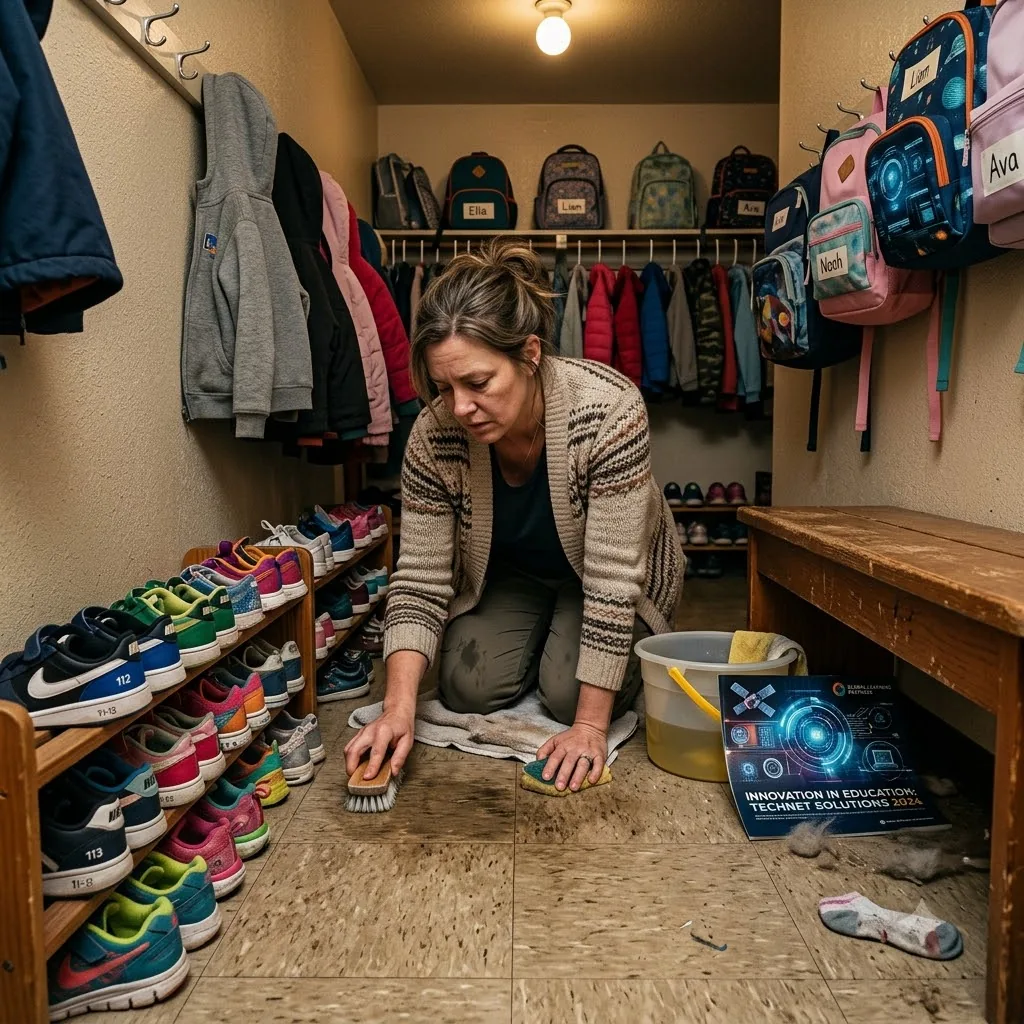
Sarah wrung the sponge into the gray janitorial bucket, the harsh chemical bite of industrial floor cleaner completely failing to mask the smell of terrified second-grader. The unannounced lockdown drill had stretched from a standard ten-minute exercise into a grueling forty-five-minute ordeal, leaving eight-year-old Leo shaking so violently he had wet himself behind the row of winter coats. She wiped the linoleum one last time, her knees aching against the hard floor of the cramped closet. The space was meant for backpacks and snow boots, not for thirty small bodies crammed together in utter darkness while unknown adults rattled the door handles to test the locks.
As she reached for the yellow wet-floor sign, her knuckles brushed against something stiff and out of place. Tucked behind a pair of light-up Spiderman sneakers lay a piece of heavy-stock card paper. Sarah pulled it into the dim light of the closet, wiping a smear of soapy water from the edge. It was a tri-fold brochure, printed on expensive, high-gloss material that caught the glare of the single overhead fluorescent tube. The cover text was embossed in metallic ink. It read *Guardian AI Solutions: Predictive Threat Modeling for Tomorrow’s Educational Environments*.
She stared at the stylized silver padlock logo. District officials did not leave sleek tech startup marketing materials in elementary school closets during active shooter drills. She thought back to the morning observers who had walked through the halls just before the sirens started. Three men who moved with the arrogant swagger of private sector money, taking notes on digital tablets while the children huddled in the dark under the smartboards. They had stood right here in this classroom, watching the kids cry without offering a single word of comfort.
Sarah folded the brochure and shoved it deep into her cardigan pocket. The thick paper felt like a threat against her hip. She grabbed her bucket and stepped out into the silent, empty hallway. The students were finally outside for a delayed recess, trying to run off the lingering adrenaline of the morning in the cold air. The school felt hollowed out, the usual hum of learning replaced by a heavy, exhausted quiet.
Through the reinforced glass of the main entrance vestibule, Sarah noticed a vehicle that did not belong. A sleek, black Lexus SUV sat idling directly in the painted red fire lane. Its engine rumbled in a low register, sending thick white plumes of exhaust into the freezing morning air. There was no district placard on the dashboard. There was no visitor pass hanging from the rearview mirror. It was the kind of vehicle that screamed entitlement, parked exactly where emergency services would need to stage.
Sarah abandoned her cleaning supplies by the front office water fountain. She marched toward the vestibule, determined to order the driver off the curb. Before her hand could even make contact with the red metal push-bar of the interior doors, the heavy exterior glass swung violently inward. A bitter blast of winter wind swept through the lobby, scattering a neat stack of early dismissal permission slips right off the administrative desk.
A man stepped into the school, bringing the cold with him. It was one of the observers from the morning, wearing a bespoke charcoal suit that likely cost more than her annual salary as a school counselor. He did not pause at the mandatory sign-in sheet on the security pedestal. He did not remove his dark aviator sunglasses in the dim lighting of the lobby. He walked with a terrifying, absolute sense of ownership over the space, his leather dress shoes clicking sharply and rhythmically against the polished terrazzo tile.
He stopped exactly two feet in front of Sarah, deliberately invading her personal space. He held out a thick metal clipboard, shoving it aggressively toward her chest.
“Sign this,” he said. His voice was completely flat, devoid of any regional accent or basic human inflection.
Sarah looked down at the clipboard. The top sheet was a complex shipping manifest from a private logistics firm she did not recognize. She kept her hands firmly at her sides, refusing to take the metal board.
“I am not authorized to accept district deliveries,” she told him, keeping her voice steady despite the adrenaline spiking in her chest.
The man thrust the clipboard closer. The metal edge caught the fabric of her cardigan. “This is not a district delivery. You need to sign for the Phase Two ballistic blankets so my team can begin the live deployment metrics.”
Sarah stared at his mirrored sunglasses, seeing only her own tense reflection staring back. Phase Two. Live deployment metrics. The sterile, corporate words made absolutely no sense in the context of an elementary school lobby. She pressed her hand against her pocket, feeling the sharp corner of the Guardian AI brochure digging into her palm through the wool. The pieces of the morning started to align into a shape she deeply hated.
“The drill is over,” Sarah said, stepping forward to force him back. “You need to move your vehicle out of the fire lane and leave the building immediately.”
The man let out a short, hollow exhale, a sound of profound irritation. He lowered the clipboard by a fraction of an inch. Without breaking his invisible stare, he reached inside his tailored suit jacket, bypassing his wallet and drawing out a bulky black cellular device that looked entirely too heavy for a standard consumer phone. His thumb tapped a single physical button on the side of the casing.
“Subject non-compliant,” the man said directly to the device. “Initiate the active stressor protocol for the exterior playground.”
Through the thick glass doors behind him, the shrill, mechanical shriek of the external lockdown sirens began to wail up to full volume, tearing through the crisp air where the second graders were playing.
Sarah wrung the sponge into the gray janitorial bucket, the harsh chemical bite of industrial floor cleaner completely failing to mask the smell of terrified second-grader. The unannounced lockdown drill had stretched from a standard ten-minute exercise into a grueling forty-five-minute ordeal, leaving eight-year-old Leo shaking so violently he had wet himself behind the row of winter coats. She wiped the linoleum one last time, her knees aching against the hard floor of the cramped closet. The space was meant for backpacks and snow boots, not for thirty small bodies crammed together in utter darkness while unknown adults rattled the door handles to test the locks.
As she reached for the yellow wet-floor sign, her knuckles brushed against something stiff and out of place. Tucked behind a pair of light-up Spiderman sneakers lay a piece of heavy-stock card paper. Sarah pulled it into the dim light of the closet, wiping a smear of soapy water from the edge. It was a tri-fold brochure, printed on expensive, high-gloss material that caught the glare of the single overhead fluorescent tube. The cover text was embossed in metallic ink. It read *Guardian AI Solutions: Predictive Threat Modeling for Tomorrow’s Educational Environments*.
She stared at the stylized silver padlock logo. District officials did not leave sleek tech startup marketing materials in elementary school closets during active shooter drills. She thought back to the morning observers who had walked through the halls just before the sirens started. Three men who moved with the arrogant swagger of private sector money, taking notes on digital tablets while the children huddled in the dark under the smartboards. They had stood right here in this classroom, watching the kids cry without offering a single word of comfort.
Sarah folded the brochure and shoved it deep into her cardigan pocket. The thick paper felt like a threat against her hip. She grabbed her bucket and stepped out into the silent, empty hallway. The students were finally outside for a delayed recess, trying to run off the lingering adrenaline of the morning in the cold air. The school felt hollowed out, the usual hum of learning replaced by a heavy, exhausted quiet.
Through the reinforced glass of the main entrance vestibule, Sarah noticed a vehicle that did not belong. A sleek, black Lexus SUV sat idling directly in the painted red fire lane. Its engine rumbled in a low register, sending thick white plumes of exhaust into the freezing morning air. There was no district placard on the dashboard. There was no visitor pass hanging from the rearview mirror. It was the kind of vehicle that screamed entitlement, parked exactly where emergency services would need to stage.
Sarah abandoned her cleaning supplies by the front office water fountain. She marched toward the vestibule, determined to order the driver off the curb. Before her hand could even make contact with the red metal push-bar of the interior doors, the heavy exterior glass swung violently inward. A bitter blast of winter wind swept through the lobby, scattering a neat stack of early dismissal permission slips right off the administrative desk.
A man stepped into the school, bringing the cold with him. It was one of the observers from the morning, wearing a bespoke charcoal suit that likely cost more than her annual salary as a school counselor. He did not pause at the mandatory sign-in sheet on the security pedestal. He did not remove his dark aviator sunglasses in the dim lighting of the lobby. He walked with a terrifying, absolute sense of ownership over the space, his leather dress shoes clicking sharply and rhythmically against the polished terrazzo tile.
He stopped exactly two feet in front of Sarah, deliberately invading her personal space. He held out a thick metal clipboard, shoving it aggressively toward her chest.
“Sign this,” he said. His voice was completely flat, devoid of any regional accent or basic human inflection.
Sarah looked down at the clipboard. The top sheet was a complex shipping manifest from a private logistics firm she did not recognize. She kept her hands firmly at her sides, refusing to take the metal board.
“I am not authorized to accept district deliveries,” she told him, keeping her voice steady despite the adrenaline spiking in her chest.
The man thrust the clipboard closer. The metal edge caught the fabric of her cardigan. “This is not a district delivery. You need to sign for the Phase Two ballistic blankets so my team can begin the live deployment metrics.”
Sarah stared at his mirrored sunglasses, seeing only her own tense reflection staring back. Phase Two. Live deployment metrics. The sterile, corporate words made absolutely no sense in the context of an elementary school lobby. She pressed her hand against her pocket, feeling the sharp corner of the Guardian AI brochure digging into her palm through the wool. The pieces of the morning started to align into a shape she deeply hated.
“The drill is over,” Sarah said, stepping forward to force him back. “You need to move your vehicle out of the fire lane and leave the building immediately.”
The man let out a short, hollow exhale, a sound of profound irritation. He lowered the clipboard by a fraction of an inch. Without breaking his invisible stare, he reached inside his tailored suit jacket, bypassing his wallet and drawing out a bulky black cellular device that looked entirely too heavy for a standard consumer phone. His thumb tapped a single physical button on the side of the casing.
“Subject non-compliant,” the man said directly to the device. “Initiate the active stressor protocol for the exterior playground.”
Through the thick glass doors behind him, the shrill, mechanical shriek of the external lockdown sirens began to wail up to full volume, tearing through the crisp air where the second graders were playing.