Story code: ST-000298
Part 2: The Lists Stop Matching
By the next round of tickets, the revised prep list had started doing actual damage. The lowboy was open too long while Derrick hunted for the new bins Ray had named. The fry station was backlogging because the schedule on the sheet said to rotate baskets in a rhythm that did not fit lunch, and the pass window kept filling up with plates that were waiting on one missing piece or another. I was crossing checks, scratch notes, and the official list, and the three of them were not agreeing with each other.
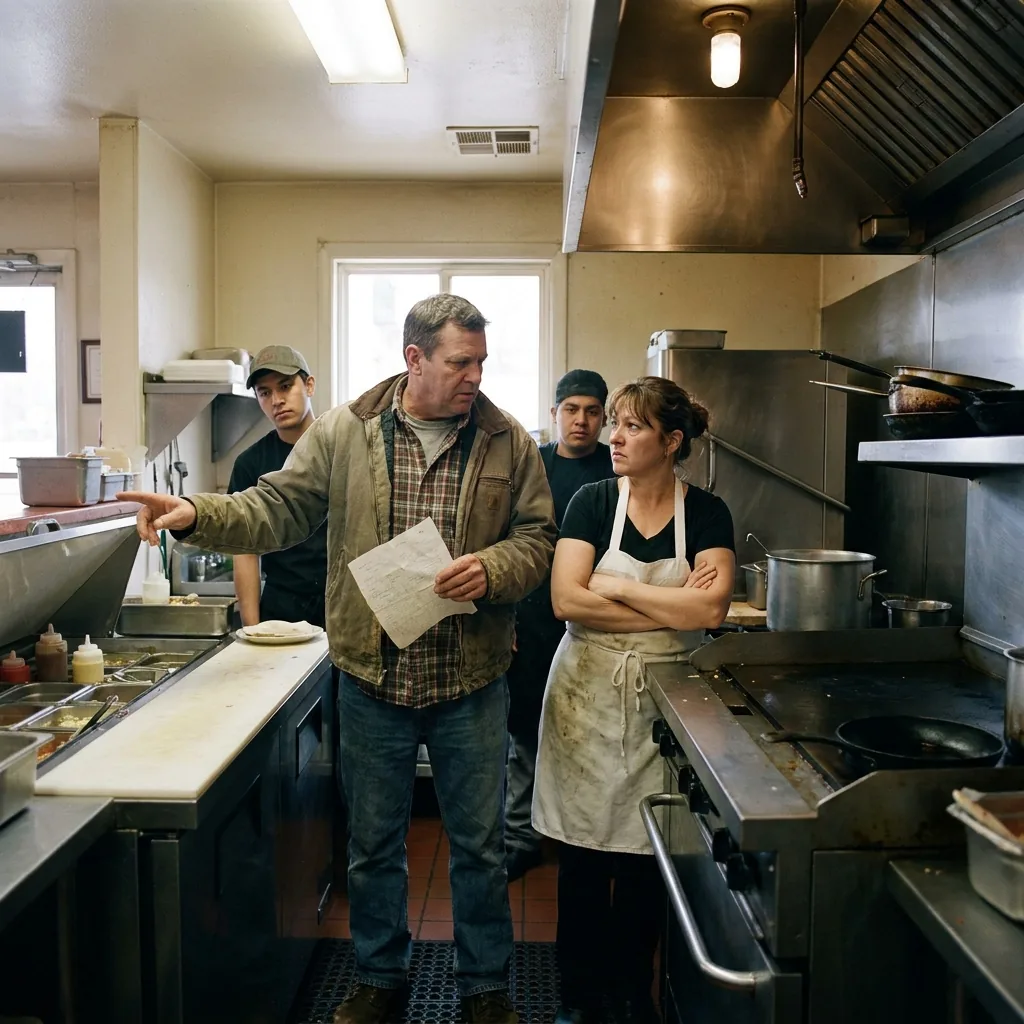
Ray stayed in the kitchen like a man checking his own work, except he never touched the line in a way that helped. He would point at a label, adjust a word, and tell somebody the problem was their interpretation. When Derrick asked whether the supposed “thermal set transition” meant resting the patties longer or moving them earlier, Ray answered with more language. He called it a “stabilization window,” then a “surface integrity phase,” then finally told Derrick not to reduce a procedure to the level of a station habit.
That last part landed wrong enough that even the dishes went quieter for a second.
Derrick looked at the sheet, then at the grill, then back at Ray. “The burgers are backing up,” he said. “The list is making me hold product I don’t need to hold.”
“No,” Ray said, and he said it clean and sharp enough that Tasha stopped in the doorway. “The list is making you confront the fact that your station has been running loose.”
That was how he worked. He took a plain kitchen problem and dressed it up until the person asking about it sounded lazy. Marlene heard enough of it to come off the office doorway and stand by the pass window with the invoices still folded in her apron. She did not interrupt. She watched the tickets. She watched the line. She watched the old prep sheets under the clip. Then she looked at my scratch pad when I set it beside the board.
I slid it toward her without saying much. It had the old prep counts, the actual usage from this week, and the new labels Ray had forced in over them. The mismatch was plain on the page. The revised list asked for more prep in one place, less in another, and a timing sequence that had already thrown off the first lunch rush. We were wasting product just to keep up with a word game.
Tasha came back in with a stack of checks and said, “I have four tables asking why everything is taking longer today.”
That made Marlene finally speak. “Ray, why does the new sheet not match the station?”
He did not flinch. He pulled the page closer and started explaining the fake term again, slower this time, like repetition could turn it into something solid. He said the burgers needed a controlled bloom, then said the hold time was necessary for “protein architecture,” then tapped the line about the fry rotation as if the paper itself was smarter than the cook standing in front of it.
Derrick let out a short breath through his nose and went back to the grill, but he did not stop looking at the sheet. I could see his jaw tighten when Ray used the bigger words. That was the second time Ray had done it in front of everybody. The first time had been to embarrass Derrick. This time he was using the same language to make the damage sound intentional.
Marlene reached under the register clip, pulled one of the old prep sheets free, and laid it next to Ray’s revised list. Side by side, the difference was ugly. The old sheet matched the ticket flow. The new one made no sense on a lunch rush. She stared at both of them for a long second and then looked up at Ray.
“If this is your process,” she said, “show me where it works without tying up the grill.”
Ray gave her a look that was halfway between annoyance and instruction. “It already works,” he said. “You’re seeing adjustment friction, not failure.”
But he said it while the pass window filled up again, while Tasha stood there with a late order slip in her hand, and while Derrick waited for a line explanation that never came.
Marlene folded the old sheet in half and tucked it against the invoices. Then she looked at me and at Derrick and said, “Keep both versions close. If this is real, we’ll prove it on the line.”
Ray heard that and smiled like she had agreed with him.
I wrote the word bloom one more time at the top of my scratch pad and underlined it twice, because if that term was real, it was about to survive the kitchen or fall apart in front of everybody. The only question left was which one Ray had just talked himself into.