Story code: ST-000298
Part 1: The New Prep List
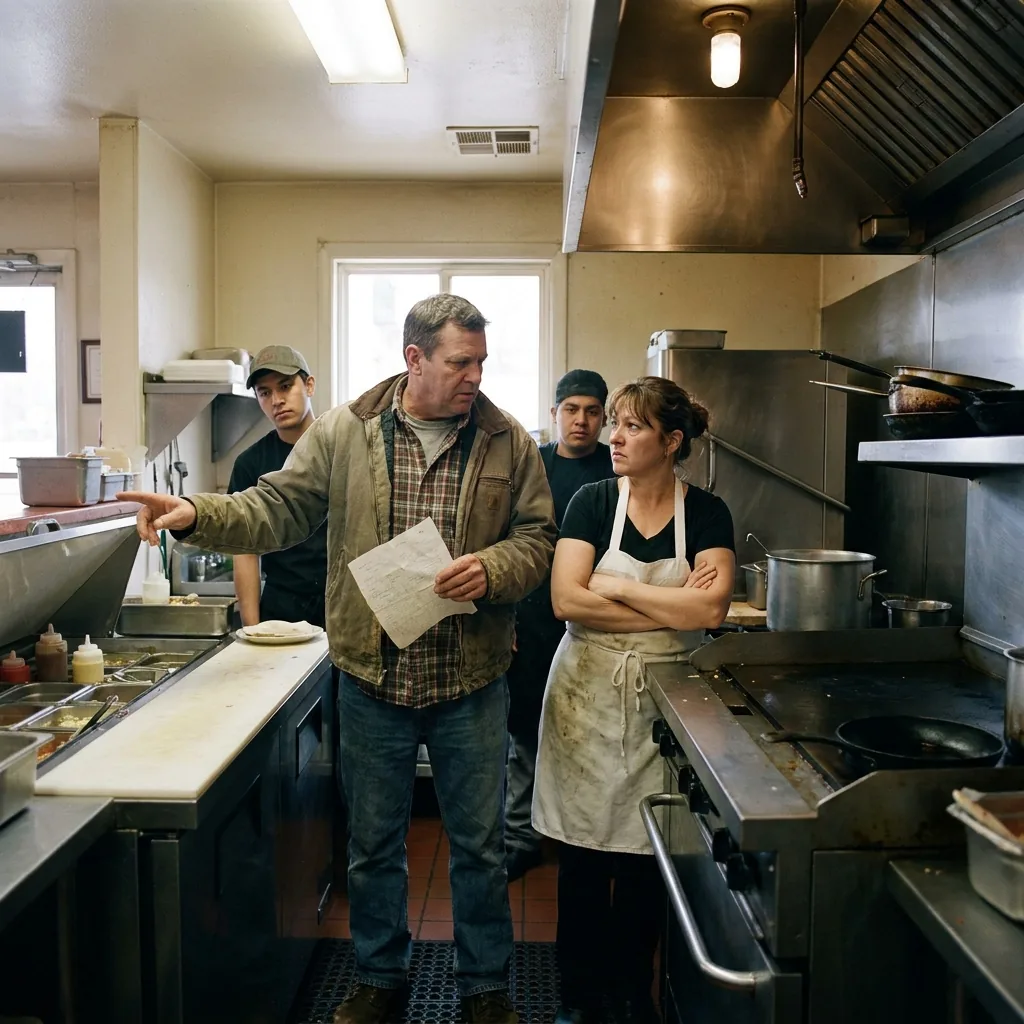
Ray Mercer walked into the Pike Street Diner kitchen like he owned the flat-top, the prep table by the lowboy, and the air between them, and he brought a revised prep list in one hand like it was a badge. He stopped at the dry-erase prep board, pointed at Derrick Shaw on the grill line, and started using consultant words over the sound of eggs hitting the pan, like that was supposed to make the kitchen obey him. By the time he called Derrick “under-calibrated on station discipline,” Derrick was holding the paper with two fingers and looking at the line like it had changed under his boots.
I was at the prep table by the lowboy, grease pencil behind my ear, copying the new items onto a scratch pad because the official sheet had already gone sideways once before lunch. The revised prep list had a neat header and a clean print date, but the numbers did not match the hotel pans we had, and the timing on the board did not match the ticket rail. Ray kept one shoulder turned toward the pass window so everybody could hear him. That was part of it. He did not just want the list followed. He wanted it repeated.
“This is a controlled hold protocol,” he said, tapping a line with his knuckle. “If you’re not familiar with the term, that’s fine. Just follow the instructions.” He said it while Tasha Bell slipped through the kitchen door with a stack of checks in one hand and two coffees in the other. She slowed when she heard him, then kept moving, eyes on the floor and back to the dining room. Marlene Pike was at the office doorway off the kitchen with invoices folded into her apron pocket, watching the line and not saying a word yet.
Derrick leaned in, forearms shiny from the flat-top, and pointed at one line on the sheet. “What does that even mean on the grill?” he asked. “You want the burgers held, or you want the patties pulled early?” It was a plain question. The kind you ask when a list is about to make lunch go bad.
Ray did not answer it plain. He smiled without showing teeth and turned the whole thing into a lesson. “If you have to ask, you’re already behind the procedure,” he said. Then he looked past Derrick to Marlene, like he was bringing her in as witness. “We are not running guesswork back here. We are standardizing.”
That was when Derrick got shamed in front of everybody. Ray talked over him, explained the same line twice in bigger words, and made it sound like Derrick was too slow to understand a basic kitchen process. Derrick straightened up, then went quiet with the sheet still in his hand. He did not toss it. He set it flat beside the grill and started reading it like he was trying to find where the language had started lying to him.
I copied the whole thing into my scratch notes. I do that when people start changing the rules in the middle of service. The old prep sheets were still stacked under the register clip by the office doorway, and I could see the difference without even asking. On the old sheets, the prep matched what we actually burned through on a lunch rush. On Ray’s version, half the morning prep got pushed into new bins with words nobody on the line used. One line told us to “stage the protein bloom.” Another said to rotate the fry baskets on a schedule that did not fit the ticket flow. Ray said all of it like he was reading from a manual only he could see.
Derrick asked him one more time, quieter now, “What are you calling bloom?”
Ray turned to him like the question itself was disrespect. “It’s a thermal set transition,” he said. “You don’t need the theory. You need compliance.”
Nobody in that kitchen repeated that phrase. Not Marlene. Not Tasha. Not me. Not Derrick.
I wrote it down anyway.
By the time the lunch tickets started stacking, the line was already working off two versions of the truth: the one on Ray’s paper and the one the kitchen actually used. Tasha came back through the door and dropped two checks on the corner of the prep table. “Table four is asking why their fries are waiting and their burgers are not,” she said, eyes on me because I was the closest thing to a translator standing there. “And table nine says the sandwich is coming back because the cheese wasn’t melted right.”
Ray heard her and lifted the revised prep list like that solved everything. Marlene finally stepped off the doorway and looked down at the sheet, then at the old stack under the clip, then back at Ray’s clean printout.
“Where did you get these terms?” she asked.
Ray did not even look away from the paper. “From the process.”
That was the moment that made my hand close around the grease pencil.
Because he had just said a whole lot of nothing with a straight face, and he sounded proud of it. The problem was, if his process was real, then why did the grill line stop making sense the second somebody tried to use it?
Ray Mercer walked into the Pike Street Diner kitchen like he owned the flat-top, the prep table by the lowboy, and the air between them, and he brought a revised prep list in one hand like it was a badge. He stopped at the dry-erase prep board, pointed at Derrick Shaw on the grill line, and started using consultant words over the sound of eggs hitting the pan, like that was supposed to make the kitchen obey him. By the time he called Derrick “under-calibrated on station discipline,” Derrick was holding the paper with two fingers and looking at the line like it had changed under his boots.
I was at the prep table by the lowboy, grease pencil behind my ear, copying the new items onto a scratch pad because the official sheet had already gone sideways once before lunch. The revised prep list had a neat header and a clean print date, but the numbers did not match the hotel pans we had, and the timing on the board did not match the ticket rail. Ray kept one shoulder turned toward the pass window so everybody could hear him. That was part of it. He did not just want the list followed. He wanted it repeated.
“This is a controlled hold protocol,” he said, tapping a line with his knuckle. “If you’re not familiar with the term, that’s fine. Just follow the instructions.” He said it while Tasha Bell slipped through the kitchen door with a stack of checks in one hand and two coffees in the other. She slowed when she heard him, then kept moving, eyes on the floor and back to the dining room. Marlene Pike was at the office doorway off the kitchen with invoices folded into her apron pocket, watching the line and not saying a word yet.
Derrick leaned in, forearms shiny from the flat-top, and pointed at one line on the sheet. “What does that even mean on the grill?” he asked. “You want the burgers held, or you want the patties pulled early?” It was a plain question. The kind you ask when a list is about to make lunch go bad.
Ray did not answer it plain. He smiled without showing teeth and turned the whole thing into a lesson. “If you have to ask, you’re already behind the procedure,” he said. Then he looked past Derrick to Marlene, like he was bringing her in as witness. “We are not running guesswork back here. We are standardizing.”
That was when Derrick got shamed in front of everybody. Ray talked over him, explained the same line twice in bigger words, and made it sound like Derrick was too slow to understand a basic kitchen process. Derrick straightened up, then went quiet with the sheet still in his hand. He did not toss it. He set it flat beside the grill and started reading it like he was trying to find where the language had started lying to him.
I copied the whole thing into my scratch notes. I do that when people start changing the rules in the middle of service. The old prep sheets were still stacked under the register clip by the office doorway, and I could see the difference without even asking. On the old sheets, the prep matched what we actually burned through on a lunch rush. On Ray’s version, half the morning prep got pushed into new bins with words nobody on the line used. One line told us to “stage the protein bloom.” Another said to rotate the fry baskets on a schedule that did not fit the ticket flow. Ray said all of it like he was reading from a manual only he could see.
Derrick asked him one more time, quieter now, “What are you calling bloom?”
Ray turned to him like the question itself was disrespect. “It’s a thermal set transition,” he said. “You don’t need the theory. You need compliance.”
Nobody in that kitchen repeated that phrase. Not Marlene. Not Tasha. Not me. Not Derrick.
I wrote it down anyway.
By the time the lunch tickets started stacking, the line was already working off two versions of the truth: the one on Ray’s paper and the one the kitchen actually used. Tasha came back through the door and dropped two checks on the corner of the prep table. “Table four is asking why their fries are waiting and their burgers are not,” she said, eyes on me because I was the closest thing to a translator standing there. “And table nine says the sandwich is coming back because the cheese wasn’t melted right.”
Ray heard her and lifted the revised prep list like that solved everything. Marlene finally stepped off the doorway and looked down at the sheet, then at the old stack under the clip, then back at Ray’s clean printout.
“Where did you get these terms?” she asked.
Ray did not even look away from the paper. “From the process.”
That was the moment that made my hand close around the grease pencil.
Because he had just said a whole lot of nothing with a straight face, and he sounded proud of it. The problem was, if his process was real, then why did the grill line stop making sense the second somebody tried to use it?