Story code: ST-001596
Part 1: The Phone on the Curb
By the time Nia turned onto Lottie’s block, the ambulance was already gone. Its siren had faded into the main road, leaving behind a strange, pressed-flat silence that did not fit the number of people still standing outside.
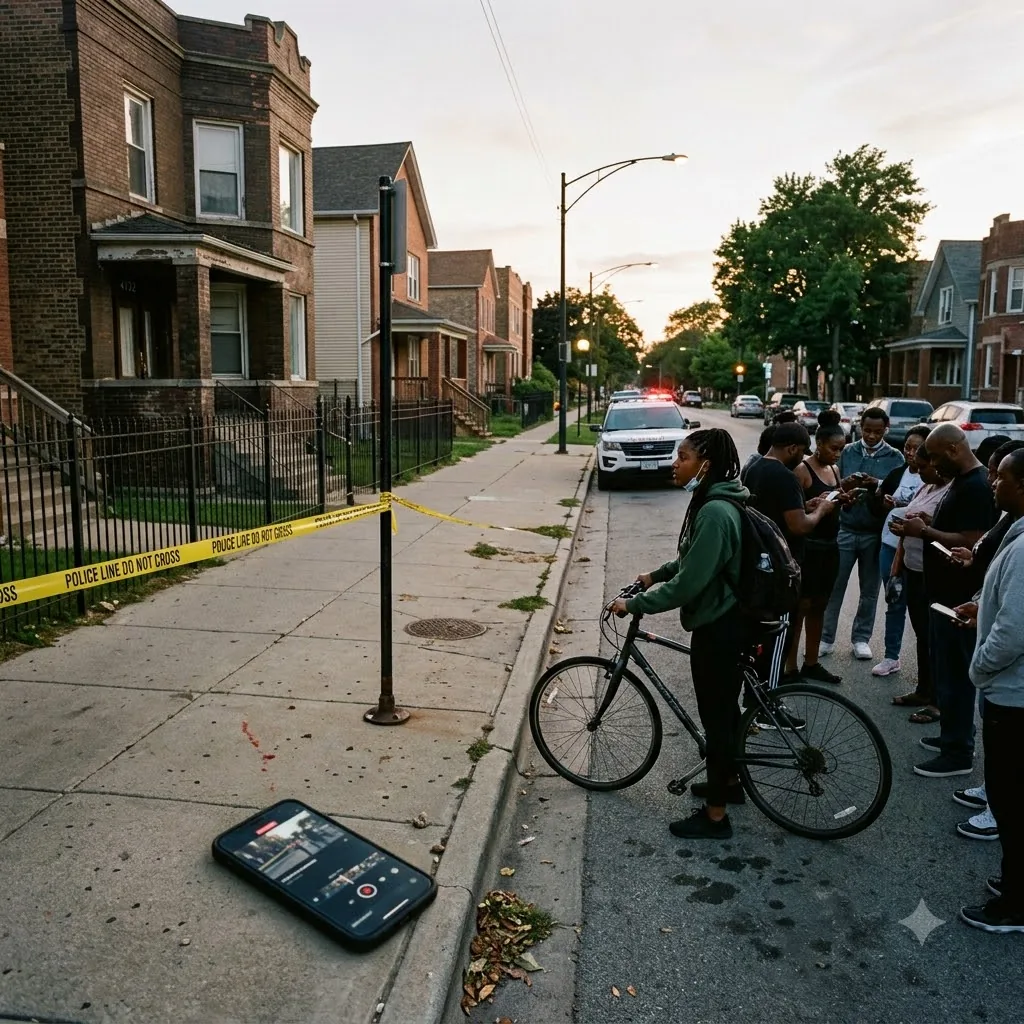
A phone lay faceup near the curb, still recording the darkening sky and the lower halves of people’s legs as they shifted around it. Nobody picked it up. Nobody seemed to want to be the one touching anything.
Nia stopped so fast her work tote slid off her shoulder. Police tape stretched from Lottie’s porch rail to the azalea bush by the walkway, making the little front yard look theatrical, like somebody had roped off a scene for an audience that refused to go home. Two officers stood near the steps. Three women from down the block were clustered under the sycamore, each with a phone out, each talking in the low excited voices people used when pretending they were not excited at all.
Nia started forward anyway.
“That’s my auntie’s house,” she said, though Lottie was not her aunt by blood and nobody here cared about that difference except on paperwork.
One of the officers held up a hand. “You family.”
“I’m with her. I stay there half the week. I just got off work.”
He looked past her, then back at the porch. “You can wait by the gate for now.”
Wait by the gate. As if Lottie had gone in for a routine appointment. As if Nia had not left that morning with Lottie in her house dress and slippers, muttering about people who came around with smiles too white and folders too thick.
Nia moved to the gate because there was nowhere else to go. The latch dug into her palm. Through the tape she could see one of Lottie’s flowerpots on its side, dirt spilled in a black crescent across the porch. One sandal sat near the top step, turned backward. The other was missing.
“Baby, you just got here,” Mrs. Kemp said, coming at her sideways with sympathy already arranged on her face. “They took her breathing, so that’s good.”
“Took her where.”
“County first, I think. Gavin rode behind in his truck for a minute, then came back when police wanted statements.”
Nia looked up sharply. “Gavin came back.”
Mrs. Kemp lowered her voice though he was thirty feet away and acting like the mayor of everything. “Said he was trying to help. Said she got dizzy and fought the paramedics because she was confused.”
Across the yard, Gavin stood near the officers with one hand on his hip and the other spread open in that calm, reasonable way of his. Button-down shirt, sleeves rolled neat. Loafers that never seemed to touch dirt. He nodded while one officer wrote. Then he bent and set a bottle of water on the hood of a cruiser for a crying neighbor, like he was hosting a cookout instead of hovering around an old woman’s collapse.
Nia had seen him enough the past two months to know the type before she knew the name. First he was just a man slowing his SUV in front of Lottie’s house. Then he was a man leaving a card wedged in the screen door. Then he was a man laughing too loud on the sidewalk, telling Lottie he helped seniors simplify things, release burdens, move with dignity into the next chapter. Lottie had come inside that day cussing under her breath and tearing his card in half, but after that he kept showing up in one form or another. A mailer. A call. Another card. A visit that happened to coincide with trash day, then another with lawn day, like he had studied the rhythm of the house and picked at the weak points.
Now he looked almost offended by the mess around him, like the whole block had inconvenienced him by making a spectacle.
A burst of noise rose from the sycamore group.
“Play it again.”
“I’m telling you, zoom in.”
Nia turned before she meant to. Mrs. Kemp’s nephew had recovered the phone from the curb and was swiping with his thumb. The women crowded in close. One of them looked up, noticed Nia staring, and gave a small guilty shrug that did not stop her from leaning in again.
“What are you watching.”
Nobody answered at first. The nephew angled the screen away on instinct, then must have remembered who Nia was because he hesitated. “It’s from when she fell.”
The words landed wrong. From when she fell. Clean and simple, as if the phone had caught a raindrop.
“Let me see.”
Mrs. Kemp touched her elbow. “Maybe not right now.”
Nia pulled free. “If everybody else gets to see my people laid out on the ground, I get to see it too.”
That shut them up. The nephew handed over the phone.
The video was shaky from the start. Somebody had been filming casually from across the street, the kind of thoughtless recording people did now whenever voices got loud in public. The frame bobbed past a parked car, then found Lottie on the porch. Not collapsed yet. Standing.
Nia’s breath caught.
Lottie was braced against the storm door with one hand, her shoulders rigid, chin lifted in that hard angle Nia knew well. Gavin stood one step below her, body turned just enough that the camera never quite got a clean full view of his hands. Another neighbor’s voice floated from offscreen, saying something half amused, half nosy. Someone laughed.
On the video, Lottie said something too muffled to make out. Then she moved, quick and sharp, not like a woman drifting into dizziness but like somebody knocking something aside. The phone camera jerked. The filmer swore. A little object hit the porch boards and skittered out of frame.
“Did you hear that part before,” Nia said.
The nephew shook his head. “Everybody was focused on when she went down.”
Because that was what the crowd did. They pointed themselves at the biggest visible thing and called it the whole truth.
Nia watched the clip again. This time she noticed the sound under the neighbor chatter. Lottie’s breathing was ragged, yes, but angry too. Not confused. Not wandering. Gavin said something low, with his public smile still fixed on his face. Lottie jerked her arm back.
The women around Nia leaned closer. Even Mrs. Kemp had gone silent.
The video lurched as the filmer stepped off the curb. Gavin’s shoulder blocked the frame for a second. Then Lottie’s voice came through clear enough to slice the air.
“Don’t put that in my hand, I said-”
The clip cut there when another call came in, and the screen went black.
By the time Nia turned onto Lottie’s block, the ambulance was already gone. Its siren had faded into the main road, leaving behind a strange, pressed-flat silence that did not fit the number of people still standing outside.
A phone lay faceup near the curb, still recording the darkening sky and the lower halves of people’s legs as they shifted around it. Nobody picked it up. Nobody seemed to want to be the one touching anything.
Nia stopped so fast her work tote slid off her shoulder. Police tape stretched from Lottie’s porch rail to the azalea bush by the walkway, making the little front yard look theatrical, like somebody had roped off a scene for an audience that refused to go home. Two officers stood near the steps. Three women from down the block were clustered under the sycamore, each with a phone out, each talking in the low excited voices people used when pretending they were not excited at all.
Nia started forward anyway.
“That’s my auntie’s house,” she said, though Lottie was not her aunt by blood and nobody here cared about that difference except on paperwork.
One of the officers held up a hand. “You family.”
“I’m with her. I stay there half the week. I just got off work.”
He looked past her, then back at the porch. “You can wait by the gate for now.”
Wait by the gate. As if Lottie had gone in for a routine appointment. As if Nia had not left that morning with Lottie in her house dress and slippers, muttering about people who came around with smiles too white and folders too thick.
Nia moved to the gate because there was nowhere else to go. The latch dug into her palm. Through the tape she could see one of Lottie’s flowerpots on its side, dirt spilled in a black crescent across the porch. One sandal sat near the top step, turned backward. The other was missing.
“Baby, you just got here,” Mrs. Kemp said, coming at her sideways with sympathy already arranged on her face. “They took her breathing, so that’s good.”
“Took her where.”
“County first, I think. Gavin rode behind in his truck for a minute, then came back when police wanted statements.”
Nia looked up sharply. “Gavin came back.”
Mrs. Kemp lowered her voice though he was thirty feet away and acting like the mayor of everything. “Said he was trying to help. Said she got dizzy and fought the paramedics because she was confused.”
Across the yard, Gavin stood near the officers with one hand on his hip and the other spread open in that calm, reasonable way of his. Button-down shirt, sleeves rolled neat. Loafers that never seemed to touch dirt. He nodded while one officer wrote. Then he bent and set a bottle of water on the hood of a cruiser for a crying neighbor, like he was hosting a cookout instead of hovering around an old woman’s collapse.
Nia had seen him enough the past two months to know the type before she knew the name. First he was just a man slowing his SUV in front of Lottie’s house. Then he was a man leaving a card wedged in the screen door. Then he was a man laughing too loud on the sidewalk, telling Lottie he helped seniors simplify things, release burdens, move with dignity into the next chapter. Lottie had come inside that day cussing under her breath and tearing his card in half, but after that he kept showing up in one form or another. A mailer. A call. Another card. A visit that happened to coincide with trash day, then another with lawn day, like he had studied the rhythm of the house and picked at the weak points.
Now he looked almost offended by the mess around him, like the whole block had inconvenienced him by making a spectacle.
A burst of noise rose from the sycamore group.
“Play it again.”
“I’m telling you, zoom in.”
Nia turned before she meant to. Mrs. Kemp’s nephew had recovered the phone from the curb and was swiping with his thumb. The women crowded in close. One of them looked up, noticed Nia staring, and gave a small guilty shrug that did not stop her from leaning in again.
“What are you watching.”
Nobody answered at first. The nephew angled the screen away on instinct, then must have remembered who Nia was because he hesitated. “It’s from when she fell.”
The words landed wrong. From when she fell. Clean and simple, as if the phone had caught a raindrop.
“Let me see.”
Mrs. Kemp touched her elbow. “Maybe not right now.”
Nia pulled free. “If everybody else gets to see my people laid out on the ground, I get to see it too.”
That shut them up. The nephew handed over the phone.
The video was shaky from the start. Somebody had been filming casually from across the street, the kind of thoughtless recording people did now whenever voices got loud in public. The frame bobbed past a parked car, then found Lottie on the porch. Not collapsed yet. Standing.
Nia’s breath caught.
Lottie was braced against the storm door with one hand, her shoulders rigid, chin lifted in that hard angle Nia knew well. Gavin stood one step below her, body turned just enough that the camera never quite got a clean full view of his hands. Another neighbor’s voice floated from offscreen, saying something half amused, half nosy. Someone laughed.
On the video, Lottie said something too muffled to make out. Then she moved, quick and sharp, not like a woman drifting into dizziness but like somebody knocking something aside. The phone camera jerked. The filmer swore. A little object hit the porch boards and skittered out of frame.
“Did you hear that part before,” Nia said.
The nephew shook his head. “Everybody was focused on when she went down.”
Because that was what the crowd did. They pointed themselves at the biggest visible thing and called it the whole truth.
Nia watched the clip again. This time she noticed the sound under the neighbor chatter. Lottie’s breathing was ragged, yes, but angry too. Not confused. Not wandering. Gavin said something low, with his public smile still fixed on his face. Lottie jerked her arm back.
The women around Nia leaned closer. Even Mrs. Kemp had gone silent.
The video lurched as the filmer stepped off the curb. Gavin’s shoulder blocked the frame for a second. Then Lottie’s voice came through clear enough to slice the air.
“Don’t put that in my hand, I said-”
The clip cut there when another call came in, and the screen went black.