Story code: ST-001605
Part 1: The Glass and the Drive
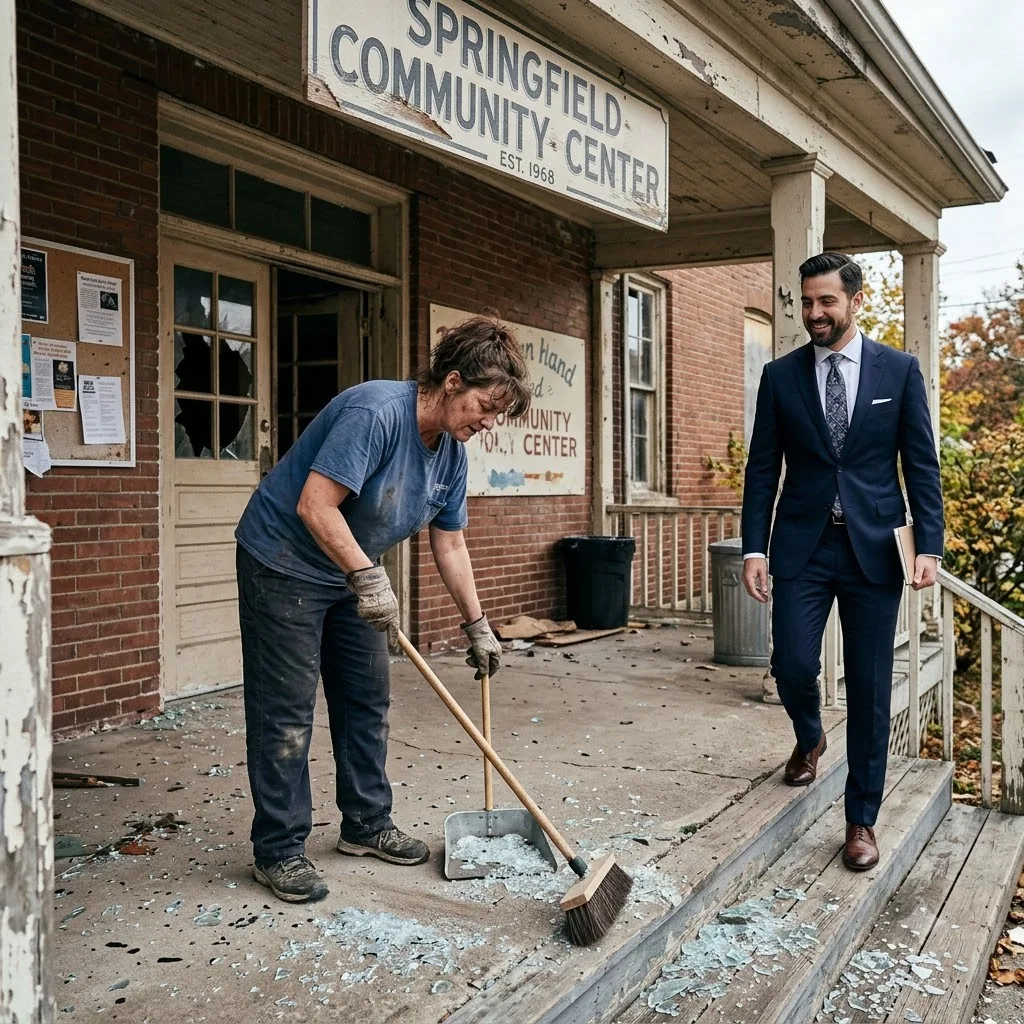
Elena pushed the wide bristled broom over the scarred linoleum, corralling the glittering shards of the front vestibule window into a neat, hostile pile. It was the third brick this month, another anonymous act of vandalism meant to bleed the community center’s meager budget and rattle her into signing the deed over to the developers. She gripped the wooden broom handle tight, mapping out the morning phone calls she needed to make to the glazier, the insurance adjuster, and the neighborhood patrol. She refused to let the anger slow her down. The after-school program started in six hours, and the children needed to see a clean, safe space, not the shattered remnants of a corporate intimidation tactic.
The heavy crunch of expensive leather soles on loose glass stopped her sweeping. Elena turned toward the empty window frame to see Trent stepping over the brick that still lay on the welcome mat. He wore a charcoal suit tailored tight to his shoulders, completely alien against the peeling paint and battered folding tables of the main hall. He held two steaming paper cups from the high-end roaster that had just gentrified the corner of Fourth and Elm, walking with the unearned confidence of a man who believed he already owned the floor beneath his feet.
“Rough morning to be playing janitor, Elena,” Trent said, offering one of the cups. “I brought you a flat white. Figured you could use the caffeine after dealing with this mess.”
Elena leaned her broom against the cinderblock wall. She did not take the coffee. Trent was a senior acquisition broker for Horizon Development, and he played the concerned neighbor routine with the polished ease of a predator. He was the reason the bricks kept flying through the windows, even if his manicured hands never touched the masonry. His firm wanted the lot to complete a luxury high-rise footprint, and they relied on the slow, grinding pressure of street-level harassment to soften up stubborn property owners.
“Set it on the table,” Elena told him, her voice flat and perfectly controlled. “Then you can tell your contractors that the glass cleanup will be done by noon. The center will open exactly on schedule.”
Trent sighed, a theatrical display of patience, and set both cups on the nearest folding table. He paced around the perimeter of the room, running a finger along a bulletin board covered in rent-assistance flyers and youth soccer sign-ups. He stopped to examine a collage of photos from the summer block party, shaking his head with a look of manufactured pity.
“You are fighting a war of attrition you cannot win,” Trent said, his tone dripping with false sympathy. “The holding company is getting tired of this back-and-forth. The neighborhood is moving on. Property taxes are spiking. The maintenance on a building this old is a financial sinkhole that will eventually drag you under. The buyout offer we submitted last week is thirty percent above market value, and it expires at the end of the business day.”
Elena picked up the plastic dustpan and knelt by the pile of glass. She had heard this exact speech four times since the winter thaw. It was standard real estate hardball, designed to make her feel isolated and financially precarious. She knew the game well. As long as she held the deed, the community had a foothold, a place where the kids were safe and the elders could organize against the rising tide of displacement. Horizon Development wanted a quick surrender, but she was built for a siege.
“The building is not for sale,” Elena said, dumping the broken glass into a heavy-duty trash bin with a loud, satisfying crash. “You can take your expired offer and your overpriced coffee back to the financial district. We are done talking about the property.”
Trent stopped pacing. The easy, neighborly smile vanished from his face, replaced by a cold, calculating stillness that made the air in the room feel instantly heavier. He turned to face her fully, his posture rigid and deliberate. He reached into the inside breast pocket of his suit jacket. Elena braced herself, expecting him to produce a final eviction notice, a zoning violation cooked up by his friends at city hall, or a revised contract with an intimidating legal letter attached. She stood up straight, ready to tear up whatever document he handed her.
Instead, Trent pulled out a small, matte-black flash drive.
He did not hand it to her. He set it down gently next to the coffee cups, right in the center of the scarred plastic table. The metal casing clicked against the surface, a tiny sound that echoed loudly in the quiet, empty hall.
“You are absolutely right,” Trent said softly, buttoning his jacket with slow, precise movements. “We are done talking about the property. That drive contains the complete, unredacted transcripts from your niece’s recent pediatric neurology evaluations at the state hospital.”
Elena froze, her hand still gripping the sharp plastic edge of the dustpan.
“The state child welfare board takes a very specific view on guardians who cannot afford the specialized medical protocols outlined in those files,” Trent continued, his voice perfectly level and devoid of any previous warmth. “The holding company has resources far beyond real estate, Elena. We can ensure the state flags her case for immediate relocation to a ward of their choosing by tomorrow morning.”
Elena stared at the black drive on the table, the dustpan digging deep into her palm as the entire nature of the threat shifted beneath her feet.
Elena pushed the wide bristled broom over the scarred linoleum, corralling the glittering shards of the front vestibule window into a neat, hostile pile. It was the third brick this month, another anonymous act of vandalism meant to bleed the community center’s meager budget and rattle her into signing the deed over to the developers. She gripped the wooden broom handle tight, mapping out the morning phone calls she needed to make to the glazier, the insurance adjuster, and the neighborhood patrol. She refused to let the anger slow her down. The after-school program started in six hours, and the children needed to see a clean, safe space, not the shattered remnants of a corporate intimidation tactic.
The heavy crunch of expensive leather soles on loose glass stopped her sweeping. Elena turned toward the empty window frame to see Trent stepping over the brick that still lay on the welcome mat. He wore a charcoal suit tailored tight to his shoulders, completely alien against the peeling paint and battered folding tables of the main hall. He held two steaming paper cups from the high-end roaster that had just gentrified the corner of Fourth and Elm, walking with the unearned confidence of a man who believed he already owned the floor beneath his feet.
“Rough morning to be playing janitor, Elena,” Trent said, offering one of the cups. “I brought you a flat white. Figured you could use the caffeine after dealing with this mess.”
Elena leaned her broom against the cinderblock wall. She did not take the coffee. Trent was a senior acquisition broker for Horizon Development, and he played the concerned neighbor routine with the polished ease of a predator. He was the reason the bricks kept flying through the windows, even if his manicured hands never touched the masonry. His firm wanted the lot to complete a luxury high-rise footprint, and they relied on the slow, grinding pressure of street-level harassment to soften up stubborn property owners.
“Set it on the table,” Elena told him, her voice flat and perfectly controlled. “Then you can tell your contractors that the glass cleanup will be done by noon. The center will open exactly on schedule.”
Trent sighed, a theatrical display of patience, and set both cups on the nearest folding table. He paced around the perimeter of the room, running a finger along a bulletin board covered in rent-assistance flyers and youth soccer sign-ups. He stopped to examine a collage of photos from the summer block party, shaking his head with a look of manufactured pity.
“You are fighting a war of attrition you cannot win,” Trent said, his tone dripping with false sympathy. “The holding company is getting tired of this back-and-forth. The neighborhood is moving on. Property taxes are spiking. The maintenance on a building this old is a financial sinkhole that will eventually drag you under. The buyout offer we submitted last week is thirty percent above market value, and it expires at the end of the business day.”
Elena picked up the plastic dustpan and knelt by the pile of glass. She had heard this exact speech four times since the winter thaw. It was standard real estate hardball, designed to make her feel isolated and financially precarious. She knew the game well. As long as she held the deed, the community had a foothold, a place where the kids were safe and the elders could organize against the rising tide of displacement. Horizon Development wanted a quick surrender, but she was built for a siege.
“The building is not for sale,” Elena said, dumping the broken glass into a heavy-duty trash bin with a loud, satisfying crash. “You can take your expired offer and your overpriced coffee back to the financial district. We are done talking about the property.”
Trent stopped pacing. The easy, neighborly smile vanished from his face, replaced by a cold, calculating stillness that made the air in the room feel instantly heavier. He turned to face her fully, his posture rigid and deliberate. He reached into the inside breast pocket of his suit jacket. Elena braced herself, expecting him to produce a final eviction notice, a zoning violation cooked up by his friends at city hall, or a revised contract with an intimidating legal letter attached. She stood up straight, ready to tear up whatever document he handed her.
Instead, Trent pulled out a small, matte-black flash drive.
He did not hand it to her. He set it down gently next to the coffee cups, right in the center of the scarred plastic table. The metal casing clicked against the surface, a tiny sound that echoed loudly in the quiet, empty hall.
“You are absolutely right,” Trent said softly, buttoning his jacket with slow, precise movements. “We are done talking about the property. That drive contains the complete, unredacted transcripts from your niece’s recent pediatric neurology evaluations at the state hospital.”
Elena froze, her hand still gripping the sharp plastic edge of the dustpan.
“The state child welfare board takes a very specific view on guardians who cannot afford the specialized medical protocols outlined in those files,” Trent continued, his voice perfectly level and devoid of any previous warmth. “The holding company has resources far beyond real estate, Elena. We can ensure the state flags her case for immediate relocation to a ward of their choosing by tomorrow morning.”
Elena stared at the black drive on the table, the dustpan digging deep into her palm as the entire nature of the threat shifted beneath her feet.