Story code: ST-001605
Part 2: The Demyelination Algorithm
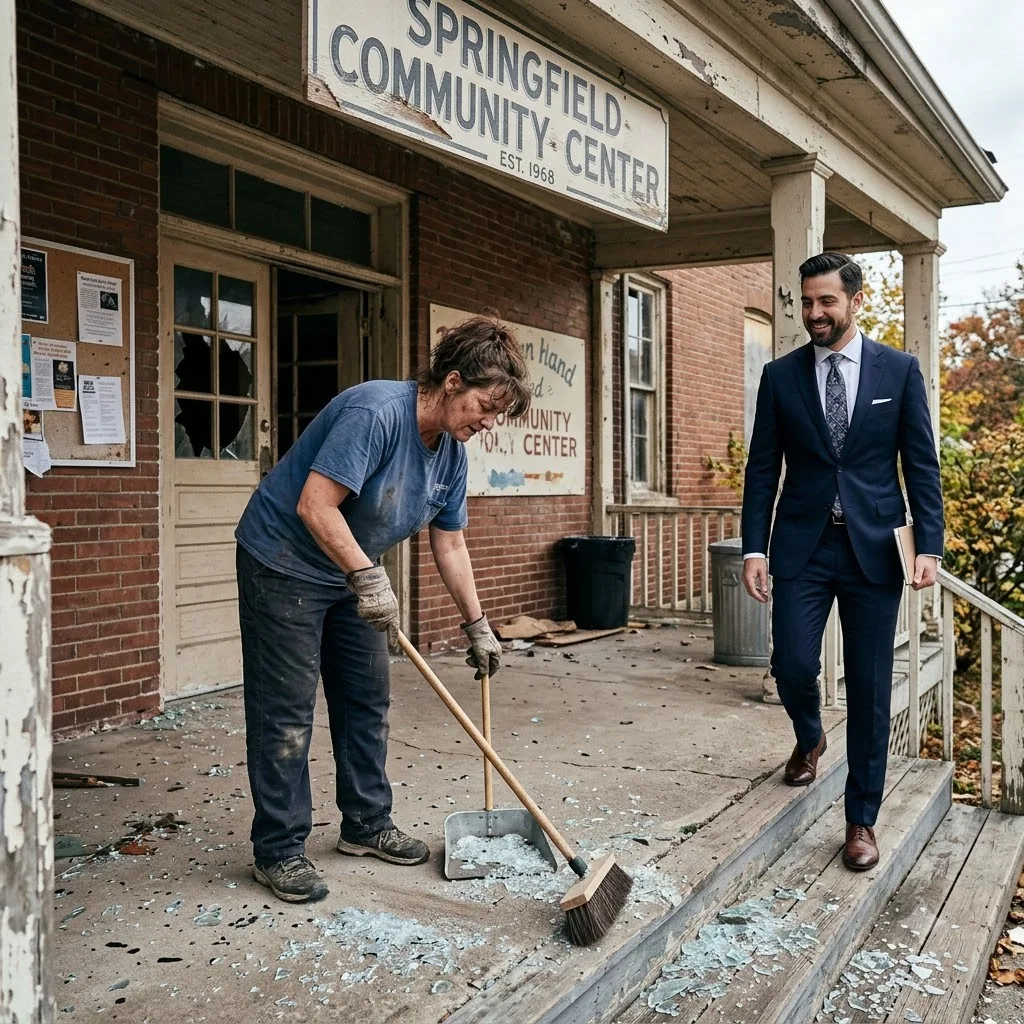
The heavy glass door clicked shut behind Trent, the brass bell jingling a cheerful, mocking tune. Elena did not move until his charcoal silhouette disappeared past the corner of Elm Street, swallowed by the morning foot traffic. Only then did she let out the breath burning in her lungs. She dropped the dustpan. The plastic clattered loudly against the linoleum, spilling a few glittering shards, but she didn’t care about the remaining mess. She reached for the matte-black flash drive, its metal casing cold against her calloused fingertips.
She bypassed the main hall and locked herself in the back office. It was a glorified storage closet, smelling of stale coffee and old paper, dominated by a heavy metal desk and a donated computer that took a full minute to hum to life. Elena stared at the screen as the operating system slowly booted, her mind racing through the impossibility of Trent’s claim. Maya’s pediatric neurology files were sealed. The state hospital system was supposed to be a fortress of privacy laws and bureaucratic red tape.
She slid the drive into the USB port. A window popped open immediately, displaying a single folder titled *Elena_Vargas_Risk_Assessment*.
Her stomach dropped as she double-clicked. The screen filled with documents, and the first was exactly what Trent had promised. It was an unredacted PDF of Dr. Aris Thorne’s evaluation from last Tuesday. Elena scrolled with a trembling hand, reading the exact phrases the doctor had spoken to her in the sterile, windowless consultation room. *Progressive motor demyelination. Requires immediate and sustained intervention. Recommended protocol: Bi-weekly specialized enzyme infusions.*
But the horror was not in the diagnosis itself; it was in the margins. The medical file had been heavily annotated by a third party. Someone had highlighted every mention of the treatment’s exorbitant cost in bright, digital red. Beside the doctor’s notes, a secondary column had been added, cross-referencing Maya’s medical needs with Elena’s personal financial history. There were screenshots of her checking accounts, her missed mortgage payments from two years ago, and the community center’s bleak, red-lined operating ledger. They even had the denial letters from her health insurance appeals.
They hadn’t just stolen medical records. They had built a flawless, mathematically sound case for medical insolvency.
Elena picked up her desk phone and dialed Marcus, a legal aid attorney who ran a pro-bono clinic out of a church basement two neighborhoods over. He answered on the fourth ring, sounding ragged and exhausted.
“Marcus, it’s Elena. I need to know how quickly the Department of Child and Family Services can move on a medical neglect flag.”
“Elena? Hello to you, too,” Marcus said, the scratching of a pen stopping in the background. “If it’s a standard flag, weeks. Maybe a month to get an investigator out there to evaluate the home. Why? Did someone report a kid at the center again?”
“No. Maya. What if the flag comes from a corporate entity with high-level state connections, backed by a complete financial audit proving the legal guardian can’t afford a life-saving protocol?”
A heavy silence fell over the line. When Marcus spoke again, the exhaustion was gone, replaced by a tight, professional alarm. “Elena, what exactly are you looking at right now?”
“Horizon Development. Trent just handed me a flash drive. They have Maya’s neurology charts. They have my bank statements. They’re threatening to trigger a relocation to a state ward if I don’t sign the building over.”
“Don’t sign anything,” Marcus said instantly. “And don’t delete anything on that drive. But Elena… you need to understand the reality of this. If a well-resourced entity submits a comprehensive neglect dossier to DCFS, especially involving specialized pediatric care, they can secure an emergency removal order in forty-eight hours. It’s an algorithm. The state sees the cost of the infusions, sees your income, and auto-generates a mandate to place the child in a state-funded facility where costs are absorbed.”
“A state facility won’t give her the specialized infusions,” Elena argued, her voice rising in the cramped room. “They’ll put her on the baseline management tier. Dr. Thorne said that would accelerate the degeneration. She wouldn’t survive the year.”
“I know,” Marcus said softly. “But the family court system takes months to untangle emergency removals. By the time we get a hearing to prove you’re a fit guardian, Maya will have been in the ward for half a year. Horizon knows this. They aren’t trying to win a court case; they are using the bureaucratic timeline as a weapon to force your hand.”
Elena hung up the phone, her hands shaking so hard she had to grip the edge of the metal desk to steady herself. The trap was perfect. If she fought, Maya was taken by Friday, lost in a system that would destroy her health while they waited for a judge to hear the appeal.
She turned back to the monitor and opened the second file on the drive. It was titled *Resolution_Agreement.pdf*.
It was a contract, but not the standard buyout Trent had been pushing for months. The terms had changed. Horizon Development was no longer just asking for the deed to the community center. Clause 4 stipulated that Elena must sign a public statement supporting the new luxury high-rise, effectively acting as a community liaison to crush the remaining neighborhood protests.
In exchange, Clause 7 outlined a ‘community impact grant.’ The grant would be paid directly to the state hospital via a shell LLC, covering Maya’s specialized infusions in full, for as long as she needed them.
Trent didn’t just want the building anymore. He wanted her total, humiliating surrender. He wanted her to betray her neighbors on camera, stripping the resistance of its trusted leader. If she did it, Maya lived. If she refused, Maya was swallowed by the state.
Outside the office, the heavy front door opened. The bright voices of children spilled into the vestibule. The after-school program had begun. She could hear Leo, the eight-year-old whose mother worked double shifts, arguing with his sister about a missing workbook. She heard Mrs. Gable, the retired nurse who volunteered to run the reading circle, loudly instructing the children to avoid the taped-off section of the vestibule where the glass had been.
Elena closed the files on the screen. She stood up, smoothing the wrinkles from her jeans, forcing her face into a mask of calm leadership. She had to go out there and help with homework, hand out snacks, and pretend the ground beneath them wasn’t crumbling.
As she reached for the doorknob, her cell phone buzzed in her back pocket.
She pulled it out. It was an automated text message from a shortcode number used by state government agencies.
*Notice: Case #884-V has been opened regarding the guardianship of Maya Vargas. A preliminary home inspection is scheduled for 8:00 AM tomorrow. Please ensure all medical and financial records are available.*
Trent hadn’t waited for her answer. He had already started the countdown.