Story code: ST-001606
Part 3: The Structural Integrity of Lies
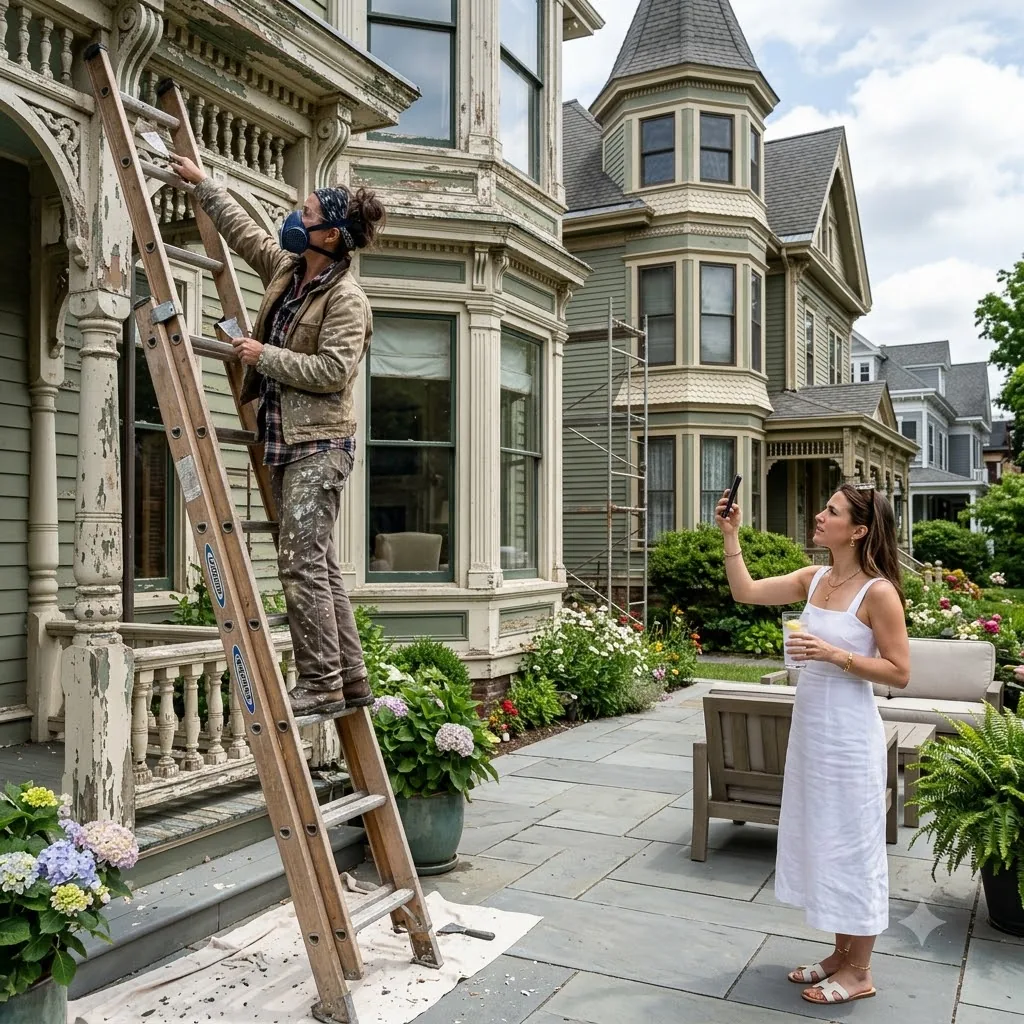
Marian’s gloved fingers trembled against the plastic buckle of the respirator. The thick rubber straps dug into her scalp. *Take it off,* Evelyn had demanded, the smartphone camera aimed like a firing squad.
Marian pressed the release latch. The mask fell forward, dangling heavily against her sternum. Cool air hit her face, instantly chilling the sweat that had glued a thick layer of chalky white paint dust to her skin. Her features were obscured by the grim mask of labor-gray paste caked in her eyebrows, streaks of grime cutting down her cheeks, her hair tucked tightly beneath the frayed brim of her cap.
Evelyn squinted at the screen, adjusting the exposure to compensate for the harsh afternoon sun. She didn’t recognize the woman she had ruined. To Evelyn, Marian was just a dirty prop, a nameless casualty in a fresh war.
“State your name, clearly,” Evelyn commanded.
Before Marian could open her mouth, the heavy crunch of tires on gravel interrupted them. A convoy of three luxury SUVs rolled up the long, curving driveway, parking in a neat row behind Marian’s battered work truck.
Evelyn immediately lowered her phone, the annoyance flashing across her features instantly replaced by a brilliant, welcoming smile. “Ah, the zoning committee is early,” she murmured to herself. She glanced back at Marian, evaluating the dirt, the sweat, the sheer pathetic image she presented. A new calculation clicked behind Evelyn’s eyes.
“Change of plans,” Evelyn said briskly, slipping her phone into her pocket. “Video is too easy to dismiss. Live testimony is undeniable. Come inside. Don’t bother washing your hands-the grime is absolutely perfect for the narrative.”
Marian didn’t argue. Her pulse pounded violently in her ears as she followed Evelyn up the porch steps, her heavy steel-toed boots thudding against the painted wood. She clutched a crumpled, chemical-soaked paint rag in her right hand, squeezing it until her knuckles ached.
The transition into the house was a shock to her system. The central air conditioning blasted her sweaty skin, raising goosebumps on her arms. The renovated living room was a monument to wealth and curated taste. Vaulted ceilings, pristine crown molding, and walls painted a soft, expensive cream. A massive antique Persian rug anchored the space beneath a crystal chandelier.
Four committee members filed in through the foyer, exchanging warm greetings and air-kisses with Evelyn. They were dressed in crisp linens and tailored summer blazers. Evelyn directed them to the plush velvet sofas, offering sparkling water from a silver tray while Marian was left to stand awkwardly near the heavy oak double doors, a silent, filthy statue intruding on their immaculate sanctuary.
“I’m so glad you could all make it on such short notice,” Evelyn began, taking a seat in a high-backed armchair. She leaned forward, adopting the exact posture of honeyed concern Marian had heard her practicing through the window. “I asked you here because we are facing a crisis of community character. This high-density housing project isn’t just an eyesore; it’s an existential threat to the delicate ecosystem of our neighborhood.”
The committee members nodded gravely.
“We have to consider the true burden on our unhoused neighbors,” Evelyn continued, delivering the rehearsed lines flawlessly. “Placing a structure here, so terribly far from essential services, is not an act of charity. It is, frankly, an act of marginalization.”
Marian stood perfectly still. The chemical smell of the paint stripper on her rag wafted up, battling the scent of Evelyn’s expensive floral perfume.
“But you don’t just have to take my word for it,” Evelyn said, gesturing gracefully toward the back of the room. “I want you to see the real human cost. The people the city council forgets when they push these massive developments. This is our contractor. If they eliminate street parking for the complex, artisans like her won’t be able to work here. Her livelihood will be destroyed.”
The four committee members turned in unison, looking at Marian with identical expressions of condescending pity.
Evelyn smiled encouragingly. “Go ahead. Tell them what you told me.”
Marian took a slow breath. The cold air filled her lungs, completely devoid of toxic dust. She stepped away from the door. She didn’t shuffle or keep her head bowed. She walked directly onto the center of the priceless Persian rug.
Evelyn’s smile faltered slightly at the sight of the dirty boots on the antique silk threads.
Marian raised her hand and let the paint rag fall. It landed on the rug with a soft, damp thud, leaving a dark, oily stain on the intricate floral pattern.
“My name is not of consequence to my current employer,” Marian said. Her voice was no longer the guttural, muffled rasp she had used on the lawn. It was clear, resonant, and steady. She reached up and pulled off her baseball cap, letting her hair fall loose around her dust-caked face. “But my professional name is M.E. Thorne.”
A suffocating silence descended on the living room. One of the committee members, an older man with silver hair, frowned in confusion. But Evelyn froze. The color instantly drained from her perfectly bronzed face, leaving her looking sallow and suddenly very old.
“M.E. Thorne,” Marian repeated, locking eyes with Evelyn. “Lead architect of the downtown shelter initiative. The one you destroyed.”
Evelyn’s mouth opened, but no sound came out. Her manicured hands gripped the armrests of her chair so tightly her knuckles turned white.
Marian didn’t break eye contact. She stepped one inch closer, the memory of her ruined life fueling every syllable. She had stared at the screen for months, reading the words that had unraveled her career until they were burned into her retinas.
“‘The proposed mixed-use shelter by M.E. Thorne is not an act of urban renewal,'” Marian recited, her voice echoing off the vaulted ceiling. She matched Evelyn’s cadence perfectly, throwing the woman’s own weaponized tone back at her. “‘It is a deliberate laundering of taxpayer funds disguised as progressive compassion. The firm is wholly unqualified, the permits are fundamentally fraudulent, and this architect is a predator feeding on the vulnerability of our city. We demand a full audit to save the downtown retail corridor.'”
“Stop,” Evelyn hissed, the word barely escaping her throat.
“‘#SaveHistoricDowntown,'” Marian finished, her voice slicing through the tense air like a scalpel. “Sent at 2:14 PM, September fourth, ten years ago. It took exactly three days for the city to freeze my funding, and four months for the legal fees to bankrupt my firm.”
The committee members exchanged alarmed, horrified glances. The narrative had violently derailed.
“You…” Evelyn stammered, her chest heaving as the carefully constructed illusion of her benevolence shattered into a million jagged pieces. The realization that she had just confessed to her sabotage, gloated about it to the very woman she had ruined, broke something fundamental behind her eyes.
“You’re a painter,” Evelyn choked out, pointing a trembling, perfectly manicured finger at the oily rag on her rug.
“I’m the rot you were trying to stop before it started,” Marian said softly.
The mask completely slipped from Evelyn’s face. The elegant, empathetic community leader vanished, replaced by a cornered, vicious thing.
“Get out!” Evelyn shrieked, shooting up from her armchair so violently it tipped backward and crashed against a mahogany side table. Her voice was a raw, ugly sound that tore her throat. “Get out of my house! You filthy, pathetic-get out!”
Marian stood rooted to the stained Persian rug, perfectly calm in the center of the storm, watching the woman who had ruined her life finally tear herself apart.