Story code: ST-001606
Part 1: The Lead Undercoat
Marian dragged the heavy carbide blade across the warped clapboard, feeling the century-old paint yield in thick, chalky flakes. The massive Victorian house was slowly shedding its skin under her brutal, repetitive force. Her shoulders burned with the deep, agonizing fire that only came from three straight hours of overhead work on an aluminum extension ladder. Sweat pooled at the small of her back and ran down her temples, binding the toxic dust to her skin in a tight, itchy mask. She shifted her weight on the narrow rungs, feeling the rigid metal press through the worn soles of her boots, and dug the scraper into another blister of cracking gray paint.
The August sun beat down on her neck, relentless and heavy. She reached for the scraper with both hands, bearing down to strip the wood bare. Directly to her left, a second-story window sat propped open by a decorative brass rod, the sheer curtains fluttering slightly in the stagnant breeze.
A sudden, crystalline voice drifted through the mesh screen, cutting through the dull scrape of metal on wood.
“We have to consider the true burden on our unhoused neighbors,” the voice echoed. The cadence paused in a way that sounded meticulously timed, a rehearsed beat of solemnity. “Placing a high-density structure here, so terribly far from essential services, is not an act of charity. It is, frankly, an act of marginalization.”
Marian froze, her scraper hovering an inch from the siding.
“No, let me try that again,” the woman inside muttered. “Too aggressive. Keep it warm. The board loves warm.”
Evelyn, the homeowner, cleared her throat. The subsequent delivery shifted into a tone of weaponized empathy, soft and devastatingly reasonable. Marian listened to the woman construct an argument perfectly designed to kill the affordable housing project slated for the empty lot down the street. It was a masterclass in packaging pure self-interest and property-value protection as progressive compassion.
Marian’s grip on the wooden handle tightened until the thick leather of her work gloves groaned. It was the pivot. The exact, sickening pivot in the woman’s tone. The flawless shift from cold calculation to a honeyed, maternal cadence.
Marian knew that exact shift.
The scraper slipped from her grasp, carving a deep, jagged gouge into the soft pine of the siding. Marian did not notice the damage. Her breath hitched, catching in the back of her throat like she had inhaled a cloud of lead dust directly into her lungs. The blood drained entirely from her face, replaced by a cold, rushing static that drowned out the hum of the cicadas in the elm trees.
She pressed her forehead against the hot wood of the house, closing her eyes. The rough grain bit into her skin. The voice through the screen continued to practice, refining the syllables, shaping the vowels to sound just a fraction more heartbroken about the tragedy of the zoning proposal.
It was her.
Marian had taken this contracting job blindly, dispatched by her boss to a nameless address on the affluent side of the river. She had seen the homeowner only from a distance yesterday, a distant silhouette pointing vaguely at the eaves from the safety of an air-conditioned sunroom. But this voice, isolated and performing a script of fake righteousness, was unmistakable. It was the same voice that had methodically dismantled her world.
A violent tremor started in Marian’s calves. It vibrated up through her knees, rattling the metal ladder against the side of the house. She squeezed her eyes shut, fighting the sudden, overwhelming urge to vomit into the manicured hydrangea bushes twenty feet below. The oppressive heat of the afternoon sun vanished under a wave of ice-water shock. She forced herself to breathe in through her nose, counting the seconds, trying to anchor herself to the sharp, chemical smell of dried pine and paint stripper.
“Perfect,” the voice inside announced. The tone was completely devoid of the warmth it had just practiced. “Now, I just need the visual.”
Footsteps tapped across the hardwood floor inside, sharp and decisive, retreating from the window.
Marian stayed frozen on the ladder, her heart slamming against her ribs in a frantic, irregular rhythm. The instinct to flee pulled at her muscles. She needed to climb down, throw her tools into the back of her rusted truck, and drive until the gas tank ran dry. Instead, her boots remained stubbornly planted on the rung. Her hands remained locked in a death grip around the scraper. The physical reality of the house, the peeling paint, the canvas drop cloth spread over the lawn, all felt suddenly fragile, like a paper stage set waiting to be torn down.
The heavy oak front door groaned open on its massive brass hinges directly below her.
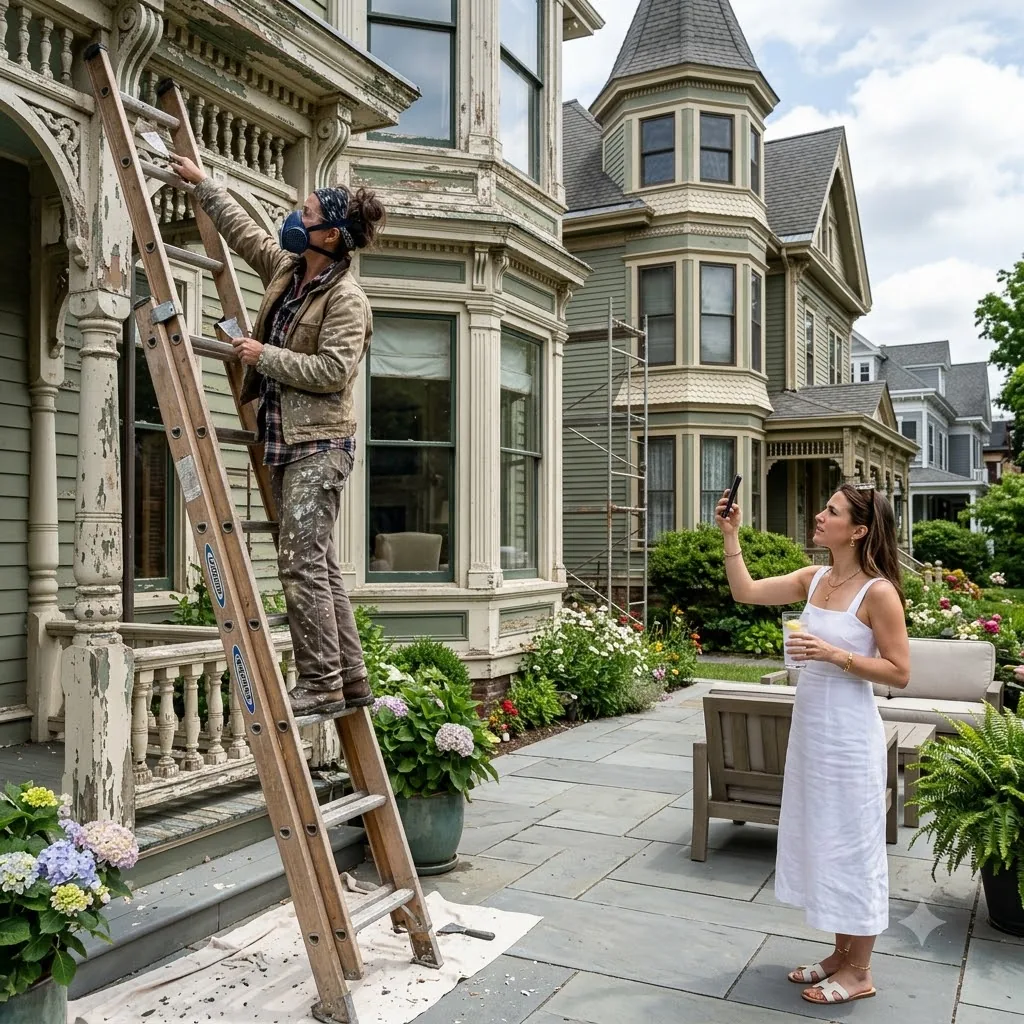
Marian looked down, her vision swimming slightly from the adrenaline. Evelyn stepped out onto the wraparound porch. Her posture was perfectly aligned, a silk blouse tucked flawlessly into immaculate linen trousers, looking utterly untouched by the heat of the day. In her left hand, she held a tall, condensation-beaded glass of ice water, the cubes clinking sharply. In her right hand, she held her smartphone. The screen glowed bright, the camera lens pointed squarely upward, framing the exhausted, dust-covered painter trapped on the ladder.
“Smile for the zoning board,” Evelyn said, tapping the red record button.
Marian dragged the heavy carbide blade across the warped clapboard, feeling the century-old paint yield in thick, chalky flakes. The massive Victorian house was slowly shedding its skin under her brutal, repetitive force. Her shoulders burned with the deep, agonizing fire that only came from three straight hours of overhead work on an aluminum extension ladder. Sweat pooled at the small of her back and ran down her temples, binding the toxic dust to her skin in a tight, itchy mask. She shifted her weight on the narrow rungs, feeling the rigid metal press through the worn soles of her boots, and dug the scraper into another blister of cracking gray paint.
The August sun beat down on her neck, relentless and heavy. She reached for the scraper with both hands, bearing down to strip the wood bare. Directly to her left, a second-story window sat propped open by a decorative brass rod, the sheer curtains fluttering slightly in the stagnant breeze.
A sudden, crystalline voice drifted through the mesh screen, cutting through the dull scrape of metal on wood.
“We have to consider the true burden on our unhoused neighbors,” the voice echoed. The cadence paused in a way that sounded meticulously timed, a rehearsed beat of solemnity. “Placing a high-density structure here, so terribly far from essential services, is not an act of charity. It is, frankly, an act of marginalization.”
Marian froze, her scraper hovering an inch from the siding.
“No, let me try that again,” the woman inside muttered. “Too aggressive. Keep it warm. The board loves warm.”
Evelyn, the homeowner, cleared her throat. The subsequent delivery shifted into a tone of weaponized empathy, soft and devastatingly reasonable. Marian listened to the woman construct an argument perfectly designed to kill the affordable housing project slated for the empty lot down the street. It was a masterclass in packaging pure self-interest and property-value protection as progressive compassion.
Marian’s grip on the wooden handle tightened until the thick leather of her work gloves groaned. It was the pivot. The exact, sickening pivot in the woman’s tone. The flawless shift from cold calculation to a honeyed, maternal cadence.
Marian knew that exact shift.
The scraper slipped from her grasp, carving a deep, jagged gouge into the soft pine of the siding. Marian did not notice the damage. Her breath hitched, catching in the back of her throat like she had inhaled a cloud of lead dust directly into her lungs. The blood drained entirely from her face, replaced by a cold, rushing static that drowned out the hum of the cicadas in the elm trees.
She pressed her forehead against the hot wood of the house, closing her eyes. The rough grain bit into her skin. The voice through the screen continued to practice, refining the syllables, shaping the vowels to sound just a fraction more heartbroken about the tragedy of the zoning proposal.
It was her.
Marian had taken this contracting job blindly, dispatched by her boss to a nameless address on the affluent side of the river. She had seen the homeowner only from a distance yesterday, a distant silhouette pointing vaguely at the eaves from the safety of an air-conditioned sunroom. But this voice, isolated and performing a script of fake righteousness, was unmistakable. It was the same voice that had methodically dismantled her world.
A violent tremor started in Marian’s calves. It vibrated up through her knees, rattling the metal ladder against the side of the house. She squeezed her eyes shut, fighting the sudden, overwhelming urge to vomit into the manicured hydrangea bushes twenty feet below. The oppressive heat of the afternoon sun vanished under a wave of ice-water shock. She forced herself to breathe in through her nose, counting the seconds, trying to anchor herself to the sharp, chemical smell of dried pine and paint stripper.
“Perfect,” the voice inside announced. The tone was completely devoid of the warmth it had just practiced. “Now, I just need the visual.”
Footsteps tapped across the hardwood floor inside, sharp and decisive, retreating from the window.
Marian stayed frozen on the ladder, her heart slamming against her ribs in a frantic, irregular rhythm. The instinct to flee pulled at her muscles. She needed to climb down, throw her tools into the back of her rusted truck, and drive until the gas tank ran dry. Instead, her boots remained stubbornly planted on the rung. Her hands remained locked in a death grip around the scraper. The physical reality of the house, the peeling paint, the canvas drop cloth spread over the lawn, all felt suddenly fragile, like a paper stage set waiting to be torn down.
The heavy oak front door groaned open on its massive brass hinges directly below her.
Marian looked down, her vision swimming slightly from the adrenaline. Evelyn stepped out onto the wraparound porch. Her posture was perfectly aligned, a silk blouse tucked flawlessly into immaculate linen trousers, looking utterly untouched by the heat of the day. In her left hand, she held a tall, condensation-beaded glass of ice water, the cubes clinking sharply. In her right hand, she held her smartphone. The screen glowed bright, the camera lens pointed squarely upward, framing the exhausted, dust-covered painter trapped on the ladder.
“Smile for the zoning board,” Evelyn said, tapping the red record button.