Story code: ST-001637
Part 1: The Metric
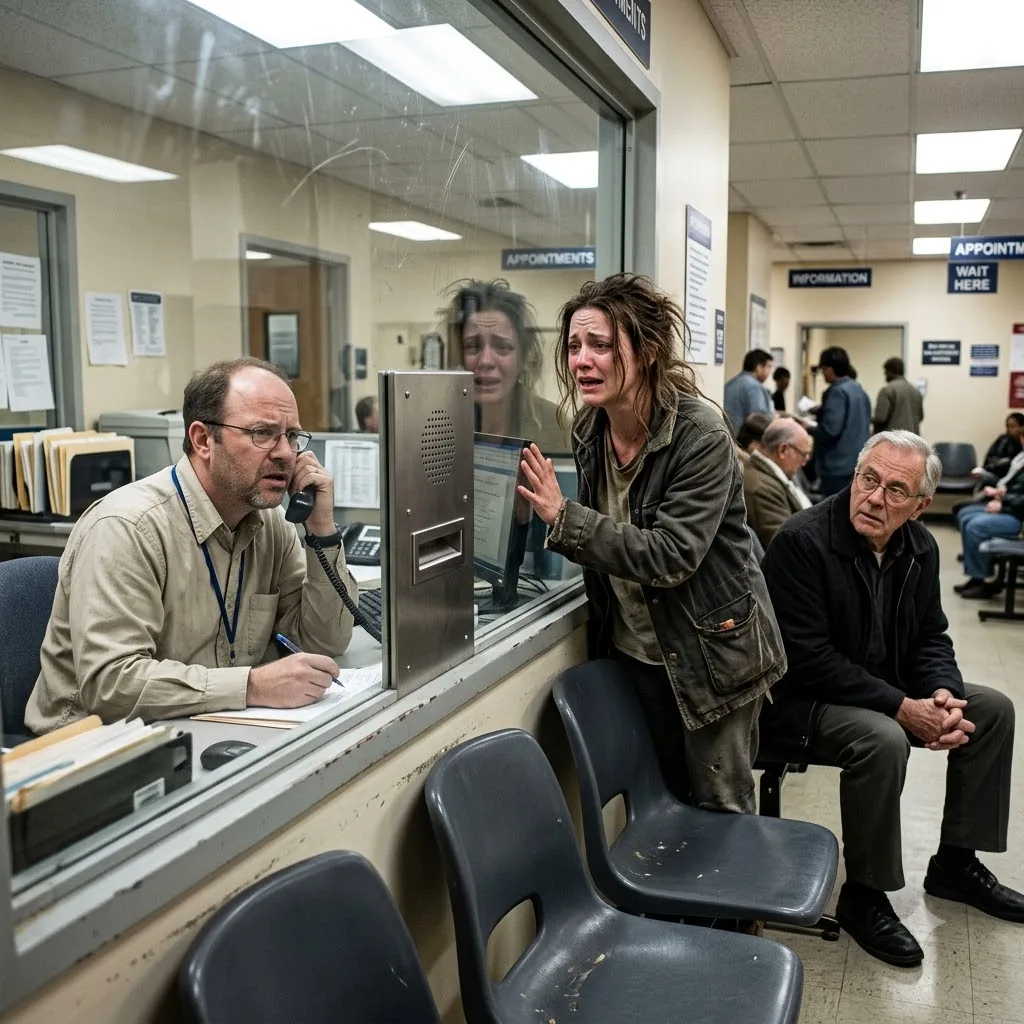
The intake quota on Marcus’s monitor blinked a steady, aggressive crimson. Thirty-four completed files out of fifty required for the day, and his shift ended in forty minutes. If he missed the target again, his supervisor would flag his file for another mandatory efficiency seminar. He tapped his pen against the bulletproof glass of the reception window, willing the waiting room to produce someone with a straightforward, properly filled-out Form 10-10EZ.
The heavy reinforced door at the clinic entrance clanked open. A woman stumbled through the frame. She wore a faded olive-drab field jacket three sizes too big and mud-caked boots that squeaked against the pristine linoleum. She did not stop at the touch-screen check-in kiosk. She did not take a number from the red plastic dispenser. Instead, she marched straight to Marcus’s window and slammed both palms flat against the glass.
Marcus hit the intercom button. He recited the standard greeting in a flat, practiced monotone, instructing her to step back and use the kiosk.
The woman shook her head violently. She pressed her face near the speaker grille. She told him she just needed to use the secure bathroom down the patient hallway. Her voice was strained, a tight whisper that clipped through the cheap desk speaker.
Marcus shifted his gaze back to his screen. He informed her that clinic policy restricted access beyond the security doors to patients with scheduled appointments or verified identification. He told her to present her VA card.
She patted the deep pockets of the field jacket, her breathing shallow and erratic. She insisted she had lost it. She begged him to just buzz the magnetic lock for two minutes.
Marcus let out a slow, heavy breath. Five years at the front desk had taught him to recognize the signs of a severe PTSD flare-up. The frantic pacing, the lack of spatial awareness, the desperate need for a small, enclosed space. It was a standard disruption. He reached into his drawer for the laminated de-escalation flowchart. He needed to keep his metrics moving, and calling security for a mental health transport would freeze his intake numbers for the rest of the afternoon. He told her to take a seat in the blue chairs while he paged a duty nurse.
She hit the glass again, harder this time. She demanded he open the door right now.
Marcus looked up, ready to issue a stern warning about damaging federal property. That was when he saw the sleeve of her jacket.
The dark green fabric was soaked through with a darker, shiny liquid. It clung heavily to her left forearm. As she raised her hand to strike the glass a third time, a thick crimson drop fell from her cuff. It hit the metal transaction tray with a wet smack. Another drop followed, smearing against the edge of the paperwork slot.
This was not a standard panic attack. The metallic smell of fresh copper drifted through the narrow gap under the window. Marcus froze with his hand hovering over the intercom button.
A sudden movement in the corner of the waiting room caught his attention. A man sitting in the far row of chairs stood up. Marcus had not even processed the man checking in. The bystander wore a crisp, unmarked navy polo shirt and khaki tactical pants. He did not look at the intake kiosk. He did not look at the clinic directory. His eyes were locked entirely on the bleeding woman at the glass.
The man pulled a matte-black smartphone from his belt. He did not dial a number. He simply raised it to his ear and spoke loudly enough for the reception microphones to pick up the audio.
He stated the exact street address of the clinic. He described the woman in the oversized olive jacket. He reported that the target was cornered at the reception desk and bleeding heavily. He instructed the person on the other end of the line to send the containment units immediately.
The woman flinched. She spun away from the glass, her boots slipping slightly on her own blood. She stared at the man in the polo shirt. All the frantic energy drained from her posture, replaced by a rigid, primal terror. She pressed her back against the bulletproof glass, sliding sideways toward the locked security door.
Marcus realized the man on the phone was not calling an ambulance. He was not calling the local precinct for a wellness check. The terminology was entirely wrong.
The bleeding veteran looked back over her shoulder at Marcus. Her eyes were wide, fixed on his face through the thick pane. She leaned into the speaker grille and whispered that they were going to kill her right here if he did not hit the buzzer.
Marcus looked from her terrified face to the man in the navy polo. The man lowered his phone. He reached his right hand under the hem of his shirt and took a slow, deliberate step toward the front desk.
The intake quota on Marcus’s monitor blinked a steady, aggressive crimson. Thirty-four completed files out of fifty required for the day, and his shift ended in forty minutes. If he missed the target again, his supervisor would flag his file for another mandatory efficiency seminar. He tapped his pen against the bulletproof glass of the reception window, willing the waiting room to produce someone with a straightforward, properly filled-out Form 10-10EZ.
The heavy reinforced door at the clinic entrance clanked open. A woman stumbled through the frame. She wore a faded olive-drab field jacket three sizes too big and mud-caked boots that squeaked against the pristine linoleum. She did not stop at the touch-screen check-in kiosk. She did not take a number from the red plastic dispenser. Instead, she marched straight to Marcus’s window and slammed both palms flat against the glass.
Marcus hit the intercom button. He recited the standard greeting in a flat, practiced monotone, instructing her to step back and use the kiosk.
The woman shook her head violently. She pressed her face near the speaker grille. She told him she just needed to use the secure bathroom down the patient hallway. Her voice was strained, a tight whisper that clipped through the cheap desk speaker.
Marcus shifted his gaze back to his screen. He informed her that clinic policy restricted access beyond the security doors to patients with scheduled appointments or verified identification. He told her to present her VA card.
She patted the deep pockets of the field jacket, her breathing shallow and erratic. She insisted she had lost it. She begged him to just buzz the magnetic lock for two minutes.
Marcus let out a slow, heavy breath. Five years at the front desk had taught him to recognize the signs of a severe PTSD flare-up. The frantic pacing, the lack of spatial awareness, the desperate need for a small, enclosed space. It was a standard disruption. He reached into his drawer for the laminated de-escalation flowchart. He needed to keep his metrics moving, and calling security for a mental health transport would freeze his intake numbers for the rest of the afternoon. He told her to take a seat in the blue chairs while he paged a duty nurse.
She hit the glass again, harder this time. She demanded he open the door right now.
Marcus looked up, ready to issue a stern warning about damaging federal property. That was when he saw the sleeve of her jacket.
The dark green fabric was soaked through with a darker, shiny liquid. It clung heavily to her left forearm. As she raised her hand to strike the glass a third time, a thick crimson drop fell from her cuff. It hit the metal transaction tray with a wet smack. Another drop followed, smearing against the edge of the paperwork slot.
This was not a standard panic attack. The metallic smell of fresh copper drifted through the narrow gap under the window. Marcus froze with his hand hovering over the intercom button.
A sudden movement in the corner of the waiting room caught his attention. A man sitting in the far row of chairs stood up. Marcus had not even processed the man checking in. The bystander wore a crisp, unmarked navy polo shirt and khaki tactical pants. He did not look at the intake kiosk. He did not look at the clinic directory. His eyes were locked entirely on the bleeding woman at the glass.
The man pulled a matte-black smartphone from his belt. He did not dial a number. He simply raised it to his ear and spoke loudly enough for the reception microphones to pick up the audio.
He stated the exact street address of the clinic. He described the woman in the oversized olive jacket. He reported that the target was cornered at the reception desk and bleeding heavily. He instructed the person on the other end of the line to send the containment units immediately.
The woman flinched. She spun away from the glass, her boots slipping slightly on her own blood. She stared at the man in the polo shirt. All the frantic energy drained from her posture, replaced by a rigid, primal terror. She pressed her back against the bulletproof glass, sliding sideways toward the locked security door.
Marcus realized the man on the phone was not calling an ambulance. He was not calling the local precinct for a wellness check. The terminology was entirely wrong.
The bleeding veteran looked back over her shoulder at Marcus. Her eyes were wide, fixed on his face through the thick pane. She leaned into the speaker grille and whispered that they were going to kill her right here if he did not hit the buzzer.
Marcus looked from her terrified face to the man in the navy polo. The man lowered his phone. He reached his right hand under the hem of his shirt and took a slow, deliberate step toward the front desk.