Story code: ST-001650
Part 4: The Procurement of Ruin
The silence in the Oakridge community clubhouse shattered. It did not break with a singular shout, but with a low, rising murmur of collective disgust. Maya stood perfectly still, the glossy pages of the Vance Institutional Services brochure cool against her palms. She watched the retired widower in the front row rise slowly from his folding chair. The elderly man did not look at Maya; his eyes were locked on Richard.
“You cited me for mailbox paint,” the widower said, his voice trembling with a potent mix of age and sudden, raw indignation. “You threatened to put a lien on my pension over a paint swatch, while you’re out there feeding poisoned meat to human beings?”
“Frank, sit down,” Richard snapped, though the authoritative bass had completely drained from his chest. He clutched his brushed aluminum clipboard to his waist like a shield. “This is an internal neighborhood matter. Do not let her twist the narrative.”
But the narrative had already escaped him. A woman in the third row, who had been crying ten minutes earlier over a citation for leaving her child’s tricycle on the lawn, stood up and joined Frank. Then another neighbor stood. Then three more.
Maya watched Richard step backward. His expensive leather shoe caught the leg of the plastic folding table, pushing it an inch across the linoleum with a pathetic squeak. The crisp, pastel yellow polo shirt that had seemed so intimidating on her porch yesterday now just looked absurd-a flimsy costume worn by a profoundly fragile man.
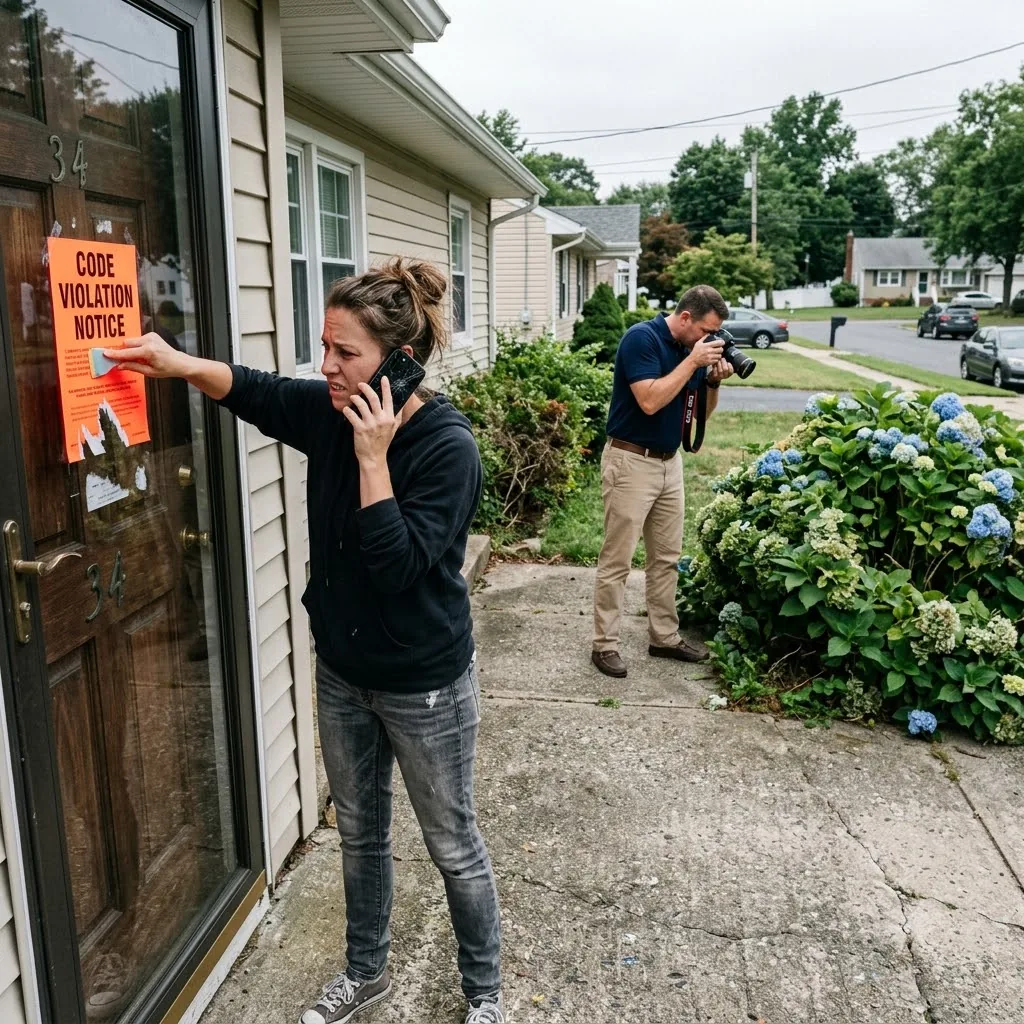
In that moment, the crushing, suffocating panic that had gripped Maya’s chest for the last forty-eight hours evaporated. The terror of her forty-two-dollar bank account, the impending water shutoff, the neon orange eviction sticker-it all dissolved into nothing. In its place, a terrifying, absolute cold clarity settled over her.
She saw Richard not as a corporate titan or an untouchable community president, but as a parasite whose entire existence relied on compliance and isolation. His business model required his victims to feel alone. It required women like Maya to sit in dark, hot kitchens, weeping over drop-down menus, believing their poverty was a personal failure rather than a mathematically engineered trap.
Richard leaned over the table, abandoning his pristine posture, his face flushing a mottled, ugly red. “Maya,” he hissed, his voice dropping to a frantic, vibrating whisper meant only for her. “I will waive the lien. I will strike the negligence citation from the record right now. Give me the document. We are done here.”
Maya did not blink. She did not step back. She simply looked at his shaking hands. “We aren’t done,” she said, her voice eerily calm, cutting through the rising clamor of the angry neighbors. “We haven’t even started.”
Her mind raced, assembling the precise, devastating steps she was going to take. She knew exactly what to do. The five-hundred-dollar lien was already dead; the homeowners association was going to tear him out of the presidency before the night was over. That was step one. Frank and the others were already shouting for an emergency motion to suspend his authority.
Step two was the brochure. She folded the thick, glossy cardstock carefully and slid it into her manila folder, locking it away. She was going to walk out of this clubhouse, drive to the local library, and scan every single page on the public flatbed scanner. She was going to upload the PDF to every single online support group for incarcerated families in the state. Thousands of mothers, wives, and sisters were currently starving themselves to pay Vance Management’s twenty-five percent surcharge. By midnight, they would all have the exact address of Richard’s corporate headquarters. They would have his direct email. They would have the breakdown of his profit margins, printed in his own proprietary font.
“You are making a terrible mistake,” Richard stammered, his eyes darting frantically toward the clubhouse doors as the neighbors began to close in around the folding table. “You have no idea the legal resources my firm has. I will bury you in litigation. I will take your house.”
“You don’t have a firm without those state contracts,” Maya said flatly. “And once the state realizes you’re generating a PR nightmare that’s going to end up on the evening news, they will cut your procurement contract before breakfast. You’re going to lose the prisons, Richard. And when you lose the prisons, you lose the firm.”
Richard’s mouth opened, but no sound came out. The tight, practiced smile was gone permanently, replaced by the hollow, deer-in-the-headlights stare of a man watching his empire burn to ash.
Maya turned her back on him. She didn’t wait to watch the neighbors vote him out, and she didn’t wait to hear his frantic, groveling excuses. She walked down the center aisle of the clubhouse, her spine perfectly straight. She pushed through the double glass doors and stepped out into the fading suburban twilight.
The heavy summer air felt entirely different now. She reached into her apron pocket and pulled out her cracked smartphone. She had forty-two dollars to her name, and her water was going to be shut off tomorrow morning. But as she dialed the automated commissary number to send her husband the thirty dollars he needed to survive the week, Maya smiled. She could haul water from the diner for as long as it took. She finally knew how to win.