Story code: ST-001700
Part 1: The Decibel Limit
Beatrice’s arms ached, hovering at shoulder level as she demanded more breath, more raw iron from the forty sweating people packed into the choir loft. The sheer force of their voices rattled the loose leading in the stained-glass windows of St. Jude’s. Tenors strained, the cords standing out sharply on their necks, while the sopranos pushed a high, piercing note that physically vibrated in Beatrice’s teeth. She did not lower her hands. She signaled for a crescendo, her baton cutting a vicious arc through the dusty air. They had to hit the threshold. They had to keep the sound thick enough to drown out everything waiting for them outside these walls.
The floorboards of the loft shook under their feet, transferring the kinetic energy of their singing directly into their bones. The old church had been built for acoustic resonance, but tonight Beatrice was weaponizing that architecture. She needed the sound to be an absolute physical weight in the room.
Marcus, in the second row, gripped the wooden pew in front of him until his knuckles turned bone white. His eyes were clamped shut as he pushed the bass line from the absolute bottom of his ribs, producing a desperate, scraping sound. Beside him, Sarah trembled, her sheet music crumpled into a damp fist against her collarbone. Beatrice held their gaze, sweeping her eyes over each row. She demanded their breath, their volume, drawing the roaring sound out of them like poison being sucked from a wound. The air in the sanctuary grew heavy, tasting of dry rot and copper. Every time the sound threatened to thin, every time fatigue pulled at their lungs, Beatrice stepped forward, snapping her fingers off-beat, yanking the wall of sound back up by force. It was not about pitch anymore. It was about mass. It was about creating a physical barrier out of air and vibration.
Red and blue lights strobed suddenly against the cracked faces of the painted saints on the eastern wall. The heavy oak doors at the back of the nave shuddered under a punishing fist. Beatrice kept her arms rigid, forcing the choir to hold the final, deafening chord until the breath completely left their lungs in a ragged, collective gasp. Silence crashed down, heavier and far more dangerous than the music. Beatrice lowered her baton, her chest heaving, and turned just as the rusted iron hinges screamed open.
Two uniformed officers stood in the vestibule. Beatrice’s eyes bypassed their badges and locked immediately onto the figure pacing on the sidewalk directly behind them.
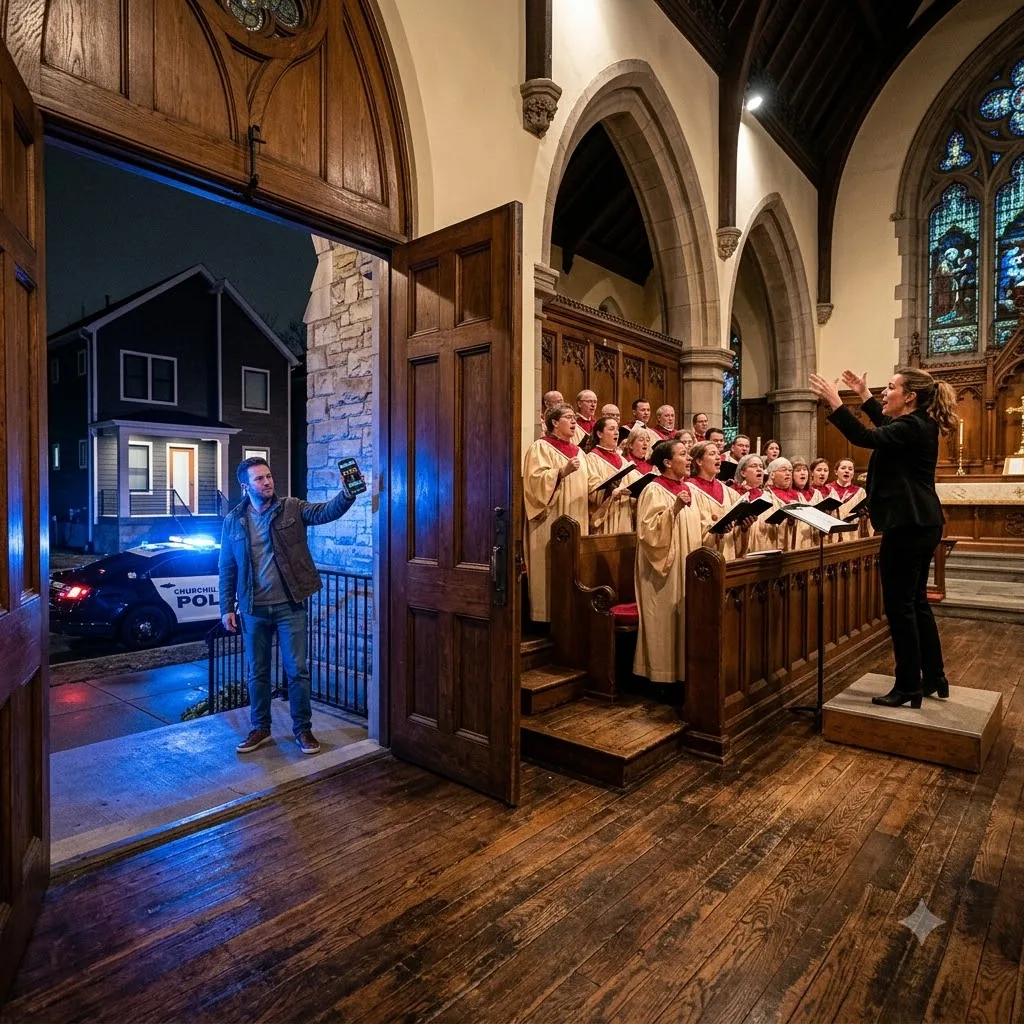
It was Julian, the new owner of the renovated Victorian next door. He wore a pristine gray cashmere sweater draped over his shoulders, his face illuminated by the harsh blue glow of his smartphone. He held the device thrust forward like a shield, the screen displaying a bouncing red bar graph. A decibel meter. He tapped the screen emphatically, pointing a manicured finger at the church, then at his phone, his mouth moving in rapid, angry bursts that the thick walls temporarily muffled.
The lead officer walked down the center aisle, his heavy boots echoing sharply against the hardwood. His radio crackled with static, a harsh, mechanical sound that cut through the lingering ringing in the choir’s ears. He stopped at the base of the chancel steps, unclipped his pen, and handed a yellow slip up to Beatrice. The handwritten violation cited a severe breach of the municipal noise ordinance. It carried a fine that exceeded the church’s entire monthly operating budget. If they could not pay the basic utility bills, they certainly could not pay this. The officer stated flatly that he did not care about their rehearsal schedule. He warned that a second visit tonight would mean immediate handcuffs for her as the organizer, and a heavy brass padlock on the sanctuary doors by midnight.
From the doorway, Julian stepped onto the threshold, his voice finally carrying into the sacred space. He shouted about property values, his right to peaceful enjoyment, and the sheer absurdity of ninety decibels of noise at ten o’clock on a Tuesday. He declared he would stand exactly where he was, measuring every single vibration, until the building was completely shut down. He held the phone up high, tracking the ambient noise of their heavy breathing, waiting for them to surrender and pack up.
Beatrice looked down at the yellow ticket. The paper meant foreclosure. It meant the absolute end of this sanctuary. The officers stood with their hands resting on their utility belts, waiting for her to dismiss the congregation.
She turned her back on the police and looked closely at her choir. The enforced silence was already doing its catastrophic damage. Without the overwhelming noise to anchor them, the forty people in the loft were beginning to drift. Marcus was staring blankly at the floor, his hands beginning to shake violently against the wood, a dangerous, quiet emptiness creeping right back into his rigid posture. He was sweating cold drops now. Sarah was folding her arms tight across her chest, her fingernails biting into her sleeves, rocking slightly on her heels. Her gaze drifted anxiously toward the darkened side exit, toward the alleyway that led to the worst parts of the neighborhood. The utter stillness in the room was breaking them apart, unraveling the fragile thread holding them together, letting the brutal reality of their lives outside rush back into their blood.
Beatrice crushed the yellow citation in her palm. She let the wrinkled ball of paper drop to the floorboards. She planted her feet firmly on the podium and raised both her hands. Julian shouted a final, furious warning from the back doors, tapping his glowing screen as the lead officer reached for the radio on his shoulder. Beatrice brought her baton down hard.
Beatrice’s arms ached, hovering at shoulder level as she demanded more breath, more raw iron from the forty sweating people packed into the choir loft. The sheer force of their voices rattled the loose leading in the stained-glass windows of St. Jude’s. Tenors strained, the cords standing out sharply on their necks, while the sopranos pushed a high, piercing note that physically vibrated in Beatrice’s teeth. She did not lower her hands. She signaled for a crescendo, her baton cutting a vicious arc through the dusty air. They had to hit the threshold. They had to keep the sound thick enough to drown out everything waiting for them outside these walls.
The floorboards of the loft shook under their feet, transferring the kinetic energy of their singing directly into their bones. The old church had been built for acoustic resonance, but tonight Beatrice was weaponizing that architecture. She needed the sound to be an absolute physical weight in the room.
Marcus, in the second row, gripped the wooden pew in front of him until his knuckles turned bone white. His eyes were clamped shut as he pushed the bass line from the absolute bottom of his ribs, producing a desperate, scraping sound. Beside him, Sarah trembled, her sheet music crumpled into a damp fist against her collarbone. Beatrice held their gaze, sweeping her eyes over each row. She demanded their breath, their volume, drawing the roaring sound out of them like poison being sucked from a wound. The air in the sanctuary grew heavy, tasting of dry rot and copper. Every time the sound threatened to thin, every time fatigue pulled at their lungs, Beatrice stepped forward, snapping her fingers off-beat, yanking the wall of sound back up by force. It was not about pitch anymore. It was about mass. It was about creating a physical barrier out of air and vibration.
Red and blue lights strobed suddenly against the cracked faces of the painted saints on the eastern wall. The heavy oak doors at the back of the nave shuddered under a punishing fist. Beatrice kept her arms rigid, forcing the choir to hold the final, deafening chord until the breath completely left their lungs in a ragged, collective gasp. Silence crashed down, heavier and far more dangerous than the music. Beatrice lowered her baton, her chest heaving, and turned just as the rusted iron hinges screamed open.
Two uniformed officers stood in the vestibule. Beatrice’s eyes bypassed their badges and locked immediately onto the figure pacing on the sidewalk directly behind them.
It was Julian, the new owner of the renovated Victorian next door. He wore a pristine gray cashmere sweater draped over his shoulders, his face illuminated by the harsh blue glow of his smartphone. He held the device thrust forward like a shield, the screen displaying a bouncing red bar graph. A decibel meter. He tapped the screen emphatically, pointing a manicured finger at the church, then at his phone, his mouth moving in rapid, angry bursts that the thick walls temporarily muffled.
The lead officer walked down the center aisle, his heavy boots echoing sharply against the hardwood. His radio crackled with static, a harsh, mechanical sound that cut through the lingering ringing in the choir’s ears. He stopped at the base of the chancel steps, unclipped his pen, and handed a yellow slip up to Beatrice. The handwritten violation cited a severe breach of the municipal noise ordinance. It carried a fine that exceeded the church’s entire monthly operating budget. If they could not pay the basic utility bills, they certainly could not pay this. The officer stated flatly that he did not care about their rehearsal schedule. He warned that a second visit tonight would mean immediate handcuffs for her as the organizer, and a heavy brass padlock on the sanctuary doors by midnight.
From the doorway, Julian stepped onto the threshold, his voice finally carrying into the sacred space. He shouted about property values, his right to peaceful enjoyment, and the sheer absurdity of ninety decibels of noise at ten o’clock on a Tuesday. He declared he would stand exactly where he was, measuring every single vibration, until the building was completely shut down. He held the phone up high, tracking the ambient noise of their heavy breathing, waiting for them to surrender and pack up.
Beatrice looked down at the yellow ticket. The paper meant foreclosure. It meant the absolute end of this sanctuary. The officers stood with their hands resting on their utility belts, waiting for her to dismiss the congregation.
She turned her back on the police and looked closely at her choir. The enforced silence was already doing its catastrophic damage. Without the overwhelming noise to anchor them, the forty people in the loft were beginning to drift. Marcus was staring blankly at the floor, his hands beginning to shake violently against the wood, a dangerous, quiet emptiness creeping right back into his rigid posture. He was sweating cold drops now. Sarah was folding her arms tight across her chest, her fingernails biting into her sleeves, rocking slightly on her heels. Her gaze drifted anxiously toward the darkened side exit, toward the alleyway that led to the worst parts of the neighborhood. The utter stillness in the room was breaking them apart, unraveling the fragile thread holding them together, letting the brutal reality of their lives outside rush back into their blood.
Beatrice crushed the yellow citation in her palm. She let the wrinkled ball of paper drop to the floorboards. She planted her feet firmly on the podium and raised both her hands. Julian shouted a final, furious warning from the back doors, tapping his glowing screen as the lead officer reached for the radio on his shoulder. Beatrice brought her baton down hard.