Story code: ST-001736
Part 1: The Collection
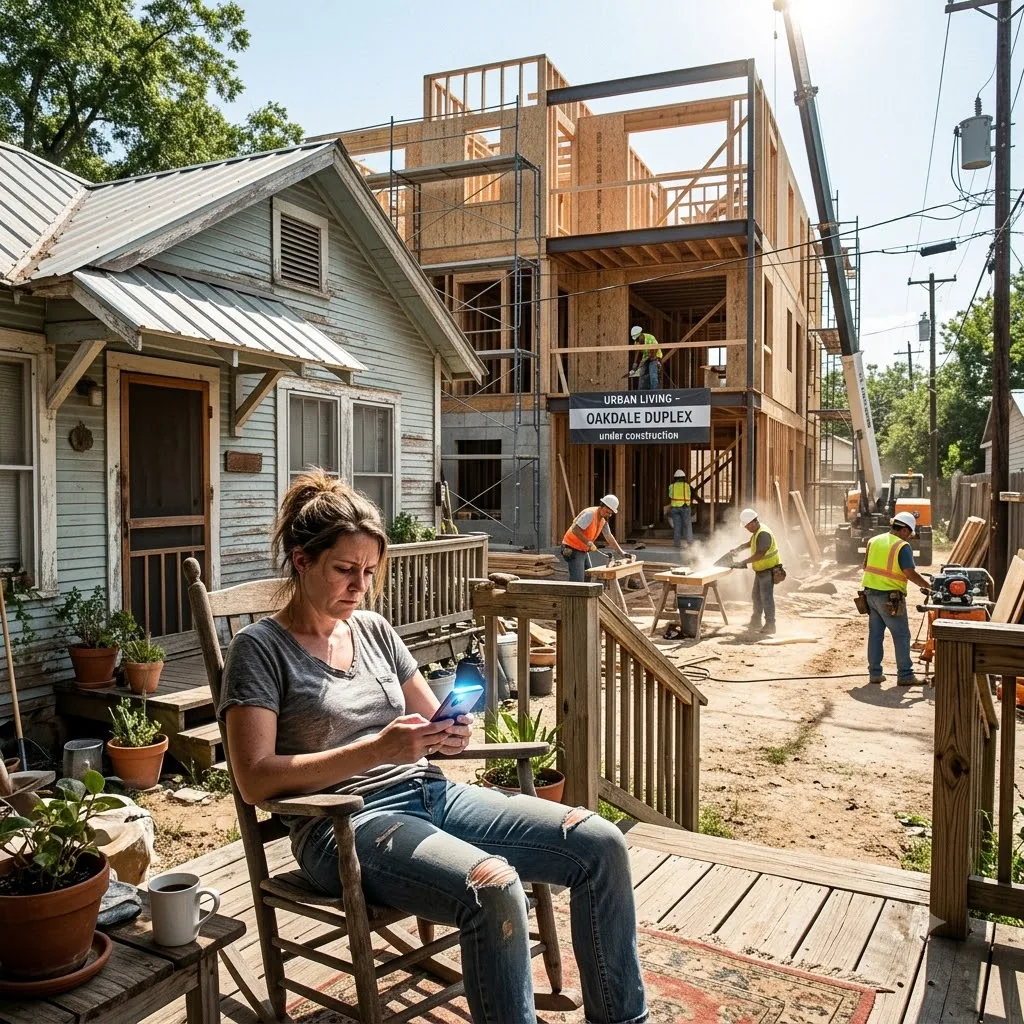
The pneumatic shriek of a framing nailer across the street vibrates right through the aluminum arms of Martha’s lawn chair, nearly drowning out the cheap plastic rattle of her cell phone against the porch railing. A yellow backhoe exhales a plume of black diesel exhaust over the skeletal remains of the neighborhood’s last original ranch house, systematically replacing it with the jagged shadow of another towering luxury duplex. Dust coats the peeling paint of Martha’s front steps in a fine, chalky film. She squints at her phone screen, rubbing the persistent ache behind her eyes, and sees a familiar local area code flashing through the grit.
Expecting one of her former AP History students needing a last-minute college recommendation letter, she presses the green button and clears the morning construction dust from her throat. A polite, practiced greeting forms on her lips, ready to welcome a familiar teenage voice from her thirty years standing in front of a chalkboard. She prepares to offer encouragement, the kind of gentle guidance she used to give freely before the illness took her stamina.
The voice on the other end is not a nervous high school senior finalizing a college application. It is a man, his tone scraped flat, entirely devoid of the practiced corporate cadence she usually associates with aggressive telemarketers. He does not introduce himself with a polite preamble or ask for a moment of her time. He simply states his name is Vance, representing Apex Asset Recovery, and immediately recites her full legal name, her home address, and her late husband’s social security number. He delivers the sensitive personal data with the rapid, mechanical precision of a butcher slicing meat, leaving absolutely no room for her to interject or correct him.
Martha grips the phone tighter, her knuckles turning bone-white against the worn plastic casing. A fresh wave of deep physical exhaustion, the permanent lingering souvenir of her brutal radiation rounds, weighs her shoulders down heavily against the fraying nylon webbing of the chair. Vance states the total debt amount with a practiced, dramatic pause designed for maximum psychological impact. He demands exactly eighty-five thousand dollars in unpaid oncology co-pays and associated out-of-network facility fees stemming directly from her cancer treatments two years ago.
The backhoe drops a massive load of concrete rubble into a steel dumpster, rattling Martha’s teeth, but Vance’s voice cuts right through the industrial din. He informs her that the Chapter 7 bankruptcy filing she secured in April is actively being contested by his firm. He cites a localized technicality regarding the transfer of a municipal medical lien, using aggressive legal jargon that sounds like jagged glass. Martha tries to speak, desperate to explain that the federal court had already discharged the crushing medical debt, but he talks right over her. He instructs her to listen, explicitly forbidding her from interrupting his disclosure.
He pivots smoothly from the clinical bills to the equity in her home. Vance recites the current market assessed value of her property, adjusting for the newly inflated neighborhood prices caused by the duplex developers. He outlines the exact timeline of a forced asset liquidation. He promises her that by the time the first winter snow falls, she will be looking for a one-bedroom apartment with a subsidized housing voucher in her hand. He knows she is on a fixed municipal teacher’s pension. He knows the exact net deposit of her monthly check, throwing the meager figure back in her face as absolute proof of her financial incompetence.
Martha breathes in the smell of pulverized drywall drifting across the asphalt. Vance suggests that selling the house voluntarily to an all-cash buyer would save her the profound public humiliation of the county sheriff’s deputies dragging her bedroom furniture and teaching awards out onto the curb. He speaks with a deeply disturbing familiarity, an unearned intimacy with the mechanics of her ruin. He dictates his terms, giving her exactly forty-eight hours to wire a five-thousand-dollar good-faith payment to temporarily halt the aggressive asset seizure process.
Martha lowers her head, staring at the scarred wooden planks of her porch. She tells him in a hollow whisper that she does not have five thousand dollars, nor even five hundred dollars to her name.
Vance laughs, a dry, entirely mirthless sound that crackles through the tiny phone speaker. He tells her people always find sudden motivation when they finally realize the absolute reality of their situation. He advises her to check her text messages for a visual aid.
A sharp notification tone pings against her ear. Vance hangs up, leaving a dead silence on the line that immediately merges with the hum of the idling backhoe. Martha pulls the phone away from her face and opens her message app. The unread text is from the exact same local spoofed number Vance just used to call her. There is no accompanying text, only a single image file. The thumbnail expands on her cracked screen, showing a crisp, high-resolution photograph taken from the public sidewalk directly in front of her house. It shows her overgrown lawn, the peeling paint on her wooden steps, and Martha herself, sitting frozen in the aluminum lawn chair with her phone pressed to her ear, staring blindly out at the street.
The pneumatic shriek of a framing nailer across the street vibrates right through the aluminum arms of Martha’s lawn chair, nearly drowning out the cheap plastic rattle of her cell phone against the porch railing. A yellow backhoe exhales a plume of black diesel exhaust over the skeletal remains of the neighborhood’s last original ranch house, systematically replacing it with the jagged shadow of another towering luxury duplex. Dust coats the peeling paint of Martha’s front steps in a fine, chalky film. She squints at her phone screen, rubbing the persistent ache behind her eyes, and sees a familiar local area code flashing through the grit.
Expecting one of her former AP History students needing a last-minute college recommendation letter, she presses the green button and clears the morning construction dust from her throat. A polite, practiced greeting forms on her lips, ready to welcome a familiar teenage voice from her thirty years standing in front of a chalkboard. She prepares to offer encouragement, the kind of gentle guidance she used to give freely before the illness took her stamina.
The voice on the other end is not a nervous high school senior finalizing a college application. It is a man, his tone scraped flat, entirely devoid of the practiced corporate cadence she usually associates with aggressive telemarketers. He does not introduce himself with a polite preamble or ask for a moment of her time. He simply states his name is Vance, representing Apex Asset Recovery, and immediately recites her full legal name, her home address, and her late husband’s social security number. He delivers the sensitive personal data with the rapid, mechanical precision of a butcher slicing meat, leaving absolutely no room for her to interject or correct him.
Martha grips the phone tighter, her knuckles turning bone-white against the worn plastic casing. A fresh wave of deep physical exhaustion, the permanent lingering souvenir of her brutal radiation rounds, weighs her shoulders down heavily against the fraying nylon webbing of the chair. Vance states the total debt amount with a practiced, dramatic pause designed for maximum psychological impact. He demands exactly eighty-five thousand dollars in unpaid oncology co-pays and associated out-of-network facility fees stemming directly from her cancer treatments two years ago.
The backhoe drops a massive load of concrete rubble into a steel dumpster, rattling Martha’s teeth, but Vance’s voice cuts right through the industrial din. He informs her that the Chapter 7 bankruptcy filing she secured in April is actively being contested by his firm. He cites a localized technicality regarding the transfer of a municipal medical lien, using aggressive legal jargon that sounds like jagged glass. Martha tries to speak, desperate to explain that the federal court had already discharged the crushing medical debt, but he talks right over her. He instructs her to listen, explicitly forbidding her from interrupting his disclosure.
He pivots smoothly from the clinical bills to the equity in her home. Vance recites the current market assessed value of her property, adjusting for the newly inflated neighborhood prices caused by the duplex developers. He outlines the exact timeline of a forced asset liquidation. He promises her that by the time the first winter snow falls, she will be looking for a one-bedroom apartment with a subsidized housing voucher in her hand. He knows she is on a fixed municipal teacher’s pension. He knows the exact net deposit of her monthly check, throwing the meager figure back in her face as absolute proof of her financial incompetence.
Martha breathes in the smell of pulverized drywall drifting across the asphalt. Vance suggests that selling the house voluntarily to an all-cash buyer would save her the profound public humiliation of the county sheriff’s deputies dragging her bedroom furniture and teaching awards out onto the curb. He speaks with a deeply disturbing familiarity, an unearned intimacy with the mechanics of her ruin. He dictates his terms, giving her exactly forty-eight hours to wire a five-thousand-dollar good-faith payment to temporarily halt the aggressive asset seizure process.
Martha lowers her head, staring at the scarred wooden planks of her porch. She tells him in a hollow whisper that she does not have five thousand dollars, nor even five hundred dollars to her name.
Vance laughs, a dry, entirely mirthless sound that crackles through the tiny phone speaker. He tells her people always find sudden motivation when they finally realize the absolute reality of their situation. He advises her to check her text messages for a visual aid.
A sharp notification tone pings against her ear. Vance hangs up, leaving a dead silence on the line that immediately merges with the hum of the idling backhoe. Martha pulls the phone away from her face and opens her message app. The unread text is from the exact same local spoofed number Vance just used to call her. There is no accompanying text, only a single image file. The thumbnail expands on her cracked screen, showing a crisp, high-resolution photograph taken from the public sidewalk directly in front of her house. It shows her overgrown lawn, the peeling paint on her wooden steps, and Martha herself, sitting frozen in the aluminum lawn chair with her phone pressed to her ear, staring blindly out at the street.