Story code: ST-001755
Part 1: The Denial Letter
The water line in Mrs. Gable’s kitchen sat exactly thirty-two inches above the warped linoleum floor. Elias tracked the faded brown stain across the floral wallpaper as he read the fourteen-page document from Providence Mutual. The air in the room tasted of bleach and wet rot. Three industrial fans whirred in the corners, pushing the damp heat in useless circles. Mrs. Gable sat across from him, her hands trembling over a mug of lukewarm tea. She watched his eyes move across the dense, legally shielded paragraphs.
“They used a sub-clause in section four,” Elias said, keeping his voice steady and soft, the tone he practiced every Sunday for the youth group. He flattened page six against the swollen wood of the table. “It states that the floodwater entered through the foundation vents before the rising crest breached the windows. They are classifying it as ground seepage. Ground seepage is excluded from the catastrophic storm rider.”
Mrs. Gable closed her eyes. The skin around them was thin and bruised with exhaustion. She had spent fifty years in this house. Elias watched a bead of sweat roll down her neck as she absorbed the bureaucratic execution of her future. The insurance company had taken six weeks to mail the packet. Fourteen pages of glossy, water-resistant paper to tell an eighty-year-old widow she was entirely on her own.
“I sent them the photographs of the storm surge,” she whispered, staring at the floorboards that were already beginning to cup and splinter. “I showed them the water coming over the porch steps.”
“The adjuster noted that,” Elias said, turning to page nine. “But they are citing the independent engineering report. The report claims the foundation was already compromised. They are saying the water merely accelerated existing wear and tear.”
It was a lie, neatly formatted in twelve-point Arial font. Elias felt a dull, heavy pressure building at the base of his skull. He read the final determination out loud, translating the sterile corporate jargon into the harsh reality of their flooded neighborhood. The company would release a standard payout of one thousand dollars for immediate debris removal. The remaining structural damage claim of one hundred and forty thousand dollars was denied.
Mrs. Gable let out a long, ragged breath. She did not cry. The block had run out of tears a month ago. Elias reached across the table and placed his hand over hers. He opened his mouth to offer a prayer, or perhaps a promise that he would personally drive down to the claims office in the morning to file a formal appeal.
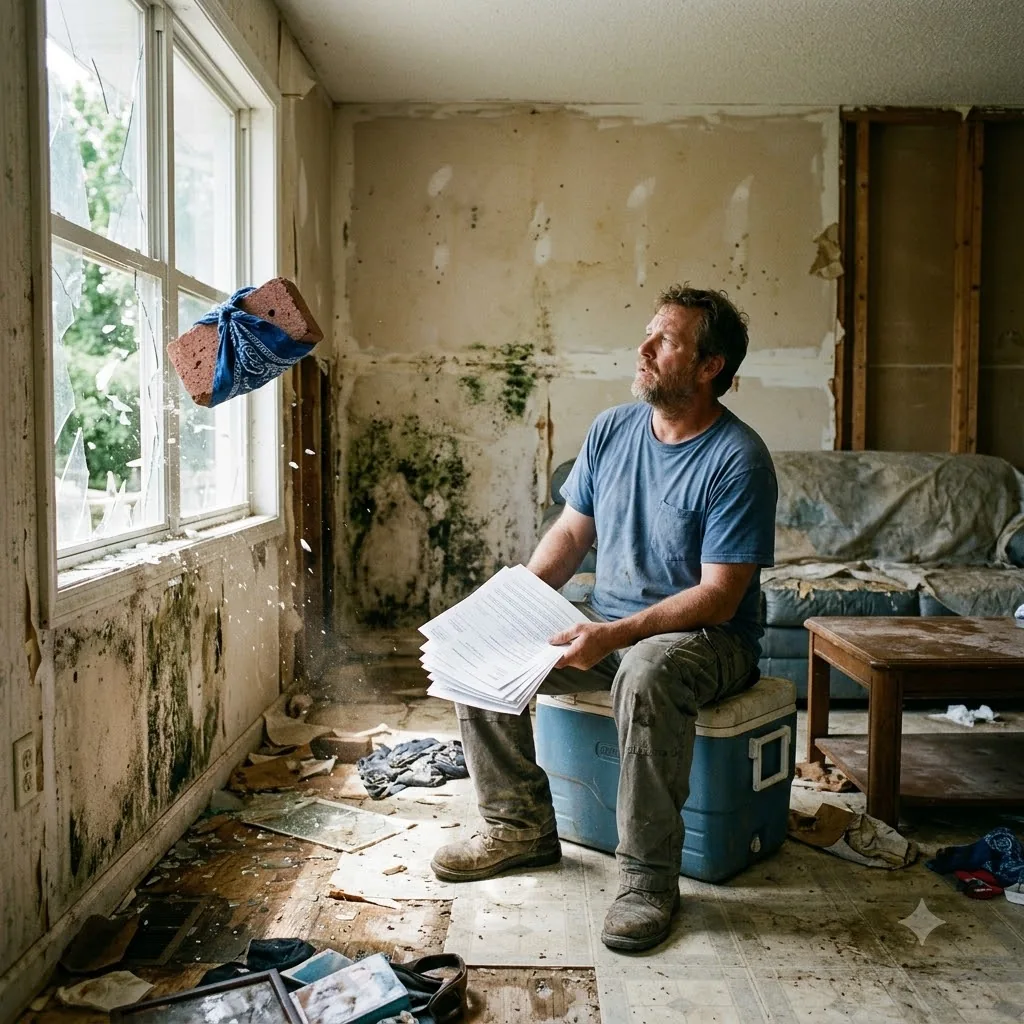
The front window exploded.
A storm of shattered glass rained across the kitchen counter and clattered onto the linoleum. Elias reacted on an instinct he had spent seven years burying. He lunged across the table, driving Mrs. Gable down to the floor, shielding her head with his chest. A heavy object slammed into the drywall above the sink, took a chunk out of the plaster, and fell into the empty porcelain basin with a loud, metallic crack.
Silence rushed back into the room, broken only by the drone of the fans and the old woman’s panicked breathing. Elias kept his hand pressed to the back of her neck. He waited for the sound of a follow-up strike, the distinctive pop of a firearm, or the crunch of boots on the front porch. Nothing came. Only the distant hum of a generator two streets over.
“Stay exactly where you are,” Elias said, his voice dropping an octave, stripping away the gentle pastoral warmth.
He rose from the floor, keeping his center of gravity low. He moved past the shattered window, staying out of the frame, and approached the sink. He looked down into the basin.
It was a half-brick. The edges were jagged and stained with dried mortar. But it was not a random piece of debris thrown by a bored teenager.
The brick was tightly wrapped in a square of heavy blue denim. Securing the fabric was a length of thick nylon cord. Elias stared at the cord. It was tied off with a very specific, deliberate knot. Two overlapping loops pulled tight through a central hitch, creating a figure-eight pattern that left the frayed ends pointing in opposite directions.
The pressure in Elias’s skull vanished, replaced by a cold, absolute stillness. He knew that color. He knew that knot. It was a signature. A territorial marker meant to send a message of total dominance.
Someone was staking a claim on the ruined, abandoned blocks of the Ward. Someone who assumed the neighborhood was completely defenseless now that the city and the insurers had left it to rot.
Elias picked up the brick. The coarse nylon dug into his palm. He looked at the deep blue fabric. The last time he had seen that exact knot, he had been standing in an alleyway three miles from here, wiping someone else’s blood off his boots.
A floorboard creaked out on the front porch.
Elias dropped the brick into the sink and turned his body toward the door, feeling the muscles in his forearms tighten as the brass handle began to slowly twist.
The water line in Mrs. Gable’s kitchen sat exactly thirty-two inches above the warped linoleum floor. Elias tracked the faded brown stain across the floral wallpaper as he read the fourteen-page document from Providence Mutual. The air in the room tasted of bleach and wet rot. Three industrial fans whirred in the corners, pushing the damp heat in useless circles. Mrs. Gable sat across from him, her hands trembling over a mug of lukewarm tea. She watched his eyes move across the dense, legally shielded paragraphs.
“They used a sub-clause in section four,” Elias said, keeping his voice steady and soft, the tone he practiced every Sunday for the youth group. He flattened page six against the swollen wood of the table. “It states that the floodwater entered through the foundation vents before the rising crest breached the windows. They are classifying it as ground seepage. Ground seepage is excluded from the catastrophic storm rider.”
Mrs. Gable closed her eyes. The skin around them was thin and bruised with exhaustion. She had spent fifty years in this house. Elias watched a bead of sweat roll down her neck as she absorbed the bureaucratic execution of her future. The insurance company had taken six weeks to mail the packet. Fourteen pages of glossy, water-resistant paper to tell an eighty-year-old widow she was entirely on her own.
“I sent them the photographs of the storm surge,” she whispered, staring at the floorboards that were already beginning to cup and splinter. “I showed them the water coming over the porch steps.”
“The adjuster noted that,” Elias said, turning to page nine. “But they are citing the independent engineering report. The report claims the foundation was already compromised. They are saying the water merely accelerated existing wear and tear.”
It was a lie, neatly formatted in twelve-point Arial font. Elias felt a dull, heavy pressure building at the base of his skull. He read the final determination out loud, translating the sterile corporate jargon into the harsh reality of their flooded neighborhood. The company would release a standard payout of one thousand dollars for immediate debris removal. The remaining structural damage claim of one hundred and forty thousand dollars was denied.
Mrs. Gable let out a long, ragged breath. She did not cry. The block had run out of tears a month ago. Elias reached across the table and placed his hand over hers. He opened his mouth to offer a prayer, or perhaps a promise that he would personally drive down to the claims office in the morning to file a formal appeal.
The front window exploded.
A storm of shattered glass rained across the kitchen counter and clattered onto the linoleum. Elias reacted on an instinct he had spent seven years burying. He lunged across the table, driving Mrs. Gable down to the floor, shielding her head with his chest. A heavy object slammed into the drywall above the sink, took a chunk out of the plaster, and fell into the empty porcelain basin with a loud, metallic crack.
Silence rushed back into the room, broken only by the drone of the fans and the old woman’s panicked breathing. Elias kept his hand pressed to the back of her neck. He waited for the sound of a follow-up strike, the distinctive pop of a firearm, or the crunch of boots on the front porch. Nothing came. Only the distant hum of a generator two streets over.
“Stay exactly where you are,” Elias said, his voice dropping an octave, stripping away the gentle pastoral warmth.
He rose from the floor, keeping his center of gravity low. He moved past the shattered window, staying out of the frame, and approached the sink. He looked down into the basin.
It was a half-brick. The edges were jagged and stained with dried mortar. But it was not a random piece of debris thrown by a bored teenager.
The brick was tightly wrapped in a square of heavy blue denim. Securing the fabric was a length of thick nylon cord. Elias stared at the cord. It was tied off with a very specific, deliberate knot. Two overlapping loops pulled tight through a central hitch, creating a figure-eight pattern that left the frayed ends pointing in opposite directions.
The pressure in Elias’s skull vanished, replaced by a cold, absolute stillness. He knew that color. He knew that knot. It was a signature. A territorial marker meant to send a message of total dominance.
Someone was staking a claim on the ruined, abandoned blocks of the Ward. Someone who assumed the neighborhood was completely defenseless now that the city and the insurers had left it to rot.
Elias picked up the brick. The coarse nylon dug into his palm. He looked at the deep blue fabric. The last time he had seen that exact knot, he had been standing in an alleyway three miles from here, wiping someone else’s blood off his boots.
A floorboard creaked out on the front porch.
Elias dropped the brick into the sink and turned his body toward the door, feeling the muscles in his forearms tighten as the brass handle began to slowly twist.