Story code: ST-000315
Part 1: She Wanted the Ramp Moved Right Now
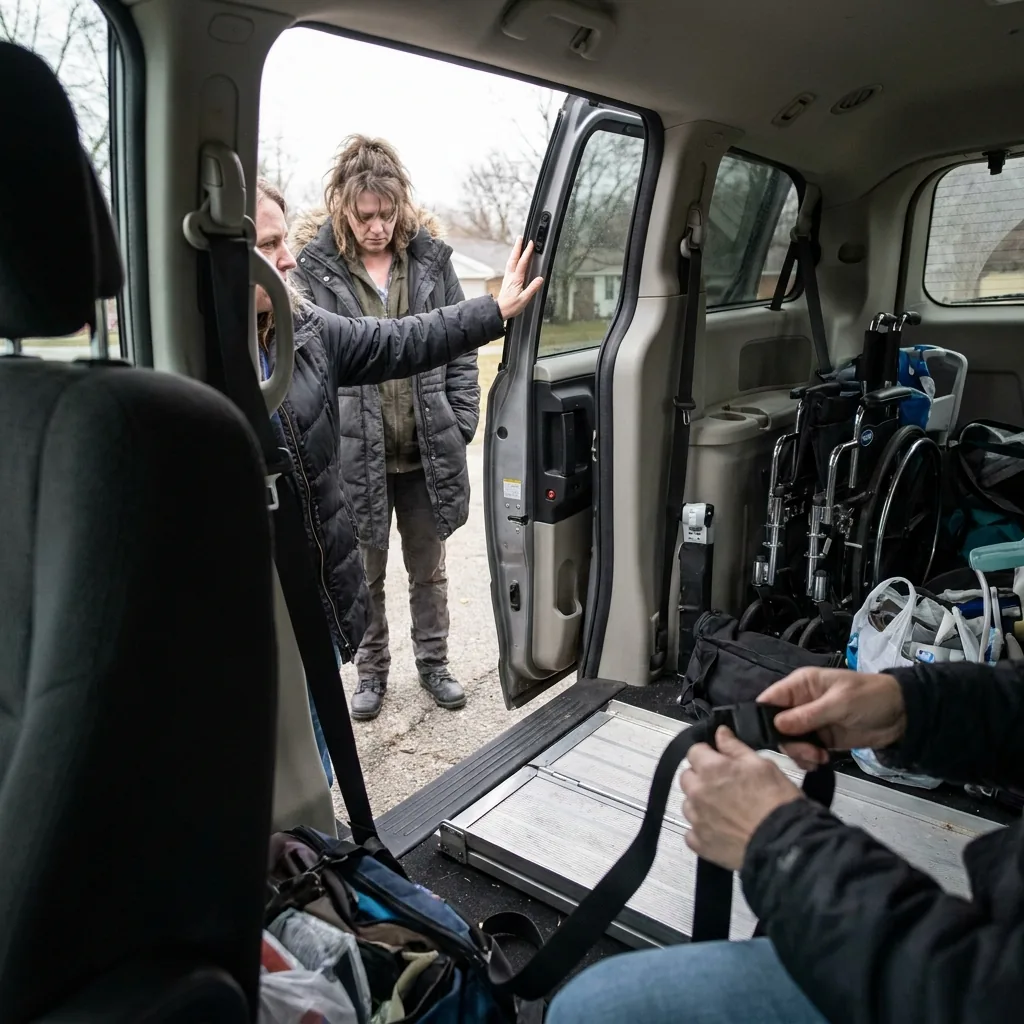
Dana slapped the side of the accessible van and told me to get the ramp down now, before I had even finished clipping the last mobility strap back onto the wall. Luis was already angled toward the van door, his chair locked in place, and she kept saying we were late, that this was an emergency, that I needed to stop asking questions and move. The ugly part was that the wheelchair ramp was the one thing in that tight van nobody could fake their way around, and she was trying to turn it into a panic button.
I was standing half inside the van, one foot on the rubber floor and one foot on the curb, with the side door open and the late afternoon traffic humming through the lot. The folded ramp sat under the threshold where it always did, metal lip showing, ready to swing down once the chair was lined up and the path was clear.
Dana pointed at it like I was refusing to hand somebody oxygen.
“Now, Mara. Right now,” she said. “We do not have time for this.”
Her voice was sharp enough that two people near the loading zone looked over.
I kept mine flat. “I need Luis centered before I drop it. His front casters are turned.”
“Just move it,” she snapped. “We have to go.”
Luis had both hands on his wheels. He wasn’t yelling. He looked from me to the ramp, then to Dana’s hand where she was braced against the door frame. The van was too narrow for all three of us to move at once without bumping the chair or catching a footplate on the ramp edge.
“Luis, hold one second,” I said.
Dana cut right across me. “No. No second. We already lost enough time.”
That line landed like a threat more than a time check. She wasn’t talking about traffic. She wasn’t asking what step came next. She just kept repeating that we were late and that I needed to move faster.
I reached for the release handle anyway. If the ramp needed to come down, it needed to come down safely. That part never changed because somebody raised their voice.
The second my fingers touched the latch, Dana stepped in and blocked me with her forearm.
“Wait,” she said.
I looked at her. “You just said now.”
“Not like that.”
It was the first crack in the whole thing.
A real hurry in a van ramp transfer has a shape to it. Clear the path. Set the chair. Drop the ramp. Get moving. But Dana had pushed me to break sequence, then physically stopped the exact step she was demanding. Her hand stayed on the frame. Her eyes flicked past me toward the parking lot, then back to the ramp.
Behind her, Rosa was coming up the sidewalk carrying the small supply tote she used for basic transport checks. She wasn’t rushing. She saw the open van door, saw Dana planted in the entrance, and stopped near my shoulder.
“Everything okay?” Rosa asked.
Dana answered before I could. “No. We need the ramp handled now. She’s dragging this out.”
Rosa looked at the chair position, then the door, then Dana’s arm across the opening. “If the ramp’s the issue, let me clear the approach and we can lower it clean.”
“No,” Dana said, too fast.
Rosa blinked once. “Okay. Then what’s the issue?”
“The issue is we’re late,” Dana said. “Can somebody please just do their job?”
Luis shifted his chair an inch, then stopped because Dana still had the doorway narrowed off with her body. One of the loose buckle ends from the wall straps tapped against the panel in the quiet that followed.
I said, “Rosa can help line him up.”
Dana turned on me. “I don’t need more people making this worse.”
That was strange too, because thirty seconds earlier she had been acting like any delay at all was dangerous. Now the one person offering the exact practical help was suddenly the problem.
Rosa set her tote down on the curb. “If there is an emergency, say what it is. If it is a ramp problem, we handle the ramp problem. If you need space, step back from the doorway.”
Dana gave a short laugh with no humor in it. “Why is everyone making this complicated?”
Nobody had made it complicated. The chair was there. The ramp was there. The van door was open. The path only got blocked when Dana started switching from hurry to stop and back again.
I bent slightly so I could see Luis better around Dana’s shoulder. “Do you want the ramp down?”
Before he could answer, Dana swung toward him. “Don’t start. We are not doing this in public.”
Rosa’s face didn’t change, but her voice got more careful. “Doing what?”
Dana ignored her and jabbed a finger at the latch again. “Fine. Lower it. Lower it if that’s what it’s going to take.”
I reached for it a second time.
Dana grabbed my wrist.
Not hard enough to hurt, but hard enough to stop the movement cold.
Rosa looked straight at her hand, then at the ramp. Luis was still in place, watching the doorway that Dana herself had turned into a barricade.
Dana let go and said, louder this time, “I said we need to go.”
Rosa didn’t raise her voice. “Then why are you stopping the ramp?”
Dana opened her mouth, glanced out toward the lot again, and said, “Because if you put it down, then people are going to start checking things.”
Dana slapped the side of the accessible van and told me to get the ramp down now, before I had even finished clipping the last mobility strap back onto the wall. Luis was already angled toward the van door, his chair locked in place, and she kept saying we were late, that this was an emergency, that I needed to stop asking questions and move. The ugly part was that the wheelchair ramp was the one thing in that tight van nobody could fake their way around, and she was trying to turn it into a panic button.
I was standing half inside the van, one foot on the rubber floor and one foot on the curb, with the side door open and the late afternoon traffic humming through the lot. The folded ramp sat under the threshold where it always did, metal lip showing, ready to swing down once the chair was lined up and the path was clear.
Dana pointed at it like I was refusing to hand somebody oxygen.
“Now, Mara. Right now,” she said. “We do not have time for this.”
Her voice was sharp enough that two people near the loading zone looked over.
I kept mine flat. “I need Luis centered before I drop it. His front casters are turned.”
“Just move it,” she snapped. “We have to go.”
Luis had both hands on his wheels. He wasn’t yelling. He looked from me to the ramp, then to Dana’s hand where she was braced against the door frame. The van was too narrow for all three of us to move at once without bumping the chair or catching a footplate on the ramp edge.
“Luis, hold one second,” I said.
Dana cut right across me. “No. No second. We already lost enough time.”
That line landed like a threat more than a time check. She wasn’t talking about traffic. She wasn’t asking what step came next. She just kept repeating that we were late and that I needed to move faster.
I reached for the release handle anyway. If the ramp needed to come down, it needed to come down safely. That part never changed because somebody raised their voice.
The second my fingers touched the latch, Dana stepped in and blocked me with her forearm.
“Wait,” she said.
I looked at her. “You just said now.”
“Not like that.”
It was the first crack in the whole thing.
A real hurry in a van ramp transfer has a shape to it. Clear the path. Set the chair. Drop the ramp. Get moving. But Dana had pushed me to break sequence, then physically stopped the exact step she was demanding. Her hand stayed on the frame. Her eyes flicked past me toward the parking lot, then back to the ramp.
Behind her, Rosa was coming up the sidewalk carrying the small supply tote she used for basic transport checks. She wasn’t rushing. She saw the open van door, saw Dana planted in the entrance, and stopped near my shoulder.
“Everything okay?” Rosa asked.
Dana answered before I could. “No. We need the ramp handled now. She’s dragging this out.”
Rosa looked at the chair position, then the door, then Dana’s arm across the opening. “If the ramp’s the issue, let me clear the approach and we can lower it clean.”
“No,” Dana said, too fast.
Rosa blinked once. “Okay. Then what’s the issue?”
“The issue is we’re late,” Dana said. “Can somebody please just do their job?”
Luis shifted his chair an inch, then stopped because Dana still had the doorway narrowed off with her body. One of the loose buckle ends from the wall straps tapped against the panel in the quiet that followed.
I said, “Rosa can help line him up.”
Dana turned on me. “I don’t need more people making this worse.”
That was strange too, because thirty seconds earlier she had been acting like any delay at all was dangerous. Now the one person offering the exact practical help was suddenly the problem.
Rosa set her tote down on the curb. “If there is an emergency, say what it is. If it is a ramp problem, we handle the ramp problem. If you need space, step back from the doorway.”
Dana gave a short laugh with no humor in it. “Why is everyone making this complicated?”
Nobody had made it complicated. The chair was there. The ramp was there. The van door was open. The path only got blocked when Dana started switching from hurry to stop and back again.
I bent slightly so I could see Luis better around Dana’s shoulder. “Do you want the ramp down?”
Before he could answer, Dana swung toward him. “Don’t start. We are not doing this in public.”
Rosa’s face didn’t change, but her voice got more careful. “Doing what?”
Dana ignored her and jabbed a finger at the latch again. “Fine. Lower it. Lower it if that’s what it’s going to take.”
I reached for it a second time.
Dana grabbed my wrist.
Not hard enough to hurt, but hard enough to stop the movement cold.
Rosa looked straight at her hand, then at the ramp. Luis was still in place, watching the doorway that Dana herself had turned into a barricade.
Dana let go and said, louder this time, “I said we need to go.”
Rosa didn’t raise her voice. “Then why are you stopping the ramp?”
Dana opened her mouth, glanced out toward the lot again, and said, “Because if you put it down, then people are going to start checking things.”