Story code: ST-001813
Part 1: The Community Care Trap
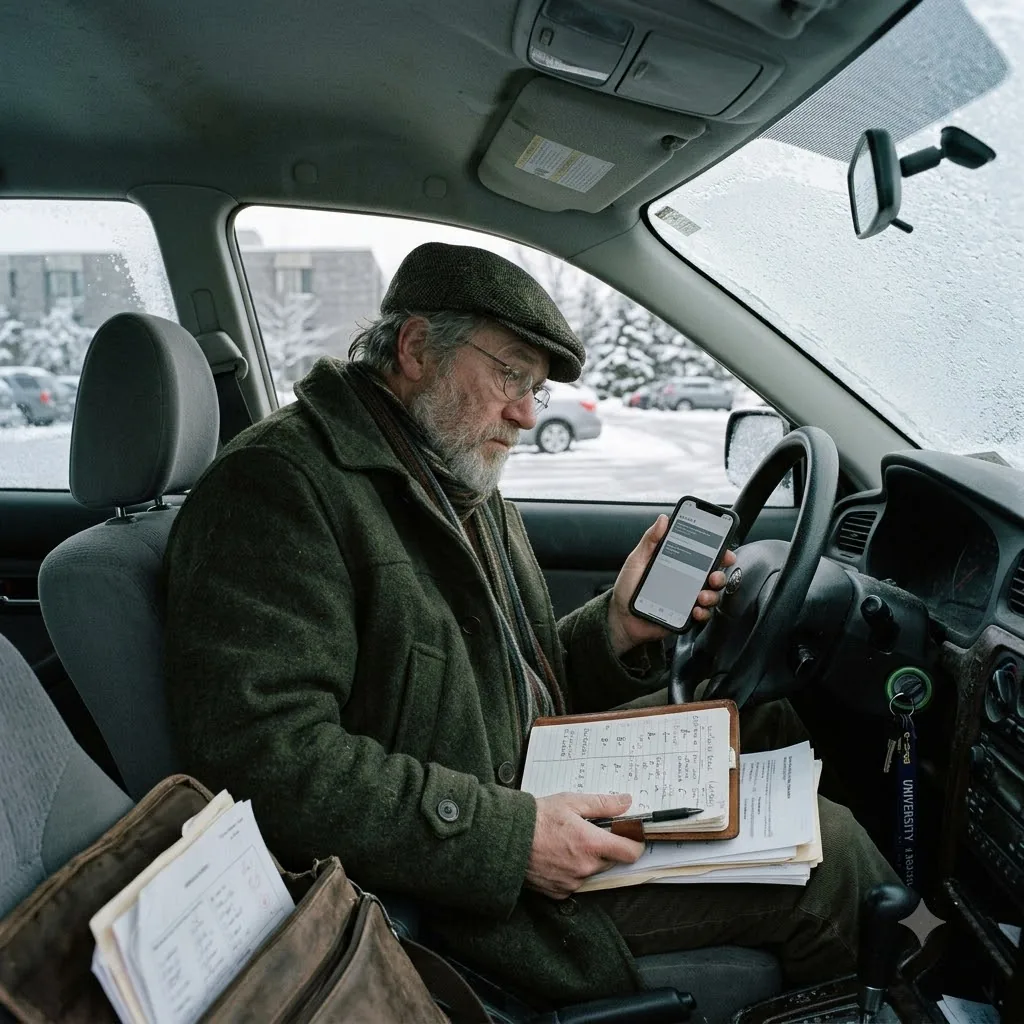
Arthur scraped a thumbnail across the inside of the Subaru’s windshield, flaking away a thin layer of human breath turned to ice. His phone screen glowed on the passenger seat, illuminating a heavy sleeping bag and a stack of ungraded essays with a sterile, block-lettered notification. Community Care Alignment – Mandatory. He wiped the frost from his knuckles and reviewed the failing grades for his introduction to literature course. He assumed the administration finally wanted to discuss Tyler’s abysmal attendance record and the corresponding zeroes in the gradebook.
He dressed in the cramped space between the steering wheel and the reclined driver’s seat. A veteran professor of thirty years had no business contorting into a pair of stiff, cold corduroy trousers. The university’s housing stipend had vanished three years ago during a budget restructuring. His adjunct salary simply did not cover rent in the affluent college town, forcing him into a quiet, hidden existence on four wheels. He brushed his teeth behind a locked gas station restroom door, splashed freezing water on his face, and carefully combed his thinning gray hair to maintain the illusion of professorial dignity.
By the time he walked across the campus quad, the crisp morning air felt like a relief compared to the stale, claustrophobic chill of the wagon. He carried his leather satchel tight against his ribs. The satchel held Tyler’s essays, thoroughly marked in red ink, ready for whatever academic intervention the administration had planned. He had prepared a firm defense of his grading policies.
The Department of Student Success and Wellbeing occupied the newly renovated east wing of the administration building. Arthur pushed through the glass double doors, immediately hit by the heavy scent of eucalyptus and lavender diffusers. The walls were painted a muted, calming sage green. Framed posters featuring smooth river stones and bamboo shoots declared this a safe space for radical growth. It was a far cry from the dusty, book-lined faculty offices Arthur remembered from a decade ago. Now, the university prioritized emotional alignment over academic rigor. He approached the reception desk, giving his name to a young woman wearing a headset and a beige cardigan. She smiled with a terrifying blankness and pointed him toward Room 3B.
Dr. Elena Vance sat behind a standing desk, though she had lowered it to balance on an ergonomic exercise ball. She wore oversized tortoiseshell glasses and a draped, shapeless linen tunic that signaled aggressive approachability. Arthur took the low-slung, cushioned chair opposite her desk. He unbuckled his satchel and reached for Tyler’s file.
Dr. Vance raised a hand, palm outward, stopping his movement. She leaned forward, clasping her hands together on the bamboo desktop. Her voice dripped with practiced, syrupy concern. She thanked Arthur for making the time, acknowledging that unexpected transitions could be severely dysregulating.
Arthur left his hand resting on the leather flap of his bag. He stated that he had the attendance logs ready, assuming they were here to discuss the sophomore who had missed six consecutive weeks of seminars.
Dr. Vance tilted her head. Her smile softened into an expression of deep, clinical pity. She told him this space was not about students today. She used the word space instead of meeting, which made Arthur’s stomach tighten. She pulled a thick manila folder from a wire rack and placed it dead center on the desk.
Arthur stared at the folder. It did not have Tyler’s name on it. It had his own.
Dr. Vance spoke in a hushed, soothing monotone, the kind of voice one might use to approach a wounded animal. She said the university community had been holding space for him lately. She mentioned that several colleagues had expressed deep concern regarding his holistic wellness and energetic presence on campus.
Arthur stiffened in the low chair. He calculated the exact distance between his parked Subaru and this eucalyptus-scented room. He reviewed his actions from the past month, searching for a slip-up in his routine. He had always parked at the far edge of the commuter lot. He had never left a blanket visible through the windows. He had used the gym showers at dawn, long before the student athletes arrived.
Dr. Vance opened the folder. She did not produce a parking citation or a photograph of his sleeping bag. Instead, she slid a printed email across the desk. It was an anonymous report to the Community Care hotline. The text was highlighted in pastel yellow.
She read the highlighted text aloud. Her tone remained dripping with toxic compassion. The report detailed an observation of Arthur looking visibly depleted in the faculty lounge, his clothing appearing unwashed, his posture reflecting unhealed trauma that was actively harming the emotional safety of the student body. She paused, letting the silence stretch, forcing him to absorb the accusation.
Arthur looked from the paper to her face. He attempted to explain that his clothing was clean, that he was simply tired from grading late into the night. He kept his tone perfectly even, suppressing the sudden, violent spike of panic in his chest. If they deemed him unfit to teach, they would revoke his adjunct contract. The contract was the only thing keeping gas in the car and food in his stomach.
Dr. Vance sighed, offering a heavy, performative exhalation. She told him that defensiveness was a recognized trauma response. She said the institution could no longer allow him to project his unmanaged emotional deficit onto the vulnerable scholars in his classroom. The university was prepared to offer him an indefinite, unpaid sabbatical to focus on his healing journey.
Arthur gripped the padded arms of his chair. An unpaid sabbatical was a termination dressed up in therapy speak. They were firing him because he looked poor, but they were using the language of wellness to make it his fault. He opened his mouth to state that he needed the classes, that his teaching record remained flawless.
Before he could form the words, Dr. Vance tapped a manicured fingernail against the anonymous report and pushed a plastic storage bin across the floor with her foot. She told him campus security had already begun clearing out his office because a recent wellness check of his license plate had revealed the truth about his living situation.
Arthur scraped a thumbnail across the inside of the Subaru’s windshield, flaking away a thin layer of human breath turned to ice. His phone screen glowed on the passenger seat, illuminating a heavy sleeping bag and a stack of ungraded essays with a sterile, block-lettered notification. Community Care Alignment – Mandatory. He wiped the frost from his knuckles and reviewed the failing grades for his introduction to literature course. He assumed the administration finally wanted to discuss Tyler’s abysmal attendance record and the corresponding zeroes in the gradebook.
He dressed in the cramped space between the steering wheel and the reclined driver’s seat. A veteran professor of thirty years had no business contorting into a pair of stiff, cold corduroy trousers. The university’s housing stipend had vanished three years ago during a budget restructuring. His adjunct salary simply did not cover rent in the affluent college town, forcing him into a quiet, hidden existence on four wheels. He brushed his teeth behind a locked gas station restroom door, splashed freezing water on his face, and carefully combed his thinning gray hair to maintain the illusion of professorial dignity.
By the time he walked across the campus quad, the crisp morning air felt like a relief compared to the stale, claustrophobic chill of the wagon. He carried his leather satchel tight against his ribs. The satchel held Tyler’s essays, thoroughly marked in red ink, ready for whatever academic intervention the administration had planned. He had prepared a firm defense of his grading policies.
The Department of Student Success and Wellbeing occupied the newly renovated east wing of the administration building. Arthur pushed through the glass double doors, immediately hit by the heavy scent of eucalyptus and lavender diffusers. The walls were painted a muted, calming sage green. Framed posters featuring smooth river stones and bamboo shoots declared this a safe space for radical growth. It was a far cry from the dusty, book-lined faculty offices Arthur remembered from a decade ago. Now, the university prioritized emotional alignment over academic rigor. He approached the reception desk, giving his name to a young woman wearing a headset and a beige cardigan. She smiled with a terrifying blankness and pointed him toward Room 3B.
Dr. Elena Vance sat behind a standing desk, though she had lowered it to balance on an ergonomic exercise ball. She wore oversized tortoiseshell glasses and a draped, shapeless linen tunic that signaled aggressive approachability. Arthur took the low-slung, cushioned chair opposite her desk. He unbuckled his satchel and reached for Tyler’s file.
Dr. Vance raised a hand, palm outward, stopping his movement. She leaned forward, clasping her hands together on the bamboo desktop. Her voice dripped with practiced, syrupy concern. She thanked Arthur for making the time, acknowledging that unexpected transitions could be severely dysregulating.
Arthur left his hand resting on the leather flap of his bag. He stated that he had the attendance logs ready, assuming they were here to discuss the sophomore who had missed six consecutive weeks of seminars.
Dr. Vance tilted her head. Her smile softened into an expression of deep, clinical pity. She told him this space was not about students today. She used the word space instead of meeting, which made Arthur’s stomach tighten. She pulled a thick manila folder from a wire rack and placed it dead center on the desk.
Arthur stared at the folder. It did not have Tyler’s name on it. It had his own.
Dr. Vance spoke in a hushed, soothing monotone, the kind of voice one might use to approach a wounded animal. She said the university community had been holding space for him lately. She mentioned that several colleagues had expressed deep concern regarding his holistic wellness and energetic presence on campus.
Arthur stiffened in the low chair. He calculated the exact distance between his parked Subaru and this eucalyptus-scented room. He reviewed his actions from the past month, searching for a slip-up in his routine. He had always parked at the far edge of the commuter lot. He had never left a blanket visible through the windows. He had used the gym showers at dawn, long before the student athletes arrived.
Dr. Vance opened the folder. She did not produce a parking citation or a photograph of his sleeping bag. Instead, she slid a printed email across the desk. It was an anonymous report to the Community Care hotline. The text was highlighted in pastel yellow.
She read the highlighted text aloud. Her tone remained dripping with toxic compassion. The report detailed an observation of Arthur looking visibly depleted in the faculty lounge, his clothing appearing unwashed, his posture reflecting unhealed trauma that was actively harming the emotional safety of the student body. She paused, letting the silence stretch, forcing him to absorb the accusation.
Arthur looked from the paper to her face. He attempted to explain that his clothing was clean, that he was simply tired from grading late into the night. He kept his tone perfectly even, suppressing the sudden, violent spike of panic in his chest. If they deemed him unfit to teach, they would revoke his adjunct contract. The contract was the only thing keeping gas in the car and food in his stomach.
Dr. Vance sighed, offering a heavy, performative exhalation. She told him that defensiveness was a recognized trauma response. She said the institution could no longer allow him to project his unmanaged emotional deficit onto the vulnerable scholars in his classroom. The university was prepared to offer him an indefinite, unpaid sabbatical to focus on his healing journey.
Arthur gripped the padded arms of his chair. An unpaid sabbatical was a termination dressed up in therapy speak. They were firing him because he looked poor, but they were using the language of wellness to make it his fault. He opened his mouth to state that he needed the classes, that his teaching record remained flawless.
Before he could form the words, Dr. Vance tapped a manicured fingernail against the anonymous report and pushed a plastic storage bin across the floor with her foot. She told him campus security had already begun clearing out his office because a recent wellness check of his license plate had revealed the truth about his living situation.