Story code: ST-001829
Part 1: The Eyesore on Oakridge Drive
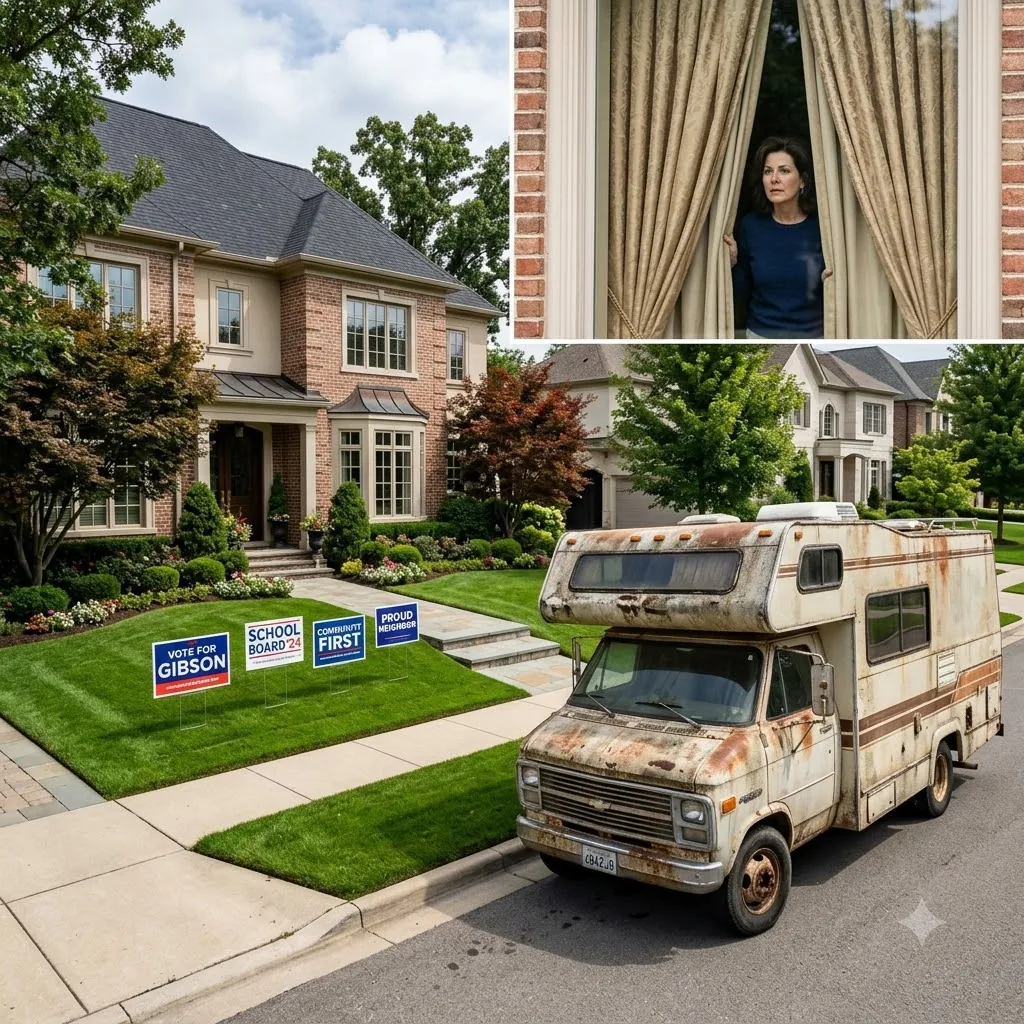
“I am telling you, the vehicle has been parked here for exactly seventy-two hours, and it is actively leaking an unidentified brown fluid onto the asphalt.” Eleanor pressed her forehead against the cool glass of her front window, gripping her phone tight enough to make her knuckles ache. “It is an eyesore, a literal hazard, and completely out of compliance with the Oakridge Estates community guidelines.”
The dispatcher on the non-emergency line delivered a monotonous recitation of municipal public street parking statutes. Eleanor let out a sharp, clipping sigh, tapping her manicured fingernail against the window sill. She informed the dispatcher that a thirty-year-old rusted Winnebago with peeling beige decals did not belong in a neighborhood where every lawn was cut to precisely two inches. Oakridge Estates was supposed to be pristine. Her property values were currently being held hostage by a massive metal rectangle covered in water damage, duct tape, and grime. The sheer audacity of someone abandoning such a monstrosity in front of her prize-winning hydrangeas was unacceptable.
The side door of the RV shrieked on unlubricated hinges. Eleanor silenced the dispatcher with a sharp command to wait.
A man stepped out of the rusted metal box, his boots hitting the pavement with a heavy thud. He wore a faded olive-drab military jacket, his shoulders hunched tightly against the crisp morning air. He was entirely out of place among the manicured topiaries and slate driveways. He was not admiring the neighborhood, nor was he making any move to repair the hideous vehicle.
He was carrying a bundle of white towels, and even from the safety of her living room window, Eleanor could see the dark, rust-colored stains smeared across the fabric.
“He is bringing out soiled linens right out in the open,” Eleanor hissed into the receiver, her breath fogging the glass. “Disgusting, heavily stained linens. This is exactly what I warned the HOA president about regarding these public parking loopholes.”
She detailed the horrific state of the towels to the bored voice on the other end, emphasizing the sheer degradation it brought to the cul-de-sac. The man dumped the towels into a plastic utility bucket near the rear bumper. He did not look up at the houses. He kept his gaze fixed on the asphalt, moving with a stiff, hurried urgency that Eleanor found deeply suspicious. The stains on the towels were not oil or grease. They were a dark, dried rust color that offended her sensibilities on every conceivable level.
He paused to pull something from his jacket pocket. It was a crinkled white paper pharmacy bag, stapled shut at the top. He clutched it tight against his chest, looking up and down the street with a frantic, darting motion that made Eleanor tighten her grip on the curtains. He was acting completely erratic, clutching a pharmacy bag while surrounded by ruined, stained sheets. This was no longer just a parking violation. This was a clear and present nuisance, a blight on her perfect view, and a deliberate insult to the strict sanitary standards of the community.
The dispatcher stated that unless a crime was in progress, they could not force a vehicle to move from a public roadway simply for being unappealing.
Eleanor refused to accept that absurd answer. She recited the city ordinance regarding abandoned and derelict vehicles, specifically citing the section on visible fluid leaks and external debris. She pointed out the bucket of stained towels sitting on the curb as a clear violation of municipal waste disposal codes. She was a taxpayer, a founding member of the neighborhood watch, and she demanded a patrol car be sent to document the situation immediately.
Outside, the veteran turned back to the RV door. He hesitated, his hand resting on the metal frame. He pulled a small, dark bottle out of the pharmacy bag. Eleanor squinted, trying to read the label from across the lawns. He opened the bottle, hands shaking violently, and fumbled with whatever was inside. Several small objects spilled onto the pavement.
He dropped to his knees right there on the street, frantically scraping his fingers against the rough asphalt to gather them up.
“He is dropping things on the street now,” Eleanor reported, her voice vibrating with righteous indignation. “He is on his hands and knees in the gutter. You need to send someone out here right this second before this entire situation spirals out of control.”
The dispatcher put her on a brief hold.
Eleanor watched the man shove the items back into the bottle, clutching it so tightly his knuckles turned white. He grabbed the rim of the plastic bucket containing the stained towels and hauled it back toward the RV door. The stains were dark, stiff, and completely unnatural for a simple spill. They looked like something that required hazardous waste removal, certainly not something to be left sitting on the curb of Oakridge Drive. He struggled to lift the bucket up the narrow metal steps, his breathing visibly labored, his movements clumsy and desperate.
The dispatcher returned to the line, stating a unit would drive by in a few hours if they had a free moment.
That was entirely insufficient. Eleanor hung up the phone with a sharp click. She stared at the rusted metal hull blocking her carefully curated view of the neighborhood entrance. The police were useless, but she knew the municipal codes better than any bored dispatcher. There was always a loophole, a specific combination of complaints that forced the city’s hand. She marched over to her antique writing desk and booted up her laptop. She was going to document every single code violation, every leak, every stained rag, and every erratic movement this man made until he had no choice but to leave.
Outside, a sudden, sharp metallic crash echoed from inside the Winnebago.
Eleanor snapped her head back toward the window just as the RV rocked heavily on its worn suspension, followed immediately by a heavy, sickening thud against the thin aluminum wall.
“I am telling you, the vehicle has been parked here for exactly seventy-two hours, and it is actively leaking an unidentified brown fluid onto the asphalt.” Eleanor pressed her forehead against the cool glass of her front window, gripping her phone tight enough to make her knuckles ache. “It is an eyesore, a literal hazard, and completely out of compliance with the Oakridge Estates community guidelines.”
The dispatcher on the non-emergency line delivered a monotonous recitation of municipal public street parking statutes. Eleanor let out a sharp, clipping sigh, tapping her manicured fingernail against the window sill. She informed the dispatcher that a thirty-year-old rusted Winnebago with peeling beige decals did not belong in a neighborhood where every lawn was cut to precisely two inches. Oakridge Estates was supposed to be pristine. Her property values were currently being held hostage by a massive metal rectangle covered in water damage, duct tape, and grime. The sheer audacity of someone abandoning such a monstrosity in front of her prize-winning hydrangeas was unacceptable.
The side door of the RV shrieked on unlubricated hinges. Eleanor silenced the dispatcher with a sharp command to wait.
A man stepped out of the rusted metal box, his boots hitting the pavement with a heavy thud. He wore a faded olive-drab military jacket, his shoulders hunched tightly against the crisp morning air. He was entirely out of place among the manicured topiaries and slate driveways. He was not admiring the neighborhood, nor was he making any move to repair the hideous vehicle.
He was carrying a bundle of white towels, and even from the safety of her living room window, Eleanor could see the dark, rust-colored stains smeared across the fabric.
“He is bringing out soiled linens right out in the open,” Eleanor hissed into the receiver, her breath fogging the glass. “Disgusting, heavily stained linens. This is exactly what I warned the HOA president about regarding these public parking loopholes.”
She detailed the horrific state of the towels to the bored voice on the other end, emphasizing the sheer degradation it brought to the cul-de-sac. The man dumped the towels into a plastic utility bucket near the rear bumper. He did not look up at the houses. He kept his gaze fixed on the asphalt, moving with a stiff, hurried urgency that Eleanor found deeply suspicious. The stains on the towels were not oil or grease. They were a dark, dried rust color that offended her sensibilities on every conceivable level.
He paused to pull something from his jacket pocket. It was a crinkled white paper pharmacy bag, stapled shut at the top. He clutched it tight against his chest, looking up and down the street with a frantic, darting motion that made Eleanor tighten her grip on the curtains. He was acting completely erratic, clutching a pharmacy bag while surrounded by ruined, stained sheets. This was no longer just a parking violation. This was a clear and present nuisance, a blight on her perfect view, and a deliberate insult to the strict sanitary standards of the community.
The dispatcher stated that unless a crime was in progress, they could not force a vehicle to move from a public roadway simply for being unappealing.
Eleanor refused to accept that absurd answer. She recited the city ordinance regarding abandoned and derelict vehicles, specifically citing the section on visible fluid leaks and external debris. She pointed out the bucket of stained towels sitting on the curb as a clear violation of municipal waste disposal codes. She was a taxpayer, a founding member of the neighborhood watch, and she demanded a patrol car be sent to document the situation immediately.
Outside, the veteran turned back to the RV door. He hesitated, his hand resting on the metal frame. He pulled a small, dark bottle out of the pharmacy bag. Eleanor squinted, trying to read the label from across the lawns. He opened the bottle, hands shaking violently, and fumbled with whatever was inside. Several small objects spilled onto the pavement.
He dropped to his knees right there on the street, frantically scraping his fingers against the rough asphalt to gather them up.
“He is dropping things on the street now,” Eleanor reported, her voice vibrating with righteous indignation. “He is on his hands and knees in the gutter. You need to send someone out here right this second before this entire situation spirals out of control.”
The dispatcher put her on a brief hold.
Eleanor watched the man shove the items back into the bottle, clutching it so tightly his knuckles turned white. He grabbed the rim of the plastic bucket containing the stained towels and hauled it back toward the RV door. The stains were dark, stiff, and completely unnatural for a simple spill. They looked like something that required hazardous waste removal, certainly not something to be left sitting on the curb of Oakridge Drive. He struggled to lift the bucket up the narrow metal steps, his breathing visibly labored, his movements clumsy and desperate.
The dispatcher returned to the line, stating a unit would drive by in a few hours if they had a free moment.
That was entirely insufficient. Eleanor hung up the phone with a sharp click. She stared at the rusted metal hull blocking her carefully curated view of the neighborhood entrance. The police were useless, but she knew the municipal codes better than any bored dispatcher. There was always a loophole, a specific combination of complaints that forced the city’s hand. She marched over to her antique writing desk and booted up her laptop. She was going to document every single code violation, every leak, every stained rag, and every erratic movement this man made until he had no choice but to leave.
Outside, a sudden, sharp metallic crash echoed from inside the Winnebago.
Eleanor snapped her head back toward the window just as the RV rocked heavily on its worn suspension, followed immediately by a heavy, sickening thud against the thin aluminum wall.