Story code: ST-001836
Part 1: The Weight of Grace
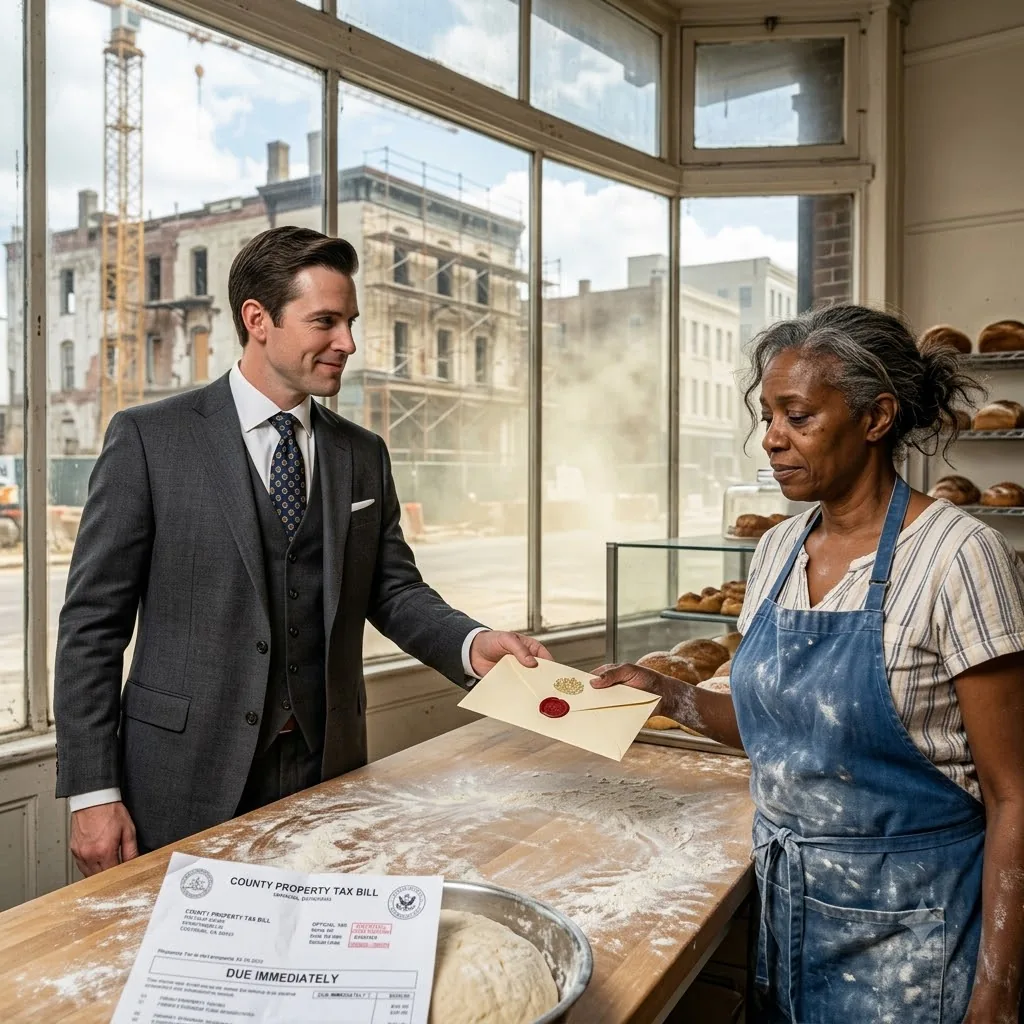
A fine layer of pulverized drywall coated the stainless steel prep tables, settling faster than Marcus could wipe it away. The floorboards of the bakery shook, a rhythmic, bone-rattling vibration from the excavator tearing into the bedrock next door, and the massive bowl of brioche dough collapsed in on itself with a wet sigh. Marcus stared at the ruined, deflated mass. The crisp, official envelope of a property tax reassessment sat near the register like an unexploded bomb. The county had tripled the valuation of his corner lot, a death sentence delivered on heavy stock paper.
He scraped the ruined dough into the industrial bin, the heavy thud mirroring the pounding in his temples. For three generations, his family had baked on this block. Now, the new luxury high-rises were squeezing him out, inch by dusty, deafening inch. The air rolling in through the vents smelled of diesel exhaust and wet concrete instead of yeast and caramelized sugar. He turned on the deep sink faucet, washing the sticky residue from his fingers, watching the water run cloudy down the drain. The silence following the sudden cessation of the excavator left a pressurized ringing in his ears.
Back at the front counter, he picked up the tax bill again. The numbers swam in his vision. It was a sum he could never earn, making his small brick building the last stubborn tooth in a jaw waiting to be pulled.
The brass bell above the glass door chimed, cutting through the thick atmosphere of the shop. Marcus reached for a clean towel, turning slowly to face the front.
The man in the doorway looked entirely out of place in a working kitchen. He wore a tailored charcoal suit miraculously immune to the ambient dust, his leather shoes polished to a mirror shine. A warm, practiced smile crinkled the corners of his eyes, exuding an intense calm. He stepped inside, bringing with him the faint scent of expensive cedar and ozone, shutting the door firmly behind him.
“Marcus,” the man said, his tone rich and resonant, sounding exactly like a seasoned pastor greeting a beloved congregant. He did not extend a hand, acknowledging the flour dusting Marcus’s apron with a polite, deferential nod. “I know this is an unexpected visit. My name is Elias, and I represent the Sanctuary Redevelopment Initiative.”
Marcus stood motionless, the towel twisted tightly in his grip. The Sanctuary Initiative had bought the theater across the street and the lot next door. They were currently vibrating the foundation of his bakery into dust to erect structures gleaming with architectural modernism and subtle religious iconography.
“You have a beautiful legacy here,” Elias continued, pacing slowly toward the pastry case. He trailed a manicured finger along the polished glass. “We value legacy. Our organization believes progress should not come at the cost of community pillars like your family. We are keenly aware of the shifting economic realities in this district.”
Elias’s gaze dropped to the counter, landing with pinpoint accuracy on the tax reassessment letter. His smile did not waver. It grew softer, dripping with a terrifying kind of pity.
“The burdens of this world can be crushing,” Elias said, his voice dropping to a comforting, hypnotic murmur. “The state demands its due, and the market shows no mercy to the faithful or the hardworking. But we are in a position to offer grace. A hand up, not a handout. A grant, specifically designed to eliminate the debt threatening this establishment, allowing you to remain exactly where you belong.”
Marcus felt his chest tighten. The sum on the county letter meant total foreclosure and the loss of everything his family had built by the end of the quarter. After nights spent calculating the scrap value of his commercial mixers, a man in a bespoke suit was now offering total salvation.
Elias reached into the interior breast pocket of his coat. He withdrew a thick, cream-colored envelope, sliding it slowly across the glass of the pastry case. It came to rest exactly beside the tax bill, dwarfing the county letter in both thickness and quality.
“There is a contract, naturally,” Elias said gently, folding his hands in front of him. “A covenant of partnership. We simply ask that you align with our community standards moving forward, to ensure our shared neighborhood thrives in the light. The funds are ready for immediate disbursement upon your signature.”
Marcus approached the counter, the ambient roar of the construction outside fading into a distant, underwater hum. The envelope was incredibly heavy, sealed with a thick crimson wax stamp bearing an intricate, interlocking cross and key. He reached out, his flour-dusted fingertips brushing the thick vellum. The paper felt strangely cold, unnaturally rigid against his skin. As he slid his thumb under the unsealed flap, the heavy stock parted slightly, exposing the dense, archaic legal print inside. His eyes caught the bolded heading of the covenant, the sheer density of the compliance clauses, and the sudden, physical weight of the terms required for his salvation dropping like a stone in his stomach.
He gripped the edge of the document, the blood roaring in his ears as his breathing completely stopped.
A fine layer of pulverized drywall coated the stainless steel prep tables, settling faster than Marcus could wipe it away. The floorboards of the bakery shook, a rhythmic, bone-rattling vibration from the excavator tearing into the bedrock next door, and the massive bowl of brioche dough collapsed in on itself with a wet sigh. Marcus stared at the ruined, deflated mass. The crisp, official envelope of a property tax reassessment sat near the register like an unexploded bomb. The county had tripled the valuation of his corner lot, a death sentence delivered on heavy stock paper.
He scraped the ruined dough into the industrial bin, the heavy thud mirroring the pounding in his temples. For three generations, his family had baked on this block. Now, the new luxury high-rises were squeezing him out, inch by dusty, deafening inch. The air rolling in through the vents smelled of diesel exhaust and wet concrete instead of yeast and caramelized sugar. He turned on the deep sink faucet, washing the sticky residue from his fingers, watching the water run cloudy down the drain. The silence following the sudden cessation of the excavator left a pressurized ringing in his ears.
Back at the front counter, he picked up the tax bill again. The numbers swam in his vision. It was a sum he could never earn, making his small brick building the last stubborn tooth in a jaw waiting to be pulled.
The brass bell above the glass door chimed, cutting through the thick atmosphere of the shop. Marcus reached for a clean towel, turning slowly to face the front.
The man in the doorway looked entirely out of place in a working kitchen. He wore a tailored charcoal suit miraculously immune to the ambient dust, his leather shoes polished to a mirror shine. A warm, practiced smile crinkled the corners of his eyes, exuding an intense calm. He stepped inside, bringing with him the faint scent of expensive cedar and ozone, shutting the door firmly behind him.
“Marcus,” the man said, his tone rich and resonant, sounding exactly like a seasoned pastor greeting a beloved congregant. He did not extend a hand, acknowledging the flour dusting Marcus’s apron with a polite, deferential nod. “I know this is an unexpected visit. My name is Elias, and I represent the Sanctuary Redevelopment Initiative.”
Marcus stood motionless, the towel twisted tightly in his grip. The Sanctuary Initiative had bought the theater across the street and the lot next door. They were currently vibrating the foundation of his bakery into dust to erect structures gleaming with architectural modernism and subtle religious iconography.
“You have a beautiful legacy here,” Elias continued, pacing slowly toward the pastry case. He trailed a manicured finger along the polished glass. “We value legacy. Our organization believes progress should not come at the cost of community pillars like your family. We are keenly aware of the shifting economic realities in this district.”
Elias’s gaze dropped to the counter, landing with pinpoint accuracy on the tax reassessment letter. His smile did not waver. It grew softer, dripping with a terrifying kind of pity.
“The burdens of this world can be crushing,” Elias said, his voice dropping to a comforting, hypnotic murmur. “The state demands its due, and the market shows no mercy to the faithful or the hardworking. But we are in a position to offer grace. A hand up, not a handout. A grant, specifically designed to eliminate the debt threatening this establishment, allowing you to remain exactly where you belong.”
Marcus felt his chest tighten. The sum on the county letter meant total foreclosure and the loss of everything his family had built by the end of the quarter. After nights spent calculating the scrap value of his commercial mixers, a man in a bespoke suit was now offering total salvation.
Elias reached into the interior breast pocket of his coat. He withdrew a thick, cream-colored envelope, sliding it slowly across the glass of the pastry case. It came to rest exactly beside the tax bill, dwarfing the county letter in both thickness and quality.
“There is a contract, naturally,” Elias said gently, folding his hands in front of him. “A covenant of partnership. We simply ask that you align with our community standards moving forward, to ensure our shared neighborhood thrives in the light. The funds are ready for immediate disbursement upon your signature.”
Marcus approached the counter, the ambient roar of the construction outside fading into a distant, underwater hum. The envelope was incredibly heavy, sealed with a thick crimson wax stamp bearing an intricate, interlocking cross and key. He reached out, his flour-dusted fingertips brushing the thick vellum. The paper felt strangely cold, unnaturally rigid against his skin. As he slid his thumb under the unsealed flap, the heavy stock parted slightly, exposing the dense, archaic legal print inside. His eyes caught the bolded heading of the covenant, the sheer density of the compliance clauses, and the sudden, physical weight of the terms required for his salvation dropping like a stone in his stomach.
He gripped the edge of the document, the blood roaring in his ears as his breathing completely stopped.